
A crypto IBAN and virtual card that is EEA-only, quietly priced, and surrounded by unanswered questions
 Available in US

Brighty is not a bank. It says so itself, in as many words, and it is the first thing you should understand about this card. What it actually is: a financial technology front end that gives you a euro IBAN and a virtual card, lets you hold crypto inside the app, and converts that crypto into spendable balance when you pay. Behind it sit licensed partners — unnamed on the pages Brighty publishes — who hold the accounts and issue the card. You are not opening a current account at a bank; you are opening a relationship with an app that says it can move to a bank licence or a licence of its own later.
I went through the card’s own pages, its help centre, the numbers it publishes about its plans, and the user reviews sitting underneath it, and this is what I found. My overall mark is 5.6 out of 10. That is not a scathing score and it is not a recommendation either. It sits right where cards like this usually sit: genuinely useful if you fall inside a narrow band of circumstances, and quietly annoying if you fall just outside it.
The band is roughly this. If you live in the EEA, you want a euro-denominated IBAN to receive money into and pay from, you are comfortable having your balance held by a company that describes itself as a fintech rather than a bank, and you mostly pay online — you will find this card does a competent job. If you need a physical plastic card in your wallet, live somewhere outside the EEA, need Apple Pay on a Mastercard, or care more about the cashback rate than the IBAN, this is the wrong card and I would tell you so.
The conditions described here are current as of October 28, 2026.
| Criterion | Mark | Why |
|---|---|---|
| Who can get it | 5 / 10 | The card page is labelled “EEA only”; the app has since been extended to Montenegro and Andorra, and availability may vary by jurisdiction |
| Cost | 7 / 10 | Virtual card issue EUR 2.99, monthly card service free; in-app conversion 0.6% / 0.5% / 0.4% above the free allowance on One / Plus / Pro |
| Top-up options | 7 / 10 | Bitcoin, Ethereum and USDC in the app, incoming crypto free on every plan, plus an IBAN; withdrawal networks include Ethereum, Tron, Bitcoin, Solana, Polygon and Arbitrum |
| Reliability and complaints | 4 / 10 | Issuing partners are not named officially; Trustpilot sits at 3.2/5 from 78 reviews, with repeated reports of accounts closed without explanation |
| Everyday use | 5 / 10 | Virtual Mastercard; Apple Pay unavailable for Mastercard, available for Visa; Google Pay works |
Total: 5.6 / 10
One more thing worth saying before the sections. Every time I could not find something, I have said so rather than filling the gap with a plausible guess. Brighty’s public pages leave several genuinely important numbers unstated — the card currency, the fee for paying in a foreign currency, ATM fees, the cost of a physical card, what happens to your remaining balance if you close the account. I have marked each of those as not stated rather than inventing a figure. Where a third-party site supplied a number, I have labelled it unofficial and told you it is not confirmed by Brighty.
Will they give you the card?
They will give it to you if you live in the EEA. That is the label on the card page itself, and it is the single most useful thing to know before you start. The app has since been extended to Montenegro and Andorra, though the pages hedge by saying availability may vary by jurisdiction — which is not the same as a promise.
The rule runs on residence plus, in two specific cases, nationality. Brighty states plainly: “Due to regulatory restrictions, we are unable to onboard Russian nationals residing in Montenegro and Andorra.” Read that carefully if it applies to you. It is a nationality restriction attached to a place of residence, which is a narrower thing than a blanket exclusion, but it is the clearest example of how these companies handle nationality rules.
A full country list is not stated on the pages I could reach. Unofficial sources put it at 36 countries including the EU, the EEA, Switzerland, Montenegro, Andorra, San Marino, Monaco and Moldova — that figure comes from a third-party card directory in August 2026, not from Brighty, and I would treat it as a pointer rather than a guarantee.
The broader principle here is worth understanding before you get angry at one company. Identity checks are not bureaucratic decoration. Under EU anti-money-laundering law, regulated firms must verify identity, assess risk, monitor transactions and report suspicious activity. In the EU, customer due diligence covers your name, address, date of birth, nationality and identity documents, plus a sanctions check and a politically-exposed-person check. Nationality is screened separately from residence precisely because sanctions lists and issuer risk policies are applied to citizenship and country of birth, not only to your address. If due diligence cannot be completed, EU rules require the institution to decline the transaction or the relationship — and to end an existing one where necessary. That is why accounts get closed. It is uncomfortable, but it is the rule the company is working under, not a personal decision about you.
Age is the other basic question. Cards of this kind are generally for adults, and some issuers set higher limits for some customers.
How to get it
You sign up in the app and the verification happens there. A help article names Sumsub as the identity verification provider, which tells you the check is automated rather than a conversation with a person — convenient, and also the reason documents get rejected for tiny reasons.
What they ask for is specific. For identity: a clear photo, your full name, date of birth, place of birth and citizenship. For address: a utility bill or bank statement as a PDF no older than three months — screenshots are rejected — or an official registration confirmation, or a second official ID showing an address. The listed reasons for rejection read like a checklist of what people get wrong: documents that are ambiguous, unclear, contradictory or incomplete; an address that does not match the one you signed up with; documents that are old or damaged; blank fields, including an unsigned signature.
That list is the most useful thing on this page for anyone planning to apply. If you sign up with a home address and then send a bill in a different form of your name, it fails. If you photograph a bill on your phone screen rather than downloading the PDF, it fails. It is not fraud detection, it is form-filling, and it is entirely within your control.
What I could not find: the verification levels. Brighty says verification runs at sign-up but does not define tiers, and processing time is not stated. If an application stalls, the documented fallback is email to [email protected]. There is no published phone number, no live chat and no support hours in the FAQ I read.
On the card itself: the card page offers a virtual card that works wherever Visa is accepted. The help centre references a physical Visa, a virtual Visa without a PIN, and a virtual Mastercard. One of those articles describes the card as a virtual Mastercard. In other words, Brighty’s own materials are not consistent about which network you end up with, and that matters a great deal for phone wallets, as we will come to. The card currency is not stated.
Delivery is not stated either. An issuance article says you can choose a virtual or a physical card in the app, but gives no countries, no timescale and no cost, and does not say what a replacement costs. Unofficial reporting in August 2026 says physical Mastercard orders are currently unavailable and the help centre says they “will not be fulfilled”, with no published cost or timeframe and no published replacement price. That is unconfirmed by Brighty, but it is consistent with the fact that no one I could reach has a physical card, and it is the reason this card is a virtual-only proposition in practice.
Fees and what a payment actually costs
Here is where Brighty is genuinely better than most cards in this category, and here is where the fine print earns its keep.

| Fee or limit | What it says |
|---|---|
| Virtual card issue | EUR 2.99 on all plans; up to 10 card issues per month |
| Monthly card service | Free |
| Balance inquiry | Free |
| In-app currency exchange | 0.6% (One) / 0.5% (Plus) / 0.4% (Pro) above the monthly free allowance |
| Free FX allowance per month | EUR 0 (One) / EUR 2,000 (Plus) / EUR 5,000 (Pro) |
| Paying in a foreign currency | Not stated |
| ATM | Acceptance claimed worldwide; fee and allowance not stated |
| Card purchase limit, daily and monthly | EUR 50,000 / 75,000 / 100,000 (One / Plus / Pro) |
| Outgoing fiat, daily and monthly | EUR 30,000 / 250,000 / 500,000 (One / Plus / Pro) |
| SEPA and Faster Payments out | EUR 3 + 0.3%, minimum EUR 10 on One; EUR 0.5 + 0.3% on Plus and Pro |
| SWIFT out | 0.9%, minimum EUR 50; minimum EUR 30 on Pro |
| Maximum fiat account balance | EUR 100,000 / 250,000 / 500,000 (One / Plus / Pro) |
Two things jump out. First, the free allowance is only on the paid tiers — on One, every currency exchange above nothing costs 0.6%. Second, the plan prices themselves are not stated on the help page I read; the tier table exists, the subscription cost for it does not, and neither does the price of a metal card. Unofficial sources give Plus at EUR 9 per month and Pro at EUR 18 per month with One free. Those same sources list card limits at EUR 15,000 / 25,000 / 50,000, which contradicts the official figures of EUR 50,000 / 75,000 / 100,000. Where an unofficial source contradicts the card itself, I believe the card.
The plan structure, as published in a help article dated 15/09/26:
| One | Plus | Pro | |
|---|---|---|---|
| Cards included | 1 | 2 | 3 |
| Free FX per month | EUR 0 | EUR 2,000 | EUR 5,000 |
| Exchange above allowance | 0.6% | 0.5% | 0.4% |
| Subscription price | Not stated | Not stated | Not stated |
Now, three everyday payments, so the fees stop being abstract.
A EUR 30 subscription on One. Nothing about this touches the FX allowance, because it is not a currency exchange. You pay EUR 30 from your balance. The only thing to watch is whether the merchant treats your card as foreign — see the section on how cards get declined — but on the fee side, EUR 30 costs EUR 30.
A EUR 40 lunch paid while your balance sits in USDC. This is the payment the 0.6% is about. You are converting crypto to euro, and on One the full 0.6% applies with no free allowance. The card does not publish a conversion rate anywhere, it only says crypto converts instantly, so I cannot tell you what spread sits underneath that percentage — and that is a real gap, because a published percentage with an unpublished rate is only half the picture.
A EUR 25 purchase in a shop that charges in dollars while you are in the euro area. Here I have to be blunt about what I do not know. The card currency is not stated, and the fee for paying in a foreign currency is not stated. What is stated is the in-app exchange allowance and rate, which applies to converting currencies in the app. Whether paying abroad adds a separate markup, and how much, I cannot tell you from Brighty’s pages. That is not a small gap — for anyone planning to travel with this card, it is the gap that matters most, and I would ask support directly before relying on it.
On ATMs, the card page claims acceptance at ATMs worldwide and states no fee and no allowance. Unofficial sources say there is no dependable current ATM feature on the Mastercard, and quote legacy Visa rates of EUR 3.50 in the EEA and EUR 3.50 plus 3.5% outside for Plus, EUR 3 in the EEA and EUR 3 plus 3% outside for Pro. Those are not confirmed by Brighty and refer to an older card generation. If cash matters to you, treat ATM use as unsupported.
One technical note if you do try: a physical Visa has to be used at an ATM with a new PIN after a PIN change in order to activate it. That is the only activation instruction Brighty publishes.
Top up
This is the strongest part of the offer, and it is why I scored top-up options at 7.
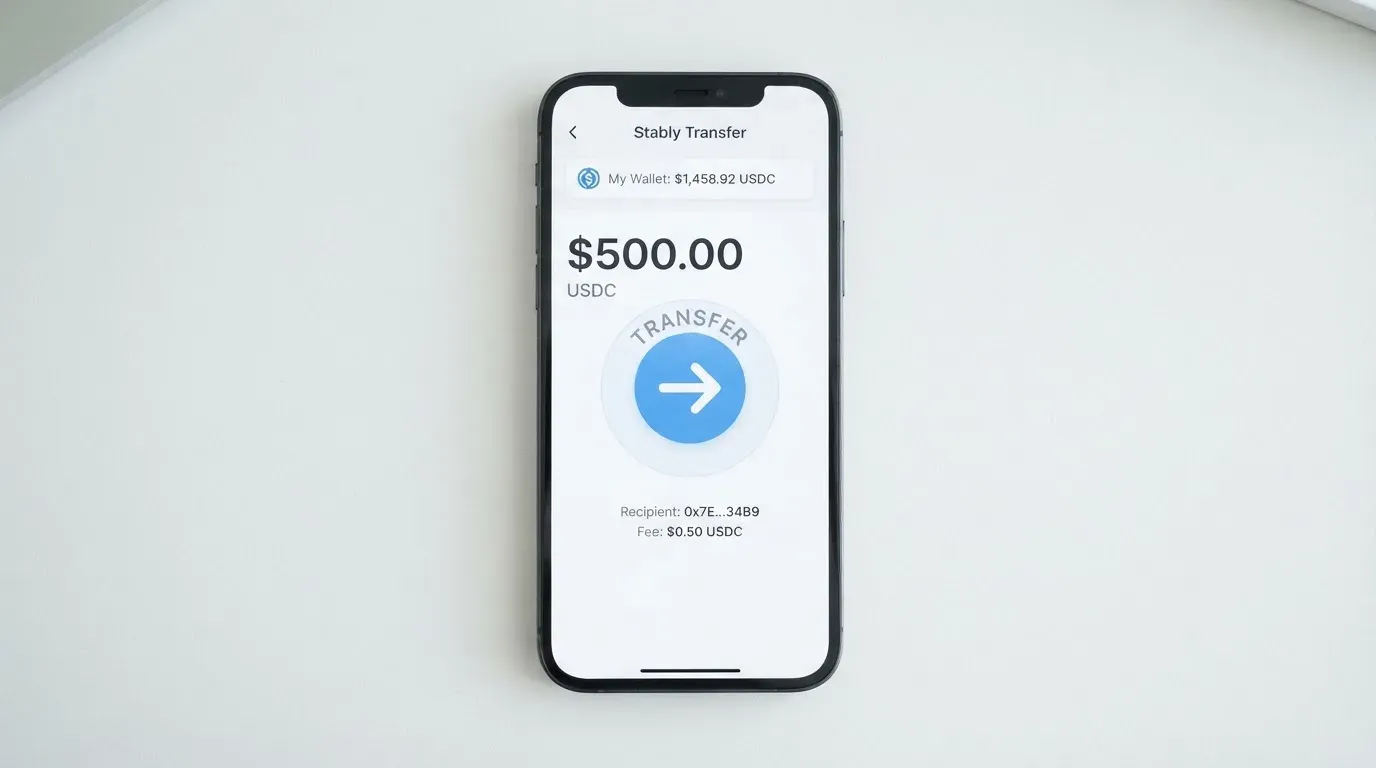
You can hold crypto such as Bitcoin, Ethereum and USDC in the app, and you have an IBAN to receive fiat into. The card page features the NPC token. Incoming crypto is free on all plans and has no monthly limit — that is unusual and genuinely valuable, because most providers charge something to receive funds. Incoming fiat is not free: SEPA costs 0.3% with a EUR 10 minimum, Faster Payments 0.3% with a EUR 10 minimum, and SWIFT 0.7% with a EUR 50 minimum. Incoming fiat is capped at EUR 100,000 per month.
So the cheapest way in, if you already hold crypto, is the crypto route, at no provider fee. The cost you cannot avoid is the blockchain’s own: on-chain network fees for your deposit are charged by the blockchain, not by Brighty. That is a fact about how the networks work rather than a Brighty charge, but it comes out of your wallet, so budget for it.
Networks listed for outgoing crypto: Ethereum, Cardano, Tezos, Islamic Coin, TON, Arbitrum, Solana, Polygon and BEP20.
| Outgoing crypto route | Fee |
|---|---|
| ERC20 | EUR 3 |
| TRC20 | EUR 3 |
| BTC | EUR 20 |
| ADA | EUR 1 |
| XTZ | EUR 1 |
| HAQQ | EUR 1 |
| TON | EUR 3 |
| ARB | EUR 3 |
| Solana | EUR 3 |
| Polygon | EUR 3 |
| BEP20 | EUR 3 |
The same on every plan, with no monthly limit. Note how wide that spread is: moving ADA or XTZ costs EUR 1, moving BTC costs EUR 20. If you are a Bitcoin user, that fee is the number to think about before anything else, because you will pay it every time.
Two things about sending out that deserve care. First, wrong-network deposits are the classic irreversible loss in this category. Blockchain transfers cannot be reversed; a deposit sent on a network the provider does not support, or to an address belonging to a different network, can be lost or need manual recovery with no guarantee. Brighty’s help centre has articles titled “Refund Policy for Unsupported Crypto Deposits” and “Wrong Network and Unsupported Cryptocurrency”, which tells you this happens often enough to require written policy. The help centre explains fees on Ethereum are paid in ETH, so a wallet holding a token but no ETH cannot send it, and that Tron fees are paid by burning TRX. Check you hold the native asset for the network you are about to use.
Second, closure. If you close the account yourself, Brighty says it is “scheduled for permanent deletion within 30 days”. What happens to the balance that remains is not stated. I would not leave funds in there you have not withdrawn, and I would not treat a 30-day deletion notice as a schedule you can rely on.
Paying with it every day
Two mobile wallets matter here, and the news is mixed in a way that will annoy you.
Apple Pay is currently unavailable for Mastercard cards, as a help article dated 26 May 2026 states plainly, citing technical updates — and available for Visa. Google Pay works for Mastercard. So if you get a Mastercard, you have Google Pay and no Apple Pay; if you get a Visa, you have both. Since Brighty’s own pages are inconsistent about which network you will be handed, the honest answer to “can I add this to Apple Wallet” is: probably, but not guaranteed, and I would check in the app before you plan around it.
The app itself is called “Brighty: Crypto Card & IBAN” and the App Store listing I read on the Turkish storefront showed 4.9 from 9 ratings. A 4.9 from nine ratings is not evidence of anything. The Google Play rating was not found.
What you can pay with, and where, is broadly normal: the card works wherever Visa is accepted, subject to the blocked-category list, which is not stated. Nothing in the materials points to gambling or similar categories being blocked, and in this category that is not always the case — MCC 7995 covers gambling and many issuers block it by policy rather than by law, with the blocked list varying by issuer.
On rewards, the card page says “Keep earning on your crypto while using it”, and stops there. No rate, no payout mechanism, no mention of cashback. Unofficial sources describe 0.5% base cashback in USDC on all tiers, 1.25% to 1.75% on selected categories, monthly caps of 20 / 60 / 100 USDC on One / Plus / Pro, paid the following month to a “Reward Box”. Not confirmed by Brighty, and the same sources say cashback can be reversed if a purchase is refunded or charged back. I would plan as though there is no cashback until you have seen it arrive.
The part I want to warn you about is declines, because this is where crypto cards annoy people most and where almost nothing is published. Your card number starts with an issuer identification number that merchants can look up, and that lookup reveals the issuer institution and country. Merchants may apply extra scrutiny when the issuer country differs from your billing address, which is why a card issued in one country can look foreign to a shop in another. Some merchants decline prepaid or foreign BINs precisely because of that lookup. Address Verification Service compares the numeric parts of your billing address with issuer records, is mainly offered in the US, Canada and the UK, and is generally unavailable for foreign-issued cards — which can cause declines. A declined authorisation may also leave a hold on your funds for several days, typically up to seven. None of this is Brighty-specific, but it is what a EUR 30 subscription looks like when it fails, and it is the everyday cost people forget to budget for.
What can go wrong
I want to start with the structural risk, because it outranks every specific number above.
Brighty is not a bank. Its own words: “Brighty is a financial technology company, not a bank.” Accounts, cards, custody and the on/off ramps all run through unnamed licensed partners. No licence numbers appear on the pages I read. Unofficial reporting from 2024 describes Brighty as based in Switzerland and holding crypto-exchange and digital-asset custodian licences; that is a press release relayed by a third party and is not confirmed on Brighty’s own pages. What you are trusting is a front end plus a partner you cannot identify from the public materials.
Understand what that means for your money. Your funds are custodial, not self-custody: control belongs to whoever holds the credentials, so you must trust the provider completely. A seed phrase — typically 12 to 24 words, an unencrypted form of the private key — means anyone who obtains it can restore the wallet and spend the funds, and no such theft has a built-in recovery because the network cannot freeze or return them. Custodial platforms have a real record of failure: Mt. Gox at roughly US$350 million reported stolen between 2011 and 2014, Coincheck at about US$400 million in 2018, and Ronin Network at US$625 million in 2022. And a provider’s own licence is not the same guarantee as a bank deposit. Under EU rules, e-money institutions must safeguard customer funds by segregating them in dedicated accounts or insuring them, and such funds are not the same as bank deposits and may not be covered by deposit guarantee schemes.
Complaints. Trustpilot shows 3.2 out of 5 from 78 reviews on the Dutch-Belgian page I read; review dates were not visible. Recurring themes: accounts closed without explanation, with the company citing policy or regulation; referral bonuses not paid, with the company citing suspected referral abuse; and instant transfers taking hours. Some reviewers praise the cashback. No card-specific complaints or Reddit threads surfaced in what I looked at, which is its own kind of information — for a card whose main feature is the IBAN, the complaints are about the account relationship rather than the plastic.
This is the part that took my mark down most, and it is worth being precise about why. Trustpilot scores are noisy and 78 reviews is a small sample. But the theme of account closure without explanation is the one that should make a careful person pause, because the closure mechanism is officially documented. Brighty’s stated offboarding reasons include suspected fraud, unclear source of funds, partner-provider concerns, and PEP or sanctions status. So when a reviewer says their account was closed and the company cited policy or regulation, that is the disclosed mechanism operating as designed. It does not make the loss of your balance any less real, and it means the real question is not whether this can happen but whether you would have time to withdraw first.
Custody and security. Brighty’s FAQ says it keeps user funds in segregated accounts that are specially secured, for both fiat and crypto, and that it works with penetration testers. No insurance is mentioned. Two-factor authentication is not mentioned on the page I read. The card can be frozen and terminated in the app — freeze is temporary, termination cannot be reversed. On the wallet side, stablecoins are not censorship-proof either: Tether says it disables tokens in wallets on the OFAC sanctions list and has frozen funds tied to illicit activity.
Where it stands. Brighty raised USD 10M in December 2024 according to a 2024 press report. Growth financing tells you there is a business being built; it does not tell you anything about how your money is treated if things go wrong.
Support. Email at [email protected], help centre at help.brighty.app, no phone, no live chat, no published hours. The help centre offers English, French, Italian, Lithuanian, Polish, Romanian, Serbian and Spanish — no Russian. Whether support staff speak your language is not stated.
Taxes. One thing to be aware of, not advice. Tax treatment depends on where you live, and I am not going to pretend otherwise. What is true generally: digital assets are treated as property in many jurisdictions, so exchanging them for goods or services generally produces a taxable gain or loss, measured in local fiat currency at fair market value on the date of the transaction — which means each card payment funded from crypto may be a separate disposal. For personal holdings held a year or less the result is typically short-term. Whether any of that applies to you depends entirely on your jurisdiction and your own circumstances, and you should ask a qualified professional rather than a card review.
What to take instead
There is no single alternative to Brighty; there are alternatives to different parts of it. If your priority is the IBAN, there are regulated e-money issuers. If your priority is spending crypto, there are other cards. If your priority is the cashback, there are better programmes. Here is how the three cards I examined line up against the same questions.
| Brighty | RedotPay | Bitpanda | Wirex | |
|---|---|---|---|---|
| Score in my assessment | 5.6 / 10 | 6.9 / 10 | 6.5 / 10 | 6.7 / 10 |
| Who can get it | EEA, plus Montenegro and Andorra; availability may vary by jurisdiction | 47 listed places for cards; citizenship restrictions on a separate KYC list | Verified account plus residence in a euro-area country; rule is by residence | Region-dependent; service area stated as worldwide, 130+ countries |
| Card | Virtual, Visa and Mastercard referenced across pages | Virtual and physical; Visa debit in the Singapore terms | Physical Visa debit, EUR only; one active card | Virtual and physical; Visa or Mastercard depending on region |
| Issue cost | EUR 2.99 virtual; physical not stated | USD 10.00 virtual, USD 100.00 physical | First shipment free; reissue EUR 5.90, EUR 9.90 for lost or stolen | Free in UK, EEA, APAC, SG, AU and “Other”; metal card 45 GBP in the UK |
| Monthly fee | Free | Account maintenance waived | Not stated | No annual or foreign exchange fee claimed |
| Conversion or FX | 0.6% / 0.5% / 0.4% above the plan allowance | 1.00% transaction fee; 1.20% in a non-default currency | Visa mark-up fees apply; crypto spread not stated | No fixed amount; rate shown in the app before confirming |
| Rewards | “Keep earning on your crypto while using it”, no rate published | USD 5 welcome reward on spending; no cashback rate stated | 1% cashback on crypto spending per the body, “up to 2%” per the summary | Cryptoback in WXT, 0.5% Standard to 8% Elite |
RedotPay (6.9/10) is the closest thing here to a straight competitor, and on paper it beats Brighty. It offers both virtual and physical cards, explicit USD and HKD card currencies, USD 10.00 for a virtual card and USD 100.00 for a physical one, no monthly maintenance fee, and a published fee table. Its catch is geography and transparency in a different place: two official lists word its rules differently. The KYC list bars citizens of around 35 countries and regions including Russia, Belarus, Ukraine, Serbia, Montenegro and North Korea, while a separate card-issuance list dated 28 August 2026 adds India, Indonesia, Morocco, Nepal, Singapore and Turkey, where “residents of these areas are ineligible for both virtual and physical cards” and cannot use those areas as a billing address — and notably, citizenship is not mentioned on that list. Georgia, Armenia, Kazakhstan and the UAE appear on neither. Add a 1.00% transaction fee, 1.20% for non-default currency, and merchant surcharges of 1.5% on a list of named sellers including Discord and Facebook Ads, and the picture is a well-documented card with a narrower and more complicated eligibility map.
Bitpanda (6.5/10) is the regulated, boring choice, and that is a genuine virtue. It is a licensed European company, you need a verified account and residence in a euro-area country, and users verified via “Bankident” cannot order. You get a physical Visa debit card in EUR only, one active at a time, with the first shipment free. It spends from a chosen main asset — listed cryptocurrencies, precious metals or EUR — converted to EUR at payment, with a EUR 1 minimum, and Crypto Indices excluded. Its weaknesses are narrow and mostly cosmetic: the FX fee is listed at EUR 0 but Visa mark-ups apply, and the crypto conversion spread is not stated. Its cashback figure is also unreconciled within its own materials — the body says 1% on crypto spending, the page summary says “up to 2%”, with fiat, stocks, metals and stablecoins excluded. If you want a card backed by a licensed exchange rather than a fintech front end, this is the more defensible pick.
Wirex (6.7/10) is the broadest on paper — worldwide in 130+ countries, virtual and physical, and cashback from 0.5% Standard up to 8% Elite — and also the vaguest. It publishes fees for the UK, EEA, APAC, Singapore, Australia and “Other”, which is not the same as publishing a number you can rely on. It is up to you whether the FX fee is zero: the card page says no foreign exchange fee, and the fee page says no fixed amount, with rates viewable in the app. The rewards exclusions are unusually thorough and unusually long — ATM withdrawals, cash advances, crypto purchases, gambling, refunds, and a list of merchant category codes including 4829, 6010, 6011, 6012, 6050, 6051, 6211, 6529–6532, 6534, 6536–6538, 7012, 7399, 8999, 9211, 9222, 9311 and 9399 — which tells you more about where the value is not than where it is. Cash withdrawals “are not permitted in Singapore”, and your residence country on the form must match your ID.
One more category note, because it explains why this whole industry looks the way it does. Visa and Mastercard do not issue crypto cards to consumers themselves; they license issuers and can suspend a programme. In November 2022 Visa said it had terminated its global agreements with FTX and the FTX US debit card was wound down. WaveCrest, a Visa issuer that supplied crypto card brands, was suspended by Visa in Europe in 2018, closing every WaveCrest-issued Visa programme. Programme closures typically mean a notice period, then loading and spending stop, then users are asked to withdraw remaining balances. That history is why the partner question on the risks section is not a technicality.
Who I would recommend it to
I would recommend Brighty to someone who lives in the EEA, wants a euro IBAN more than they want a piece of plastic, is comfortable with a custodial balance held by a fintech rather than a bank, and pays mostly online. The free incoming crypto transfers, the EUR 2.99 virtual card and the free monthly card service make it one of the cheaper ways to hold this particular combination, and the published tier limits are higher than most.
I would not recommend it to someone who needs a physical card — unofficial reports suggest physical orders are not being fulfilled, and the card page only promises a virtual one. I would not recommend it to someone who lives outside the EEA, Montenegro or Andorra. I would not recommend it to someone who needs Apple Pay and might be handed a Mastercard. And I would not recommend it to anyone treating it as a place to keep meaningful savings, because a 3.2/5 Trustpilot score from 78 reviews, weighted toward accounts closed without explanation, plus a documented 30-day permanent deletion on voluntary closure with the fate of the remaining balance unstated, is not a structure I would put savings into.
The honest summary is that Brighty is a competent, cheap, narrow fintech product with a real unanswered question sitting underneath it: who is actually holding the money, and under which licence? If your IBAN needs are modest and your balance is modest, that is a trade many people make happily. Just make it knowingly.
Frequently asked questions
What is the Brighty card?
Brighty is a financial technology company, not a bank — its own description. It gives you a euro IBAN and a virtual card through an app, holds crypto for you, and converts that crypto into spendable balance when you pay. Accounts, cards and custody all run through licensed partners the company does not name on its public pages. You are opening a relationship with an app, not a current account at a bank.
How does the Brighty card work?
You load a balance — crypto, or fiat into the IBAN — and the card spends that balance. It behaves like a prepaid card rather than a debit card: money is converted and held first, then spent, so it cannot overdraw. Paying converts crypto to fiat at that moment, and on the free One plan that conversion costs 0.6% with no monthly allowance.
Is Brighty a bank, and who owns it?
No — Brighty describes itself as a financial technology company, not a bank. The accounts, cards and custody sit with unnamed licensed partners, and no licence numbers appear on the pages I could read. Unofficial 2024 press coverage describes a Switzerland-based company holding crypto-exchange and digital-asset custodian licences, but Brighty’s own pages do not confirm this.
Am I eligible, and does nationality matter?
The card page is labelled “EEA only”, and the app has been extended to Montenegro and Andorra with availability varying by jurisdiction. Residence is the main rule. Nationality matters in at least one specific case: Brighty states it cannot onboard Russian nationals residing in Montenegro or Andorra. A third-party site lists 36 countries, but that is unofficial and not confirmed by Brighty.
Does Brighty require KYC, and what documents do I need?
Yes, verification runs in-app at sign-up, with Sumsub named as the provider. You need a clear photo plus your full name, date of birth, place of birth and citizenship, and proof of address — a utility bill or bank statement PDF no older than three months (screenshots rejected), an official registration confirmation, or a second official ID. Rejections usually mean mismatched addresses, old or damaged documents, or blank fields.
How much does it cost, and is it free?
The virtual card costs EUR 2.99 to issue and the monthly card service is free, on all plans. In-app currency exchange costs 0.6% on One, 0.5% on Plus and 0.4% on Pro, above a monthly free allowance of EUR 0, EUR 2,000 and EUR 5,000 respectively. Plan subscription prices are not stated on the page I read; unofficial sources say Plus is EUR 9 a month and Pro EUR 18.
How do I top it up, and are the transfers free?
You can send Bitcoin, Ethereum, USDC or other crypto into the app, or receive fiat into the IBAN. Incoming crypto is free on all plans with no monthly limit; incoming SEPA and Faster Payments each cost 0.3% with a EUR 10 minimum, and incoming SWIFT costs 0.7% with a EUR 50 minimum. You still pay the blockchain’s own network fee on a crypto deposit — that comes from the chain, not from Brighty.
Can I use it with Apple Pay or Google Pay?
Partly. Google Pay works with Mastercard. Apple Pay is currently unavailable for Mastercard cards, according to a help article dated 26 May 2026, and is available for Visa. Brighty’s own pages are inconsistent about which network you receive, so check the app before planning around Apple Wallet. The blocked merchant categories are not stated.
Is Brighty card safe, and what if my account is closed?
Treat it as custodial and not bank-like. Brighty says user funds are held in segregated accounts, but no insurance is mentioned and two-factor authentication is not mentioned on the page I read. Closures are a documented mechanism — offboarding reasons include suspected fraud, unclear source of funds, partner-provider concerns and PEP or sanctions status. If you close it yourself, the account is scheduled for permanent deletion within 30 days, and what happens to the remaining balance is not stated.
Is the Brighty card worth it?
Worth it if you are in the EEA, want a euro IBAN, mostly pay online, and keep a modest balance — the virtual card is cheap and incoming crypto transfers are free. Not worth it if you need a physical card, live outside the EEA, need Apple Pay on a Mastercard, or were planning on Apple Pay working reliably. Check Trustpilot, 3.2/5 from 78 reviews, before you decide anything else.
App and neobank cards – cryptocardbasics
Content created by the «cryptocardbasics» team