The virtual crypto card that funds from any coin, with sharp edges on fees and reliability
 Available in US
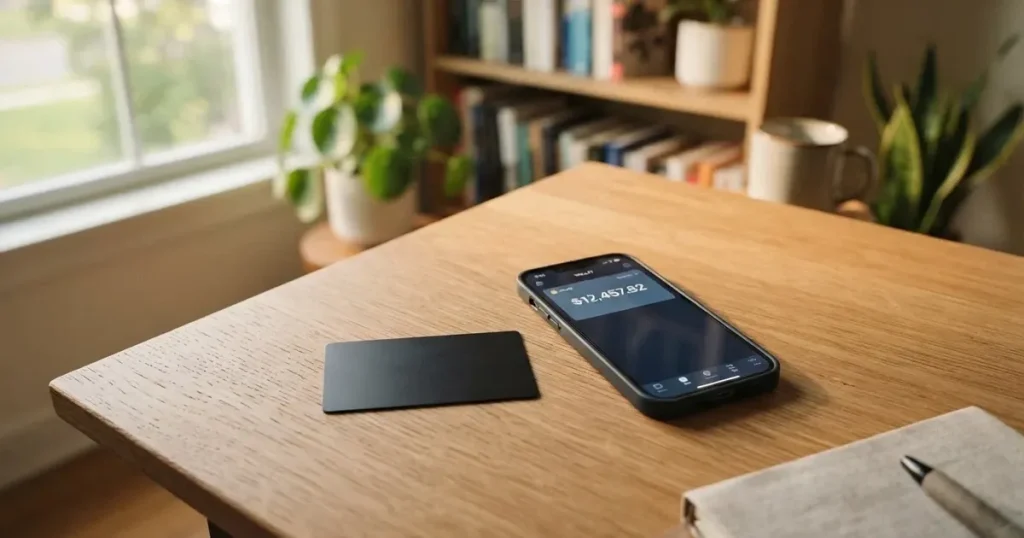
The Kolo card is a virtual payment card you fund with cryptocurrency and then spend like an ordinary card, wherever Apple Pay or Google Pay or a Visa/Mastercard terminal accepts it. The appeal is obvious: load it with almost any coin or token, across a wide choice of networks, and pay for things directly from that balance without first converting through a bank. The catch is that the interesting numbers — issuance cost, monthly fee, conversion fee on card payments, ATM fees — are not stated in the card’s own public pages. What you can read officially is a 1% fee on exchange orders plus network costs, and a site promise of no mark-up on several stablecoins. The rest arrives from third-party write-ups that don’t fully agree with each other. On top of that, user reviews for the service have been consistently mixed, and the company behind it has changed hands three times in a year.
I’ll walk you through who the card suits, what it costs, how you fund it, what can go wrong, and who I’d actually point at it — so you can decide with the real trade-offs in front of you rather than the marketing.
The conditions described here are current as of October 28, 2026.
Verdict
The Kolo card scores 6.4 out of 10. It’s a credible way to hold and spend crypto without a traditional bank account, and the funding side is genuinely strong. But it’s a virtual-only product with published fees missing on exactly the points a cardholder cares about most, sitting on top of a service that has changed operator three times in a year and draws steady complaints about blocked withdrawals and closed accounts.
Who it’s for: anyone who already holds crypto, mainly stablecoins, on one of the supported networks, and wants to convert and spend it directly without first funnelling it through a bank. It’s especially relevant to people who have trouble getting an ordinary bank card, or who move money across borders and want a card that works “60+ countries” while the service itself is offered in “170+”.
Who it’s not for: anyone who needs a physical card today, a published all-in cost, or high confidence that a withdrawal will go through on the first attempt. If your spending depends on cash machines, or you want a card you can hand over in person, this isn’t it yet — the physical card is advertised but has no ordering schedule.
| Criterion | Mark | Why |
|---|---|---|
| Who can get it | 7 / 10 | Service in 170+ countries, card works in 60+; only embargoed and sanctioned countries are closed |
| Cost | 7 / 10 | Officially 1% exchange plus network costs; unofficial: virtual issuance free, $0/month, 1% conversion on payments, ATM $1 + 0.65% |
| Top-up options | 9 / 10 | Any crypto, BTC/ETH/LTC/USDT/USDC and others, seven networks shown on the site’s logos including Tron, Solana, Base, swap in app |
| Reliability and complaints | 4 / 10 | Operator changed three times in a year, issuer unnamed (partner Signify/Rain), complaints about blocked withdrawals and closed accounts (Trustpilot 3.7) |
| Everyday use | 5 / 10 | Apple Pay and Google Pay are supported; unofficial: virtual only, plastic announced without dates, ATM unavailable on virtual |
| Total | 6.4 / 10 | Strong funding, middling everyday use, thin published cost detail |
The score is dragged down hardest by reliability. A card is only as useful as the promise that the money is there and the payment goes through; when the operator behind the card has changed three times in twelve months and users report withdrawals stalling, that promise carries real weight in the balance.
Will they give you the card?
Eligibility turns on country and residence, not just citizenship, and the official terms are stricter than the marketing suggests.
The card’s own terms bar anyone who is in, controlled from, or a national or resident of Cuba, Iran, North Korea, Sudan, Syria, or any other country under US, UN, EU or HM Treasury sanctions — and listed sanctioned persons. The rule covers both your nationality and where you live, so holding a passport from one of those countries can disqualify you even if you live elsewhere. The site says the service runs in “170+” countries and the card works in “60+”, with a list at kolo.xyz/countries; a Russia entry was not visible in the list I read. A third-party US restriction that had circulated was removed and does not appear in the terms text.
Everything else about who gets the card is not stated publicly — the exact residence list, the age floor, and the official rejection reasons are all missing from the pages I could reach. The general rule across prepaid and debit cards is adults 18+, and some issuers set higher limits, but Kolo’s own age requirement is not stated.
How to get it
Applying means full identity verification, and there may be more steps than you expect.
Verification runs through Sumsub and takes roughly a minute, plus two-factor authentication for login and withdrawals. The terms say your limits depend on “verification steps you have completed”: Enhanced Due Diligence — extra information or records — can be required to raise them, and Kolo may refuse or later lower limits. Suspicion of fraud can trigger enhanced checks. Named tiers, per-tier limits, and processing times are not stated, nor is whether proof of address is required at signup.
One third-party source reports that an EUR card may require additional verification including proof of address — that is unofficial and not confirmed by the card. So expect to be asked for more documents if you want higher limits.
The card itself: official terms say Card Services are provided in collaboration with Signify Holdings Inc (Wilmington, Delaware; Rain cards, raincards.xyz). The form, network and currency are not stated on official sources I could find. The site FAQ only says it works wherever Google Pay or Apple Pay, or a Visa/Mastercard terminal, accepts. Unofficial reporting describes a Visa network card, virtual only (USD, and EUR as Visa Platinum), with a physical card advertised for Q3 2026 and no ordering schedule — again, not confirmed by the card.
Delivery: how and when the virtual card arrives is not stated officially. Unofficial sources say it’s issued in the app or Telegram mini-app and added to Apple Pay or Google Pay, with physical delivery unscheduled.
The practical first step, then, is simply to sign up, pass the Sumsub flow, and see what limits your verification tier grants — because neither the card nor the limits are described in advance.
Fees: what it really costs
This is where Kolo is most opaque, and where you should be most careful. The card’s own terms and site publish a 1% fee on exchange orders and a promise of no mark-up on certain stablecoins. They do not publish what a card payment costs, what the FX spread is, or what an ATM withdrawal costs. The card currency, the FX spread, and any multi-currency balances are also not stated.
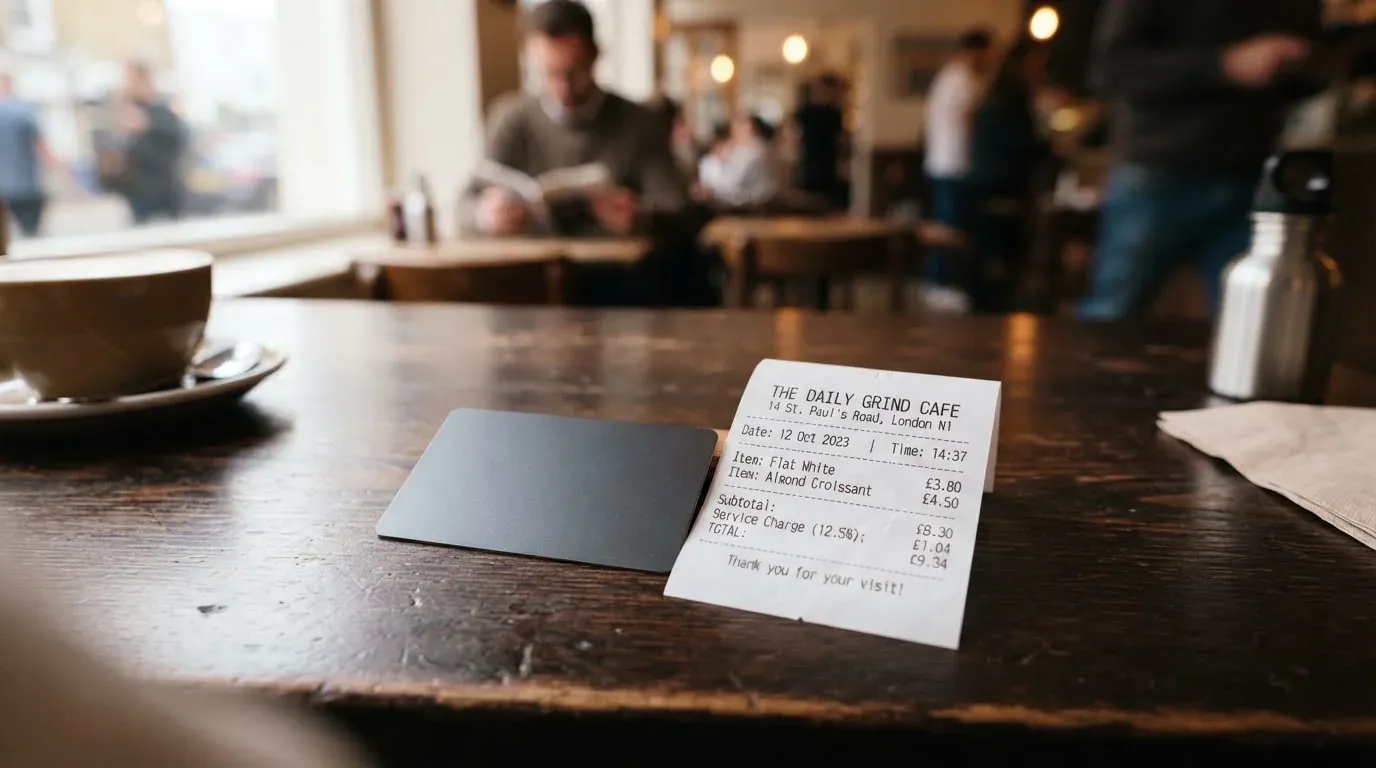
So the honest picture is two-layered. Officially, only the exchange and deposit side is priced. Unofficial sources fill in the rest, and they disagree on some points. Treat the numbers below as indicative, and confirm in the app before you rely on them.
| Fee or limit | What the card states | What unofficial sources report |
|---|---|---|
| Card issuance | Not stated | Virtual free |
| Monthly fee | Not stated | $0 |
| Minimum / activation | Not stated | $10 / EUR 10 balance to activate, returned to balance; one source calls it $0 annual |
| Exchange (buy/sell/swap) | 1% of order plus network/bank costs, shown before confirming | — |
| Conversion on card payment | Not stated | 1% Kolo conversion fee on all payments, including stablecoin-funded |
| Stablecoin mark-up | “0% mark-ups on USDT, USDC, EURC” | Repeated by a second source, but a third says 1% applies even to stablecoin-funded payments — sources conflict |
| FX — USD card, non-USD spend | Not stated; site says payments converted to local currency at point of sale | Visa rate +1%; all-in FX measured at about 1.40% vs mid-market |
| FX — EUR card, non-EUR spend | Not stated | Visa rate +0.55% / 0.65% / 1.35% by currency |
| ATM withdrawal | Not stated | $1 + 0.65% per withdrawal; limit $500 per withdrawal, 3 per rolling 24h; balance inquiry or declined attempt $0.60. Another review says $250 per withdrawal. ATM not available on the virtual card |
| Card settlement currency | Not stated | USD or EUR, subject to country eligibility |
| Spendable assets | Not stated | USDT, USDC, DAI, EURC, EURI, BTC, ETH, SOL, BNB, LTC, DOGE, TRX |
| Limits | Volume limits per period (e.g. daily) vary by payment method and verification level; seen after login; no numbers published; higher limits on request to [email protected] | — |
Two or three everyday payments, and which fees bite
- A $30 lunch, paid from USDT on the USD card. On paper the stablecoin leg should be clean — the site advertises no mark-up on USDT/USDC/EURC — but unofficial sources disagree on whether the 1% conversion fee still applies to stablecoin-funded payments. Budget for either $0 or $0.30 extra here, and check which is true in your app.
- A €40 hotel in Paris on the USD card. Visa’s rate plus a reported 1%, with all-in costs measured by third parties at an unofficial 1.40% against mid-market. That’s roughly €0.55 on €40 — small, but it applies to every foreign purchase; confirm these FX rates in your app before spending.
- Withdrawing $100 from a cash machine. Reported at $1 + 0.65% ≈ $1.65, with unofficial limits often cited as $500 per withdrawal and 3 per 24 hours — except the ATM reportedly isn’t available on the virtual card at all, so this may not be possible yet.
The pattern to notice: the deposit side is cheap and clearly priced; the spend side is where the money quietly leaks, and the card hasn’t published those numbers itself. There are also no card tiers, plans or metal options on the site or in the terms — just a single card and one cashback programme — so there’s no paid tier to escape these costs into.
Top up: how to fund the card
The funding side is the card’s strongest suit, and it’s where Kolo genuinely stands out.
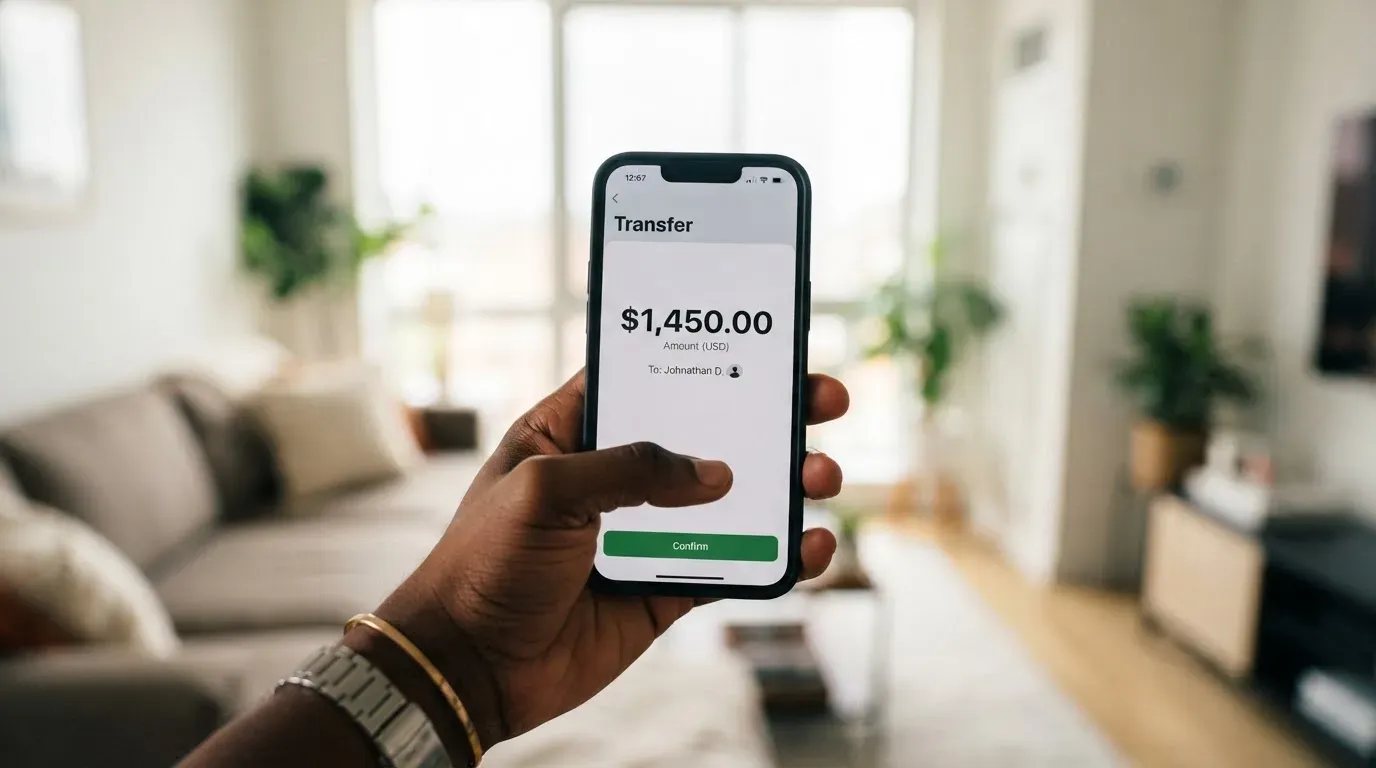
You can fund it with “any crypto”. BTC, ETH, LTC, USDT and USDC are named; the site shows seven networks as logos, which appear to include BNB Chain, Ethereum, Sui, Tron, Base and Solana (one is unlabelled), and you can swap inside the app. Crypto deposited is converted during payment “for no extra fee”, and the site advertises “0% mark-ups on USDT, USDC, EURC”. Terms add a 1% order fee on exchange orders and per-period volume limits that depend on payment method and verification level.
That “any crypto, many networks” flexibility is why this card scored 9 out of 10 on top-up options in my assessment — you are not locked into one coin or one chain.
A few cautions on funding:
- Minimum top-up: the only figure floating around is the $10 / EUR 10 activation balance (see the costs table). The card’s own pages don’t state a minimum top-up, who pays the on-chain network fee, or any bank-transfer/card top-up fees — those are not stated. Unofficial sources say no top-up fee is published and on-chain gas may apply.
- Sending on the wrong network is costly. Blockchain transfers are irreversible. A deposit sent on a network the provider doesn’t support, or to an address belonging to another network, can be lost or need manual support recovery with no guarantee. Note that Circle stopped supporting USDC on Tron in February 2024, so “USDC over TRC20” is not a native option even though Tron is a supported deposit network — a good reminder that “supported network” and “supported token on that network” aren’t the same thing.
- Network fees are the chain’s, not Kolo’s. On-chain gas or bandwidth for your deposit is charged by the blockchain. And Tron prices fees via bandwidth/energy, often burning TRX; ERC-20 gas is paid only in ETH, so a wallet with USDT but no ETH can’t send on Ethereum.
Getting money back out
You can send crypto to Revolut, Wise, N26 or any SEPA bank account, with no fees or limits published. Since 1 July 2026 the wallet is non-custodial: your funds are secured by MPC key shares, you hold one share required for every transaction and Kolo holds another and may decline to co-sign for legal or risk reasons. The terms say Kolo cannot unilaterally transfer, seize or recall your assets, and your recovery of your own key share and assets is preserved even on suspension or closure — though you stay liable for amounts owed before closure. Withdrawal-fee figures are not stated.
That design is a genuine improvement over purely custodial cards, where a provider holds your keys and you must trust them completely. The trade-off is that you bear sole responsibility for key loss and phishing.
Paying with it every day
Day-to-day, the card is functional through the phone wallets. Apple Pay and Google Pay are both supported and the card runs through them; that also means each payment uses a one-time dynamic code stored on your device rather than the raw card number, which is a genuine security benefit over a physical card.
The app is available on iOS, Android and as a Telegram Mini App, downloaded via get.kolo.xyz. Store ratings and review counts were not readable at the time I checked. Support reaches you by email at [email protected] and via a Telegram channel and Mini App at t.me/kolo.
Cashback. There’s a single, voluntary, discretionary cashback programme, paid in digital assets. The site figures: 2% BTC for the first 30 days then 1%, capped at $2 then $1 per purchase and $100/month. Important: the terms say it can be changed or ended at any time without notice, and if a transaction is disputed or charged back, related cashback is cancelled or deducted.
Limits. Volume limits per period vary by payment method and verification level, are only visible after you log in, and can be raised on request. No numbers are published — so I can’t tell you your daily or monthly ceiling in advance.
Disputes and refunds. If a card transaction is disputed or charged back, Kolo may pursue the losses from you with your bank, including the acquirer and card-scheme administrative fees and the value of the assets. Orders for digital assets themselves are final, non-cancellable and non-refundable. There’s a 14-calendar-day right of withdrawal from the agreement after account acceptance (email [email protected]). The card-payment dispute process and time frames are not stated. One practical protection to know: because this behaves like a prepaid card, and prepaid-card chargeback coverage varies by jurisdiction, don’t assume the same reversal rights as a credit card.
What can go wrong
Reliability is this card’s weak point, and it’s the one I’d weigh heaviest.
User reviews are consistently mixed. A Trustpilot reading of 3.7/5 from 54 reviews (16 in the last 12 months) shows 79% five-star and 17% one-star, and Kolo does not reply to negative reviews. A separate summarised figure was 3.9/5 from 52 reviews. Recurring themes: withdrawals blocked or not completed with support silent (late 2025 and several points in 2026); accounts or wallets closed without explanation (early-to-mid 2026, including one report from Zimbabwe); verification problems (repeated issues; an Indonesian ID reportedly not accepted); a card that wouldn’t add to a phone wallet. Positives: fast Telegram support. Some reviewers allege fake positive reviews — unverified, but worth holding loosely.
The company behind the card has changed three times in a year. Since 1 July 2026 all services are provided by Hardline Holding Limited (Kazakhstan, company number 221240900259); before that by BURVIX SP. Z O.O. (January–June 2026), and earlier still Cryppo UAB (to 2025). Card Services are in collaboration with Signify Holdings Inc (Rain cards); the actual issuer/BIN sponsor and its licences are not named. The site claims MiCA compliance and 10 million users, both self-reported, and licences or fines are not stated. Each operator change is a chance for your account terms, limits and support to shift under you.
Verification can be slow or fail. Extra documents for higher limits, Enhanced Due Diligence, fraud-triggered checks — and reports of weeks-long verification and rejected ID documents. This is normal for KYC generally, but combined with the review themes it’s a practical risk if you depend on the card.
Programmes like this can close. Card programmes terminate: Visa ended its global agreements with FTX in November 2022, and WaveCrest’s Visa programmes were suspended in Europe in 2018. A closure typically means a notice period, then spending and loading stop, then you’re asked to withdraw remaining balances. I’d keep only a working float on the card, not long-term funds.
A note on the non-custodial model. Since July 2026 Kolo says your funds sit in a wallet secured by MPC key shares and that Kolo cannot unilaterally seize or recall them. That’s a real protection. But it also means if you lose your key share, or if Kolo declines to co-sign for “legal/risk reasons” and you can’t complete a recovery, your access isn’t guaranteed by anything but the recovery process the terms mention. Nobody can promise safety or anonymity here — treat the non-custody as a reduction in one risk, not an elimination of risk.
Also worth knowing about the category. Because the card number’s BIN identifies a foreign issuer, some merchants decline prepaid or foreign-issued cards, and the card’s country may look “foreign” to a shop. Declined authorisations can leave a hold on your balance for several days. And in the US the IRS treats digital assets as property, so exchanging them for goods or services generally produces a taxable gain or loss measured in local currency on the transaction date — meaning each card payment funded from crypto can be its own taxable disposal. That’s not tax advice, just a heads-up that spending the balance isn’t spending “for free” from a tax standpoint.
What to take instead
If Kolo’s gaps — no physical card, thin published costs, mixed reliability on withdrawals — bother you, these are the alternatives I compared it against. Scores are mine, not the providers’.
| Kolo | MetaMask Card | KAST | Zeal | |
|---|---|---|---|---|
| Score | 6.4 | 7.1 | 6.1 | 6.1 |
| Funding | Any crypto, many networks | Spends from connected wallet; Linea, Base, Monad, Solana | Stablecoins (USDT, USDC, PYUSD, RLUSD) | Card Safe balances, EUR/USD/GBP (Gnosis Pay chains) |
| Card form | Virtual (physical advertised, undated) | Virtual instantly; metal $199/year | Virtual + physical, up to 10 cards | Virtual; physical not stated |
| Issuance / annual | Free virtual / $0 (unofficial) | Free virtual / metal $199/yr | $0–$10,000/yr by tier | Not stated |
| Cashback | 2% BTC then 1%, caps | 1% virtual (metal 3% to $10k) | 1.5%–3% USD by tier | Up to 4% in GNO |
| Where it suits you | Broad crypto across many chains, no bank | Clean self-custody, transparent fees | Physical card, generous tiered cashback | Simple FX at Visa rate |
MetaMask Card scored highest at 7.1. If self-custody and clearer fees matter to you, it’s the cleaner choice: virtual card free with no annual or maintenance fee, no foreign transaction fee, “minimal fee for each transaction” (amount shown in the app), Mastercard rate, cashback 1% virtual or 3% on metal up to $10,000 spent. Sign-ups are open in 45 listed countries with a waitlist elsewhere (US/UK temporarily closed), proof of residency required.
KAST (6.1) is the pick if you want a physical card and real cashback: Visa Platinum, Infinite metal, or Infinite gold tiers, up to 10 cards, USD stablecoin balance converted 1:1 at 0% spread, 1.5%–3% cashback and tier points. It’s residence-gated with an unpublished country list and stricter ID rules — and its membership runs from free to $1,000 to $10,000 a year.
Zeal (6.1) is simplest: Visa, virtual card addable to Apple Pay, EUR/USD/GBP, and — its real pitch — no added FX fee, conversion at Visa’s wholesale rate.
Against these, Kolo’s edge is funding breadth (“any crypto”, many networks) and the score it earns there is the highest of the four. Its weakness is everything downstream: reliability, an unnamed issuer, and costs you have to take on trust.
Who I would recommend it to
I’d point Kolo at a specific person: someone already holding stablecoins or a few coins they intend to spend, on a supported network, who wants to convert and pay without a traditional bank account and is comfortable treating the card as a spending tool rather than a store of value. It also makes sense for people who travel or live across the “60+ countries” where the card is said to work and want one funding source for several currencies’ worth of daily spending.
I’d steer away from it if: you need a physical card today, you can’t stomach a provider that has changed operator three times in a year with mixed reports about withdrawals, or you want a published all-in cost up front — because for card-payment and FX fees, you won’t find official numbers, only conflicting third-party ones. If ATM access is essential, note the virtual card reportedly doesn’t offer it.
My honest summary: strong at getting crypto onto a card, mediocre at the everyday details you’d want a card for, and light on published transparency where transparency matters most. That combination is why it lands at 6.4 rather than higher — and it’s exactly the profile of a card many people will still find useful, as long as they know what they’re getting.
Frequently asked questions
What is the Kolo card?
The Kolo card is a virtual payment card funded with cryptocurrency. You deposit coins or stablecoins, the balance is converted as you spend, and you pay wherever Apple Pay, Google Pay, or a Visa/Mastercard terminal is accepted. A physical card is advertised but has no public ordering schedule, so treat it as a phone-wallet card for now.
How does the Kolo card work?
You sign up, pass identity verification through Sumsub, and load your balance with crypto across several networks — the site shows seven network logos including Tron, Solana and Base. When you pay, the card draws on that stored balance, much like a prepaid card. Deposits are converted during payment, and the site advertises no mark-up on USDT, USDC and EURC, though some unofficial sources report a 1% conversion fee even on stablecoin-funded payments.
Is Kolo a bank?
No. Kolo is a crypto card provider, not a bank. Since 1 July 2026 its services are provided by Hardline Holding Limited in Kazakhstan, and the card services are delivered with Signify Holdings Inc (Rain cards). The actual card issuer and its banking licences are not named on the pages I could reach, so don’t treat the card as bank-insured.
Who owns Kolo?
Ownership has shifted repeatedly: Cryppo UAB (to 2025), then BURVIX SP. Z O.O. (January–June 2026), then Hardline Holding Limited from 1 July 2026. The site claims MiCA compliance and 10 million users, both self-reported; specific licences and any fines are not stated.
Is Kolo available in my country?
Eligibility follows your country and residence. The service is offered in “170+” countries and the card works in “60+”, but the official terms exclude anyone in, from, or resident of Cuba, Iran, North Korea, Sudan, Syria, or any other sanctioned country or listed sanctioned person. The exact country list is at kolo.xyz/countries; if you’re unsure, check there before applying.
Does Kolo require KYC?
Yes — full identity verification through Sumsub (about a minute) plus two-factor authentication. Higher limits may require Enhanced Due Diligence with extra documents, and fraud suspicion can trigger additional checks. Proof of address isn’t stated for basic signup, though one unofficial source says an EUR card may require it.
How do I top up the Kolo card?
You can fund it with “any crypto” — BTC, ETH, LTC, USDT, USDC are named — across seven networks shown on the site, with a swap available in the app. The minimum is often cited by users as an unofficial $10 / EUR 10 activation balance. Critically, always send on a network the card supports and to a matching address: blockchain transfers are irreversible and a wrong-network deposit can be lost.
Is the Kolo card free?
Virtual issuance and the monthly fee are reported as free and $0 respectively by unofficial sources, but Kolo’s own pages don’t publish these figures. The clearly stated cost is a 1% fee on exchange orders plus network costs. Card-payment, FX and ATM fees are not officially stated, so “free” really means “free to hold,” not free to spend.
Can I use Kolo at an ATM?
Reportedly not on the virtual card — the ATM feature is said to be planned for the physical card. Where it is offered, unofficial figures put it at $1 plus 0.65% per withdrawal, up to $500 per withdrawal and 3 per rolling 24 hours. Since the card is virtual-only in practice, treat cash withdrawal as unavailable for now.
Is Kolo card safe?
It carries the same risks as any crypto card. It uses 2FA, Sumsub KYC, real-time fraud checks, and since July 2026 a non-custodial MPC wallet so Kolo says it cannot unilaterally seize your assets. But user reviews report blocked withdrawals and closed accounts, the operator has changed three times in a year, and the issuer is unnamed. Keep only a spending float on it, and don’t rely on it as your only store of value.
Wallet cards – cryptocardbasics
Content created by the «cryptocardbasics» team