
Oobit card review — a Visa that spends straight from your own crypto wallet
 Available in US
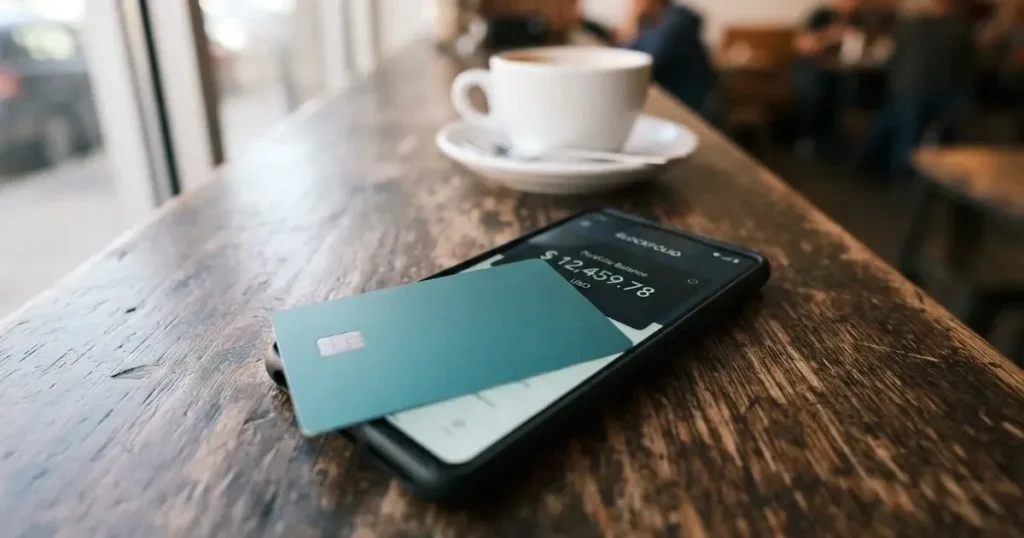
The Oobit card is a Visa you load from a connected self-custody wallet rather than from a balance you have pre-funded inside the app. That single design choice is what makes it interesting and what most of the trade-offs in this review come back to. The card itself is virtual, sits in Apple Pay or Google Wallet from the moment you activate it, and the brand talks about being available in 75+ countries, with rewards in stablecoins or its own OOB token on top.
Conditions are current as of October 28, 2026.
If you already keep your crypto in MetaMask, Phantom, Trust Wallet or on Base, the idea of paying for a coffee without first selling and then transferring is appealing. The rest of this review walks through who Oobit will actually issue the card to, what the everyday fees look like, what happens when you top up, and where the experience is still rough around the edges. Conditions are current as of 2026-10-20.
Verdict
Oobit scores 6.8 out of 10 in this review. The strengths are real: a free virtual Visa, no monthly fee, support for Apple Pay and Google Wallet, and a top-up path that uses your own wallet rather than asking you to trust a custodian. The weaknesses are equally real: the card issuer is not named, the help centre is thin, user reviews lean heavily on complaints about held funds and slow support, and the reward mechanics are a moving target between stablecoin cashback, OOB-token boosts and a five-level points ladder.
I would not recommend Oobit as a primary card. For someone who already lives inside MetaMask or Phantom and treats the card as a way to spend the stablecoins sitting in that wallet, the experience is competitive. For anyone who needs a reliable everyday card with predictable dispute handling, there are stronger options — covered in the alternatives section further down.
| Criterion | Score | Why |
|---|---|---|
| Who can get it | 7 / 10 | 75+ countries including the UK, much of the EU, the Americas and parts of Africa and Oceania, but the issuer is unnamed and several large markets are excluded. |
| Cost | 7 / 10 | Free to get and free to keep; a 1% purchase fee, 2.5% ATM fee and 0.95% swap fee are the real costs. |
| Top-up options | 7 / 10 | USDT, Bitcoin, Ethereum and other stablecoins from MetaMask, Phantom, Trust Wallet or Base, but the supported networks are not stated on the public pages. |
| Reliability and complaints | 5 / 10 | Trustpilot at 3.8 from 495 reviews, with recurring themes of held funds, blocked cards and slow support, balanced by a 100% reply rate from Oobit on negative reviews. |
| Everyday use | 8 / 10 | Virtual Visa, Apple Pay and Google Wallet from the start, ATM up to $250 per withdrawal. |
| Total | 6.8 / 10 | Best for self-custody users paying straight from a connected wallet, less convincing as a primary card. |
Who can get the Oobit card
Oobit states that the card is available in 75+ countries. The breakdown given by the brand is Europe 43, Asia and the Middle East 10, the Americas 17, Africa 3 and Oceania 2. On the country list itself, the United Kingdom, Germany and Spain are included; the United Arab Emirates, Turkey, Georgia, Serbia, Kazakhstan, Kyrgyzstan and Armenia are not. Russia and Belarus are explicitly on the “Not supported in” list. In Africa, only Kenya, South Africa and Tanzania are listed, which is a thin footprint for a continent where crypto cards would otherwise be useful.
The eligibility rules are mostly tied to residence, but the underlying issuer is not named. The brand describes itself as “operates through multiple entities globally” and points to “licensed partners depending on your location” without saying who those partners are. In the US, Oobit says it runs crypto services “in partnership with Bakkt Financial Solutions I, LLC”, but that is the crypto side, not the card-issuing bank. Not knowing which bank stands behind the card is a real gap if you care about who holds the money between a swipe and a settlement.
For age and identity, the Oobit sign-up flow asks for a passport or a driver’s licence and, sometimes, a proof of address. A first bank transfer also needs a one-time proof of address before any payout goes through. Most accounts are verified in minutes, with some taking up to 24 hours. The rejection reasons that come up in the help centre are expired documents, unclear scans and information that does not match the ID. When that happens, you can resubmit inside the app.
Citizenship and country of birth are part of the picture even when you live in a supported country. Sanctions screening and issuer risk policy are typically applied to citizenship as well as residence, which is one of the reasons some accounts get through KYC in a supported country and others do not. If you are a dual national, the ID you present is what counts.
The honest summary is that Oobit covers a useful slice of the world, but it is not a card for everyone, and the lack of a named issuer means you are placing a degree of trust in the brand.
How to sign up
The path is the standard crypto-card flow: download the iOS or Android app, create an account, complete identity verification, then request the card inside the app. The card itself is a Visa Platinum issued in virtual form. It starts as Pending, becomes Active once verification is done, and can be added to Apple Pay, Google Wallet or a supported smartwatch straight away. A card that goes unused for 90 days is cancelled, after which a new one can be requested.
Verification is mandatory and uses the same documents the brand describes for eligibility. The pages do not state whether a physical card is offered alongside the virtual one, and the costs for delivery, replacement or a physical upgrade are not stated either. If you need a card you can hand to a waiter rather than tap on a terminal, this is something to confirm with support before relying on Oobit.
What I would do at this stage is have a clear passport scan, a recent proof of address (a utility bill or bank statement is usually fine) and a stable internet connection. Rejections are mostly about document quality, not about the person behind the screen.
What the Oobit card really costs
The headline numbers are friendly: no issuance fee, no monthly fee and no maintenance fee. The brand’s own site says the card is free to get. The cost of using it lives in the per-transaction fees, the FX treatment and the way the network you top up from is charged.
The fee schedule that matters in practice looks like this:
| Fee or limit | Value |
|---|---|
| Card issuance | Free |
| Monthly maintenance | Free |
| Card purchase (point of sale) | 1% (minimum $0.25) |
| ATM withdrawal | 2.5% (minimum $0.25) plus any ATM operator fee |
| Crypto-to-crypto swap | 0.95% (3% if paid in OOB) |
| FX / non-USD spend | Visa rate; no separate FX fee stated on the official pages |
| Card purchase limit | $1 to $2,000 per purchase |
| Rolling 24-hour purchase cap | Up to $25,000 (FAQ says up to $10,000 per day; the two official pages differ) |
| ATM withdrawal | Up to $250 per withdrawal, 3 attempts per 24 hours |
| Swap range | $5 to $10,000 |
The two numbers worth carrying in your head are 1% for spending and 0.95% for swapping. If you swap inside the Oobit app to the right token and then spend, you are paying both fees, which can quietly reach 2% on a small coffee. The most efficient path is to hold a stablecoin in a connected wallet and let the card pull it directly, which the DePay integration is built for.
Three everyday scenarios show how the costs stack up:
- A $5 coffee in a country where the local currency is your card currency. You pay the 1% purchase fee ($0.25 minimum) and that is it. The card settles in local currency, so no FX fee on top.
- A €40 dinner in a non-USD country. The 1% purchase fee applies. Visa converts at the wholesale rate and there is no separate FX fee on the official pages, although one Trustpilot reviewer in August 2026 reported a non-USD cost closer to 7%, which Oobit has not confirmed.
- A $100 ATM withdrawal, of which the ATM operator takes $3. Oobit takes 2.5% ($2.50) on top of the $0.25 minimum and you pay the $3. That is $5.50 to walk away with $94.50.
In Brazil, Oobit describes the structure as 1% without a minimum plus local IOF and FX charges, and a local and an international card can coexist. None of this is unusually high for a crypto card, but the lack of a transparent published fee schedule means the only way to know what you will actually pay is to test with a small amount.
The rewards side is also worth a paragraph. There is one card tier, not three. Reward levels are tied to cumulative spend over a 90-day cycle: Level 1 starts at 0 USD and pays 1x points, Level 2 at 250 USD pays 2x, Level 3 at 500 USD pays 3x, Level 4 at 1,000 USD pays 4x, Level 5 at 1,500 USD pays 5x. 1,000 points equal $1. On top of that, eligible payments earn 5% in stablecoin cashback (capped at $200 of spend) or 10% if paid in OOB tokens (capped at $5,000 of spend). The cashback asset and the exact caps are not stated on the public pages, so treat the headline rate as a ceiling.
How to top up the Oobit card
Top-up is the part of Oobit that is genuinely different from most of the alternatives, and the section heading has Top up in it on purpose. The card does not need preloading in the way a traditional prepaid card does. You connect a self-custody wallet and the card pulls funds from there at the moment of payment, or you keep a balance inside the Oobit account and let the card spend from that.
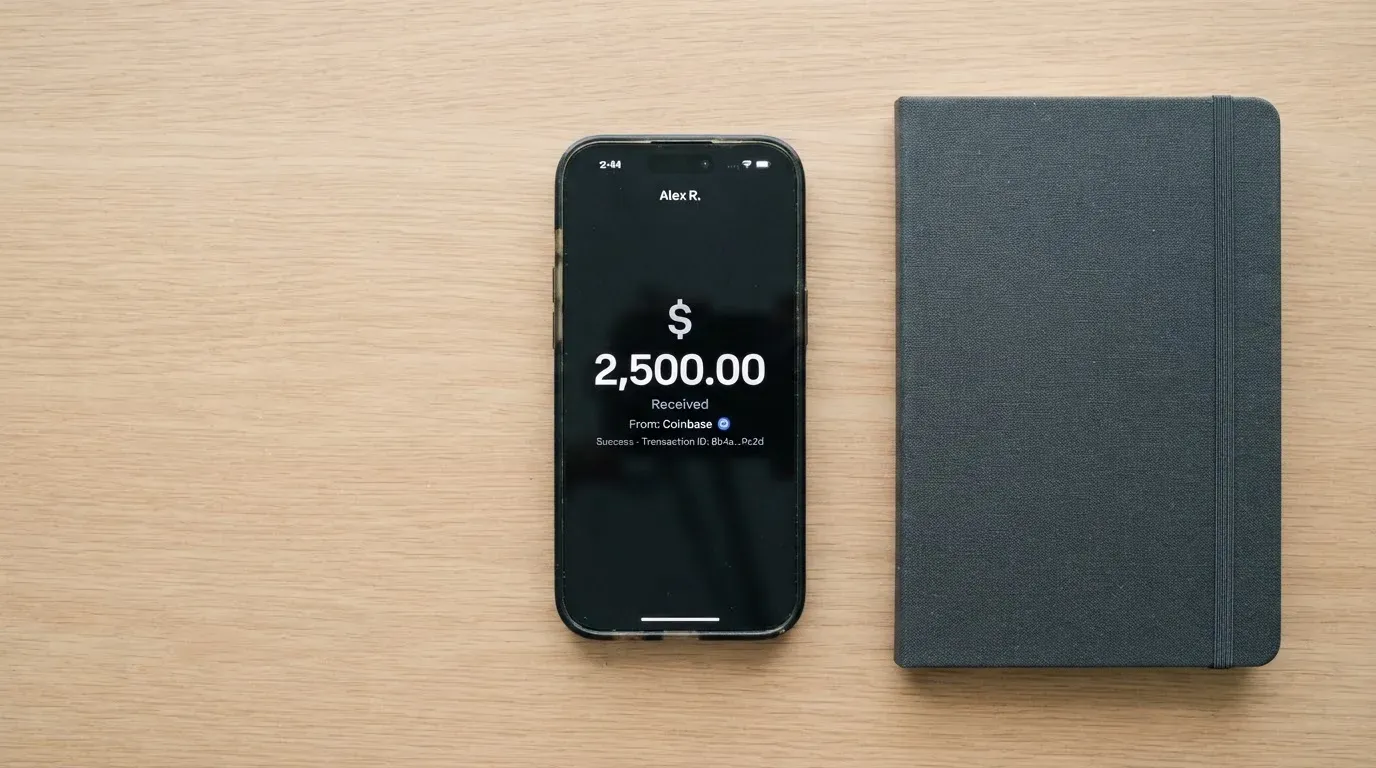
The wallets Oobit names for the direct-payment flow are MetaMask, Phantom, Trust Wallet and Base. The supported assets include USDT, Bitcoin, Ethereum and other stablecoins, but the brand does not publish a list of which blockchain networks it accepts on the pages I read. That matters because sending USDT on the wrong network is one of the most common ways to lose money in crypto: Circle stopped supporting USDC on Tron in February 2024, USDT exists on Ethereum, Tron, Solana, Polygon and Avalanche among others, and Oobit’s silence on the supported chains means a wrong-network deposit is a real risk.
The other top-up path is a direct crypto deposit into the Oobit account. The minimum is $0.10 worth of crypto. You can also buy crypto through Transak, whose limits are shown at checkout. To withdraw, you send to an external wallet between $1 and $50,000 per withdrawal (the US minimum is $5) and you pay a network fee that is shown before you confirm. Bank transfers are also supported, with a minimum of €10 / £10 / $10 and a per-transfer cap of $50,000, but the bank-transfer fee is not stated on the public pages. A failed bank transfer is automatically refunded to your in-app balance.
A few practical points worth keeping in mind:
- The card spends directly from the connected wallet, not from a pre-funded balance, which is what makes the “no preloading” claim true. If your wallet is empty, the payment is declined.
- Swaps inside the app cost 0.95% (3% if the reward asset is OOB), so converting a non-stablecoin like ETH into a stablecoin before paying is a real cost.
- The fiat top-up fee is not stated, which is one of the small things I would want answered by support before treating Oobit as a serious spending account.
- Account deletion is done in the app or via Support. The brand does not state what happens to the balance on closure, which is worth confirming before you keep meaningful funds on the platform.
Paying with Oobit every day
In daily use, the Oobit card behaves like a regular contactless Visa. The virtual card lives in Apple Pay and Google Wallet from the moment it is active, so most of the time you will be tapping a phone or a watch rather than handing over plastic. The brand supports tokenised mobile wallets, and the card can be locked in the app if it goes missing.
The apps are iOS and Android, and the Oobit site shows App Store ratings of 4.8 from over 22,000 ratings and Google Play ratings of 4.7–4.8 from over 25,000 ratings. The App Store US listing itself showed 4.5 from 134 ratings and required iOS 15.4 or later, iPhone only, when I looked on 20 October 2026. The takeaway is that the app is well rated, but the much larger headline numbers come from a broader listing than the US one.
What the help centre does not describe is a formal card dispute process. For declined payments, the standard advice is to check the in-app notification and retry. A subtle but important warning: if a merchant charges you more than the amount first approved, you can end up with a negative balance and a paused card, which is the kind of thing that would only surface after the fact.
Spending categories that the card blocks are not stated publicly. Many issuers block MCC 7995 (gambling) and a few other categories by policy, and the blocked list varies by issuer. If you are planning to use Oobit for a specific type of purchase, this is another thing worth confirming before relying on it.
A few points the brand does not spell out that bit me when I went through the documentation:
- The exact blocked merchant categories are not published.
- The dispute and chargeback path is not described in the help centre.
- Holds on declined authorisations can stay on the balance for several days, which is normal card-network behaviour but worth knowing if you are spending tight balances.
What can go wrong with Oobit
The reliability section is the part of any crypto card review where you have to be most honest about what you are not sure of. The brand’s help centre does not list any official incidents, and the page figures I read were inconsistent: 175 million merchants in one place, 150 million in another. Without a public incident list, the cleanest signal is the user reviews.
Oobit’s Trustpilot page is at 3.8 out of 5 from 495 reviews as of 20 October 2026, with no recent history of asking for reviews, which makes the number more credible. The recurring themes in the one-star reviews are:
- Held or missing funds (July to September 2026), including a deposit from another wallet that never arrived and a refund from Amazon that did not clear.
- Card suspension or account block (July and September 2026) with little explanation.
- Unresponsive support (July to October 2026), sometimes for weeks.
- Opaque fees (August 2026), especially when converting USDC or EURC into euros and on withdrawals.
- Delays on USDC-to-BTC conversions in March 2025, and an LTC transaction in February 2025 that took more than two hours, which Oobit attributed to network conditions.
Oobit replies to 100% of negative reviews, often with a template that asks the reviewer to email support. That is a good sign in terms of visibility, but it is not the same as a published dispute process or a clear path to resolution. There are no Reddit threads about Oobit, which is itself a data point: a card with this footprint would normally have a louder social footprint if the experience were uniformly good.
On the regulatory side, Russia and Belarus are on the “Not supported in” list. In December 2025, Oobit announced a US launch via Bakkt covering all 50 states. In November 2025, the brand announced an expansion to South Africa. I did not find any 2026 licence news, which means the regulatory framing is mostly the older “licensed partners” wording.
The security story has two parts. The non-custodial option, where the crypto sits in your own wallet until the moment you authorise a payment, is genuinely safer than a card that asks you to park funds on a platform. The built-in wallet option, where the balance lives inside the Oobit app, behaves like a custodial product and carries the usual counterparty and hack risk. The brand mentions “bank-grade encryption” and real-time blockchain monitoring, but two-factor authentication, insurance and safeguarding of customer funds are not stated. The card can be locked in the app, which is a useful safety net if the phone is lost.
What to take instead of the Oobit card
If Oobit does not quite fit, three alternatives cover most of the same ground with different trade-offs. The scores below are from the same scale used in this review.
MetaMask Card (7.1 / 10)
The MetaMask Card is a Mastercard with a virtual card issued first and a Metal upgrade available after approval. Sign-up is open in 45 listed countries and territories, including Argentina, Brazil, Canada, Mexico, Germany, France, Spain and Uruguay, with other regions on a waitlist. US and UK sign-ups are temporarily closed per the FAQ. Proof of residency is required, citizenship is not stated. The card is issued by Monovate and powered by Crypto Life. It spends directly from a connected wallet, with named networks Linea, Base, Monad and Solana and named tokens including mUSD, wETH, EURe, GBPe, USDC and USDT (nine in total). Virtual is free, Metal is $199 a year. The fee line is intentionally vague: “minimal fee for each transaction” with a link to the full fee table, and “no additional MetaMask fees”, with no separate foreign transaction fee. Cashback is paid in mUSD into a Money Account: 1% on Virtual, headline 3% on Metal (the footnote limits 3% to the first $10,000 spent, then drops to 1%). MetaMask Card is the closest analogue to Oobit in spirit, and stronger on the regulatory and rewards clarity.
KAST (6.1 / 10)
KAST is a Visa with up to 10 cards per user, including Standard (Platinum), Premium (Infinite metal) and Private (Infinite gold plated), plus themed designs. Sign-up is residence-based, with the country list shown at KYC rather than published, and a strict “your country is not listed means KAST is not available there” rule. Annual membership is 0 USD for Standard, 1,000 USD for Premium, 10,000 USD for Private, billed annually. Card spend in USD is 0%, the transaction fee is 0%, and non-USD FX is 0.5%–1.75% depending on residence, transaction country and card programme. Stablecoin top-up is 0%. Rewards are paid in USD: 1.5% on the first 2,000 USD a month for Standard, 2% on the first 10,000 USD a month for Premium, 3% on the first 40,000 USD a month for Private, with extra KAST Points for the higher tiers. KAST is the right card if you are happy paying for a tier and want a transparent fee schedule and predictable USD cashback.
Zeal (6.1 / 10)
Zeal is a Visa that spends from balances in a card Safe denominated in EUR, USD or GBP, with no published fee schedule and no additional FX fee (conversion at the Visa wholesale rate, with the underlying Gnosis Pay ATM fees still applying). Spend is supported in 150+ countries, with the card programme live in the EU, the UK, Brazil, Colombia, Mexico, Japan, Singapore, the Philippines, Indonesia and Thailand. Cashback is paid in GNO on Gnosis Chain at up to 4%, with the GNO sitting in the card Safe to qualify. Zeal is the pick if you live inside the Gnosis ecosystem and want a card whose stablecoin balances live on a more decentralised stack.
| Card | Network | Issuance | Reward | Notable |
|---|---|---|---|---|
| Oobit | Visa | Free | 5% stablecoin / 10% OOB cashback on eligible spend | Self-custody-first, weak help centre |
| MetaMask Card | Mastercard | Virtual free, Metal $199/year | 1% Virtual, 3% Metal (capped) in mUSD | Stronger regulatory framing, closed in US/UK |
| KAST | Visa | 0–10,000 USD/year | 1.5%–3% USD | Transparent fee schedule, paid tiers |
| Zeal | Visa | Not stated | Up to 4% in GNO | Gnosis-native balances, no published fee schedule |
Who I would recommend the Oobit card to
My honest recommendation is that Oobit is a good fit for a fairly narrow reader. If you are the kind of person who already keeps your crypto in MetaMask, Phantom or Trust Wallet, treats self-custody as a non-negotiable, and would rather not park funds on a custodial platform just to spend them, Oobit’s DePay-style direct-from-wallet flow is genuinely useful. The 1% purchase fee, 0.95% swap and 2.5% ATM fee are competitive with the rest of the crypto-card market, and the no-issuance / no-monthly-fee structure is friendly for occasional use.
Oobit is a poor fit if you want a primary everyday card with predictable dispute handling, if you need a physical card to hand over at restaurants, if you live in one of the unsupported countries (most of the Middle East, much of Central Asia, the bulk of Africa) or if you want a clearly named issuer behind the program. The Trustpilot themes of held funds, blocked cards and slow support are the reason the reliability score sits at 5, and the unnamed issuer is the reason the “Who can get it” score is a 7 rather than higher.
If any of those constraints apply, the MetaMask Card is the closest alternative and a little more transparent, KAST is the right pick if you want a published fee schedule and a paid tier that comes with real USD cashback, and Zeal is the right pick if you are already inside the Gnosis ecosystem. Oobit is worth a try with small amounts first, exactly because the top-up flow is reversible in a way the dispute flow is not.
Frequently asked questions
What is the Oobit card?
The Oobit card is a virtual Visa Platinum issued through the Oobit mobile app. It is designed to spend from a connected self-custody wallet (MetaMask, Phantom, Trust Wallet or Base) or from an in-app balance, rather than asking you to pre-load a fiat balance. It supports Apple Pay and Google Wallet from activation.
How does the Oobit card work?
When you pay, Oobit either pulls the equivalent amount from your connected wallet at the moment of authorisation, or deducts it from your in-app balance if you have one. The transaction runs over the Visa network and settles in the local currency of the merchant. Crypto-to-crypto swaps inside the app cost 0.95% (3% when paid in OOB tokens).
Is Oobit a bank?
No. Oobit Technologies describes itself as operating through multiple entities globally and points to “licensed partners depending on your location” for the card programme. In the US, Oobit’s crypto services run “in partnership with Bakkt Financial Solutions I, LLC”. The actual card-issuing bank is not named on the public pages.
Who owns Oobit?
Oobit is operated by Oobit Technologies. The company does not publish a public ownership breakdown on the pages read for this review, and the licensed partners behind the card programme vary by country.
In which countries is the Oobit card available?
Oobit says the card is available in 75+ countries, with a split of Europe 43, Asia and the Middle East 10, the Americas 17, Africa 3 (Kenya, South Africa, Tanzania) and Oceania 2. The United Arab Emirates, Turkey, Georgia, Serbia, Kazakhstan, Kyrgyzstan and Armenia are not listed. Russia and Belarus are explicitly on the “Not supported in” list.
How do I apply for the Oobit card?
You apply inside the iOS or Android app by creating an account, completing identity verification with a passport or driver’s licence (and sometimes a proof of address), and then requesting the virtual card. Most accounts are verified in minutes; some take up to 24 hours. The card goes from Pending to Active once verification is complete.
Does the Oobit card require KYC?
Yes. KYC is mandatory before the card can be issued. A first bank transfer also needs a one-time proof of address before any payout goes through. Rejections mostly come from expired, unclear or mismatched documents, and you can resubmit inside the app.
How do I top up the Oobit card?
You do not need to pre-load. The card can spend directly from a connected self-custody wallet (MetaMask, Phantom, Trust Wallet or Base) or from an in-app balance. You can also deposit supported assets such as USDT, Bitcoin, Ethereum and other stablecoins. Crypto deposits start at $0.10, swaps run from $5 to $10,000, and bank transfers require a minimum of €10 / £10 / $10. The brand does not publish a list of supported blockchain networks, which is worth confirming before sending a deposit.
How do I add the Oobit card to Apple Wallet or Google Wallet?
Once the card is Active, you add it from inside the Oobit app to Apple Pay or Google Wallet. The card is also supported on compatible smartwatches. If you do not use the card for 90 days it is cancelled, and a new virtual card can be requested from the app.
Is the Oobit card safe?
The non-custodial path, where the crypto stays in your own wallet until the moment you authorise a payment, removes the counterparty risk that comes with a custodial balance. The card can be locked in the app. The brand mentions “bank-grade encryption” and real-time blockchain monitoring, but two-factor authentication, insurance and the safeguarding of customer funds are not stated on the public pages. Treat Oobit the way you would treat any brand whose issuer is not named: keep small balances, use a unique email and password, and turn on whatever second factor the app offers.
Wallet cards – cryptocardbasics
Content created by the «cryptocardbasics» team