I checked the Littio card end to end: it is cheap, Colombian, and carries one honest warning about supervision
 Available in US
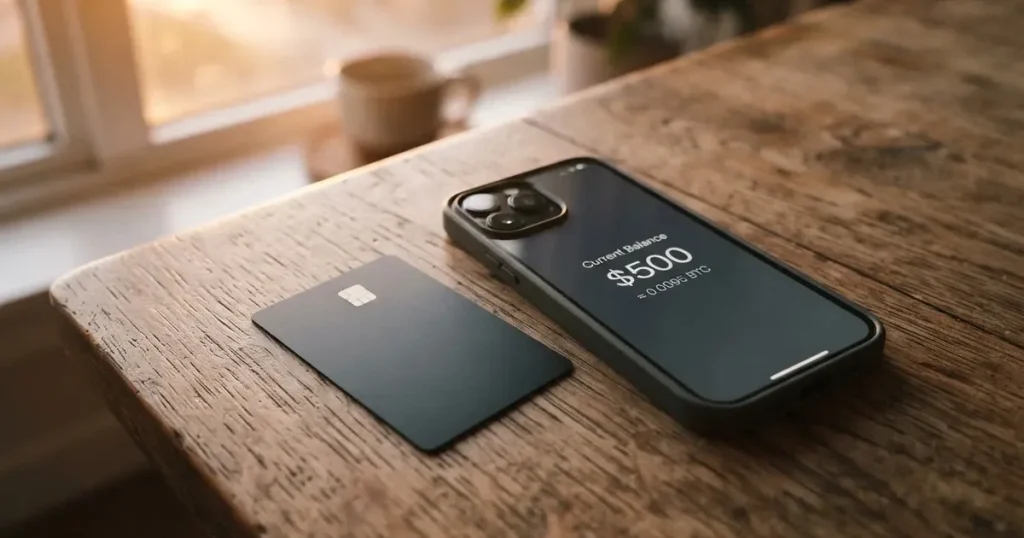
If you have been searching for an ordinary bank card and the applications keep coming back empty, the Littio card deserves a look. It is a Mastercard that spends a balance you load yourself, priced without a monthly fee, and it does not hand your money to a crypto exchange when you pay for a coffee. That last part is what makes it different from most cards in this category, and it is also the part that tells you where its limits are.
The catch is one line long and easy to skim past. Littio states on its own pages that it is not supervised by the Superintendencia Financiera de Colombia and does not provide financial services requiring authorisation. That is not a scandal, but it is a fact you should carry into every decision below. It changes what happens if something goes wrong, and it changes what protection you should expect your money to have.
The conditions described here are current as of October 28, 2026.
Verdict: 6.0 out of 10
I scored the Littio card at 6.0 out of 10. That is not a bad score. It is a card that does one thing very well — spending a loaded balance anywhere a Mastercard goes, without a monthly fee — and that does it from inside one country’s regulatory reality with a supervision gap it discloses rather than hides.
Who it suits: Colombian residents who hold or can hold a dollar balance, who want a card that costs nothing to keep, and who are comfortable that their funds sit with a company that tells you plainly it is outside the supervised banking system. Who it does not suit: anyone who needs deposit-guarantee protection, anyone who needs the card in a currency the service cannot hold, and anyone who wants a published, complete fee schedule on day one.
Here is the score broken down, criterion by criterion.
| Criterion | Mark | Why |
|---|---|---|
| Who can get it | 3 / 10 | Colombian service, topped up via PSE, Nequi, Bancolombia and Bre-B; the Mastercard works in 190+ countries but the list of issuing countries is not published |
| Cost | 8 / 10 | No annual fee, no digital card issuance fee, 0% commission when the currency matches; the physical card costs 3 USD; other currencies carry 2% plus the Mastercard rate |
| Top-up options | 6 / 10 | Top up with USDC, EURC, COPM or MXNB, or through PSE, Nequi, Botón Bancolombia and Bre-B; the networks are not named |
| Reliability and complaints | 5 / 10 | Not supervised by Superfinanciera, the issuer is not named; Trustpilot shows 4.4 out of 5 from 187 reviews, with complaints about support and verification |
| Everyday use | 9 / 10 | Digital and physical versions, Apple Pay and Google Pay, ATM withdrawals up to 500 USD |
| Total | 6.0 / 10 | A genuinely cheap card with a narrow home base and an openly acknowledged supervision gap |
The 9 in everyday use is not decoration. Littio is one of the few cards in this category where the things you actually touch every day — a phone wallet, a physical card in a foreign ATM, a purchase in four currencies — are described plainly and work as described. The 3 in eligibility is equally plain: this is a Colombian product, not a global one.
Who they will give the card to
The eligibility rules are not stated on the site. That is the honest answer, and I would rather give it to you than dress it up.
What is clear is the shape of the service. Littio is a Colombian operation. Its funding rails are Colombian: PSE, Nequi, Bancolombia’s Botón, Bre-B. That is not a formality, it is the design centre of the product. The card is built to be loaded from a Colombian bank or a Colombian wallet and then spent anywhere the Mastercard network reaches.
The card itself is a Mastercard used in Colombia and in 190+ countries. So the *card* is international. The *service* is not. Those are two different facts and people constantly collapse them into one. You can hold a Littio card in Lisbon and it will probably work at the terminal; that does not make Littio a service for people who live in Lisbon.
The list of countries the card is issued in is not disclosed. For a reader outside Colombia, the practical question is therefore not “is my country on the list” — you cannot answer that — but “does this thing serve someone like me at all”. For most non-Colombians the answer, on the evidence of the funding rails alone, is no.
Inside Colombia, the people this card is designed for are those who already use Nequi or Bre-B or a Colombian bank account and want a dollar balance they can spend without opening a second bank. If you are one of them, the remaining questions are the ones in the next three sections.
How to get it
The sign-up path runs through the app. Littio mentions a “verificación de identidad” — an identity verification step — but does not state which documents, whether proof of address is required, or what the minimum age is. The verification levels, in the sense that many platforms describe tiers of checks, are not stated either. You will be asked to verify who you are; how much proof you must show is not published.
The card is requested from inside the app once you are through. There is a one-time code by email on transactions, and two-factor one-time codes on transactions are listed among the security measures the service describes.
Two versions exist and they are not interchangeable:
- The digital version is for online use and for Apple Pay and Google Pay.
- The physical version works at point-of-sale terminals worldwide and, crucially, at Mastercard ATMs. Only the physical card supports ATM withdrawals.
This distinction matters more than it first appears. If you see “ATM” written anywhere in connection with this card, the digital version is not involved. A lot of the confusion around cards in this category comes from marketing that lists features across both versions as though they were one.
On delivery, the physical card costs 3 USD, deducted from the app balance, and a replacement for a lost physical card costs the same 3 USD. The digital card is free. Where the physical card is delivered, how long it takes, and whether shipping costs anything are not stated.
So the practical checklist: verify your identity in the app, order the version you actually need, and if you need cash machines, order the physical one and pay the 3 USD knowing the digital card will not do that job.
What it really costs: Fees
The fee picture is the strongest part of this card, and it is worth understanding properly rather than skimming, because the good news is conditional on one thing you control.
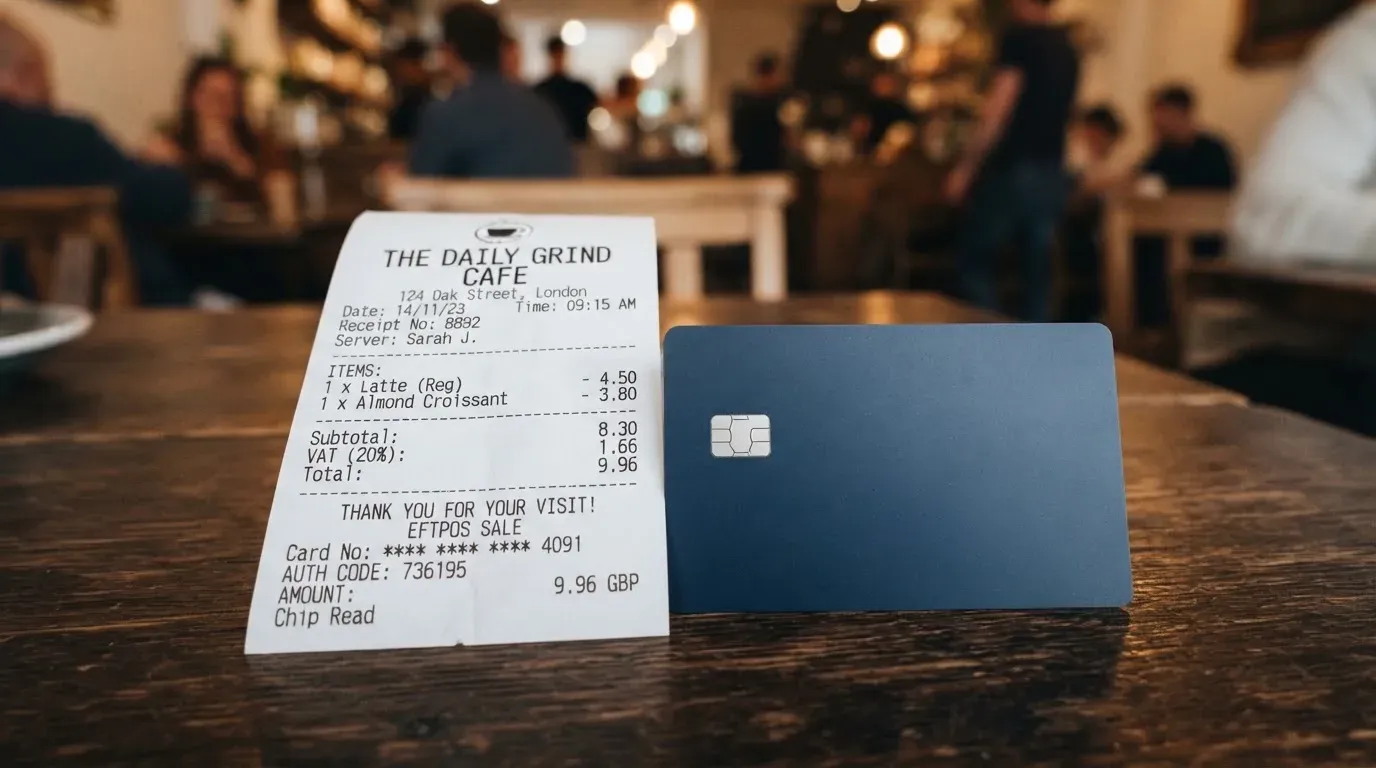
The headline is short: no annual fee, no management fee (“cuota de manejo”), and no issuance fee for the digital card. The physical card costs 3 USD. Purchases carry no commission when the currency of the card matches the currency of the purchase. That is the whole secret of the pricing, and the rest of this section is about what happens when it does not.
Littio publishes this:
| Fee or limit | What Littio states |
|---|---|
| Annual / management fee | None |
| Issuance fee, digital card | None |
| Issuance fee, physical card | 3 USD |
| Purchase commission, card currency = purchase currency | None |
| Purchase commission, other currencies | 2% plus the Mastercard exchange rate |
| 4×1000 tax | The card is exempt from it |
| ATM withdrawal in Colombia | 6,180 COP per transaction |
| ATM withdrawal abroad | Set by the ATM owner, amount not stated |
| Replacement of a lost physical card | 3 USD |
| Minimum purchase | 1 USD, or the EUR, COP or MXN equivalent |
| Maximum purchase | 3,500 USD per 24 hours, adjustable in the app |
| ATM withdrawal limit | Up to 500 USD per withdrawal |
| Card currencies | USD, EUR, COP or MXN |
Read the currency rule carefully, because it is where the cost lives. The card can be set to USD, EUR, COP or MXN, and a purchase in that same currency is deducted 1:1 with no commission. A purchase in any other currency costs you 2% plus whatever rate Mastercard applies. The card can also reach into your other currency balances if the one it is set to runs short.
That last mechanic deserves a second look. It means the currency you set is a preference, not a wall. If you set the card to USD, buy something priced in euros, and the dollar balance is thin, the card will look elsewhere — at your euro balance, your peso balance, your peso-denominated balance. In a good month that is convenient. In a month when you are watching one balance, it can surprise you. Set the card to the currency you actually think in, and keep an eye on what the app shows you before you tap.
Three everyday payments, and what each one costs:
- A 20 USD subscription paid in dollars, card set to USD. No commission. The 4×1000 tax exemption also applies, which in Colombia removes a levy that would otherwise sit on card spending. This is the case the pricing was built for.
- A 20 USD meal paid in pesos, card set to USD. 2% plus the Mastercard rate. On 20 USD the commission is 40 cents, and the rate difference depends on the day. You are paying twice: a percentage on top, and whatever the network’s rate does to the peso figure at the moment of the transaction.
- A 60 USD cash withdrawal from an ATM in Colombia. The card’s own limit is up to 500 USD per withdrawal, so 60 is fine. The ATM fee is 6,180 COP. You are now spending on two fronts — the 3,500 USD daily purchase cap does not apply here, but the ATM fee is a real, fixed, per-transaction cost that adds up faster than a percentage does if you make several small withdrawals.
One thing the fee pages do not do is publish a single all-inclusive schedule. The conversion and FX terms live in a separate fee schedule from the purchase-commission statement. Read both before you rely on a number.
How to Top up
There are two doors into the balance, and they suit different people.
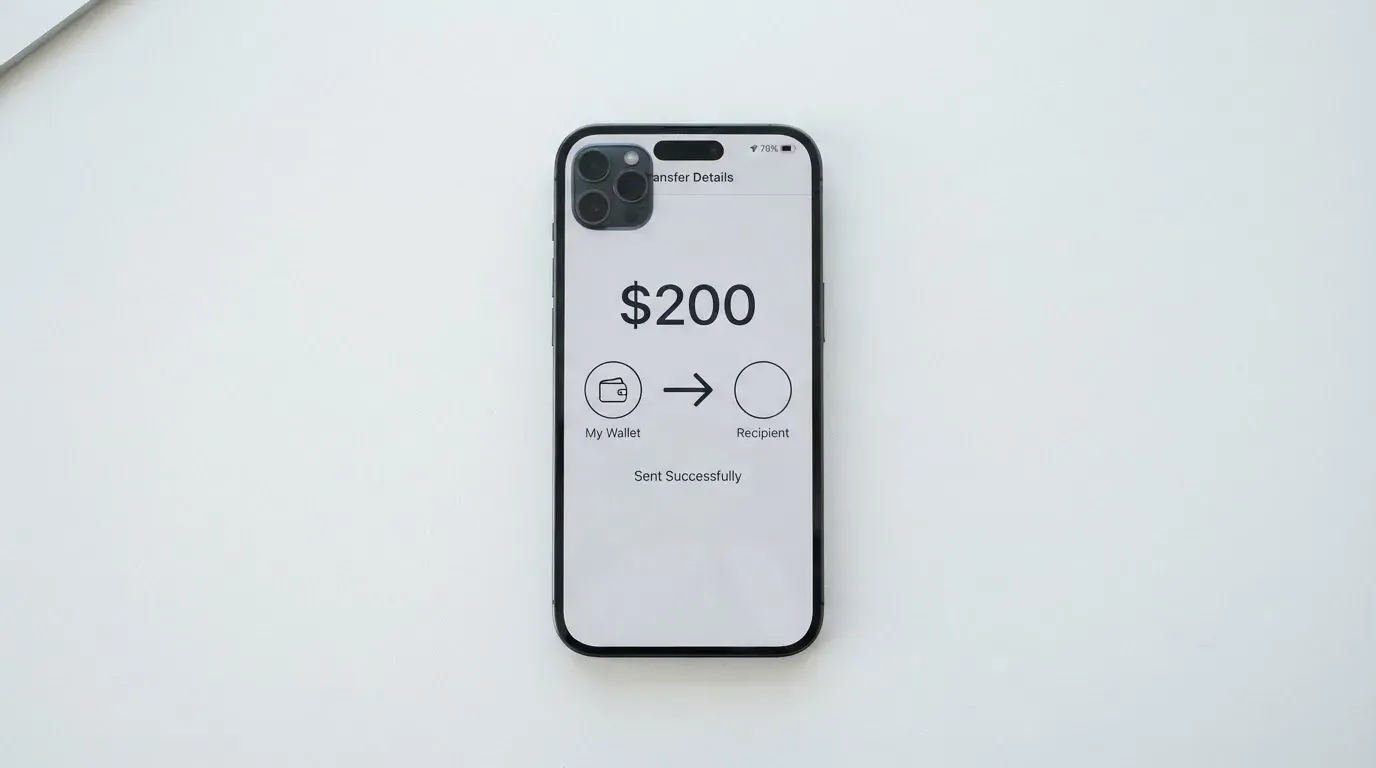
The local door: PSE, Nequi, Botón Bancolombia, or Bre-B. These are the Colombian rails, and they are how most people will load the card.
The crypto door: deposit USDC, EURC, COPM or MXNB. This is what makes Littio a crypto card in the sense people usually mean. A stablecoin arrives, and it becomes spendable balance.
The networks those stablecoins travel on are not named on the pages. This is a genuine gap, not a technicality, and I want to be precise about why. Blockchain transfers are irreversible. If you send on a network the provider does not support, or to an address belonging to a different network, the funds can be lost or need manual support recovery with no guarantee. So when you top up with USDC, the single question that matters is which network to send it on, and Littio does not publish the answer. Get it from the app at the moment of deposit, not from a forum, not from a blog, not from memory.
On fees and minimums for topping up, the pages read do not state them for the payment-method routes. What they do state: transfers to another Littio user are free, and transfers to external wallets start from 1 USDC.
One point of vocabulary, since it confuses people: COPM and MXNB are peso-denominated and Mexican-peso-denominated forms of the same stablecoin idea. The card operates in four currencies — USD, EUR, COP, MXN — and these tokens are how you arrive in the COP and MXN ones.
Getting money back out
Withdrawal fees are where a card like this quietly costs more than you expected, so here is the whole table as published:
- To a Colombian bank account: the first 2 withdrawals are 0. Above 20,000 COP is 0. Under 20,000 COP is 0.50 USD per withdrawal.
- To another Littio user: 0.
- To a USDC wallet: 1%.
- To a US bank account: 2.99 USD, on amounts from 10 to 7,000 USD.
- To a European bank account: EUR 2.99, on amounts from 10 to 7,000 EUR.
- To a Mexican bank account: 3 MXN, on amounts from 10 to 7,000 MXN.
- To third-party Colombian accounts: 2 USD.
Times for these withdrawals are not stated, and neither is what happens to your account on closure. That second silence is worth noticing. If you are deciding whether to keep meaningful balance here long-term, ask what the withdrawal route looks like on the way out before you put the money in.
Paying with it every day
The everyday experience is where Littio scores highest, and the mechanics are simple.
- Apple Pay and Google Pay both work, in stores and online. Whether any merchant categories are blocked is not stated, which means either nothing is blocked or the policy is not published. If you gamble or buy certain prepaid goods, that is worth asking about before you need it.
- No cashback on the card itself. There are rewards of up to 9.8% E.A. on balances held in Bolsillos or Bóvedas, but read that carefully: those rewards apply to balances, not to card spend. Do not add them up into a spending rate.
- There is a single card, and the digital and physical versions can be active at the same time.
- A separate paid Littio PRO programme exists with its own terms and benefits. I did not read those pages, so I am not going to characterise them. If you are considering PRO, read them yourself.
- The app has a download link on the site; the stores and platforms are not named on that page, and I could not find App Store or Google Play ratings.
- The dispute process — what happens when a charge is wrong — is not stated. No process is described on the pages I read. On a card that spends a pre-loaded balance, understanding how a bad transaction gets reversed is not a detail.
That last point deserves more than a line, so let me put it in general terms. A chargeback is a refund ordered by the card issuer to settle a dispute, with reason codes such as fraud, duplicate billing or goods not received. Consumer reversal rights differ by country: in the US, debit card rights come from Regulation E and credit card rights from Regulation Z, and prepaid-card coverage varies and should not be assumed. A card that behaves like a stored balance, rather than a bank account, is exactly the kind of product where that variation bites.
Two general mechanics are worth knowing because they explain most declines you will ever see. A merchant can look up the card’s issuer identification number — the 6 or 8 digit BIN — and see which institution and country issued the card, and may apply extra scrutiny if the issuer country differs from the billing address. Some merchants decline prepaid or foreign BINs for that reason. Separately, address verification, which compares the numeric parts of the billing address a buyer typed against issuer records, is mainly offered in the US, Canada and the UK and is generally unavailable for foreign-issued cards, which can cause declines on online purchases.
So if a Littio card declines where other cards work, the reason is often structural rather than a fault in your balance. That is a fact about how card networks see Colombian-issued cards, not about you.
What can go wrong
Here is the part of the review I would want a friend to read twice.
The supervision line. Littio states it is not supervised by the Superintendencia Financiera de Colombia and does not provide financial services requiring authorisation. The service is operated by Selenio S.A.S. (“Littio Colombia”) as a “mandatario de ejecución”. The card issuer and BIN sponsor are not named. Take all three together: you are holding a Mastercard balance with a company that has told you, in its own words, that it is not a supervised financial institution, and you cannot look up which institution actually issued the card. I found no Littio-specific Trustpilot, Reddit or news complaints — but that silence should be read for what it is, which is that the service is small, not that it is clean.
Where your money is. The service describes identity verification, encryption, two-factor one-time codes on transactions, and a blockchain record. It also lets you freeze the card, which stops recurring charges — genuinely useful if a subscription worries you — and adjust the daily spending limit in the app. What is not stated is whether customer funds are safeguarded in any way: no insurance, no segregated accounts, no deposit guarantee. In the EU, electronic money institutions must safeguard customer funds, and even then those funds are not bank deposits and may not be covered by deposit guarantee schemes. Littio does not make an equivalent statement. Do not assume one.
What users actually say. Trustpilot, read on 2026-10-20: 4.4 out of 5 from 187 reviews, of which 123 were in the last 12 months. 82% are 5-star, 14% are 1-star. The complaints I could see were: slow support, delays and unclear fees or policies, and complicated verification, reported in May 2026; too much automation, in March 2026; and one report of “thieves” with no detail, in October 2025. Read that distribution for what it is — a mostly happy user base with a real, persistent minority who found the support and verification experience frustrating. The automation complaint and the “thieves” complaint pull in opposite directions, which is what a young operation looks like from the outside.
Money moving wrongly. Blockchain transfers are irreversible. A stablecoin sent on the wrong network is gone or in recovery limbo. If you are topping up from an external wallet, that is the risk you take, and it is not a Littio-specific risk — it is how the technology works. Littio names no networks on its pages, so the responsibility for getting this right is entirely yours at the moment of sending.
The category’s own history. Card programmes in crypto do close. In November 2022 Visa said it had “terminated our global agreements with FTX”, and the FTX US debit card programme was wound down by its issuer. WaveCrest, a Visa card issuer that supplied crypto card brands, was suspended by Visa in Europe in 2018, closing all WaveCrest-issued Visa programmes. Closures typically give a notice period, then stop spending and loading, then ask users to withdraw remaining balances. Whether Littio holds assets in a structure that would survive that, and how fast a user could get money out, are not answered by anything on its public pages.
Holding keys yourself. If you self-custody, control of crypto belongs to whoever holds the private key or seed phrase — typically 12 to 24 words in an unencrypted form, and anyone who obtains it can restore the wallet and spend its funds. Transfers are typically irreversible with no built-in recovery. Custodial platforms have a record of failures: Mt. Gox (about US$350 million reported stolen, 2011–2014), Coincheck (about US$400 million, 2018) and Ronin Network (US$625 million, 2022). Littio is on the custodial side of that line, which means you are accepting counterparty and hack risk in exchange for convenience. That is a reasonable trade for a spending balance. It is not a reasonable trade for your savings.
What to take instead
I want to be useful here rather than loyal to the card I just reviewed, so here is the honest comparison. All three alternatives below are options for someone who cannot get an ordinary card, and all three have their own rough edges.
| Card | Score | Card cost | Key cost to watch | Main friction |
|---|---|---|---|---|
| Littio | 6.0 / 10 | Digital free; physical 3 USD | 2% plus Mastercard rate on cross-currency purchases | Colombian service, not supervised by Superfinanciera |
| RedotPay | 6.9 / 10 | Virtual 10.00 USD; physical 100.00 USD | 1.00% transaction fee, 1.20% in non-default currency | Long country restriction lists worded two different ways |
| Bitpanda | 6.5 / 10 | First shipment free; reissue EUR 5.90 or EUR 9.90 | Visa mark-up on non-EUR spending | Euro-area residents only |
| Wirex | 6.7 / 10 | Free in UK, EEA, APAC, SG, AU and “Other” | One-off administrative fee 30 GBP for terms violations | Availability varies by region |
RedotPay scores highest of the four. It issues virtual and physical cards, in USD and HKD. The cost is the difference: 10.00 USD for the virtual card, 100.00 USD for the physical one, not cancellable or refundable once paid, and replacements at 5.00 USD then 10.00 USD each. Transaction fee is 1.00%, waived in the default currency and 1.20% otherwise, with the first 5 small transactions and first 3 declined transactions each month waived. Account maintenance is waived. On eligibility, two official lists word the rule differently — one is by citizenship and bars anyone who is a citizen of the listed countries from completing verification or using the service; the card-issuance list, dated August 28, 2026, adds India, Indonesia, Morocco, Nepal, Singapore and Turkey as places whose residents are ineligible for both virtual and physical cards and whose addresses cannot be used as billing addresses. Russia, Belarus, Ukraine and Serbia appear on both lists; Georgia, Armenia, Kazakhstan and the UAE appear on neither. If you are in a jurisdiction that is not on a list you have read, the two-wording problem is the first thing to check.
Bitpanda is the euro-area answer. A physical Visa debit card, EUR only, one active card at a time, and it requires a verified Bitpanda account with residence in a euro-area country — users verified via “Bankident” cannot order. Account opening and monthly costs are free, the first shipment is free, reissue is EUR 5.90 (the FAQ says EUR 9.90 for lost or stolen) and each additional physical card is EUR 10. Spending draws from a chosen main and optional fallback asset — listed cryptocurrencies, precious metals or EUR — converted to EUR at payment, minimum EUR 1, with Crypto Indices excluded. Non-EUR spending carries EUR 0 as an FX fee but “VISA mark-up fees apply”. The crypto conversion fee or spread is not stated. Rewards are worded inconsistently: the body says 1% cashback on crypto spending, the summary says “up to 2%”.
Wirex is the widest reach and the least specified pricing. A virtual card and a physical card, one of each at a time, on Visa or Mastercard depending on region, with a Visa Signature metal card available. Card issuance is free in the UK, EEA, APAC, SG, AU and “Other”; the metal card carries a 45 GBP order fee on the UK page with free DHL Express, or “only 45 EUR” delivery elsewhere. The card page says “no annual or foreign exchange fees”, but the fee page does not specify an FX fee and instead points to the app, where exchange fees vary by pair and liquidity and are shown before you confirm. There is a 30 GBP one-off administrative fee for accounts violating the General Terms. Cash withdrawals “are not permitted in Singapore” under the Singapore terms, and the residence country you enter must match your ID. Cryptoback in WXT runs 0.5% Standard, 3% Premium, up to 8% Elite, with ATM withdrawals, cash advances, crypto purchases, gambling and refunds excluded.
The pattern across all four: the cheapest card to hold is not always the cheapest card to use, and the card with the widest reach is rarely the one with the clearest numbers.
Who I would recommend it to
I would recommend Littio to a Colombian resident who has a dollar balance or can easily get one, who wants to spend in Colombia and abroad without a monthly fee, and who has read the supervision line and decided — with eyes open — that they are comfortable holding a spending balance with a company outside the supervised banking system. For that person, 6.0 is arguably conservative. The pricing is genuinely good, the currency handling is well thought out, and the everyday mechanics are the best-documented of the four cards I looked at.
I would not recommend it as a first card for someone whose money depends on the protections a supervised institution provides. I would not recommend it for savings, for a large balance held over time, or for anyone who cannot get at Colombian payment rails — because without PSE, Nequi, Bancolombia or Bre-B, the easy half of this card is not available to you.
And I would hold three specific questions open before you commit, because the pages do not answer them: which networks the stablecoin deposits support, what the dispute process is when a charge is wrong, and what happens to your balance at closure. Any service that will not answer those in writing is telling you something.
Frequently asked questions
What is the Littio card?
The Littio card is a Mastercard that spends a balance you load yourself, rather than a bank account. It comes in a digital version for online payments and mobile wallets, and a physical version for terminals and Mastercard ATMs worldwide. It is run by Selenio S.A.S. as a Colombian service, and the Mastercard is accepted in Colombia and 190+ countries. It behaves more like a prepaid stored balance than a normal debit card, which shapes both its costs and its protections.
Is Littio a bank?
No, and Littio does not claim to be one. The company states plainly that it is not supervised by the Superintendencia Financiera de Colombia and does not provide financial services requiring authorisation. It operates as a “mandatario de ejecución”, and it does not name the institution that issues the card or sponsors the BIN. That is not disqualifying, but it means you should not expect deposit-guarantee protection, and you should not treat a Littio balance as bank savings.
Who can get a Littio card?
The site does not state eligibility rules, and it does not publish the list of issuing countries. What is clear is that this is a Colombian service designed to be funded through PSE, Nequi, Bancolombia’s Botón and Bre-B, plus stablecoin deposits. In practice that means Colombian residents. The card travels widely, but the service behind it is built around Colombian payment rails, and the identity verification requirements are described only as a “verificación de identidad”.
What does the Littio card cost?
There is no annual or management fee and no issuance fee for the digital card. The physical card costs 3 USD, and a replacement for a lost one costs the same. Purchases carry no commission when the card’s currency matches the purchase currency; other currencies cost 2% plus the Mastercard exchange rate. The card is also exempt from the 4×1000 tax. ATM withdrawals in Colombia cost 6,180 COP per transaction, and abroad the fee is set by the ATM owner.
How do I top up the Littio card?
You can top up through PSE, Nequi, Botón Bancolombia or Bre-B, or by depositing USDC, EURC, COPM or MXNB. Fees and minimum top-ups for the payment-method routes are not stated on the pages I read. Transfers to another Littio user are free, and transfers to external wallets start from 1 USDC. If you deposit stablecoins, check which network the app specifies at that moment, because transfers are irreversible and the pages do not name supported networks.
Can I use the Littio card abroad?
The Mastercard works in 190+ countries, and the physical card works at terminals worldwide and at Mastercard ATMs. Spending in a currency other than the one the card is set to costs 2% plus the Mastercard rate. ATM withdrawals abroad carry a fee set by the ATM owner, which is not stated. The card can also draw on your other currency balances if the set currency is short, so check the app before a large purchase in an unfamiliar currency.
Is the Littio card safe?
It has real safeguards: identity verification, encryption, two-factor one-time codes on transactions, a freeze function that stops recurring charges, and an adjustable daily spending limit in the app. What it does not state is any insurance or safeguarding of customer funds. Combine that with the fact that it is not supervised by Superfinanciera, and the fair summary is that the security features are decent and the institutional protections are absent. Keep the balance to what you can afford to have inaccessible for a while.
How do I withdraw money from the Littio card?
The first 2 withdrawals to a Colombian bank account are free, as are those above 20,000 COP; under 20,000 COP costs 0.50 USD. To another Littio user it is free, to a USDC wallet 1%, to a US bank account 2.99 USD, to a European bank account EUR 2.99, to a Mexican bank account 3 MXN, and to third-party Colombian accounts 2 USD. Withdrawal times are not stated, and neither is what happens to your balance if you close the account.
Does the Littio card have cashback or rewards?
No cashback on card spending. There are rewards of up to 9.8% E.A., but they apply to balances held in Bolsillos or Bóvedas, not to what you spend on the card. There is also a separate paid Littio PRO programme with its own terms and benefits pages, which I did not read. If you are comparing cards on rewards, do not fold the balance rate into a spending rate — they are different things.
Is the Littio card worth it?
For a Colombian resident who wants a no-fee card and can load it from local rails, yes — the pricing and the everyday mechanics are among the best in this category, and I scored everyday use at 9 out of 10. For anyone else, or for anyone who wants supervised-institution protection, no. The card’s value depends on Colombian funding rails and on tolerating an unsupervised issuer, and if either of those is not true of you, one of the alternatives will serve you better.
App and neobank cards – cryptocardbasics
Content created by the «cryptocardbasics» team