Krak card review — crypto-funded Mastercard with no monthly fee, but not for everyone
 Available in US
The Krak card is Kraken’s payment card: a Mastercard debit that draws on a Krak Everyday account and lets you spend from over 600 supported crypto assets in more than 150 million shops worldwide. The card itself is free to order, with no monthly, annual, FX or ATM fees from Krak, and up to 2% cashback if you hold enough assets on the Krak platform. On paper it looks generous; in practice the card is currently available only to residents of the UK and the EU, the “variable spread” when you spend crypto is never quoted, and a few Trustpilot and Reddit reports describe account freezes that took weeks to resolve. This review walks through who Krak actually works for, what it costs day to day, how the top-up flow looks, where it can hurt you, and which alternatives are worth a look if you live somewhere it doesn’t cover.
Conditions are current as of October 28, 2026.
The information in this article reflects Krak’s published card pages and the most recent third-party reports available as of October 2026. Card terms, country coverage and fees can change; always confirm the live version in the Krak app before you order.
Verdict: 7.1 out of 10
Krak is one of the cleaner crypto-to-payment-card products on the market if you live in the UK or the EU. The card itself is free, there are no recurring fees, and spending is genuinely cheap in plain fiat. The weaknesses sit at the edges: the geographic reach is narrow, the spread on crypto spending is opaque, and the support operation has drawn repeated complaints when accounts get restricted after a transfer. I would recommend it to people who already use Kraken and want a single Mastercard that quietly spends their balance, and I would steer people in other regions, or anyone with a thin transaction history, toward a card with a published fee table and a wider footprint.
| Criterion | Mark | Why |
|---|---|---|
| Who can get it | 5 / 10 | Residents of the UK and the EU only, with “more countries coming soon” |
| Cost | 9 / 10 | Free to order, no monthly or annual fees, no transaction, FX or ATM fees from Krak; a variable spread applies when you spend across assets |
| Top-up options | 7 / 10 | Spends from a Krak Everyday balance; spend order set in the app across 600+ assets, not all of them usable on the card; networks not published |
| Reliability and complaints | 5 / 10 | Issued by FCA-registered Monavate (UK) and Monavate UAB (Lithuania); Trustpilot score and review count vary by source, with the main theme being account restrictions after transfers |
| Everyday use | 10 / 10 | Virtual card available immediately, physical card free, optional metal card, Mastercard, Apple Pay and Google Pay, fee-free ATM withdrawals in 190+ countries |
| Total | 7.1 / 10 |
Krak suits UK and EU residents who already keep assets on the Krak platform and want a low-friction way to spend from that balance, with cashback scaling up as their average holdings grow. It does not suit people outside the current coverage area, anyone who needs a published fee schedule, or anyone who would feel exposed by a single issuer relationship that runs through both Kraken and Monavate.
Who Krak will issue the card to
Krak currently issues the card to residents of the UK and the EU. The card pages put it that way, and add a footnote that “geo restrictions apply”. A separate Krak help article uses a slightly different list and says personal accounts are also available to US residents; that wording hasn’t been reconciled on the card pages themselves, so for card purposes the working rule is UK and EU residency.
The eligibility flow is short. You open a Krak account, complete identity verification, and then order a virtual card in minutes or a physical card that is shipped free of charge. Krak does not publish a list of accepted identity documents, a minimum age beyond the standard 18+ for regulated e-money products, or a proof-of-address requirement, and the help article that covers verification levels was not part of the materials reviewed here. What Krak does state is that you need a verified Krak account and that Monavate, the card issuer, has to confirm your identity before a card can be issued. If you’re a UK or EU resident who has already been through Kraken’s existing KYC, the friction is low; if you’re new to the platform, expect the usual document upload and a wait.
Two things matter beyond the headline geography. First, residency is the gate, not citizenship, so a non-EU citizen living in Germany should be eligible in principle while an EU citizen resident in, say, Canada is not. Second, the card is a personal product; business cards are not described in the materials reviewed. Anyone whose situation doesn’t fit the standard “UK or EU resident, 18+, verified” profile will find out quickly whether they qualify, and there is no published appeal process for residents of unsupported countries.
How to get the card
The path from “no card” to “card in hand” has three steps. Open a Krak account and pass KYC; order a virtual card; decide whether you also want a physical or metal card.
Once your Krak account is verified, the virtual card is the quickest win: it is available within minutes and behaves like any other Mastercard number for online purchases and mobile wallet enrolment. The physical card comes in two colourways (orange or black) and is shipped free of charge; the materials reviewed do not give a delivery time for the plastic card, although an unofficial source puts it at around 14 business days, and the card is only delivered to UK and EEA addresses. Replacement of a physical card costs $4.99, charged by the issuer Monavate, and the metal card is a separate, heavier piece of stainless steel (16 g) that requires average combined assets of GBP/EUR 50,000 across Krak, Kraken and Kraken Pro to unlock. Cancelling a virtual card and cancelling a physical card are separate actions in the app, which is worth knowing if you want to keep the virtual number for online use while disposing of a plastic card that has expired or been lost.
The Mastercard is valid in 600+ spending currencies, the card currency is GBP for UK cards and EUR for EEA cards, and FX is passed through at the Mastercard rate with no Krak markup. The flip side of all this is that you are committing to a multi-entity stack: Krak for the app and account, Kraken’s wider exchange for the assets, and Monavate as the regulated card issuer. If any of those three has a bad day, your ability to spend is downstream of it.
Fees: what it really costs day to day
The headline is simple. Krak publishes that the card is free to order, with no monthly, annual, transaction, FX or ATM fees on your spend, and that the card works in over 190 countries. A replacement physical card is $4.99, and the only other cost Krak explicitly calls out is a “variable spread” that applies when you spend across assets rather than from a fiat balance.
That last phrase is the part to sit with. Krak’s card pages do not quote the size of the spread, and a spread is, in plain terms, the gap between the mid-market price of an asset and the price Krak uses when it converts your crypto at the moment of payment. On a busy network, on a volatile asset, on a card payment in a currency different from the one your balance is denominated in, that spread can move against you by more than any published fee would. Krak also doesn’t publish daily, weekly or monthly card-spending or ATM limits on the materials reviewed; an unofficial source gives contactless thresholds of GBP 300 in the UK and a cumulative EUR 150 in the EEA, plus caps on the number of active cards (two virtual, two physical) and a rate limit of three virtual card creations per rolling 30 days, but these figures have not been confirmed by Krak itself.
Three everyday examples bring this to life.
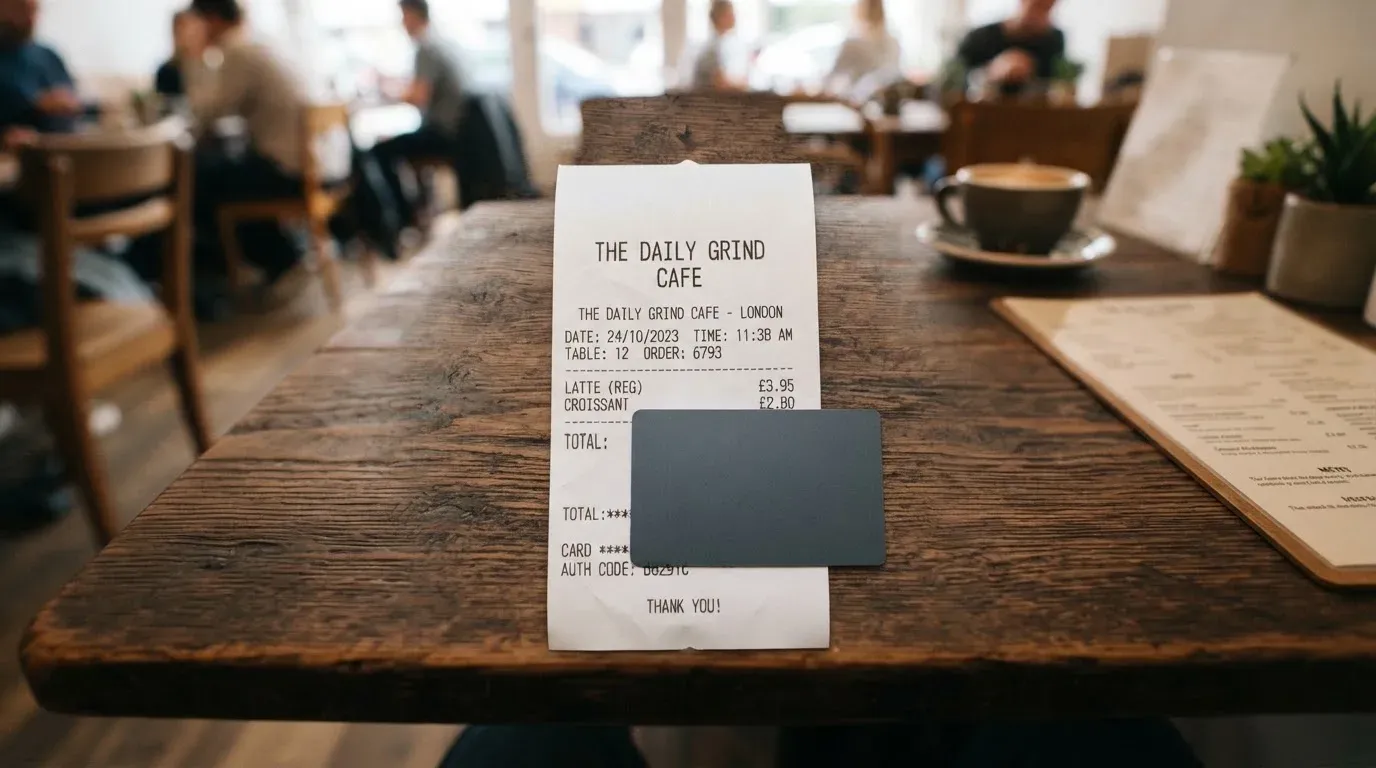
Coffee at a London café, paid from your GBP Everyday balance: no transaction fee, no FX fee, no card fee. The merchant pays its own acquirer fee; you pay nothing to Krak.
A flight booked in EUR while your Everyday balance is in GBP: Krak converts at the Mastercard FX rate with no markup, and you see the converted amount in the app. If the balance is funded from crypto, the variable spread on the sell side applies on top of that FX rate.
Cash from a foreign ATM on a Krak-issued card: Krak charges nothing, but the ATM operator may charge its own fee, which will be shown to you before you confirm. The materials reviewed do not give a free-allowance figure, so on a long trip you should expect the operator fee to apply from the first withdrawal.
| Item | Cost |
|---|---|
| Card issuance | Free |
| Monthly fee | None |
| Annual fee | None |
| Transaction fees | None on spend |
| FX fees | None from Krak; Mastercard rate passed through |
| ATM fees | None from Krak; third-party ATM operator fee may apply |
| Crypto conversion | Variable spread (size not published) |
| Card replacement | $4.99 |
| Metal card eligibility | Average GBP/EUR 50,000 across Krak, Kraken, Kraken Pro |
| Daily, weekly, monthly limits | Not published on the card pages reviewed |
Top up: how to fund the card
The card spends from a Krak Everyday account, and the order in which your balances are drawn down is something you set inside the app as a “Spend Order”. Krak offers 600+ assets in the app, but not all of them are usable for card spending; if you pick one that isn’t, the app will mark it “Unavailable” and skip over it at payment time. You can also spend fiat balances directly, and the card currency (GBP for UK cards, EUR for EEA cards) is the primary currency your payments settle in, with FX handled at the Mastercard rate on top of that.
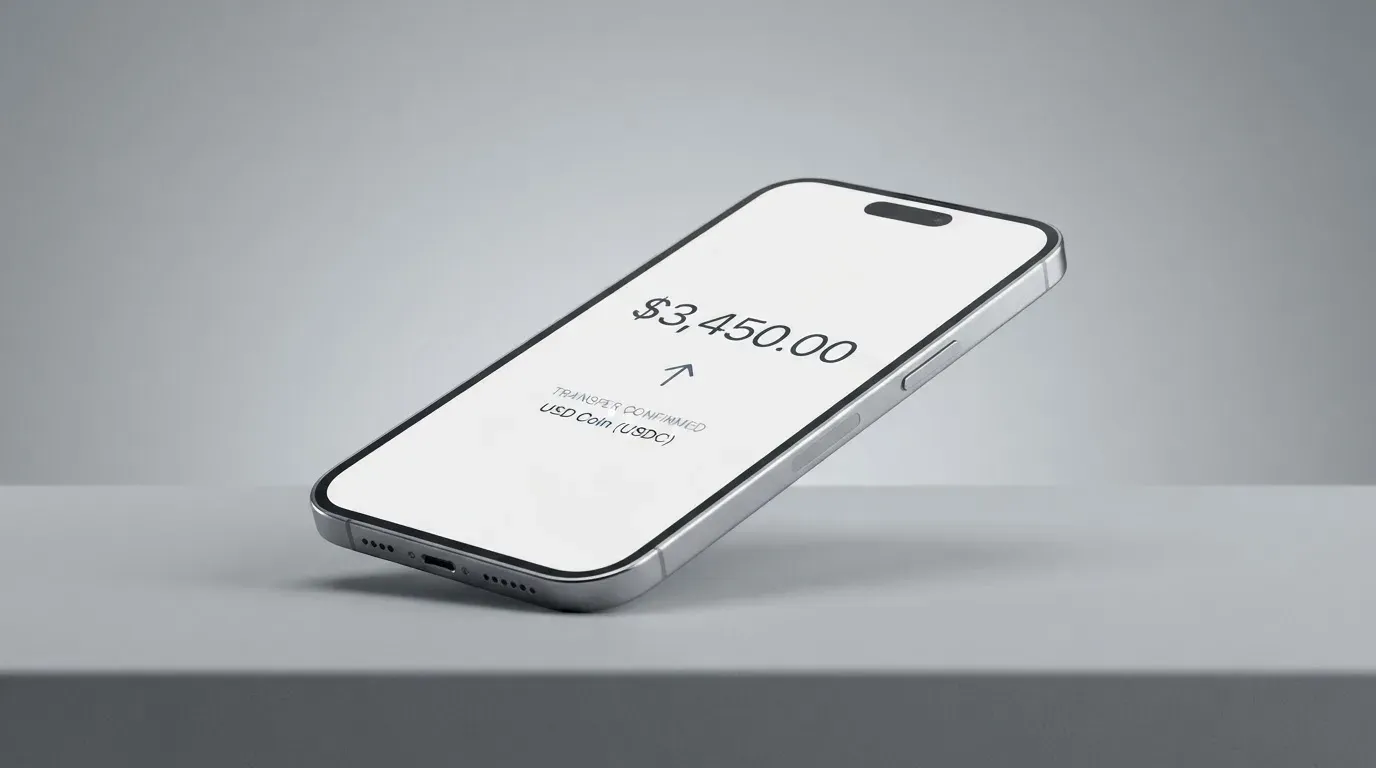
Fiat funding can go through Plaid, in EUR and GBP, or through PayPal, both with help articles on Krak. The materials reviewed do not publish a deposit fee or a minimum deposit on those routes. They do note that some deposit methods carry a three-day withdrawal hold, which is the kind of detail that matters if you’re topping up just before a big purchase. An unofficial source, which has not been confirmed by Krak, puts near-instant card deposits at GBP/EUR 0.25 plus 3.75%, but treat that as a third-party figure rather than a published fee.
The networks on which crypto deposits arrive are not listed on the materials reviewed. This is the single biggest practical unknown in the funding flow. Sending a stablecoin on a network Krak doesn’t support, or to an address meant for a different network, can mean lost funds or a manual support recovery with no guarantee, and the irreversibility of blockchain transfers means the network choice is on you. If you fund the card in fiat, none of this applies, and the everyday balance is funded in the usual way. If you intend to fund it from crypto, the safest pattern is to send a small test transaction on the network Krak tells you to use before sending any meaningful amount.
There is also no clearly described path for withdrawing an unused card balance back to a bank or to crypto. The card FAQ doesn’t cover it, and the closest the materials come is a note that closing a Kraken E-Wallet terminates the Monavate agreement, and that a fee may apply if the card agreement is ended within six months. For anything more than spending down the balance at a merchant, you should treat the Everyday account as the place where balances live, and confirm withdrawal routes inside the app before you load meaningful funds.
Paying with the Krak card every day
Once the card is funded, the day-to-day experience is the part Krak has put the most work into. The virtual card is ready in minutes, the physical card is free, and the optional metal card exists for customers who hold average assets of GBP/EUR 50,000 across Krak, Kraken and Kraken Pro. The card is a Mastercard debit, so it works anywhere Mastercard is taken, and the materials reviewed confirm it can be added to both Apple Pay and Google Pay, which means your phone or watch is usually what you tap at the till.
Krak markets up to 2% cashback, paid in cash or crypto, and up to 4% on travel booked through Krak Concierge, with the rate scaling on the average assets you hold on the Krak platform. The reward rate is not a single number, and the cashback you actually see depends on your tier, which depends on holdings, so the right way to read the marketing line is “between roughly 1% and 2% on regular spend, more on travel, if you hold enough”. The app is available for iOS and Android, and Krak’s published support promise is in-app 24/7, with a Support Center; languages, email and phone contact details are not in the materials reviewed.
Two practical details matter at the till. First, a hotel or car rental pre-authorisation can hold 10–20% above the eventual bill, and the unused portion can take up to seven days to clear, which is normal for the industry but worth knowing before you budget for a trip. Second, the card currency is the primary currency for settlement, so any spend in a different currency passes through Mastercard’s FX rate with no Krak markup but, again, the variable spread on the sell side if you’re spending crypto rather than fiat.
If something goes wrong with a transaction, the in-app flow is “open the transaction, tap Get help with this transaction”. Refunds return to the Everyday account in the card’s primary currency, which means a refund of a crypto-funded payment is not automatically converted back to the same crypto. Krak’s published complaint timelines are 24 hours for an acknowledgement and 15 business days for a final response in the UK, extendable by 20; 15 business days in the EEA, extendable to 35. A Kraken help article puts the practical dispute window at 45–60 days, which is the longer figure to plan around if the merchant pushes back. There is also a 14-day cooling-off refund of fees for new cardholders, which is the only refund window Krak spells out in the materials reviewed.
What can go wrong
The product is sound on paper and the issuer is regulated, but a few risks are worth weighing before you move meaningful funds onto the card.
The first is geographic. The card is currently issued only to UK and EU residents; outside that footprint, “more countries coming soon” is the only published forward statement. If you move, the card can be cancelled, and Monavate’s terms give it the usual set of tools to restrict accounts. The second is the variable spread on crypto spending, which is real cost, not published cost. If you spend a volatile asset at the wrong moment, the spread is the fee, and it is not visible in any fee table.
The third is the operational record. Trustpilot scores for krak.app differ between sources: 3.8 from a small set of 34 reviews, and 1.9 from a larger set of 126, with the dominant theme in both being accounts restricted after a bank transfer or deposit, and funds that took weeks to access. A July 2026 Reddit thread describes an 11-day security review that suspended deposits, withdrawals and card use, with Kraken support later saying the company “dropped the ball”. A UK cardholder reported terminals asking for a signature rather than a PIN, and a delayed refund, and a separate case described a slow response to an unauthorised-transaction claim. None of this is a verdict against the product, but it sets a reasonable expectation about how stretched support can get when an account is flagged.
The fourth is the regulatory picture around the issuer. The UK card programme is issued by Monavate, which is registered with the FCA (FRN 901097, company no. 12472532); the EEA programme is issued by Monavate UAB in Lithuania, under licence no. 92. A third-party aggregator reports a Bank of Lithuania fine or warning to Monavate UAB over AML and safeguarding, which has not been confirmed by Krak or by a primary source. An unofficial source notes that the fiat leg of the balance sits in segregated accounts at regulated institutions but is not covered by the UK’s Financial Services Compensation Scheme, and the EEA wallet has no deposit-guarantee cover either. Read that as: your money is segregated, but segregation is not the same as insurance.
The fifth is the standard set of crypto card risks. Crypto remains custodial with Kraken and Krak, so a platform-level incident is also a card-level incident. A pre-authorisation can hold funds for up to seven days. Crypto payments are typically taxable events in many jurisdictions, with each card payment a possible disposal, and Krak’s published materials do not give tax guidance.
Finally, on security, the published controls are: instant freeze, unfreeze or replacement of the physical card in the app; real-time transaction monitoring; and data encryption. Two-factor authentication is not described in the materials reviewed, which is a gap rather than a finding. Mobile-wallet tokenisation is supported through Apple Pay and Google Pay, and you can block specific currencies from your Spend Order in the app, which is the closest thing to a merchant-category block Krak offers.
What to take instead
If Krak doesn’t fit, or if you want a published fee table to compare against, here is what the alternative set looks like at the time of writing. The cards below are described in the materials reviewed; their scores and feature lists are taken from those materials and not independently re-checked.
Bybit Card (6.0 / 10). Available in Argentina, AIFC (Kazakhstan), Georgia, Kazakhstan, Australia, Mexico, Brazil, Peru and parts of Asia Pacific, and explicitly not available to European Economic Area customers. The card is virtual-first, with a physical card in most regions (Peru excluded); networks are Mastercard in Argentina, AIFC, Georgia, Kazakhstan, Australia and Mexico, and Visa in Brazil, Peru and Asia Pacific. Issuance is free “until further notice” in every region; physical card issuance ranges from 5 USD/USDT (Argentina, Asia Pacific) to 29.99 USD (Australia) and 29.99 USDT (AIFC, Georgia, Kazakhstan), with no fee in Brazil or Mexico. Crypto conversion fees range from 0.5% (Argentina) to 0.9% elsewhere, on top of FX fees that range from 1% (Brazil, Peru) to 7% (Argentina). Rewards run from 2% (Base and Beta tiers) to 10% (Infinite), with monthly caps and a 4-day pending window, and a welcome offer of 10% cashback up to 110 USDT in the first 30 days. The right read on Bybit is: a richer cashback ladder than Krak, in more regions, with a published fee table and a longer list of explicit gotchas, including a hard exclusion of EEA customers.
Coinbase Card (6.4 / 10). Available in all US states except Hawaii, on a Visa prepaid debit network, with virtual and physical cards that spend cash or crypto. Coinbase publishes “zero spending fees and no annual fees”, with a spread on the crypto conversion at payment. Funding can come from a linked bank account or from a paycheck deposit at zero cost, and crypto on Coinbase is converted to USD at payment. US card users can opt in to rotating crypto rewards on every purchase, with the rate shown in the app. The right read on Coinbase is: a US-only card with a simple fee story, no cashback table to memorise, and rewards that depend on what the app is offering this quarter.
OKX (6.2 / 10). Mastercard, euro-denominated virtual debit card, launched across the EU plus Norway on 28 January 2026, with Iceland and Liechtenstein excluded in the explainer (and the explainer’s conclusion calling the reach the “entire EEA”, which is inconsistent). The card is issued through a European licensed payment provider not named in the materials reviewed, draws on OKX Pay, and supports USDC and USDG funding. OKX publishes no card fee, no transaction fee, and no OKX FX fee; the conversion spread is given as 0.1% in the May 2026 explainer, against a 0.4% market spread in the launch press release, and the explainer is the newer figure. Cashback is paid on USDG purchases only (not USDC), at rates from 2% (Regular) to 10% (VIP4+), with monthly caps in EUR. The right read on OKX is: a euro card with cashback in a non-USD stablecoin, and a small but real ambiguity about exactly which EEA countries it covers.
A short comparison in the same row format. The numbers are taken from the alternatives section above and not re-estimated.
| Krak | Bybit | Coinbase | OKX | |
|---|---|---|---|---|
| Geographic reach | UK, EU | 9 regions; no EEA | US (excl. Hawaii) | EU + Norway (excl. Iceland, Liechtenstein) |
| Network | Mastercard debit | Mastercard or Visa by region | Visa prepaid | Mastercard debit (virtual) |
| Issuance fee | Free | Free, then region-specific | Free | Free |
| FX fee from issuer | None | 1%–7% by region | None published | None |
| Crypto conversion | Variable spread (size not published) | 0.5%–0.9% | Spread at conversion | 0.1% (explainer) |
| Cashback ceiling | Up to 2% (4% on travel) | Up to 10% | Rotating crypto rewards | Up to 10% (USDG only) |
| Independent score | 7.1 / 10 | 6.0 / 10 | 6.4 / 10 | 6.2 / 10 |
Who I would recommend the Krak card to
Krak is the right card for a fairly specific kind of reader, and the wrong card for most others.
It suits UK and EU residents who already keep meaningful assets on the Krak platform, want a single Mastercard to spend from that balance without thinking about it, and are happy to have their cashback rate scale with their average holdings. For this reader, the lack of monthly and FX fees is the real value, and the variable spread on crypto spending is the cost of convenience rather than a hidden trap. The metal card is a real differentiator if your average balance clears the GBP/EUR 50,000 line, and the in-app Spend Order gives you enough control to keep everyday spend on stablecoins and speculative trades off the card.
It is the wrong card if you live somewhere outside the UK and EU, if you want a published fee table you can show to an accountant, if you need US-dollar card currency, or if the operational risks of a single platform-and-issuer stack make you uncomfortable. The Trustpilot and Reddit picture is mixed rather than alarming, but the dominant complaint pattern is exactly the kind of “account restricted after a transfer” that hurts the most, and Krak’s published complaint timelines are not short.
If you fall into the second group, Bybit is the card to look at if you live in one of its nine regions, especially outside the EEA; Coinbase is the card to look at if you live in the US and value simplicity over cashback; and OKX is the card to look at if you live in the EU outside Iceland and Liechtenstein and want euro-denominated cashback in a non-USD stablecoin. For everyone else, the honest answer is to wait, because Krak’s “more countries coming soon” is a real forward statement, and the card is much more attractive in a region where it actually works.
Frequently asked questions
What is the Krak card?
The Krak card is a Mastercard debit issued by Monavate and fronted by Kraken’s Krak app. It draws on a Krak Everyday account that can hold fiat and over 600 supported crypto assets, and lets you spend that balance in shops, online and at ATMs wherever Mastercard is taken.
How does the Krak card work?
You open and verify a Krak account, order a virtual or physical card, and set a Spend Order in the app. When you pay, Krak draws on your Everyday balance in the order you set; if you spend crypto, a variable spread applies on the conversion, and any non-card-currency spend is converted at the Mastercard FX rate.
Is Krak a bank?
No. Krak is Kraken’s consumer app; the card is issued by Monavate, an FCA-registered e-money institution in the UK and a Lithuania-licensed e-money institution (Monavate UAB) in the EEA. The Everyday account is an e-money account, not a bank deposit, and is not covered by deposit guarantee schemes.
Who owns Krak?
Krak is the consumer brand of Kraken, the cryptocurrency exchange. The card itself is operated by Kraken and issued by Monavate, with the legal entity depending on whether your card is the UK or EEA programme.
Is the Krak card available in my country?
Krak currently issues cards to residents of the UK and the EU. A separate help article says personal accounts are also available to US residents, but that has not been reflected on the card pages themselves. For anywhere else, “more countries coming soon” is the only forward statement.
How do I apply for the Krak card?
You open a Krak account, complete KYC through the app, and then order a virtual card in minutes. The physical card is shipped free of charge to UK and EEA addresses, and the metal card is unlocked when you hold an average of GBP/EUR 50,000 across Krak, Kraken and Kraken Pro.
Does the Krak card require KYC?
Yes. You need a verified Krak account and Monavate has to confirm your identity before the card is issued. Krak does not publish a list of accepted documents on the materials reviewed, but the standard age rule of 18+ applies.
How do I add the Krak card to Apple Wallet or Google Pay?
Once your virtual or physical card is active, the materials reviewed confirm it can be added to Apple Pay and Google Pay. The standard flow is to open the wallet app, choose to add a card, and follow the prompts, with Krak’s app providing the card details.
Is the Krak card free?
The card is free to order, and Krak does not charge monthly, annual, transaction, FX or ATM fees. The published cost on top of that is a variable spread when you spend across assets, plus a $4.99 replacement fee for a physical card, plus any third-party ATM operator fee that the machine itself charges.
Is the Krak card safe?
The card uses instant freeze and unfreeze in the app, real-time transaction monitoring, and tokenised mobile-wallet support. The funds on the Everyday account are held in segregated accounts at regulated institutions rather than covered by deposit guarantee schemes, and your crypto remains custodial with Kraken/Krak. The published controls do not mention two-factor authentication, and the operational record is mixed on Trustpilot and Reddit, particularly around account restrictions after transfers.
Exchange cards – cryptocardbasics
Content created by the «cryptocardbasics» team