A first look at the Utorg card, who can get it, and what it really costs
 Available in US

The Utorg card is a virtual Visa that draws on a USDC balance you hold yourself, converts at the moment of payment, and can be added to Apple Pay or Google Pay within minutes of passing identity checks. It is built for people who already keep stablecoins and want a way to spend them without first offloading to a bank account — a thin layer between the wallet and the checkout, rather than a full crypto account with a debit card attached.
Conditions are current as of October 28, 2026.
Verdict
The Utorg card lands at 6.3 out of 10 in my assessment. That is a middling score, and it reflects a specific profile: the card is inexpensive and quick to obtain, but the product page is thin, several key numbers are missing, and the issuer information does not fully agree across Utorg’s own documents and third-party trackers. For the right reader — someone in the EEA or Ukraine holding USDC who wants a non-custodial way to spend it — the card does its job. For anyone else, the gaps in the public material will outnumber the benefits.
| Criterion | Mark | Why it matters |
|---|---|---|
| Who can get it | 5 / 10 | EEA plus Ukraine, Norway, Iceland, Liechtenstein on the card page; the FAQ claims 190+ countries; the two statements have not been reconciled |
| Cost | 8 / 10 | Zero issuance, zero monthly fee, zero FX markup and zero payment fees, all marked “for a limited time”; the crypto conversion fee is not published |
| Top-up options | 7 / 10 | USDC on Ethereum, Polygon, Arbitrum, Solana or BSC, nothing else on the card page |
| Reliability and complaints | 6 / 10 | Card provided by Chain Valley Sp. z o.o. with Wirex Pay; an earlier review site named Utrg UAB as issuer; Trustpilot 4.2 from 952 reviews |
| Everyday use | 5 / 10 | Virtual Visa only, Apple Pay and Google Pay supported, no physical card and no ATM access |
| Total | 6.3 / 10 |
If you are an EEA or Ukraine resident who already lives in USDC, the Utorg card is one of the simpler ways to turn that balance into something a shop will accept. If you are outside that geography, want a physical card, need cash, or want cashback, the same product will not fit.
Who can get the Utorg card
The eligibility story is a moving target. The card page lists the EEA member states — Italy, Germany, Spain, France and the Netherlands among them — and adds Ukraine, Norway, Iceland and Liechtenstein. The FAQ on the same site claims the card is available in “190+ countries”. The two statements are not reconciled anywhere I could see: there is no footnote explaining whether 190+ refers to where the wallet can be opened, where the card can be issued, or where it can be spent. For anyone whose country is not in the small list, the right reading is to treat the card page as the binding rule and the FAQ as marketing.
A third-party tracker (unofficial, not confirmed by Utorg) lists 31 available countries — the EEA plus Iceland, Liechtenstein, Norway and Ukraine — and names Afghanistan, China, Japan, Nigeria, Russia, Singapore, the United Kingdom and the United States as restricted. The card page itself does not list excluded countries, so the exclusion list is also unofficial.
Two related questions — whether the rule is based on citizenship or residence, and whether Utorg also checks the address on your proof-of-address document — are not stated. A reader who is an EEA citizen living in Dubai, or a Ukrainian citizen living in Poland, will not find a clear answer on Utorg’s public pages.
Eligibility at a glance
- Card page lists: EEA countries plus Ukraine, Norway, Iceland, Liechtenstein
- FAQ claims: 190+ countries (not reconciled with the card page)
- Residence vs citizenship: not stated
- Excluded countries: not stated on the card page; an unofficial tracker lists eight
How to sign up
Utorg’s sign-up flow is built around an AI-driven identity check that the company says completes in under five minutes. The steps on the card page are: download the app, upload an ID document, complete a liveness check, and receive a virtual card the moment verification clears. There is no mention of a physical card being available, so once KYC is done, what you get is a virtual Visa and the option to push it to Apple Pay or Google Pay.
Several details are simply missing. Utorg does not publish its KYC tiers, so there is no public map between what you submit and the limits you receive. The terms do not say whether a proof-of-address document is required at any point, even though the help centre has an article titled “Source of Funds questionnaire – accepted document types”. A company reply to a March 2023 Trustpilot reviewer gave concrete rejection reasons — a passport missing a signature, a bank statement sent as a screenshot instead of a PDF — which suggests the bar is real but the rules are case-by-case.
Android users should know that the help centre specifies app version 2.88.0 or higher for card setup; if you are on an older build, the card section may not appear.
Sign-up summary
- KYC: AI-powered, “under 5 minutes” on the card page
- ID plus liveness check: yes
- Proof of address / age: not stated
- KYC levels: not stated
- Card at the end of KYC: virtual Visa, instant
- Physical card: not mentioned
- Android requirement: app version 2.88.0 or higher for card setup
What the Utorg card really costs: Fees, limits and the small print
The headline numbers on the card page are unusually friendly. Issuance is free, there is no monthly fee, no FX markup and no payment fee. Every one of those “zero” lines is tagged “for a limited time”, which means the rates can change, and the card page does not say when the limited period ends or what the post-promo rates will be.
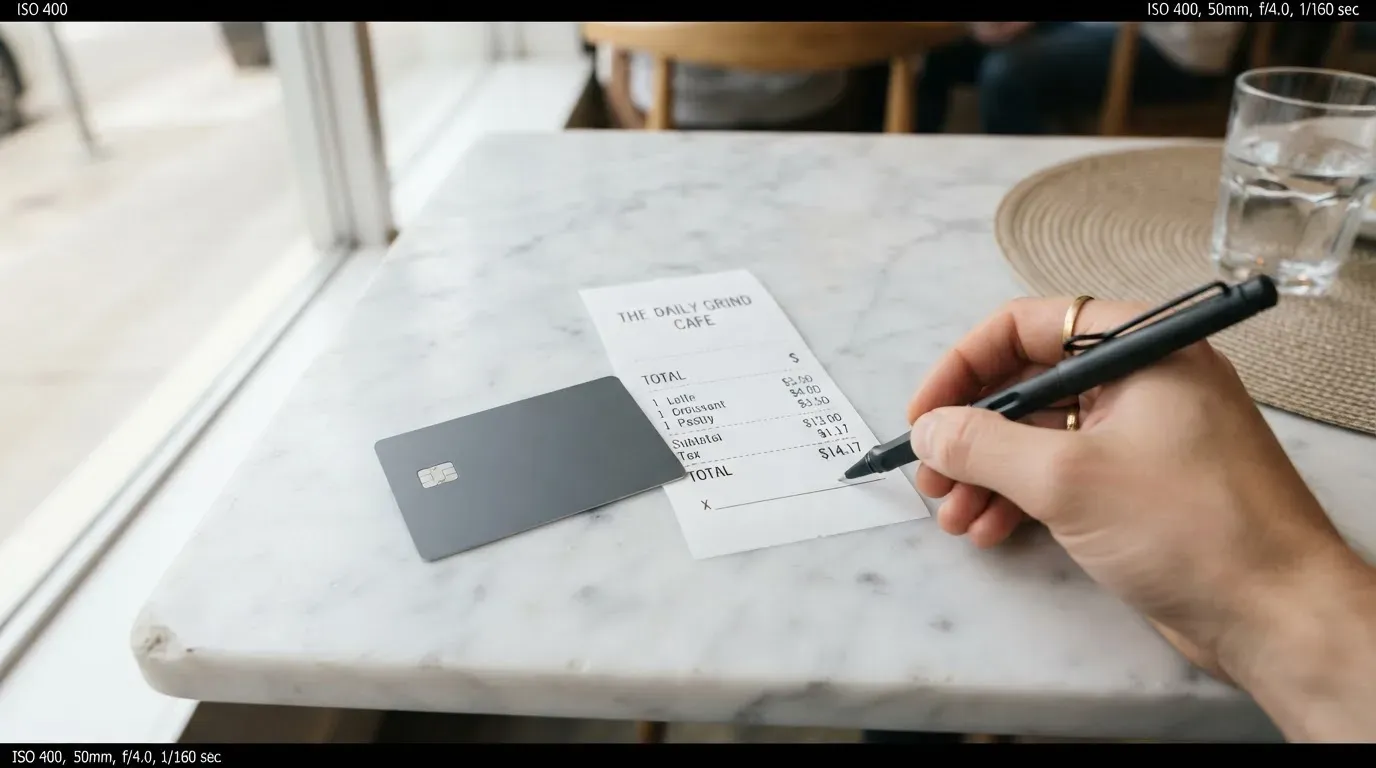
What is missing matters more than what is published. The crypto conversion fee — the rate at which USDC becomes the local currency the merchant receives — is not stated on the card page. An unofficial source says Utorg charges a live rate with no fixed public percentage, and points to provider terms that allow spreads, markups, network costs and dispute charges. Without a published conversion fee or spread, the only way to know the true cost of a payment is to watch the screen at the moment of authorisation.
ATM fees and ATM limits are not stated on the card page. The unofficial tracker marks them “not applicable”, on the grounds that the card is virtual only. That is consistent with the rest of the material: there is no physical card to insert into an ATM, and a virtual card pushed to a mobile wallet still cannot be used at an ATM.
The limits picture is the most contradictory part of the page. The card page sets a monthly cap of EUR 30,000. The unofficial tracker gives EUR 50,000. Neither side publishes a daily limit or a per-transaction limit, and both acknowledge that risk checks can lower the figure for individual users. There is no tier system on the card page — one ceiling, no ladder — so there is no public way to know what raises or lowers it.
Costs at a glance
| Fee or limit | Amount on the card page | Notes |
|---|---|---|
| Card issuance | EUR 0 | “for a limited time” |
| Monthly fee | EUR 0 | “for a limited time” |
| FX markup | EUR 0 | “for a limited time” |
| Payment fee | EUR 0 | “for a limited time” |
| Crypto conversion fee | not stated | Unofficial: live rate, no fixed public percentage |
| ATM fees | not stated | Unofficial: “not applicable” (virtual only) |
| Monthly spending limit | up to EUR 30,000 | Unofficial tracker says up to EUR 50,000 |
| Daily limit | not stated | |
| Per-transaction limit | not stated | |
| KYC tiers | not stated |
Three everyday payments, walked through
To make the cost picture less abstract, here is how three common payments would play out under the published rules, with the unknown left clearly unknown.
- Coffee, EUR 4, in a eurozone café. You tap the virtual card through Apple Pay. The merchant receives EUR, so no FX conversion is involved. Under the published rules the payment fee is zero. The crypto conversion is the moving part: the rate at which your USDC becomes those four euros is not published, and the only place you will see it is the authorisation screen. Without a published number, you cannot know the effective cost in advance.
- Online subscription, USD 9.99, paid in dollars. The card converts USDC to USD at the point of sale. The card page claims zero FX markup and zero payment fee, so under that promise the cost is the conversion alone. The same caveat applies: the conversion rate is not published, so the effective cost in USDC depends on the spread Utorg applies, and that figure is not on the public page.
- Hotel booking, JPY 25,000, paid in Japan. This is where FX actually kicks in: the merchant wants yen, your balance is in USDC, and the card has to convert. The card page promises zero FX markup. “Zero markup” is not the same as “zero cost”: the wholesale rate is not published either, so the only way to know the effective rate is to check the app at the moment of payment, or to look at a few statements afterwards to estimate the spread you actually paid.
In each case the visible fees are zero, and the invisible fee is the conversion spread. That is the one to watch.
How to top it up: networks, minimums and the “USDC only” choice
The funding model is simple and restrictive in equal measure. The card page says the card is topped up with USDC, and lists five networks: Ethereum, Polygon, Arbitrum, Solana and Binance Smart Chain. There is no mention of USDT, no native Bitcoin or Ethereum, and no on-ramp to buy crypto with a bank card inside the Utorg app. If your balance is not in USDC on one of those five networks, the card cannot be used as designed.
The card page says top-up is “effortless” and that payments and cross-fiat conversions are zero-fee, again “for a limited time”. It does not say who pays the network fee for the on-chain transfer. The unofficial tracker says top-up is advertised as EUR 0 and that the legacy Utorg card required a euro balance load, but the current card page does not confirm either. The help centre has articles titled “How to top up your Utorg card”, “Why is USDT not available for card top-up?” and “What is Gasless top-up?” — titles only, the underlying pages were not read in the course of this review, so the actual mechanics of the gasless feature are not described here.
A few practical points are worth keeping in mind before your first top-up:
- Pick the right network. USDC sent to the wrong network address is, in most cases, unrecoverable, and the help-centre article “Why is USDT not available” hints at how easily the wrong asset can be selected. Stablecoin transfers are not reversible in the way a bank transfer is.
- Keep a small amount of native gas. On Ethereum in particular, the wallet sending USDC also needs ETH to pay the gas fee; a balance of USDC with no ETH cannot move. The “Gasless top-up” article in the help centre suggests a workaround exists, but the mechanism is not on the card page.
- The minimum top-up and who pays the network fee are not stated on the card page.
Top-up at a glance
- Accepted asset: USDC
- Supported networks: Ethereum, Polygon, Arbitrum, Solana, BSC
- Deposit fee: not stated; unofficial: EUR 0 advertised
- Minimum top-up: not stated
- Who pays the network fee: not stated
- Selling crypto back to fiat: “Sell crypto” is marked “Coming soon” on the card page
- Balance on closure: the terms say the card access can be refused, restricted, suspended, terminated or discontinued at any time; nothing is said about what happens to the remaining USDC balance
Paying with the card every day
In daily use, the Utorg card is a virtual Visa that lives in your phone. Once it is in Apple Pay or Google Pay, you can tap to pay anywhere contactless Visa is accepted, and you can use the card number for online checkouts. There is no physical card to wear out, no PIN to memorise for in-store use, and no chip to swap. That is also the limit: there is no physical card to use at an ATM, no magstripe fallback, and no card to hand to a child or a colleague.
The card page does not say which merchant categories are blocked. For a card that funds itself from crypto, that gap is significant: some issuers block gambling (MCC 7995), crypto purchases, or cash-equivalent transactions, and a reader who plans to use the card for any of those will not find the answer in the public material. The help centre’s article on card freezing implies the card can be frozen and unfrozen at will; that is useful if the card is lost or compromised, but again it is not the same as a published block list.
There is no cashback, points programme or reward rate on the card page. The unofficial tracker confirms no cashback, and a July 2026 Trustpilot reviewer independently said the same. That makes the value proposition purely about convenience — USDC in, payment out — rather than about earning anything along the way.
Disputes are explicitly Utorg’s weak spot. The terms, updated 17 September 2026, state that Utorg cannot approve, reverse or decide chargebacks, cannot cancel card transactions, and disclaims refunds and disputes; the card is provided by Chain Valley Sp. z o.o. with Wirex Pay, and disputes go to the card provider. A claim relating to Utorg itself must be filed within one year or it is barred. For a card that costs nothing to issue and nothing per month, that is a meaningful trade-off: there is no Utorg helpdesk that will chase a merchant on your behalf.
Daily-use summary
- Card form factor: virtual Visa only
- Mobile wallets: Apple Pay and Google Pay supported
- Physical card: not mentioned
- ATM access: not applicable (virtual only)
- Blocked merchant categories: not stated
- Cashback or rewards: none on the card page; none confirmed independently
- 3-D Secure: not stated; expect the standard Visa Secure flow on online checkouts
- Disputes: Utorg disclaims them; the card provider handles them; Utorg claims barred after one year
What can go wrong
The product has three structural risks worth taking seriously before you put a meaningful balance behind it.
1. The conversion spread is not published. A card that charges zero in fees on paper can still be expensive in practice if the spread on the USDC-to-fiat conversion is wider than the market rate. The card page does not publish the spread, the unofficial source says the spread is not a fixed public percentage, and the only place to see the rate is the authorisation screen. The risk is not that there is a fee — there is — but that you cannot see it before you pay.
2. Issuer and provider information is inconsistent. The terms updated 17 September 2026 name Chain Valley Sp. z o.o. with Wirex Pay / Wirex Limited as the card provider. The site owner is UTORG LABS HOLDING LTD, registered in Abu Dhabi. An earlier third-party review named Utrg UAB in Lithuania as the issuer, and an unofficial tracker from August 2026 says the legacy issuer was Quicko Sp. z o.o. on Wirex Banking-as-a-Service infrastructure. None of these names appear on the public card page. The footer states that “Utorg is not attributed to banking services”, which is a careful way of saying Utorg itself is not the issuer.
3. Dispute rights are limited. As set out above, Utorg’s terms push disputes to the card provider and time-bar Utorg-related claims after one year. For a prepaid-style card without chargeback mediation on the Utorg side, a bad transaction is a transaction you have to chase through a third party.
There are also three smaller risks a careful reader should keep in mind:
- No insurance or safeguarding claim. The card page says Utorg does not issue cards, does not provide payment accounts, does not issue e-money and does not custody fiat or digital assets for the card. There is no claim about segregated funds, deposit insurance, or FSCS / DGS-style protection.
- 2FA and security details are not stated. The card page talks about freezing the card, but two-factor authentication, biometric login and device management are not described on the public page.
- Trustpilot signal is mixed. Trustpilot for Utorg reads 4.2 out of 5 across 952 reviews, with only five reviews in the last twelve months, so the trend is hard to read. Themes I could identify: a cancelled transaction and slow refund in 2024, repeated KYC rejections in 2023, a wallet reported closed in August 2026 (Utorg replied the wallet remains available), and a July 2026 reviewer who praised the card as instant and noted “No cashback”. There are no card-specific complaints in the sample I could see.
What to take instead
Utorg is not the only virtual Visa backed by crypto, and depending on what you actually need, another card may fit better. The three I have looked at most closely are below. Each scores a little higher than Utorg on my rubric, but each makes a different trade-off, so the right choice depends on what you want from the card.
| Utorg | RedotPay | Bitpanda | Wirex | |
|---|---|---|---|---|
| Score | 6.3 / 10 | 6.9 / 10 | 6.5 / 10 | 6.7 / 10 |
| Form factor | Virtual Visa | Virtual and physical Visa | Physical Visa | Virtual and physical Visa or Mastercard |
| Funded by | USDC on five networks | Crypto on-chain; on-ramp in app | Crypto, precious metals or EUR | Cash, stablecoins, crypto |
| Issuance fee | EUR 0 (limited time) | USD 10 virtual, USD 100 physical | Free first card, EUR 5.90 reissue | Free in most regions; metal card 45 GBP / 45 EUR |
| Cashback | None | 5 USD welcome reward (30 days) | 1% on crypto spending (page summary says “up to 2%”) | Standard 0.5%, Premium 3%, Elite up to 8% in WXT |
| Geographic rule | EEA + Ukraine, Norway, Iceland, Liechtenstein on the card page | Two overlapping restriction lists; Ukraine, Russia, Belarus, Serbia, US on both | Euro-area residence required | Region-dependent, “Worldwide (130+ countries)” on the homepage |
A few words on each:
RedotPay (6.9 / 10). A virtual and physical Visa with USD and HKD card variants, a clearer fee table (1.00% crypto conversion, 1.20% non-default currency, with small-auth and decline charges published), and a 5 USD welcome reward. The eligibility rule is harder to read: there are two overlapping lists, and the card-issuance list includes India, Indonesia, Morocco, Nepal, Singapore and Turkey on top of the sanctions-style list. If you want a physical card and published fees, RedotPay is the more transparent option.
Bitpanda (6.5 / 10). A euro-area-only physical Visa, free to issue, free first shipment, with a 1% cashback rate on crypto spending (the page summary says “up to 2%”, which has not been reconciled). The eligibility rule is by residence, and the card only spends in euros, so it is a tighter fit if you live in the eurozone and want a physical card. It cannot be used by people verified through “Bankident”.
Wirex (6.7 / 10). The card infrastructure that, as of April 2026, also powers Utorg’s spending. Wirex offers a metal Visa Signature debit card with up to 8% cryptoback in WXT for Elite users, published fees by region, and fiat deposit by SEPA, Faster Payments, ACH and PIX. The catch is that the cryptoback rates are region-dependent, several merchant categories (gambling, crypto purchases, certain MCCs) are excluded, and cash withdrawals are not permitted in Singapore. If rewards and a metal card matter more than USDC-only simplicity, Wirex is worth a look.
Who I would recommend the Utorg card to
Pulling all of this together, my honest recommendation is narrower than the marketing suggests.
I would recommend the Utorg card if you:
- Live in the EEA, Ukraine, Norway, Iceland or Liechtenstein, and the card page’s eligibility list is the one that applies to you
- Already hold USDC on Ethereum, Polygon, Arbitrum, Solana or BSC, and want to spend it directly without first converting to euros in a bank account
- Are comfortable with a virtual card, an Apple Pay or Google Pay wallet, and no physical backup
- Accept that the conversion spread is not published and that the only way to gauge it is to watch the app at the moment of payment
- Do not need cash, do not need cashback, and do not expect Utorg to mediate disputes
I would not recommend it if you:
- Live outside the EEA + 4 list, where the FAQ’s “190+ countries” claim and the card page’s narrow list are in conflict
- Need a physical card, an ATM, or a card you can hand to someone else
- Hold USDT, BTC, ETH or anything other than USDC, because the card page lists USDC and only USDC
- Want published fees, including a published conversion spread, before you commit money
- Expect a helpdesk to handle a chargeback on your behalf; Utorg’s terms explicitly say it will not
The card is at its best for a small, well-defined reader. For everyone else, one of the alternatives above will almost certainly be a better fit.
Frequently asked questions
What is the Utorg card?
The Utorg card is a virtual Visa debit card that draws on a USDC balance held in your own self-custody wallet. You top it up by sending USDC to the address Utorg gives you, and the card converts USDC to local currency at the point of payment.
How does the Utorg card work?
You complete an AI-powered KYC check, receive a virtual Visa, push it to Apple Pay or Google Pay, and top it up with USDC on Ethereum, Polygon, Arbitrum, Solana or BSC. The merchant receives local currency; you pay the network fee for the deposit and any spread Utorg applies on the conversion.
Is Utorg a bank?
No. The footer of the Utorg site states that “Utorg is not attributed to banking services”, and the terms updated 17 September 2026 name Chain Valley Sp. z o.o. with Wirex Pay as the card provider. Utorg itself is not the issuer and does not provide payment accounts, e-money or custody for the card.
Who owns Utorg?
The site owner is UTORG LABS HOLDING LTD, registered number 000008060, Office 18, 11th floor, Tamouh Tower, Al Reem Island, Abu Dhabi, UAE. The card provider is a separate legal entity, Chain Valley Sp. z o.o., working with Wirex Pay / Wirex Limited.
Is the Utorg card available in my country?
The card page lists the EEA plus Ukraine, Norway, Iceland and Liechtenstein. The FAQ claims “190+ countries”, but the two statements are not reconciled. A reasonable rule of thumb is to treat the card page list as binding and the FAQ as marketing until Utorg publishes a single source of truth.
How do I get the Utorg card?
Download the app, complete an AI-driven KYC check (ID plus liveness), and the virtual card appears in the app. Push it to Apple Pay or Google Pay and you can use it straight away. Android users need app version 2.88.0 or higher for card setup.
Does the Utorg card require KYC?
Yes. Identity verification is mandatory and the company says the AI-driven check completes in under five minutes. The published material does not list KYC tiers or what raises or lowers your limits.
How do I top up the Utorg card?
Send USDC to the deposit address shown in the app, on one of the five supported networks: Ethereum, Polygon, Arbitrum, Solana or BSC. The card page does not publish the minimum top-up, the deposit fee, or who pays the network fee; the unofficial tracker says the deposit fee is advertised as EUR 0.
Where can I use the Utorg card?
Anywhere Visa is accepted, online or in store, via the virtual card number or via Apple Pay or Google Pay. The card page does not list blocked merchant categories, and there is no ATM access because there is no physical card.
Is the Utorg card safe?
The card is non-custodial in the sense that Utorg does not hold your USDC, and the card can be frozen if it is lost or compromised. On the other side, Utorg’s terms disclaim disputes, there is no published insurance or safeguarding claim, the conversion spread is not published, and the issuer information across Utorg’s own documents and third-party trackers has changed over time.
App and neobank cards – cryptocardbasics
Content created by the «cryptocardbasics» team