
A very flexible card with a very expensive fee structure
 Available in US

Kemy is not a bank, and that single fact shapes almost everything else about this card. It is a fintech that says it issues cards through unnamed “authorized banking partners” under Visa and Mastercard licences, and it registered as a Money Services Business with FinCEN in the US. If you have been refused an ordinary bank card, or you are somewhere a traditional bank will not open an account for you, Kemy’s willingness to look at you is the single most valuable thing about it. The same flexibility also produces a fee list that is expensive in places and contradictory in others, and a set of open questions — who holds your money, which bank issues the card, which currency the card spends in — that the public pages simply do not answer. I score it 6.0 out of 10, and I would rather tell you exactly where the good and bad points sit than round that to a comfortable number.
The conditions described below are current as of October 28, 2026.
Verdict
| Criterion | Mark | Why |
|---|---|---|
| Who can get it | 9 / 10 | Claims “190+ countries” with “a few restrictions apply”; the restricted list is never named |
| Cost | 2 / 10 | Virtual: $15 issuance, $2/month, 3.5% + $1 per transaction; physical: $250 issuance, $10/month; deposit fee shown as both 8% and 5% |
| Top-up options | 7 / 10 | USDT and USDC “on the main networks” (networks unnamed), plus BTC, ETH, SOL via on/off ramp, fiat via mobile money and virtual bank accounts |
| Reliability and complaints | 4 / 10 | Not a bank, FinCEN-registered MSB, partner banks unnamed; unofficial aggregators report poor scores on a very small sample |
| Everyday use | 9 / 10 | Unlimited virtual cards plus one physical Mastercard, Apple Pay / Google Pay / Samsung Pay, $500/day ATM |
| Total | 6.0 / 10 | Strong access and usability, weak cost picture and unresolved trust questions |
Who this suits: people who cannot open a conventional bank account, who need several virtual cards on one balance, who are paid in crypto or stablecoins, and who accept paying a transaction fee for the privilege. Kemy’s everyday-use score is genuinely high — unlimited virtual cards, one physical Mastercard with contactless, the three big mobile wallets, and a stated 24/7 support — and for someone who has been turned away elsewhere that combination is worth a great deal.
Who it does not suit: anyone who lives on their card. A 3.5% + $1 transaction fee on a virtual card, and a deposit fee the company states as 8% in one place and 5% in another, are not rounding errors on a monthly budget. Nor is it a fit if the reason you are reading is “is my money safe” — the custody model is not stated, insurance is not stated, and the issuing banks are not named. If you want cheap everyday spending, a plain debit card from an e-money institution in your own country is the better instrument, and this review’s alternatives section explains what else exists in this category.
Will they give you the card
Kemy says it serves “190+ countries”, with the caveat “a few restrictions apply”, and eligibility is checked at sign-up. That is the whole of the official answer on who qualifies. The restricted list is not published, which means you cannot tell in advance whether your country is one of the exceptions — you find out by trying.
That is a real limitation, not a technicality. Country and citizenship rules are told here as the card states them, so the honest summary is: broad by claim, unspecified in detail, verified only at the point of application. If your situation is unusual — a residence permit rather than citizenship, a country with a difficult relationship with international card networks, or a tax residency different from where you live — the practical advice is to attempt registration early, before you are depending on the card for something specific, so that a refusal does not arrive at the worst moment.
Two broader points apply to any card in this category, and they matter here because Kemy is not a bank. A card number begins with a 6- or 8-digit issuer identification number that tells the merchant which institution and country issued it, and merchants may apply extra scrutiny when the issuer country differs from the billing address. And because Kemy is a money services business rather than a depository, your balance is not a bank deposit and should not be assumed to carry deposit-guarantee protection.
| Question | What Kemy publishes |
|---|---|
| Where | “190+ countries” |
| Exceptions | “a few restrictions apply” — list not published |
| Where you check | Eligibility at sign-up |
| Age requirement | Not stated by the card |
| Card currency | Not stated |
| Issuing bank | Not named |
How to get it
Identity checks run through Sumsub, with Veriff also named, and take two minutes on a phone. The business pricing page lists a proof-of-address check at $1.80, but which documents are accepted is not specified. There are no KYC tiers described: no bronze/silver/gold ladder, no stated processing time, and no published list of reasons an application can be rejected.
That structure — one check, no tiers — is worth understanding on its own terms. KYC rules exist because anti-money-laundering law requires regulated businesses to verify customers and monitor transactions, and in the EU the due diligence set is name, address, date of birth, nationality and identity documentation, a sanctions check, the purpose of the relationship, and whether you are a politically exposed person. In the US, the customer identification programme requires name, date of birth, address and an identification number. Nationality is screened separately from residence, because sanctions screening often follows citizenship and country of birth rather than the address on your documents. If due diligence cannot be completed, an institution is expected to decline the transaction or end the relationship — which is why accounts close or freeze pending documents.
Limits may change with your KYC level, although no levels are published; that sentence in the documentation is doing quiet work and it is worth assuming your limits could be lower than the headline figures.
After the checks, the cards themselves: unlimited virtual cards, with Visa shown on the mockups, and one physical Mastercard with contactless. “Visa & Mastercard accepted globally” is the stated acceptance claim, and no blocked merchant categories are listed.
| Item | Detail |
|---|---|
| Identity check | Sumsub, Veriff also named |
| Time | Two minutes on a phone |
| Proof of address | $1.80 on business pricing |
| KYC tiers | None described |
| Virtual cards | Unlimited; Visa shown on mockups |
| Physical card | One Mastercard, contactless |
| Acceptance claim | “Visa & Mastercard accepted globally” |
The physical card ships “within 5 to 15 business days, depending on country”, and DHL Express is included in the $250 order. The country list for delivery is not stated and neither is the replacement cost, so if the card is lost or stolen abroad you have no published figure to plan against.
Fees: what it really costs
This is where the card is weakest, and I want to be precise about it rather than tidy. Here is every figure the card publishes.

| Fee or limit | Virtual | Physical |
|---|---|---|
| Issuance | $15 | $250 |
| Validity | 3 years | 3 years, 1 card per user |
| Monthly fee | $2 | $10 |
| Top-up fee | $1.5 under $100, or 1.25% from $100 (min $5) | Same, minimum $10 |
| Transaction fee | 3.5% + $1 | Not stated separately |
| Failed transaction | $0.8 | $0.80 |
| FX fee | Not listed | Not listed |
| ATM | Not applicable | $500 per day, $15,000 per month; fee not stated |
| Balance limit | Up to $100,000 | Up to $400,000 |
| Per transaction | $10,000 | $25,000 |
| Daily spend | Not stated | $50,000 |
Now the three payments that tell you how this behaves in real life.
A $30 lunch. On a virtual card, a 3.5% transaction fee plus $1 applies. On the physical card, the transaction fee is not stated separately, so I cannot tell you what a physical-card purchase costs; the figure that is published for virtual cards does not automatically apply.
A $400 online purchase. A 3.5% transaction fee plus $1 applies. This is the level at which a percentage fee stops feeling like friction. Above roughly $1,000 the same 3.5% is the dominant cost, and no tier or volume discount is published anywhere.
A $200 top-up. $1.5 if under $100; from $100 it is 1.25%, so $2.50, with a stated minimum of $5 (virtual) or $10 (physical). Under the minimum rule the $5 floor means a small top-up is proportionally expensive.
Two things sit underneath all of that and are easy to miss. First, the main-account deposit fee — charged when crypto, mobile money or similar goes into the account rather than onto the card balance — appears as 8% in the summary and in the Pricing FAQ, and as 5% in the deposits section. The company’s own page contradicts itself. An eight percent deduction is the single largest number in this review, and I would not build any plan on either figure until you have asked and received a written answer. Second, on-chain network fees for your deposit are charged by the blockchain, not by Kemy, so they appear on top of everything above and are not in any of these figures.
There are only two card types — virtual (unlimited) and physical (one per user, with priority support included). There are no consumer tiers. API plans (Decouverte, Starter, Business, Premium) exist on a separate page and are not part of the retail offer. Cashback is not mentioned anywhere.
How to top up the card
Top-up options are the second-strongest area, which is why that criterion scores 7. The card accepts USDT and USDC “on the main networks” — the specific chains are not listed, which is the gap worth watching — plus BTC, ETH and SOL through an on/off ramp, and fiat through mobile money and virtual bank accounts. Account creation is free.
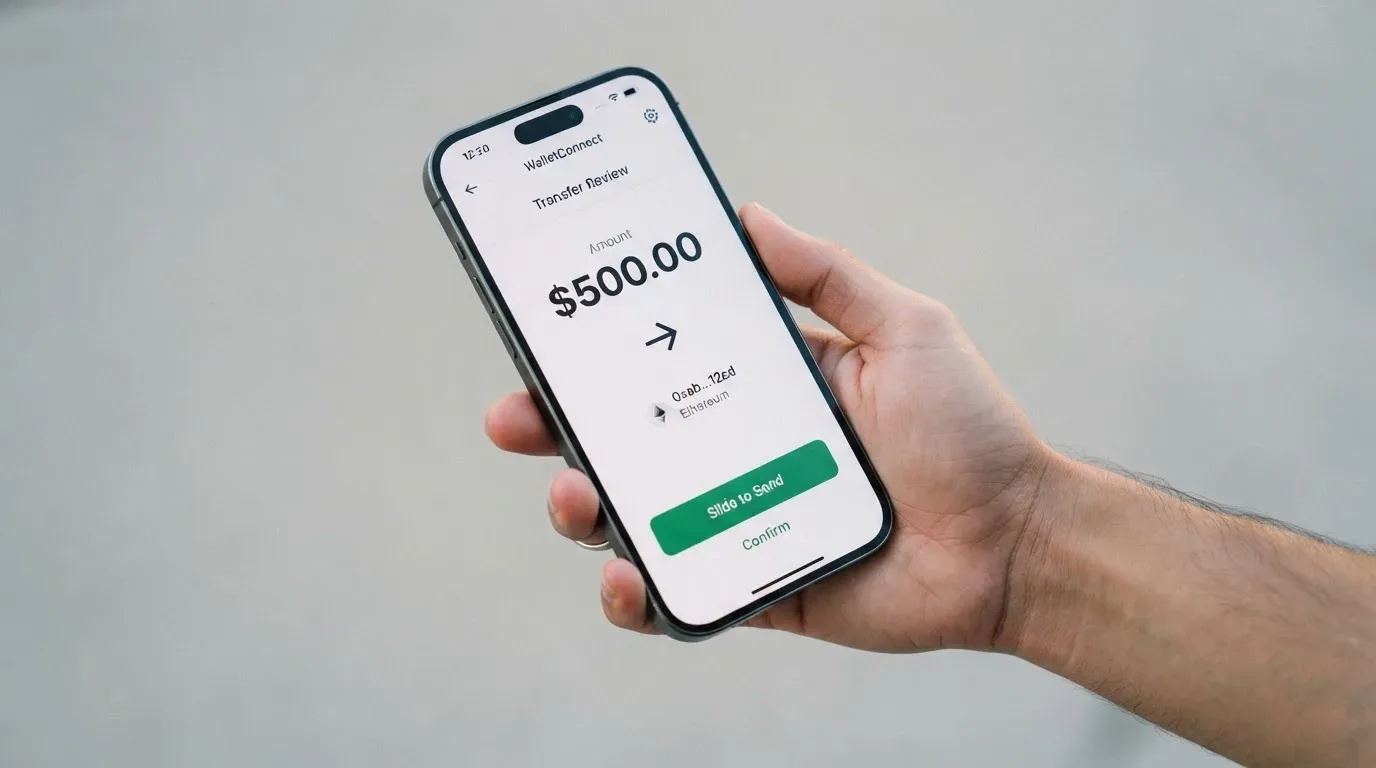
The unnamed networks are not a small detail. Blockchain transfers are irreversible, so a deposit sent on a network the provider does not support, or to an address belonging to a different network, can be lost or need manual support recovery with no guarantee. The same applies to gas: on Ethereum, fees are paid only in ETH, so a wallet holding USDT and no ETH cannot send it. Circle stopped supporting USDC on Tron in February 2024, so “USDC over TRC20” is not a native option, and the supported USDC networks are wide — 38 as of 16 September 2026, including Ethereum, Solana, Base, Polygon PoS, Avalanche, Arbitrum and Stellar — which cuts both ways. Before your first transfer, confirm the network in the app against the network your exchange will send from. Getting this wrong on the first deposit is the most expensive mistake available to a new user, and it is entirely avoidable.
| Method | What is published |
|---|---|
| USDT, USDC | “On the main networks” — chains not listed |
| BTC, ETH, SOL | Via on/off ramp |
| Fiat | Mobile money, virtual bank accounts |
| Account creation | Free |
| Card top-up fee | $1.5 under $100; 1.25% from $100 |
Getting money back out is where you should read the fine print most carefully. Crypto withdrawal to a wallet works on any chain, with fees described in the FAQ as variable network and administrative fees. Bank payouts run $25 to $2,499 per transfer to US and European accounts, with withdrawal fees not specified. Crypto-to-fiat is described as “pricing published at launch” — which is a phrase that tells you pricing exists somewhere, and not where.
The terms also state that termination can happen with one month’s notice, that nothing is said about returning the balance, that exporting stored data is not possible, and that termination becomes possible after 18 months of non-use. Nobody reads these clauses expecting to use them. Everybody should know they exist, because the pattern across this whole category is that closures give notice, then stop spending and loading, then ask you to withdraw what is left. One 2026 closure reported by a secondary source ended new loads on 8 July 2026 and spending on 8 August 2026 — single source, unconfirmed, and offered only as an illustration of how the sequence runs.
Paying with it every day
Everyday use is where Kemy is at its best, and the 9 out of 10 reflects a genuinely good feature list rather than enthusiasm. Unlimited virtual cards on one account is unusual and directly useful: you can put a different virtual card on each merchant, which limits the damage if one store is compromised or if you simply want to keep subscriptions separated. The physical Mastercard is contactless. Apple Pay, Google Pay and Samsung Pay are all supported, which is how most people will actually use the card day to day, and tokenisation is handled properly underneath: Apple Pay replaces the card number with a device-specific number stored in the Secure Element, never on Apple’s servers, and each payment uses a one-time dynamic security code.
Security features stated for the account include 2FA and device biometric login, instant card freeze, unfreeze and delete from the dashboard, real-time AML transaction monitoring, and AES-256 encryption of card data. Funds are described as being “in segregated accounts with regulated institutions” with regular audits claimed — note the distinction from a bank deposit: segregation is an arrangement, not a guarantee, and insurance is not stated.
What is missing: no App Store or Google Play app was found on the site, which means a web dashboard and a Telegram bot rather than a native app; there are no app ratings to read. Blocked merchant categories are not stated, which matters because many issuers block gambling (MCC 7995) as policy rather than law, and the blocked list varies by issuer — with no list published, you cannot predict which subscriptions will be declined. Cashback is not mentioned. No 3-D Secure behaviour is documented, which means you cannot rely on a step-up identity check for online payments.
| Feature | Status |
|---|---|
| Virtual cards | Unlimited |
| Physical card | One Mastercard, contactless |
| Mobile wallets | Apple Pay, Google Pay, Samsung Pay |
| Native app | Not found on the site; web dashboard and Telegram bot |
| Cashback | Not mentioned |
| Blocked merchants | Not stated |
| 3-D Secure | Not documented |
Practical friction to expect in normal use: a declined authorisation can leave a hold on funds for several days, typically up to seven. Address verification is mostly offered in the US, Canada and the UK and is generally unavailable for foreign-issued cards, which causes declines on its own. Some merchants decline prepaid or foreign-issued cards because the BIN lookup reveals the card type and issuer country. None of that is Kemy-specific, but it is the reason a card with excellent features can still be refused at a till.
What can go wrong
I will separate what the card publishes from what third parties say, because they are not equally reliable.
Officially stated. KemyCard is a fintech company, not a bank; it is registered as a Money Services Business with FinCEN in the US, and says cards are issued by its authorized banking partners — unnamed — under Visa U.S.A. and Mastercard International licences. The custody model is not stated. Insurance is not stated. Support is stated as “24/7”, reachable through a Telegram bot, a Telegram channel, X, an FAQ and an email address that is obfuscated on the site; the interface is said to run in roughly 30 languages. No dated regulatory events were found in a check on 20 October 2026. Official incidents are not stated.
Unofficial, from third-party sites, not confirmed by Kemy. A secondary aggregator (cryptocards.so, small sample, unverified) reports a Trustpilot rating of 2.5 out of 5 from 4 reviews, delayed applications, failed withdrawals, unanswered support, scam warnings, and one user noting no 3-D Secure — while also recording praise for fast sign-up. A re-search on 20 October 2026 found no Reddit threads and no Trustpilot page for kemycard.com, which is itself informative: it means there is very little public review volume either way, and a 2.5 from four reviews is not a reliable signal in either direction. A CryptoSlate review rates it 3.9 (“Poor”) and flags the 8% deposit deduction, no named issuing bank, undisclosed owners, and inconsistent KYC claims — a contradiction between “No KYC” and full electronic KYC. One unofficial source lists the operator as a Delaware entity with no issuing bank disclosed. Treat all of that as leads worth asking about, not as established fact.
The claims process, which is the part that bites. Claims must be reported in writing within two months of discovery. Payments are non-refundable because the service activates immediately. Chargebacks are not addressed in the terms at all. US law and US courts govern. A failed transaction costs $0.8.
That last cluster deserves a moment of your attention. A two-month window from discovery is shorter than many people assume — by the time you notice a recurring charge you may already be past it. If chargebacks are not addressed, the protection you would normally expect from a card issuer is uncertain rather than assured. In the US, debit card reversal rights come from Regulation E and credit card rights from Regulation Z, and prepaid-card coverage varies and should not be assumed. And under 3-D Secure, liability for fraudulent online payments can shift from the merchant to your bank — or, per critics, to you — so an undocumented 3-D Secure setup is not neutral.
| Area | Position |
|---|---|
| Ownership | Not a bank; FinCEN-registered MSB |
| Issuing bank | Not named |
| Custody model | Not stated; “segregated accounts” claimed |
| Insurance | Not stated |
| Claims | In writing, within two months of discovery |
| Chargebacks | Not addressed in terms |
| Failed transaction | $0.8 |
| Governing law | US law, US courts |
| Public reviews | 2.5/5 from 4 reviews (unofficial aggregator); 3.9 “Poor” (CryptoSlate) |
One last category point, because it bears on how much runway you should assume. Custodial platforms have a record of failure: Mt. Gox, about US$350 million reported stolen between 2011 and 2014; Coincheck, about US$400 million in 2018; Ronin Network, US$625 million in 2022. Holding funds with a custodian carries counterparty and hack risk. Against that, card programmes themselves do close — Visa terminated its global agreements with FTX on 13 November 2022 and the FTX US debit card was wound down by its issuer, and WaveCrest, a Visa issuer that supplied crypto card brands, was suspended by Visa in Europe in 2018, closing all its Visa programmes. Two separate worlds, two separate shutdowns.
What to take instead
If you are reading this because Kemy’s cost structure does not work for you, here is how the direct comparison lines up. Scores are mine on the same ten-point scale; card-specific figures are from the same sources as everything above, and where a figure is marked unofficial it comes from an independent site rather than the company.
| Kemy | Bitrefill | UPay | Tevau | |
|---|---|---|---|---|
| Score | 6.0 | 6.8 | 6.1 | 6.0 |
| Countries | “190+”, exceptions unnamed | List not stated; “eligibility criteria” | List not stated; 180+ support claim | “200+” (unofficial) |
| Card network | Visa virtual, Mastercard physical | Visa, virtual and physical | Not named | Visa (unofficial) |
| Issuance | $15 virtual, $250 physical | Free through the app (amounts not stated) | Not stated | $20 / $100 / $199 / $499 (unofficial) |
| Monthly fee | $2 / $10 | Inactivity fee after 12 months, amount not stated | Not stated | Not stated |
| Transaction fee | 3.5% + $1 (virtual) | Deposit spread on crypto-to-euro conversion | Conversion may occur at payment | Not stated |
| Top-up fee | $1.5 / 1.25%, minimum $5 or $10 | SEPA pay-in 1.99% | Not stated | 1% to move USDT to balance (unofficial) |
| Cashback | Not mentioned | 2% total, no cap: 1% on deposit, 1% on purchase | None stated | Not mentioned (unofficial) |
Bitrefill is the strongest of the three on cost, which is why it scores highest. It publishes 2% total cashback with no cap — 1% on each crypto deposit and 1% on each purchase — and its card is free through the app, though the issuance and monthly amounts are not stated and an inactivity fee applies after 12 months without spending or cash-out. It accepts a wide range of coins and networks on the card page, including Bitcoin, Lightning, Ethereum, USDC, USDT, Solana, BASE and Polygon, with SEPA transfer per its terms, and it is the only one of the four with a stated cashback scheme. What it does not do is tell you its country list; its terms say access is “subject to eligibility criteria” and that “further eligibility requirements, established and verified by our partners, shall apply”, which is Kemy’s ambiguity with more legal padding.
UPay sits closest to Kemy on structure. Virtual and physical, personal and business, with payments converting to USD, EUR, AED and others — the only alternative here with named card currencies. It supports 180+ countries by its own claim while saying it does not serve residents of certain countries, a list that may change with regulatory and issuer policies. One practical constraint worth noting: its KYC partner accepts only ID documents issued by the same country as the user, which is exactly the kind of rule that blocks people whose documents and residence do not align. Costs are simply not stated, so you cannot budget from the page.
Tevau is the wildcard, and almost everything known about it comes from an independent information site rather than from Tevau itself, which I would treat as a warning as much as a fact. On that basis it offers the widest physical range — Virtual, Plastic, Metal and 24K Gold at 20, 100, 199 and 499 US dollars — with USDT funding, a 1% fee to move deposited USDT to the card balance, and a caution that funds sent on the wrong network are not recoverable. Cashback is not mentioned. If your interest is metal or gold, nothing else here competes; if you need published, verifiable pricing, this is the weakest-documented of the four.
| Criterion | Best fit |
|---|---|
| Lowest cost of everyday use | Bitrefill |
| Cashback | Bitrefill (2%, no cap) |
| Named card currencies | UPay |
| Physical card materials | Tevau (unofficial figures) |
| Unlimited virtual cards | Kemy |
| Broadest stated country reach | Kemy or Tevau (unofficial) |
None of these three is obviously safer than Kemy on the questions that matter most, because all of them leave the same things unpublished: the issuing bank, the custody model, insurance. That is a property of this category, not a defect of any one company. Where an alternative publishes a figure Kemy does not — Bitrefill’s cashback and SEPA fee, UPay’s currency list — that is a reason to look closer, not a reason to assume.
Who I would recommend it to
I would recommend Kemy to someone in a specific and fairly narrow position: you cannot get an ordinary bank card, you hold crypto or stablecoins rather than a salary, you want several virtual cards from one balance, and you are treating the balance as spending money rather than as savings. For that person, the 9 out of 10 on access and the 9 on everyday use are not marketing — unlimited virtual cards, a contactless Mastercard, the three mobile wallets and a $500 daily ATM limit solve real problems that a declined application elsewhere created.
I would not recommend it to someone spending from it daily. Do the arithmetic honestly: 3.5% plus $1 on a virtual card, a deposit fee the company states as 8% in one section and 5% in another, no cashback, an unnamed issuing bank, an unstated custody model, a two-month claims window, and no chargeback coverage described. For a person in that position, an e-money institution account in their own country gives a regulated issuer, a stated safeguarding regime, and typically a fraction of these fees. Kemy’s weakness is not that it is dishonest; it is that the parts you would most want pinned down for a daily-spend card are the parts it leaves open.
And before you commit either way, three questions are worth asking in writing, because the answers are not on the website: which bank issues the card, what happens to the balance if the programme ends, and which figure applies for the deposit fee. If the answers come back clearly, this is a usable card for a specific kind of user. If they do not, you have your answer too.
Frequently asked questions
What is the Kemy card?
Kemy is a crypto card that loads a balance you can spend anywhere Visa or Mastercard is accepted. It is issued by unnamed banking partners, so the card number is ordinary and works at ordinary shops. You fund it with stablecoins, BTC, ETH or SOL, or with fiat through mobile money and virtual bank accounts. It is a payment front-end, not a bank account.
Is Kemy a bank?
No. KemyCard describes itself as a fintech company, not a bank, and is registered as a Money Services Business with FinCEN in the US. It says cards are issued by its authorized banking partners under Visa U.S.A. and Mastercard International licences, but does not name them. Your balance is therefore not a bank deposit and deposit-guarantee protection should not be assumed.
Who can get a Kemy card?
Kemy claims “190+ countries” and says “a few restrictions apply” without publishing the list, checking eligibility at sign-up. Identity checks run through Sumsub, with Veriff also named, in two minutes on a phone. No KYC tiers, age requirement or document list is stated on the public pages.
How much does the Kemy card cost?
The virtual card costs $15 to issue plus $2 a month, with a 3.5% plus $1 transaction fee. The physical card is $250 to issue plus $10 a month, with DHL Express included. The main-account deposit fee is shown as 8% in one place on Kemy’s own pages and 5% in another, so ask for a written answer before relying on either.
Is the Kemy card safe for large balances?
The custody model is not stated. Kemy says funds sit “in segregated accounts with regulated institutions” and claims regular audits, but that is an arrangement rather than a deposit guarantee, and no insurance is mentioned. With a $100,000 virtual balance limit and $400,000 on physical, treat the balance as spendable money rather than as storage.
How do I top up the Kemy card?
USDT and USDC are accepted “on the main networks”, plus BTC, ETH and SOL through an on/off ramp, and fiat through mobile money and virtual bank accounts. The specific chains are not named, so confirm the network in the app against your exchange before sending. Transfers are irreversible; a deposit on an unsupported network can be lost with no guarantee of recovery.
Can I add the Kemy card to Apple Pay?
Yes — Apple Pay, Google Pay and Samsung Pay are all supported. The card number is replaced by a device-specific number stored in the phone’s Secure Element, not on Apple’s servers, and each payment uses a one-time code. No native iOS or Android app was found on the site; access is through a web dashboard and a Telegram bot.
What happens if a payment fails or I need to dispute one?
A failed transaction costs $0.8 on either card type. Claims must be reported in writing within two months of discovering the problem, which is a short window. Payments are non-refundable because the service activates immediately, and chargebacks are not addressed in the published terms. US law and US courts govern.
Is the Kemy card free?
Not remotely. Virtual is $15 issuance plus $2 monthly with 3.5% plus $1 per transaction; physical is $250 plus $10 monthly. Top-ups cost $1.5 under $100 or 1.25% from $100, with a $5 minimum on virtual and $10 on physical. There is no cashback and no consumer tier structure.
Why is the Kemy Trustpilot rating so bad?
Reports come from a secondary aggregator (cryptocards.so) citing 2.5 out of 5 from just 4 reviews, with delayed applications, failed withdrawals and unanswered support; a re-check on 20 October 2026 found no Trustpilot page or Reddit threads for kemycard.com. A CryptoSlate review gives 3.9, “Poor”. With samples this small, treat the scores as leads to ask about, not as measured quality.
Should I choose Bitrefill, UPay or Tevau instead?
Bitrefill scores highest at 6.8 with a free app card and 2% cashback with no cap, but its country list is not stated. UPay scores 6.1 and names card currencies (USD, EUR, AED) but publishes no costs and only accepts same-country ID documents. Tevau scores 6.0 with metal and gold options, but its figures come from an independent site, not from Tevau itself.
Virtual cards – cryptocardbasics
Content created by the «cryptocardbasics» team