Tegro card, reviewed as a no-KYC Visa that lives in a Telegram bot
 Available in US
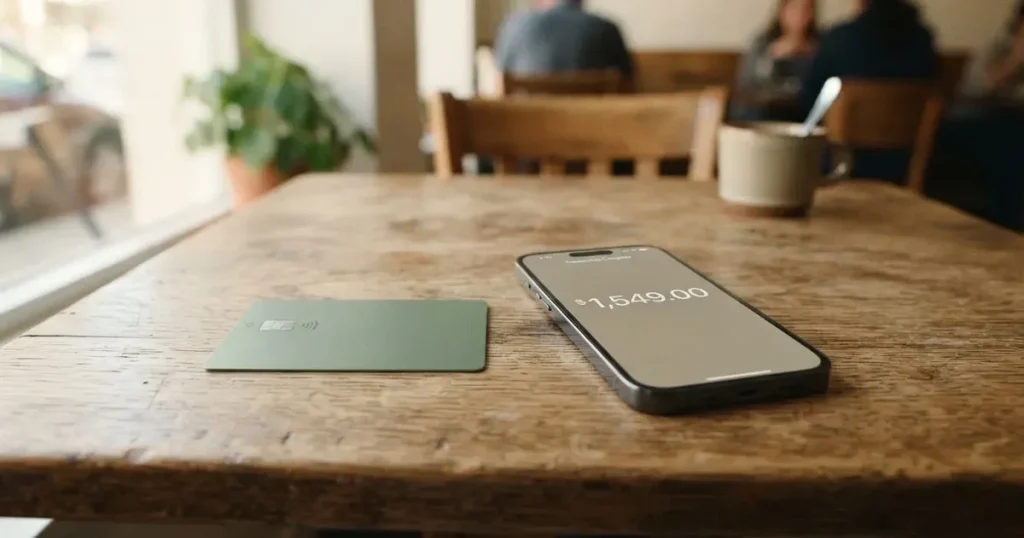
Tegro is a virtual Visa that lives entirely inside a Telegram bot. You order it, top it up with USDT on the Tron network, and spend the balance anywhere Visa is taken online, in apps, or through Apple Pay and Google Pay. There is no plastic card, no bank account, and no identity check for the basic product. That combination is unusual enough to look at closely, because every convenience it offers comes with a trade-off: a single funding coin on a single network, a 4% loading fee, an unnamed issuing bank, and very little public information about the company behind it.
This review walks through who Tegro actually works for, what it costs in practice, how the daily experience holds up, and where the edges are. The conditions described here are current as of October 28, 2026.
Verdict
Tegro earns 4.7 out of 10 in this review. The card does what it says on the tin: it turns USDT sitting on Tron into a spendable Visa balance in minutes, with no passport, no selfie and no paperwork. For someone who already holds USDT on TRC-20 and wants a frictionless way to pay that does not run through a traditional bank, the basic pitch lands. The score is dragged down by the cost of loading, the narrow funding rail, the absence of disclosed licences and the near-empty public track record.
A quick read of the marks behind the total:
| Criterion | Mark | Why it matters |
|---|---|---|
| Who can get it | 7 / 10 | Works wherever Visa is accepted; no country list, but sanctioned-country residents are excluded. |
| Cost | 3 / 10 | $13 issuance, no monthly fee, but a 4% top-up fee and a $50 minimum make a $50 card cost $65. |
| Top-up options | 4 / 10 | USDT TRC-20 only; anything else must be swapped into TRC-20 first. |
| Reliability and complaints | 4 / 10 | Issuing bank not named, operator is Libermall LLC, licences not disclosed; no complaints found, one positive review. |
| Everyday use | 5 / 10 | Virtual-only Visa in a Telegram bot, Apple Pay and Google Pay work, no plastic and no ATM. |
| Total | 4.7 / 10 | Best suited to USDT TRC-20 holders who want a no-KYC card and accept the costs and the opacity. |
The audience for this card is narrow but real: a USDT TRC-20 holder who wants a no-KYC card and is comfortable with the fact that the issuing bank is not publicly named. If you sit outside that description, the trade-offs pile up fast.
Who Tegro will give the card to
Tegro does not publish a country list. The terms say the card works “wherever Visa is accepted” and the only explicit exclusions are people in countries under international sanctions and people on sanctions lists. The service requires you to confirm you are 18 or older and that you are not in a sanctioned country. Nothing in the public terms ties the card to a residence or a citizenship beyond that.
Because there is no identity check for the virtual card, eligibility is effectively self-attested: you open the Telegram bot, tick the boxes, and you are in. The terms note that KYC only kicks in for “part of the products” with extended features, and that monitoring of unusual activity can trigger a request for more information. The list of activities or thresholds that count as “unusual” is not given. What this means in practice is that the on-ramp is open, but the off-ramp is at Tegro’s discretion.
For a reader without easy access to a bank card, the lack of a country list is two-edged. On one hand, you do not need to check whether your country is “supported” before trying. On the other, the absence of a country list means the card’s availability in your specific location is something you only confirm by signing up and seeing whether the bot blocks you.
How to get the card
Sign-up is the part Tegro has stripped to the bone. The service runs entirely inside a Telegram bot, and the ordering bot is @TegroCardbot. There is no app to download, no website form, and no document upload for the basic product.
The flow is short:
- Open @TegroCardbot in Telegram.
- Order a card through the bot.
- Send USDT on the Tron network (TRC-20) to the address the bot gives you, in the exact unique amount it specifies.
- The bot credits the deposit and issues a virtual Visa with a card number, expiry and CVV in the chat.
There is no KYC for the virtual card, which the service describes as “zero KYC”: no passport, no selfie, no verification. A later KYC step exists for “part of the products” with extended features and would ask for your name, date of birth, citizenship, address, ID and selfie. The terms do not say which features trigger that step or what the rejection criteria are.
Because the card is virtual only, there is no delivery step. There is also no physical card, no PIN mailer, and no shipping address to worry about. The card details arrive inside the Telegram chat, which is also where you will use them. The currency of the card and the limits are quoted in US dollars, and the card limit at start is $1,000.
Two things to check before you sign up: first, that you actually use Telegram, since the bot is the product, not a companion to it; and second, that you can send a TRC-20 transaction, because other networks will not be accepted.
Fees and the real cost of using Tegro
This is where the score takes its biggest hit. The headline pricing is simple and small: a $13 one-time issuance fee, no subscriptions, no monthly fee. The catch sits in the top-up fee and the minimum balance.
Here is the costs picture as published:
| Fee or limit | Amount |
|---|---|
| Issuance | $13 one-time |
| Monthly fee | None |
| Top-up fee | 4% of the amount |
| Minimum card balance | $50 |
| Card limit at start | $1,000 |
| FX fee | Not stated |
| Conversion spread | Not stated |
| ATM withdrawal | Not stated (no physical card) |
| Daily and monthly spend limits | Not stated |
Three everyday examples make the cost feel more concrete than a table.
Loading $100 to spend on groceries. The bot credits $100 minus the 4% fee, so $96 lands on the card. You then pay with Apple Pay at a supermarket for, say, $96 worth of goods. If the merchant charges in a non-USD currency, the Visa exchange rate applies and the card does not state an additional FX fee on top. That does not mean there is none; it means the card’s terms do not document one. Treat anything FX-related as a question to put to support before you travel.
Loading the minimum $50. A $50 card costs $65 in total: $50 to spend and $13 + 4% to load. In percentage terms, the 4% top-up fee on $50 is $2, so $50 of usable balance costs $15 in total fees. The smaller the top-up, the steeper the effective fee.
Paying for an online subscription in euros. You load USDT, the bot deducts 4%, the card settles in USD if the merchant settles in USD, or in the merchant’s currency if not. With no published FX fee and no published spread, you are exposed to whatever Visa’s rate is on the day and to any markup the issuer adds. The terms do not quantify it, which is itself the problem.
Beyond the published fees, a few related points are not stated: whether you pay the Tron network fee on top of the 4%, what the conversion spread is between USDT and USD, and whether the $1,000 starting limit is a hard cap or a soft one that lifts over time. The terms note that limits depend on card type and may change, without giving numbers.
Top up: how funding works
Top-up is the second place Tegro is genuinely narrow. Only one coin, on one network, is accepted: USDT on Tron, the TRC-20 standard. Everything else has to be converted into TRC-20 USDT before it reaches the bot, which usually means a swap on an exchange, the network fees for that swap, and the spread on the conversion pair.
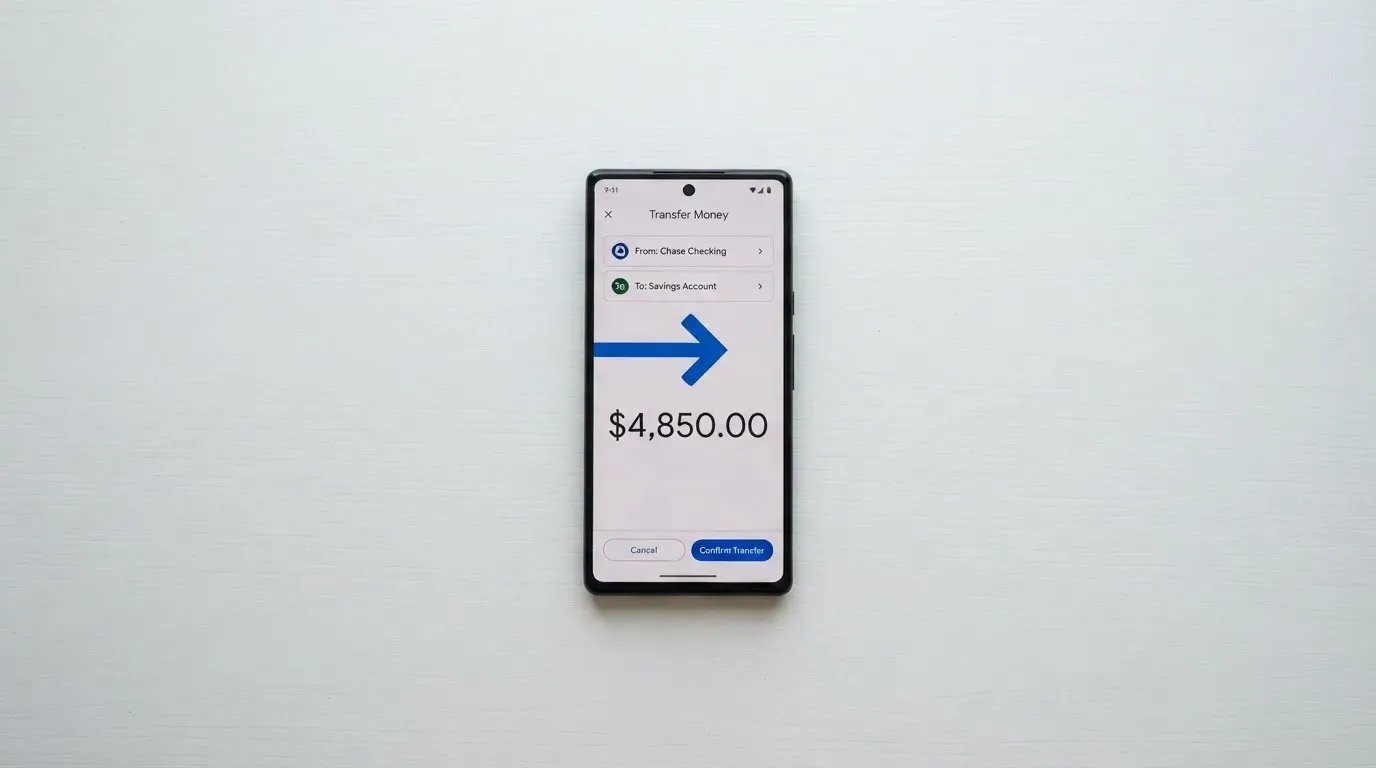
The mechanics in the bot are designed to be hard to mess up. The bot issues a deposit address and a unique amount, and credits your balance automatically once the transfer confirms. Tron transfers typically settle in a minute or two, and the small network fee is paid in TRX. The terms do not say who pays the Tron fee, but in practice the user’s wallet pays it because that is how Tron transactions work.
A few practical points that come up in real use:
- The unique-amount trick is what lets the bot credit the right account without a memo or tag. Send any other amount and the bot cannot match it, and the funds can be hard to recover.
- Sending USDT on the wrong network is the single most expensive mistake. If you send USDT on Ethereum, on BNB Smart Chain, or on any chain other than Tron, the bot will not see it. Blockchain transfers are irreversible, and the terms warn that crypto transfers cannot be undone. Recovery in that case depends on Tegro’s support, not on any guarantee.
- A separate top-up from a bank card or a bank transfer is not offered. If you do not already hold USDT on TRC-20, you first have to buy it somewhere, move it to your own wallet, and then send it to the bot.
- The minimum card balance is $50, the top-up fee is 4%, and the issuance fee is $13, so the cheapest usable card is $65 all in.
What this means for you is straightforward. If your crypto is already on Tron, Tegro is convenient. If your crypto is anywhere else, Tegro is a worse option than a card that accepts the network you already use.
Paying with Tegro every day
Once the balance is loaded, the card behaves like any other Visa online. The details arrive in the Telegram chat, you paste them into a checkout form, and the payment goes through. For in-store use, you add the card to Apple Pay or Google Pay from the chat details and pay at the terminal by tapping your phone.
What works without friction in everyday use:
- Online checkouts that take Visa and do not block foreign-issued prepaid BINs.
- App-store and subscription payments, provided the merchant does not require 3-D Secure with a one-time code the bot cannot deliver.
- Contactless in-store payments via Apple Pay and Google Pay, where the wallet tokenises the card number.
What is missing or not stated:
- No physical card, so no contactless tap-to-pay with a card and no ATM cash withdrawal.
- No card control app, no in-app spending analytics, no instant freeze. The Telegram bot is the only interface.
- No 2FA, no biometric check, no in-app card lock described in the terms.
- No published list of blocked merchant categories, although MCC 7995 (gambling) and similar categories are commonly blocked by prepaid programmes.
- No cashback, rewards or sign-up bonus. None is mentioned.
For disputes, the terms say returns and chargebacks are processed in line with payment-system rules and partner timelines. The suggested path is to try the merchant first and contact support afterwards. No time frames are given, and the governing law is Wyoming, USA.
The practical implication: everyday spending works, but you are leaning entirely on Visa’s dispute process and on a support channel that replies “within a day” through a separate Telegram account, @Tegro_bot. There is no app to push a notification, freeze a card, or generate a one-time code.
What can go wrong with Tegro
The risks with Tegro fall into three buckets: the company behind it, the funding rail, and the safety features that are missing.
On the company side. Tegro is the brand and the ordering interface. The actual card is issued by a “Visa partner bank” that is not named. The operator behind the terms page is Libermall LLC. Neither the issuing bank nor Libermall’s licences are disclosed in the public terms. That does not make the card unsafe, but it does mean the reader has no published regulator to point at if something goes wrong. The terms do specify that Libermall may suspend or terminate your access for violations, legal requirements or fraud prevention, and that the balance on closure is not described.
On the funding rail. USDT on Tron is a deliberately narrow pipe. The good side is that Tron fees are low and transfers settle in minutes. The bad side is that USDT is a custodial stablecoin: Tether says it disables tokens in wallets on the OFAC sanctions list and has frozen funds tied to illicit activity, so the “crypto is censorship-proof” pitch does not hold at the issuer level. Stablecoins can also depeg, which is not a Tegro-specific risk but is a risk that runs through the top-up. Circle stopped supporting USDC on Tron in February 2024, so any attempt to substitute USDC on TRC-20 will not work.
On the safety features. The card is custodial in the Visa sense: the partner bank holds the programme and Tegro runs the front end. Tegro’s own terms advise never sharing the PAN and CVV and not storing them unencrypted, and reserve the right to pause an operation or restrict access on risk. There is no 2FA, no in-app freeze, no insurance, and no segregation of customer funds described. For a reader whose only balance is on the card, the practical safeguard is the same as for any prepaid Visa: do not keep more on it than you can afford to lose access to, and load only what you plan to spend soon.
On the public-feedback side, the picture is thin. One Trustpilot review from June 2026 calls the card simple, while flagging that clear limits, fees and responsive support will matter as the service grows. No substantive complaints were found, and no Reddit threads surfaced. A Product Hunt-style listing on hunted.space shows zero upvotes, one comment, and no user feedback. The Trustpilot page is for tegro.cash, which is a possibly related brand rather than the same domain as the Tegro Card bot, so the link to this specific card is unconfirmed.
What this means in one line: the card does what it claims, but you are trusting an unnamed issuing bank, an operator that publishes no licences, and a USDT-on-Tron rail that has its own failure modes.
What to take instead of Tegro
The honest comparison is between Tegro and other no-KYC or low-KYC crypto cards that live outside the traditional banking rails. Three alternatives sit in a similar niche, with different trade-offs.
MaxSwap (5.2 / 10). A virtual Mastercard, no geographical restrictions claimed. The issuance path is more expensive: a $50 card with a $25 first deposit, for a total around $77. Top-up is 4.5% plus $1, transactions cost $0.25 plus 0.4%, and the published material notes that users should “take into account possible fees when paying and converting currencies.” The funding list is much wider than Tegro’s: ADA, ALGO, AVAX, BCH, BNB, BTC, DOT, ETH, HBAR, HT, KRRX, LINK, LTC, MATIC, NEAR, SHIB, SUSHI, TON, TRX, UNI, USDC, USDT, XLM, XRP. If your crypto is not on Tron, MaxSwap is a more flexible fit; if you specifically want USDT TRC-20 and the lowest funding fee, Tegro is cheaper to load.
Karta (7.9 / 10). A Visa Signature available in 200-plus countries, with both virtual and physical cards. Virtual activation is 5 USDT (the FAQ shows an old 30 USDT price struck through), physical from 100 USDT, no monthly fee listed. Crypto top-up is free, card payments cost 1.5%, SEPA is 1.5% plus €2, SWIFT in USD is 1.4% plus $2. Funding covers USDT or USDC across Tron, Ethereum, BNB Smart Chain, Polygon, Arbitrum, Optimism, Base, and Solana, plus fiat rails like ACH, SWIFT, SEPA, PIX, COP bank transfer, and SPEI. Cashback is claimed at an undisclosed rate, with referral rewards in KARAT points (1 KARAT = 0.01 USDT). Karta is the more expensive and more compliant end of this comparison: it asks for verification, costs more up front, and gives you a wider funding list, both card forms, and a published programme.
Worldwide (4.2 / 10). A Russian-language Telegram mini-app card, marketed as orderable and top-upable “from Russia without a VPN.” The product, Karta Without Borders, is a virtual Mastercard in tiers Standard, Premium, Promo and Business; Standard starts at 2,900 RUB a year, Premium at 3,900 RUB a year, Promo at 2,390 RUB to issue with 0% top-up in the first year, and Business at 12,900 RUB a year. Card operations are listed at $0.00, SBP top-up carries no transfer fee, and the FX rate is described as “close to exchange / central bank rate,” shown before top-up. Top-up is by SBP from any Russian card or account, credited in minutes. Eligibility rules and country coverage are not described, and the App Store app does not state where the card is issued. Worldwide is a fit for a reader whose funding is in rubles and who wants SBP; for anyone else, the cost structure and the geographic ambiguity make it a less obvious choice.
Pulled together, the alternatives look like this:
| Card | Mark | Card type | Funding breadth | Top-up fee | KYC |
|---|---|---|---|---|---|
| Tegro | 4.7 / 10 | Virtual Visa | USDT TRC-20 only | 4% | None for virtual |
| MaxSwap | 5.2 / 10 | Virtual Mastercard | 24 coins, no network list | 4.5% + $1 | Not stated |
| Karta | 7.9 / 10 | Virtual and physical Visa | USDT/USDC on 8 chains, plus fiat | 0% (crypto) | Required |
| Worldwide | 4.2 / 10 | Virtual Mastercard | SBP from Russian accounts, USDT TRC-20 (app) | 0% in first year (Promo) | Not stated |
The short version: Tegro is the cheapest to load if you already hold USDT on Tron and you want zero KYC; Karta is the most rounded product for a reader who can pass KYC and is willing to pay more up front; MaxSwap sits in the middle on cost and on funding flexibility; Worldwide is a regional fit.
Who I would recommend Tegro to
After walking through the cost, the funding rail, the daily experience and the alternatives, my recommendation is narrow.
Tegro makes sense if all of the following are true: you already hold USDT on the Tron network, you specifically need a Visa that works without KYC, you are comfortable with a Telegram bot as the only interface, and you are not parking more on the card than you can afford to lose access to. Under those conditions, the 4% top-up fee, the $13 issuance fee and the $50 minimum are the price of a no-paperwork Visa, and the trade-off is fair.
Tegro does not make sense if you want to fund the card from a bank transfer, if you want a physical card or ATM access, if you want cashback, if you want a card from a named and licensed issuer, or if you hold most of your crypto on a chain other than Tron. In each of those cases, Karta is the more rounded product, MaxSwap is the more flexible funding choice, and Worldwide is worth a look if you specifically need SBP from a Russian account.
The honest summary is this: Tegro is a small, focused tool that does one thing well and asks you to take a lot on trust. For the right reader, that is enough. For most readers, the same job is done better by a card with disclosed licences, a wider funding list, and a published fee schedule.
Frequently asked questions
What is Tegro card?
Tegro is a virtual Visa that runs inside a Telegram bot, designed to be paid from a balance loaded with USDT on the Tron network. It is targeted at users who want a no-KYC way to spend stablecoins anywhere Visa is taken, online or through Apple Pay and Google Pay.
How does Tegro card work?
You open the @TegroCardbot in Telegram, order a card, send USDT TRC-20 to the deposit address and unique amount the bot gives you, and the bot credits your balance. The card details arrive in the chat, and you can use them online or add them to Apple Pay or Google Pay for in-store payments. The card is prepaid, so it spends only the balance you have loaded.
Is Tegro a bank?
No. Tegro is the brand and the ordering interface; the card itself is issued by an unnamed Visa partner bank. The terms name Libermall LLC as the operator. No banking or e-money licence is disclosed in the public material.
Who owns Tegro?
The published terms identify Libermall LLC as the operator of the service. The issuing bank is described only as a “Visa partner bank” and is not named. There is no public information on the ownership of Libermall LLC.
Is Tegro card available in my country?
Tegro does not publish a country list. The terms say the card works wherever Visa is accepted and exclude people in sanctioned countries and on sanctions lists. Because there is no published supported-country list, the only way to confirm availability is to open the bot and try.
How do I get a Tegro card?
Open the @TegroCardbot in Telegram, order a card through the bot, send USDT on the Tron network to the deposit address and amount the bot specifies, and wait for the bot to credit the balance and issue the card details. The basic product does not require documents.
Does Tegro card require KYC?
Not for the basic virtual card. The terms describe a “zero KYC” path with no passport, selfie or verification. KYC is reserved for “part of the products” with extended features, and monitoring of unusual activity can trigger a request for more information. The terms do not say which activities count as unusual.
How do I top up Tegro card?
Send USDT on the Tron network, TRC-20, to the deposit address and unique amount the bot gives you. The bot credits the balance automatically once the transfer confirms. Top-ups cost 4% and require a $50 minimum card balance, and the first card carries a $13 issuance fee. Other coins and other networks are not supported.
How do I add Tegro card to Apple Wallet?
Copy the card details from the Telegram bot and add them to Apple Wallet as you would any Visa. Because the card is virtual only, there is no plastic to enrol. Google Pay works the same way. Some issuers require an extra verification step in the wallet app, which the bot may or may not be able to complete.
Is Tegro card safe?
Tegro’s terms advise never sharing the PAN and CVV, and the operator can pause an operation or restrict access on risk. The card is custodial in the sense that the issuing bank holds the programme, but no 2FA, in-app freeze, insurance or fund segregation is described. Public feedback is thin: one positive Trustpilot review and no substantive complaints found, on a domain whose link to this specific card is unconfirmed. Treat it as a small, low-trust prepaid Visa, not as a primary account.
Virtual cards – cryptocardbasics
Content created by the «cryptocardbasics» team