
What the Cryptomus card really costs, and who should avoid it
 Available in US
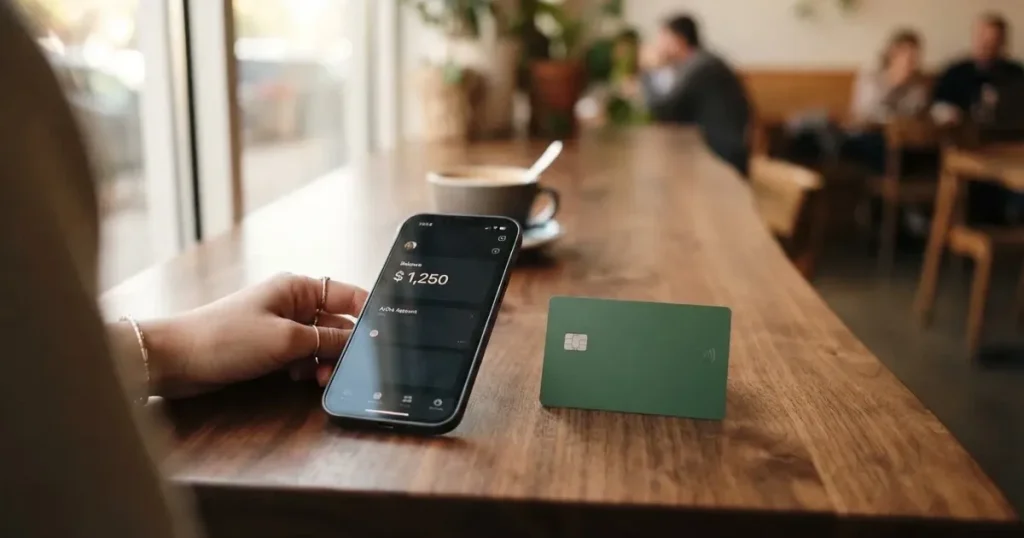
Most crypto cards promise the same three things: spend your crypto anywhere a card is accepted, pay one tidy fee, and get a card in your pocket the same afternoon. The Cryptomus card does some of that well and none of it generously. It is virtual-only, it charges you to top it up, it converts your crypto into fiat before you spend a cent, and the public pages leave several large blanks — no country list, no monthly fee figure, no ATM policy, no spending limits. Add a Trustpilot score of 2.4 out of 5 across 521 reviews, and a documented case of a card being deactivated after a $1,200 transaction with the refund refused, and you have a product that works as described for people who pay online with USDT and is a poor fit for almost everyone else.
I scored it 4.7 / 10. That is not a rounding of a good product down. It is a product with two real strengths — reach and speed — sitting on top of an unresolved set of questions about who runs the card programme, what it costs in total, and what happens when something goes wrong.
Conditions described here are current as of October 28, 2026.
Verdict: 4.7 out of 10
The score below is my own, broken down by the seven things I could actually check. Where the card’s own pages say nothing, I scored the gap rather than guessing at the answer — a missing number is not a good number.
| Criterion | Mark | Why |
|---|---|---|
| Who can get it | 8 / 10 | “Most countries worldwide”, with local regulation caveats; no country list, and that list may change |
| Cost | 3 / 10 | Issuance 4 USD, top-up 3.2%, monthly or inactivity fees that depend on card type; FX 3.9% is unconfirmed third-party |
| Top-up options | 5 / 10 | USDT and USDC; networks not specified, list may expand |
| Reliability and complaints | 3 / 10 | Issuer and legal entity not named; Trustpilot 2.4/5 from 521 reviews, a virtual card deactivated after a 1,200 USD payment, refund refused, AML holds on funds |
| Everyday use | 4 / 10 | Virtual Visa and Mastercard only, NFC phone payment mentioned; Apple Pay and Google Pay, and ATMs, are unconfirmed third-party |
| Total | 4.7 / 10 | — |
Two groups suit it. The first is people already inside the Cryptomus ecosystem who pay online — subscriptions, hosting, software, digital services — in USDT, and who treat the card as a convenience wallet rather than a primary payment method. They get a working Visa or Mastercard number in minutes, they spend a balance they have already converted, and the top-up fee is a known percentage rather than a surprise. The second group is people in countries where an ordinary bank card is genuinely hard to obtain or maintain, and who need a card number now rather than a branch appointment next month.
Everyone else should look elsewhere. If you want a physical card in the post, cash at an ATM, a clear monthly fee, Apple Pay, or a named issuer you can complain to, this card does not offer those things today — see the alternative cards below for the four options I scored higher and what each costs.
Will they give you the card?
Yes, to almost anyone, and that is the card’s strongest feature — with one large asterisk.
The card’s own page says “Most countries worldwide”, and adds that access may be restricted by local regulation. There is no country list published, and the list may change. That is the whole of it. No eligibility criteria, no exclusions, no list of blocked jurisdictions to check against before you sign up.
The question you should ask, and cannot get answered from the public pages, is narrower than “is my country allowed”: is it my country of residence, or my citizenship? The card does not say. This matters more than it might look. In this industry, nationality is recorded and screened separately from residence, because sanctions screening and issuer risk policy are applied to citizenship and country of birth as well as to address. A provider can be open to residents of a country while its issuing bank will not touch citizens of particular ones. If your situation is unusual on that axis — dual citizenship, residence in one country and citizenship in another, a country with heavy sanctions exposure — you could pass the front line and fail at verification, and you would find out late.
What I can tell you is the shape of the answer: very broad, with local law as the limiting factor, and not guaranteed for anyone whose citizenship or residence the unnamed issuer dislikes.
How to get it
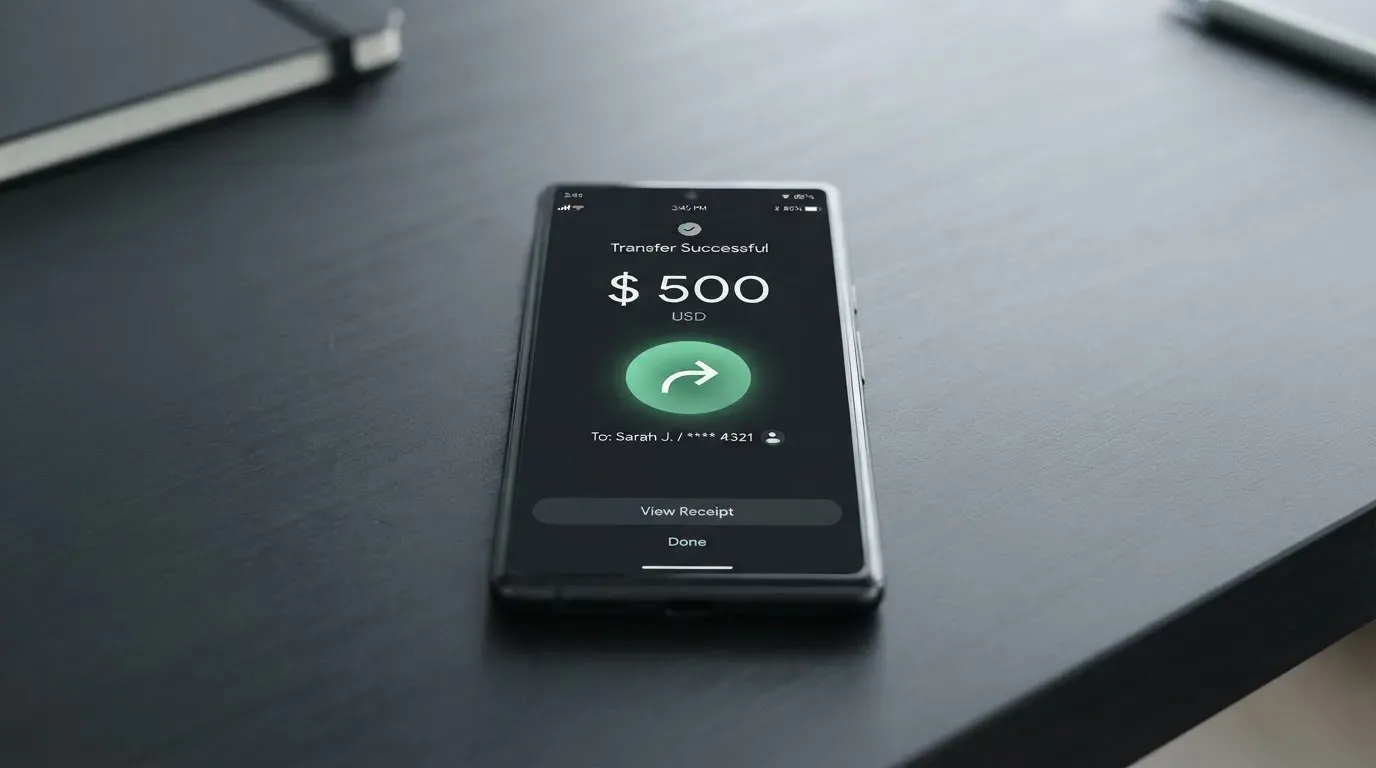
The stated path is short. Register on Cryptomus, pass KYC, and the card is issued — for the virtual cards. There is no physical card. The card is “issued instantly and works immediately after activation”.
The card itself is virtual, on either Visa or Mastercard. The page mentions “10+ BINs”, multi-currency capability, and names no currencies. It also mentions NFC payment from a phone, which implies you can add it to a mobile wallet, though the card does not name which ones (Apple Pay and Google Pay are listed by a third-party source, not by Cryptomus).
Everything else about onboarding is unstated, and these are the gaps that decide whether you are in or out:
- Which documents you need — not stated.
- Proof of address — not stated.
- Age requirement — not stated.
- KYC tiers — not stated. There is one flat instruction: register and pass KYC. No levels, no processing time, no stated reasons a check might be rejected.
That last point is worth pausing on. Because the KYC structure is opaque, and because the issuer is not named, the practical consequence is that you cannot estimate your odds before you start. You find out whether your documents are accepted, and whether your nationality passes, only after you have handed over the documents. Prepaid and debit cards are generally available to adults from 18, and some issuers set higher limits, but I cannot tell you Cryptomus’s floor because it does not publish one.
Activation is immediate rather than a delivery wait, which is the genuine convenience here. There is no mail, no courier, no lost card in a postbox.
Fees: what it really costs
This is where the card is weakest, and the problem is not the size of the fees — it is how little of the fee schedule is published.
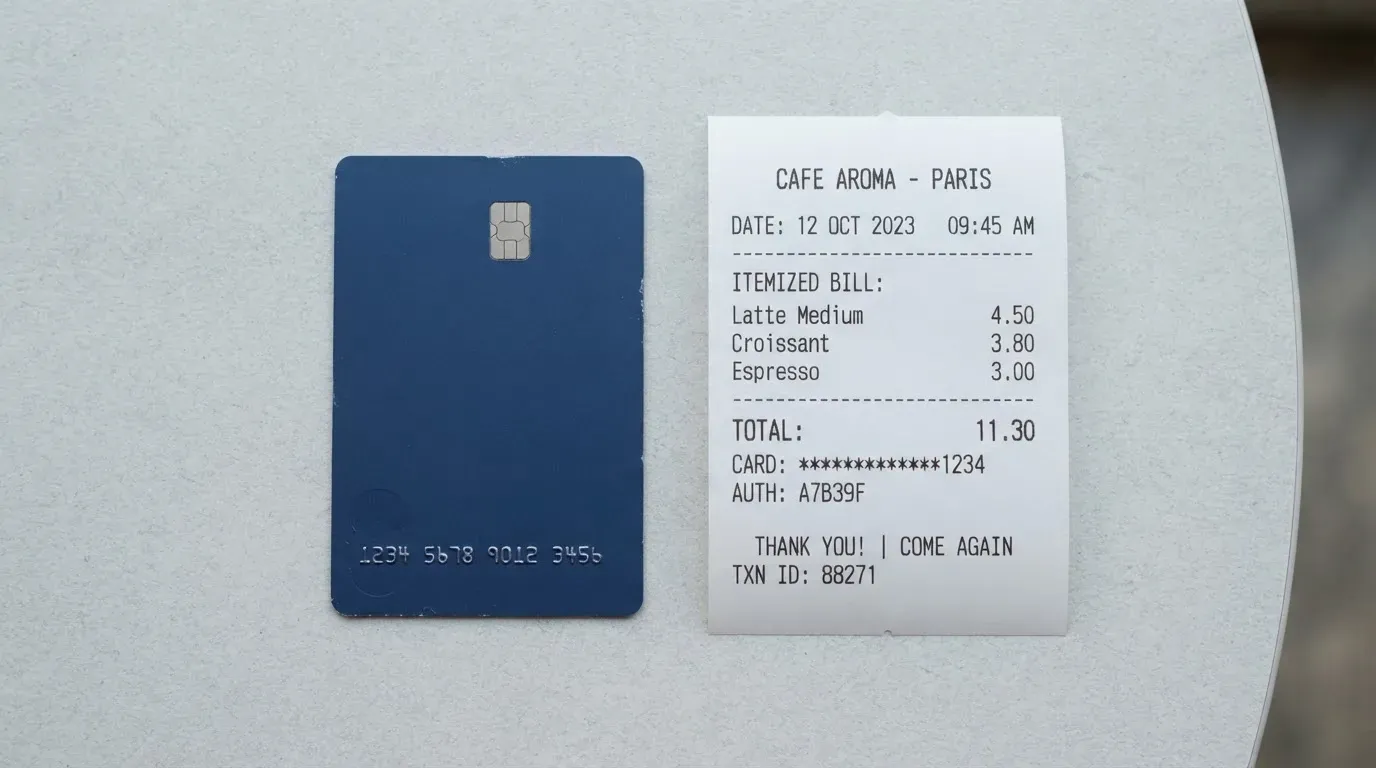
Two figures are confirmed by the card itself. Issuance costs 4 USD. The top-up fee is 3.2%. Everything else is either unstated or third-party.
| Item | Amount | Source |
|---|---|---|
| Issuance | 4 USD | Card’s own page |
| Monthly fee | Not stated; optional maintenance/inactivity fees depend on card type | Card’s own page |
| Top-up fee | 3.2% | Card’s own page |
| Crypto-to-fiat conversion | At the market rate at the time of top-up | Card’s own page |
| Payment/conversion fees | “May vary”, no figure | Card’s own page |
| FX fee | Not stated; 3.9% reported by a third-party site, unconfirmed | Unofficial |
| ATM | Not stated; two third-party listings contradict each other (one says ATMs unavailable, virtual-only; one says ATM withdrawal limit “unlimited”) | Unofficial, undated |
| Daily and monthly spending limits | Not stated; $10,000 daily and $25,000 monthly reported by a third-party site, unconfirmed | Unofficial, undated |
There are no named card tiers. The page says only “Choose a card that fits your needs”, and tells you that some fees depend on the card type without telling you which types exist or what each costs. So the maintenance and inactivity fees — the ones that quietly eat a few dollars a year when you are not using the card — are real, acknowledged, and unquantified.
Two everyday payments, with the fees that apply
A 100 USD software or hosting subscription paid with USDT. You send the crypto to the platform; the top-up fee of 3.2% is charged on the way in, so the balance you receive is 96.80 USD of the 100 USD you moved. The crypto is converted to fiat at the market rate at the moment of top-up, not at the moment you pay the subscription — so the conversion rate is locked in when you load, and any movement between loading and paying is yours. On the payment itself, the card says conversion and payment fees “may vary” and gives no number, so I cannot tell you what lands on the merchant statement. If the subscription prices in dollars and your card balance is dollars, no FX cost arises; if it prices in euros, an FX fee may arise and the card does not say how much.
A 30 USD meal paid from a card balance you loaded in euros. Here the FX question becomes real, because the card is multi-currency but does not name its currencies or its FX markup. The only figure anyone has published is 3.9%, from a third-party site that the card has not confirmed — treat it as a thing to ask about, not a thing to plan around. The same paragraph carries the ATM contradiction: one listing says ATMs are unavailable because the card is virtual-only, the other says the ATM withdrawal limit is “unlimited”. Both are undated and unofficial. Until Cryptomus publishes something, assume you cannot get cash.
The honest summary: you know what you pay to load the card and you know what it costs to open it. Everything else — monthly, inactivity, FX, per-payment conversion, ATM — is either a variable the card declines to quantify or a number from someone who is not Cryptomus.
How to top it up
Top up in USDT or USDC, and the list may expand. The card converts your crypto into fiat at the time of top-up and funds the card in fiat, so the card never holds crypto — it spends a currency balance you have already paid to load. The top-up fee is 3.2%, the same figure as in the fee schedule above.
What the card does not say:
- Which networks USDT and USDC can arrive on. Not specified.
- Minimum top-up. Not stated.
- Fiat top-up options — whether you can add money by card, bank transfer or anything else. Not stated.
- How to withdraw — getting the card balance back to crypto or to a bank, and closing the account. Not stated.
The missing network list is the sharpest practical gap. Blockchain transfers are irreversible, and a deposit sent on a network the provider does not support, or to an address belonging to a different network, can be lost or need manual support recovery with no guarantee. This is not a hypothetical nuisance: stablecoins exist on many chains — USDT on Ethereum, Tron, Solana, Polygon, Avalanche and others; Circle lists USDC as natively supported on 38 networks as of 16 September 2026 — and two of them have specific traps. ERC-20 gas fees are paid only in ETH, so a wallet holding USDT and no ETH cannot send. Circle stopped supporting USDC on Tron in February 2024, so “USDC over TRC20” is not a native option. If you are going to load this card, work out the network question in the app before you send anything, not after.
One more thing that belongs here rather than in the risk section: on-chain network fees for your deposit are charged by the blockchain, not by Cryptomus. They are separate from the 3.2%, and they come off the amount you send.
Paying with it every day
The honest description is: this is an online payment card, and using it as anything else will disappoint you.
- No physical card. Virtual only, “issued instantly and works immediately after activation”. No plastic, no ATM of your own.
- Networks: Visa and Mastercard, with “10+ BINs” and multi-currency capability. Currencies unnamed.
- Phone payment: NFC payment from a phone is mentioned by the card. Apple Pay and Google Pay are listed as supported only by a third-party source; the official page names neither.
- In the app: available in the App Store and Google Play, with expense control and transaction history. Store ratings are not stated.
- Rewards: the cards page mentions no cashback or rewards programme. Not stated — which for a card charging a 3.2% top-up fee is a notable absence.
- Blocked merchant categories: not stated. That matters if you want to know before you try, because in this category issuers block codes by policy rather than by law — MCC 7995 covers casinos, betting and lotteries — and the blocked list varies by issuer. With no published list, the only way to find out is to find out.
- Disputes and chargebacks: not stated. The FAQ page carries no card content.
That last point deserves a sentence of context rather than alarm. A chargeback is a refund ordered by the issuer to settle a dispute, with reason codes such as fraud, duplicate billing or goods not received, and prepaid-card coverage varies by issuer and by country — US debit card reversal rights come from Regulation E, and you should not assume a crypto card inherits them. If a merchant disputes a payment from this card, there is no published procedure telling you what to do.
There is a general risk here that is not Cryptomus-specific but will shape your experience. Merchants can look up the BIN to see which institution and country issued a card, and some apply extra scrutiny when the issuer country differs from the billing address — which is why a card issued in one country looks foreign to a shop in another. Some merchants decline prepaid or foreign BINs for exactly that reason, and Address Verification Service, which compares the numeric parts of a billing address against issuer records, is mainly offered in the US, Canada and the UK and is generally unavailable for foreign-issued cards, which can cause declines. Since the issuer here is not even named, I cannot tell you what country your card will appear to come from. Treat some declines as structural, not as bad luck.
Finally, if the payment is declined, the authorisation may leave a hold on funds that can remain for several days, typically up to 7.
What can go wrong
Here is the part of the review I find most important, because the card’s own pages are reassuring and the record outside them is not.
Nobody will tell you who runs this card. The issuing entity and the legal entity behind the card programme are not stated. That is not a technicality. In this category, a card payment involves several parties: Visa or Mastercard routes the messages and sets the rules, a licensed issuer holds the card programme, and the crypto brand is often only a programme manager or front end that markets it. The card says nothing about which of those Cryptomus is. Visa and Mastercard do not issue crypto cards to consumers themselves — they license issuers and can suspend a programme — and they have done it: Visa terminated its global agreements with FTX on 13 November 2022, and WaveCrest, a Visa issuer that supplied several crypto card brands, was suspended by Visa in Europe in 2018, closing all WaveCrest-issued Visa programmes. Programme closures follow a pattern — a notice period, then loading and spending stop, then you are asked to withdraw remaining balances.
The complaints are specific, not vague. Trustpilot shows cryptomus.com at 2.4 out of 5 from 521 reviews as I read them on 2026-10-20: 43% one-star and 49% five-star, a split distribution that usually means a firm with a small very happy group and a large very angry one. Most of that is about the payment service rather than the card. Trustpilot flags the profile as “may be associated with high-risk investments”. On the card specifically, one user report dated 24 September 2026 describes a virtual card being deactivated after a 1,200 USD transaction and the refund refused; the company’s explanation was that the issuing bank blocked the card after high decline rates and that Cryptomus does not control that card programme. Read that twice: the company is telling you that the entity which can switch off your card is not them and that you have no route to it.
Funds have been held. There are recurring AML and KYC holds on funds reported across August to October 2026, on dates including 30 August, 6 September, 14 September, 17 September and 6 October. This is not misconduct by the company — holding money during review is what anti-money-laundering law requires. KYC rules oblige regulated businesses to verify customers and assess risk, including ongoing monitoring and suspicious-activity reporting; in the EU, due diligence covers name, address, date of birth, nationality, identity documentation, a sanctions check, the purpose of the relationship, and whether you are a politically exposed person; and if due diligence cannot be completed, EU rules require the institution to refrain from the transaction or end the relationship. In the US, the customer identification programme requires name, date of birth, address and an identification number, with electronic systems also validating proof-of-address documents. In practice, that produces frozen balances and closed accounts for people who did nothing wrong.
Support is thin and slow. The listed channels are a Telegram bot (cryptomus_support_bot), an email address ([email protected]) and an FAQ. Languages and hours are not stated. Users report slow responses and tickets closed as duplicates in the same August–October 2026 window. If your card is deactivated, a Telegram bot is who you are talking to.
The fees themselves are unconfirmed. Third-party sources disagree — one describes a free virtual card with 0.5% conversion, which contradicts the 4 USD issuance and 3.2% top-up fee on the card’s own pages. Where the aggregators and the issuer disagree, trust the issuer, and expect this one to keep changing.
On security features, the card is reassuring and silent. It lists 3D Secure authentication, freeze and unfreeze, biometric authentication, and states that no one will be able to withdraw funds or pay without your knowledge. It also links a CertiK project page. What it does not say: who custodies the funds, and whether any insurance applies. That second blank is the one that matters. An electronic money institution in the EU must safeguard customer funds by segregating them in dedicated accounts or insuring them, but such funds are not the same as bank deposits and may not be covered by deposit guarantee schemes. If the entity behind this card is an EMI rather than a bank — and the card does not tell you — your balance may sit in that weaker category. I note also that MiCA allows e-money tokens to be issued only by a credit institution or an electronic money institution, and that a card is regulated separately from the crypto side, so a product like this often rests on two licences. Which ones apply here is not stated.
What to take instead
Three alternatives score higher than Cryptomus, and one is closer than the others in kind. Here is how they compare, and I have kept to what each provider publishes.
| Option | Score | Card | Cost | Top-up | Rewards |
|---|---|---|---|---|---|
| Bitrefill | 6.8 / 10 | Virtual and physical Visa; EUR | Free through the app; issuance and monthly amounts not stated; inactivity fee after 12 months without spending or cash-out, amount not stated | Bitcoin, Lightning, Ethereum, USDC, USDT, Solana, BASE, Polygon, Li.Finance, Apple Pay, Google Pay, Visa, Mastercard; SEPA transfer per terms | 2% total cashback, no cap — 1% per crypto deposit, 1% per purchase; payout currency not stated on the page |
| UPay | 6.1 / 10 | Virtual and physical, personal and business; network not named; converts to USD, EUR, AED and others | Not stated | Wallet top-up with BTC, ETH or USDT, USDC also listed; networks not stated | No cashback stated on the card page |
| Kemy | 6.0 / 10 | Unlimited virtual cards (Visa on mockups) and one physical Mastercard, contactless | Virtual: 15 USD issuance valid 3 years, 2 USD/month. Physical: 250 USD issuance with DHL Express, 10 USD/month, 1 card per user | USDT and USDC on the main networks (specific chains not listed), plus BTC, ETH, SOL; fiat via mobile money and virtual bank accounts | Cashback not mentioned |
| Cryptomus | 4.7 / 10 | Virtual Visa and Mastercard only | 4 USD issuance; monthly and inactivity fees unstated and type-dependent; top-up fee 3.2% | USDT and USDC; networks not specified | Not stated |
Bitrefill is the one to look at first if you want a physical card and a stated reward. It pays 2% cashback with no cap, which is the only reward scheme in this group that appears in a provider’s own material, and its currency position is clear — crypto deposits are converted to euros. Its soft spots are the same kind: no country list published, access “subject to eligibility criteria” with “further eligibility requirements, established and verified by our partners”, and a cost stack where the deposit spread on crypto-to-euro conversion has no percentage, SEPA pay-in is 1.99%, and processors and ATM operators add their own spreads. The one number it commits to is the most useful one: the inactivity fee only bites after 12 months without spending or cash-out.
UPay scores on breadth of access and flexibility — it claims support in 180+ countries while also saying it does not serve residents of certain countries, and it offers personal and business cards in virtual and physical form, converting payments to USD, EUR, AED and others. But its fee page states nothing at all, and its card page says conversion may occur during payment depending on network and settlement. One practical constraint is concrete: its KYC partner accepts only identity documents issued by the same country as the user.
Kemy publishes the most detailed price list of the three, which is worth something in this category, and it is the only one here with a physical contactless Mastercard. It is also the most expensive to hold: 2 USD a month on a virtual card, 10 USD a month on the physical one, against a 15 USD or 250 USD issuance fee. Its virtual transaction fee is 3.5% plus 1 USD, and a failed transaction costs 0.8 USD — read that against Bitrefill’s cashback and decide whether the transparency is worth the spend. One internal conflict on its own pricing page, where the main-account deposit fee shows as 8% in a summary and 5% in a section, is a small reminder to check figures twice.
On the list of things a reader searches for that neither these cards nor Cryptomus publishes clearly: who owns Cryptomus, is Cryptomus a bank, how to delete a Cryptomus account, whether the card is worth it. For an exchange rather than a bank, the EU’s answer is that MiCA regulates the crypto side while card issuing is regulated separately under e-money and payment-services law, and ESMA keeps an interim public register of authorised crypto-asset service providers, white papers and non-compliant entities — a register worth consulting about any provider, Cryptomus included.
Who I would recommend it to
To: existing Cryptomus users who pay online with USDT, treat it as a second wallet rather than their main card, and keep a balance small enough that a freeze would not hurt. Also to people in a country where an ordinary bank card is hard to get or keep, who need a card number within the hour and who are comfortable with a virtual-only product.
Not to: anyone whose salary lands in this card; anyone who needs cash; anyone who wants a physical card; anyone who plans to hold a balance worth being angry about losing; anyone who needs to know, before signing up, who would be legally responsible for their money. Nor anyone who wants a reward for spending — there is no cashback on this card, only a 3.2% fee on the way in.
My own bar for a crypto card is simple: it should name its issuer, publish its monthly fee, publish its spending limits and ATM policy, and tell me what happens when a payment is disputed. Cryptomus currently meets none of those, and the one place where the card is genuinely good — reach and speed — is the one thing that does not protect your money.
Frequently asked questions
What is the Cryptomus card?
It is a virtual payment card, available on Visa or Mastercard, that spends a fiat balance you load from crypto. You register on Cryptomus, pass KYC, and the card is issued and works immediately after activation. There is no physical version. Your crypto is converted to fiat at the market rate at the time of top-up, and the card then behaves like a prepaid card drawing on that stored balance.
How does the Cryptomus card work?
You top up with USDT or USDC, paying a 3.2% top-up fee, and the platform converts your crypto into a fiat balance for the card to spend. The card itself never holds crypto. Conversion happens when you load, not when you pay, so the rate is fixed at top-up. The card page mentions multi-currency and 10+ BINs but names no currencies, and says conversion and payment fees may vary without giving figures.
Is Cryptomus a bank?
Not one, as far as its public pages say. The card’s issuing entity and the legal entity behind the programme are not stated, so I cannot tell you which licence it holds. In this category the brand is often only a programme manager while a licensed bank or electronic money institution holds the card — and an EMI’s safeguarded funds are not bank deposits and may not have deposit guarantee coverage. Check the provider against ESMA’s interim register of authorised crypto-asset service providers.
Who owns Cryptomus?
The card pages do not say, and I would not guess. What they omit is the more useful part: which institution issues the card and is liable for it. One documented user case from 24 September 2026 involved a virtual card deactivated after a 1,200 USD transaction, with the company saying the issuing bank blocked it and that Cryptomus does not control that programme.
Does the Cryptomus card require KYC?
Yes — you must register and pass KYC before you get a card. The pages do not state which documents, whether proof of address is needed, the age requirement, how many KYC levels exist, how long checks take, or what causes rejection. What is clear from the category generally: nationality and country of birth are screened separately from your address, so citizenship can matter even where residence is fine.
Is Cryptomus card available in my country?
The card says “Most countries worldwide”, restricted by local regulation, and publishes no country list that may change. Note the unstated distinction that matters: residence and citizenship are not addressed separately, and it is citizenship that sanctions screening typically catches. If your situation is at all unusual there, verify before you commit.
How do I top up the Cryptomus card?
Send USDT or USDC — the list may expand — and the platform converts it to fiat balance, charging 3.2%. Networks are not specified, minimum top-up is not stated, and fiat top-up options are not stated. Get the network right before sending: transfers are irreversible, ERC-20 gas must be paid in ETH even if you hold none, and Circle stopped supporting USDC on Tron in February 2024.
Can I use the Cryptomus card in Apple Wallet?
Unclear from the card’s own pages. It mentions NFC payment from a phone, which implies a tokenised mobile wallet, but names neither Apple Pay nor Google Pay — a third-party product page lists both as supported, and that is not confirmation from the issuer. Tokenised numbers in mobile wallets are device-specific and each payment uses a dynamic code, which is a genuine security benefit.
Where can I use the Cryptomus card?
Anywhere a Visa or Mastercard is accepted online, in principle, since it is a virtual card with a card number. In practice, expect friction at foreign-issued and prepaid BINs: merchants can look up the issuer country and decline, and address verification is generally unavailable for foreign-issued cards, which causes declines. The card also publishes no list of blocked merchant categories, so gambling and similar codes are a matter of policy you cannot check in advance.
Is the Cryptomus card safe and worth it?
The card lists 3D Secure, freeze and unfreeze, biometric authentication and a CertiK project link — reasonable controls. But it does not state who custodies the funds or whether any insurance applies, and the record is mixed: Trustpilot shows 2.4 out of 5 from 521 reviews, and users reported recurring AML and KYC holds on funds between August and October 2026. Keep small balances, and treat it as a convenience wallet rather than somewhere to keep money.
Virtual cards – cryptocardbasics
Content created by the «cryptocardbasics» team