
Mastercard on a crypto balance, with a Spanish licence behind it
 Available in US
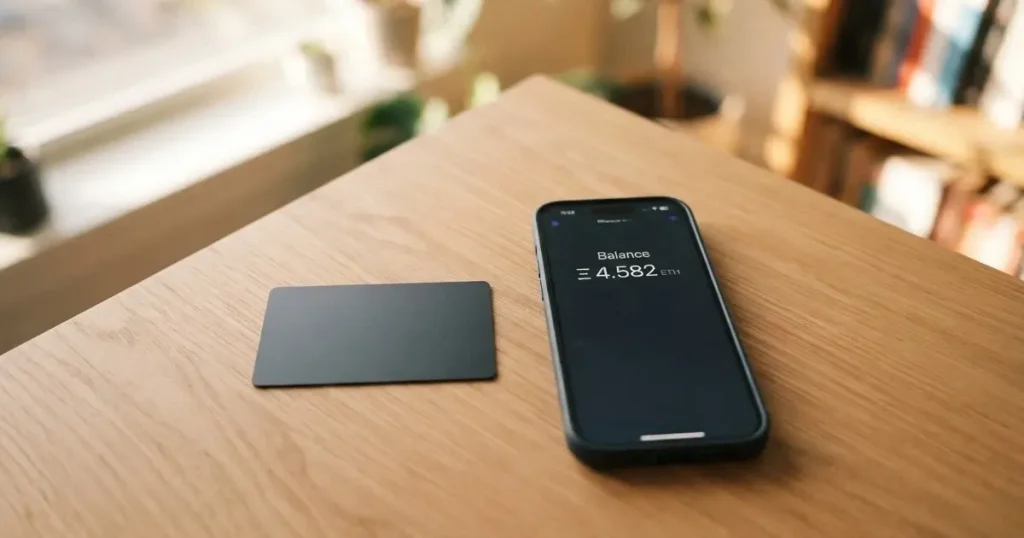
Bit2Me’s card is one of those crypto cards that stopped feeling like a novelty: you get a Mastercard, physical or virtual, you load it from a crypto balance or a euro wallet, and you spend it like any other card. That is a real convenience for anyone who cannot get an ordinary bank card to work in the country they live in, and a mild inconvenience for everyone else, because the interesting part is the rate at which crypto becomes euros and what it costs you.
I gave it 6.8 out of 10. That is not a bad score — it is a card that does its stated job, with a properly supervised issuer behind it, that leaves me with questions about what happens when something goes wrong.
The conditions described here are current as of October 28, 2026.
Who the card suits, and who it does not
The short version: this suits EU residents who want a Mastercard, are comfortable holding money on a crypto platform rather than in a bank, and value the cashback ladder enough to climb it. It does not suit you if you want a bank account, if you are outside the supported area, if you live in a country where crypto is restricted, or if the idea of a spending freeze during an account review is unacceptable to you.
One thing to understand before anything else: Bit2Me is not a bank. The card and the payment account are issued and managed by PECUNIA CARDS EDE, S.L.U., an electronic money institution supervised by the Bank of Spain and trading as PECUNPAY. Bit2Me itself holds MiCA authorisation from the Spanish regulator CNMV, and Bankinter took a stake in it through a EUR 30 million round with a minority Tether participation. So there are two regulated entities in the chain, and only one of them issues your card.
Here is how I broke the score down.
| Criterion | Mark | Why |
|---|---|---|
| Who can get it | 5 / 10 | The official page lists no countries at all; unofficial sources point to 29 countries, mostly EEA, with Canada, Ireland, Japan and the US excluded |
| Cost | 7 / 10 | No maintenance fee; unofficial sources give 0% from the euro wallet, 0.95% from crypto, 1.75% and 2% for currency conversion |
| Top-up options | 7 / 10 | “Dozens of currencies”, you choose which wallet pays, a stablecoin can be linked — but the full coin list is not published |
| Reliability and complaints | 7 / 10 | PECUNIA CARDS EDE under Bank of Spain supervision, Bit2Me MiCA-authorised; Trustpilot 3.9/5 from 2,484 reviews with complaints about withdrawal delays and account blocks |
| Everyday use | 9 / 10 | Physical, virtual or both, Mastercard, Apple Pay and Google Pay, cash withdrawal 24/7 |
| Total | 6.8 / 10 | A well-built card with a licensing question and a support record worth reading |
Everyday use scores highest, and it deserves it. Reliability sits one point lower because the complaint themes are consistent enough that you should plan for them rather than be surprised. Availability scores lowest, which is awkward for a reviewer: the card’s own public pages do not tell you where it works.
Will they give you the card?
Short answer: the card’s own public pages do not say. No country list, no statement of whether they check citizenship or residence. That is a real gap, and it is why the score in this section is the lowest of the five.
What the public material does not state: which countries are supported, whether eligibility runs on citizenship or on tax residence, what the age floor is, and which documents are required at sign-up.
What third-party sources say, and I am flagging this as unofficial because Bit2Me has not confirmed it: the card is reportedly available in 29 countries, mostly within the EEA — Austria, Belgium, Germany, Poland, Spain, Sweden and others — and reportedly restricted in Canada, Ireland, Japan, Tajikistan, the United States, Iran and Cuba. One source says tax residence in a supported country is required, dated August 2026. Another, a competing card’s own blog, describes the audience as EEA tax residents excluding Ireland, plus Argentina for a virtual card only. Treat all of that as a map, not as the rule.
There is a background reason this is confusing rather than lazy. Nationality and residence are screened differently, because sanctions screening and issuer risk policy often apply to citizenship and country of birth as well as to the country of address. A card can be open to residents of a country while being closed to citizens of a sanctioned one. If your situation is unusual — a citizenship different from where you live — the only reliable answer comes from the provider’s own support, not from a comparison table.
How to get it
Short answer: it needs a Bit2Me account, and unofficial reporting suggests identity verification with a government photo ID and a liveness check at minimum.
The card itself is straightforward in form: physical, virtual, or both. The card page says it works at “any online or physical store that accepts Mastercard payments”. The card currency is not stated on the card page, which matters more than it sounds — it decides which foreign-currency fees you may hit.
What is not stated on the official pages I could read: what the verification process actually involves, how long it takes, which documents count, and where physical cards ship, how long delivery takes, and what it costs.
Unofficial, again: a registered and verified Bit2Me account is required with tax residence in a supported country; the base tier needs a government photo ID plus a liveness check, with proof of address for higher tiers. Users report extra document requests and manual reviews being triggered after the account is already open. That last point is the one to weigh most heavily, and I come back to it in the risks section.
Fees: what it really costs
Short answer: there is no maintenance fee, but there is a conversion fee if you spend crypto rather than euros, and a second fee if the merchant charges you in a currency other than the card’s. The card’s own pages state only the first half of that.

The official position is generous and clear: “Don’t pay anything for the maintenance of your virtual or physical cards”. Cash withdrawal is offered 24/7. Payments are possible in “dozens of currencies”. Benefits depend on your tier, though no tier names or amounts appear on the card page. Nothing about issuance fees, conversion, foreign exchange, ATM charges, or limits is published there.
Here is what third-party sources report. None of this is confirmed by Bit2Me’s own card page, and you should verify the current figures before you rely on them.
| Item | Unofficial figure |
|---|---|
| Virtual card | €0 |
| Physical card | €20 at levels 0–2, €10 at L3, €5 at L4, €0 at L5–7 |
| Delivery | €5 outside Spain |
| Virtual replacement | €0 |
| Monthly or annual fee | none |
| Spending from the euro wallet | 0% |
| Spending funded from crypto | 0.95% |
| SEPA payment in a non-euro currency | 1.75% |
| Other foreign currency | 2% |
| ATM in Spain | €0 from Bit2Me |
| ATM in the rest of the Eurozone | €2.50 |
| ATM outside the Eurozone | €0.55 + 1%, minimum €0.75 |
| Purchase limits | €2,500 per transaction and per day, €20,000 per month, €200,000 per year |
| ATM limits | €300/day, €3,000/month, €30,000/year; 5/day, 50/month, 150/year (unofficial figures, not confirmed by the card) |
Now three everyday payments, with these unofficial figures in mind.
A €20 coffee paid from your euro wallet: 0% conversion, no foreign-currency fee if the café charges in the card’s currency. This is the version of the card that looks free.
The same €20 coffee paid by drawing down crypto: 0.95% of €20. Small in absolute terms, but it is the number that tells you what the card is actually for. Buy a coffee with crypto and you are paying roughly a euro for the privilege.
A €60 purchase from a non-euro online store, funded from crypto: 0.95% plus a possible 1.75% or 2% currency fee, depending on how the payment is routed. Whether you pay one or both depends on whether the charge arrives as a SEPA payment in a non-euro currency or as something else entirely. This is the case where a “free card” stops being free, and it is worth checking which of the two applies before you assume the cheaper one.
The ATM limits are the other number worth sitting with. The €300/day limit is unofficial and not confirmed by the card. It is real money for someone who lives somewhere cards are hard to get, but it is low for someone used to withdrawing what they need. One competing card’s blog quotes different ATM limits — €3,000 a day, five per day — which contradicts the figures above. I have kept the lower, more conservative set.
Top up: how the balance gets filled
Short answer: you pick which wallet pays. The card page promises “dozens of currencies”, an optional linked stablecoin, and “Pay in euros without any commission”.
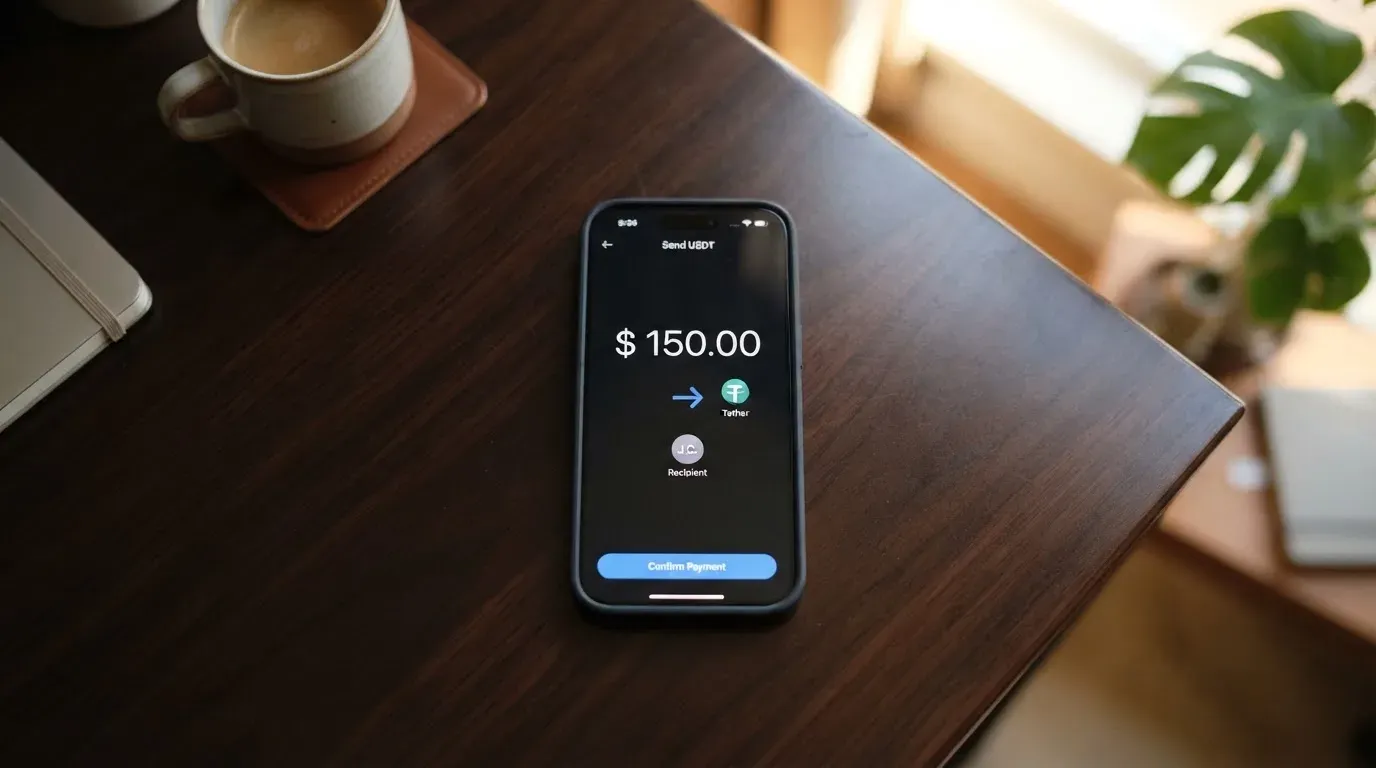
The model is straightforward. You hold crypto and a euro wallet; when you pay, you choose which of them funds the transaction. Optionally you link a stablecoin. The full list of coins is on the support site rather than the card page, and the card page does not publish a deposit fee, a minimum top-up, or how network charges are handled.
What is not stated anywhere official: withdrawal of the balance itself, closing the account, or how the cash-withdrawal function interacts with your crypto holdings. The card page mentions 24/7 cash withdrawal; that is all.
Two practical warnings before you send anything. First, blockchain transfers are one-way — a deposit sent on a network the provider does not support, or to an address belonging to a different network, can be lost or need manual support recovery with no guarantee. Second, the network fee is charged by the blockchain, not by Bit2Me, so a token you hold but have no gas for may simply not move. This is a general property of crypto transfers, not a Bit2Me quirk, but it will be your problem on the day you try it.
There is also a detail worth knowing about USDT specifically: Circle stopped supporting USDC on Tron in February 2024, so “USDC over TRC20” is not a native option. If you plan to bridge, check which networks are actually supported before you assume the obvious one works.
Paying with it every day
Short answer: this is the part the card is genuinely good at. Physical, virtual or both, Mastercard, Apple Pay and Google Pay, cash 24/7.
The card page says it is “Compatible with Apple and Google Pay”, so adding it to your phone wallet is a supported path rather than a workaround. Cash withdrawal works around the clock. The card works “at any online or physical store that accepts Mastercard payments”.
Rewards are where the marketing gets louder than the page. The claim is “We refund up to 7%* on all your purchases”, plus “up to 39% cashback” combined with other products, plus up to 7% yield on purchases if you link a stablecoin, plus up to +25% extra with Bit2Me Life at ten or more merchants. The asterisk’s conditions are not explained on the page, and neither is the payout currency.
What the tier ladder looks like, again unofficial and dated August 2026: “Space Center” levels 0 to 7 by points. Level 0 gives 0% cashback; level 1 gives 0.25% capped at €7.50 a month; level 2, 0.5% capped at €15; level 3, 1% capped at €30; level 4, 2% capped at €100; level 5, 3% capped at €175; level 6, 5% capped at €250; level 7, 7% capped at €300 and requiring 9,000 points. Cashback is paid in B2M rather than cash, does not apply to euro-wallet purchases, and excludes categories including casinos, lotteries and betting.
That last detail is the one to understand clearly: the headline rate is not money in your pocket. It is paid in the platform’s own token, and the top of the ladder needs 9,000 points.
The app is on iOS, iPad, Mac (M1 and later) and Android. The App Store listing in Spain reads 4.5/5 from roughly 3.8K ratings. What is not stated: which merchant categories are blocked, and how disputes work if a payment goes wrong.
What can go wrong
Short answer: delays and freezes are the recurring theme in user complaints, and the card itself inherits some of that risk even though the issuer is a separate supervised company.
The complaint picture, from Trustpilot for Bit2Me overall — not card-specific, since no card-specific complaints surfaced: 3.9/5 from 2,484 reviews as of 20 October 2026, 26% one-star, with replies to 97% of negative reviews. Themes, dated: withdrawals and transfers held under review (July 2026, April 2026); account lockouts, or a hack with unanswered calls (March–April 2026); slow support (February–April 2026); high fees on a small purchase (July 2026). Phone and WhatsApp support are praised in reviews from May to August 2026. One one-star review from May 2025 describes an account locked with funds held for over a year, with Bit2Me replying that it prioritises security.
That is a platform-level picture, and the card is issued by a different legal entity, so it is not a verdict on the card. But it is the signal a reader should weigh, because a freeze on the platform account is a freeze on the balance the card spends from. On the positive side: no Reddit threads surfaced on this, and no official incidents surfaced either.
Two structural risks that are not about service quality at all. The first is custody — if the funds sit with a provider rather than in a wallet you hold the keys to, you are trusting them, and the sector has a documented history of such trust failing badly, from Mt. Gox to Ronin Network. The second is that e-money funds are safeguarded rather than bank deposits, so they are not the same thing as a deposit guarantee scheme.
Regulation is in reasonable shape here. MiCA, the EU’s crypto-assets regulation, took legal effect in June 2023; its rules on stablecoins applied from 30 June 2024 and the remaining provisions from 30 December 2024; the transitional period for existing providers ran until 1 July 2026 or until they received or were refused authorisation, whichever came first. Bit2Me holds authorisation from CNMV. Separately, the card itself is a payment service under e-money law — which is why a crypto card often depends on two licences.
Also worth knowing: neither Visa nor Mastercard issues crypto cards to consumers. They license issuers and can suspend a programme. Visa terminated its global agreements with FTX on 13 November 2022, and WaveCrest, a Visa card issuer that supplied crypto card brands, was suspended in Europe in 2018, closing all its Visa programmes. Programme closures typically mean a notice period, then spending and loading stop, then you are asked to withdraw what is left.
What is not stated on the card page: the custody model, whether 2FA is available, whether you can freeze the card instantly, and whether any insurance applies. The page does link to a security page listing certifications, which I did not read.
On taxes, one factual note rather than advice: in the US the IRS treats digital assets as property, so exchanging them for goods generally produces a taxable gain or loss measured in local fiat at the fair market value on the transaction date. That means each card payment funded from crypto may be its own disposal. Your own jurisdiction will work differently, and I am not going to guess at it.
What to take instead
If the Bit2Me card’s weaknesses — an unpublished country list, a conversion fee when you spend crypto, no maintenance fee but real limits — do not suit you, three alternatives come up repeatedly.
RedotPay scores 6.9/10, slightly above Bit2Me, and is the closest structural match: a crypto-funded Visa rather than Mastercard, virtual and physical, with a stated fee schedule. Its costs are higher and clearer. Application is 10.00 USD for the virtual card and 100.00 USD for the physical one, non-refundable once paid, with replacements at 5.00 USD then 10.00 USD. Account maintenance is waived. The transaction fee is 1.00% for crypto conversion, waived in the default currency, 1.20% for non-default currencies. There is a paid Pro tier at 12.90 USD monthly or 129.00 USD annual. On eligibility, two official lists word the rule differently, one by citizenship and one by residence, so the same country can appear on one list and not the other.
Wirex scores 6.7/10 and sits at a similar level. It offers virtual and physical cards, one of each at a time, spending from cash, stablecoins or cryptocurrencies, with free SEPA, Faster Payments, ACH and PIX fiat deposits. Issuance is free in the UK, EEA, APAC, Singapore, Australia and “Other”. Its claims — “no annual or foreign exchange fees” — sit oddly against a fee page that does not actually name the exchange rate. Availability depends on region, and Singapore terms say cash withdrawals are not permitted there.
Bitpanda scores 6.5/10 and is the more conventional option: a physical Visa debit card in EUR only, spent from a chosen main asset converted to euros at payment. It requires residence in a euro-area country and a verified account. No monthly cost, free first shipment, reissue around EUR 5.90 to EUR 9.90 depending on the FAQ you read. Its cashback figures are unreconciled between 1% and “up to 2%”.
| Bit2Me | RedotPay | Wirex | Bitpanda | |
|---|---|---|---|---|
| Score | 6.8 / 10 | 6.9 / 10 | 6.7 / 10 | 6.5 / 10 |
| Network | Mastercard | Visa | Visa or Mastercard | Visa |
| Card currency | not stated | USD, HKD | not stated | EUR |
| Upfront cost | €0 virtual; €20 physical at low tiers | 10.00 USD virtual, 100.00 USD physical | free in most regions | free, first shipment |
| Monthly cost | none | none, or 12.90 USD for Pro | none stated | none |
| Crypto spending fee | 0.95% | 1.00% | rate shown in app | spread not stated |
| Eligibility published | no | two lists, worded differently | by region | euro-area residence |
Bit2Me’s edge in this group is the everyday score: physical, virtual, Apple Pay, Google Pay and 24/7 cash in one product, with no maintenance fee. RedotPay’s edge is written-down numbers. If predictability matters more to you than the product feeling finished, RedotPay is the more explicable card.
Who I would recommend it to
I would recommend the Bit2Me card to three kinds of person.
First, someone in the EEA who already has crypto and wants a Mastercard that spends it without the monthly dance of converting everything in advance. The 0% euro-wallet path and the cashback ladder make this a normal-feeling card rather than a crypto product.
Second, someone whose country blocks ordinary cards or makes them unreliable. That is the audience the product genuinely serves, and the reasons the country list is unpublished are probably commercial rather than accidental.
Third, someone who does not mind that cashback arrives as B2M and who plans to use the card often enough for the caps not to bind.
I would not recommend it if you need a bank account, if you want a card you can withdraw large amounts of cash with, if you are outside the supported area and hoping, or if you hold large balances on the platform and cannot tolerate the freeze-and-review pattern the complaints describe.
Before you apply, check three things yourself: whether your country and tax residence are eligible, since the card does not say; what the current conversion and ATM fees are, since the card does not say either; and what happens to your balance if your account is frozen, which you can only learn by asking.
Support is offered in nine languages, though the list is not published; the email is [email protected] and the phone is +34 910913788, with hours not stated. Use those if you need the eligibility or fee answers above — they are the only reliable source.
Frequently asked questions
What is the Bit2Me card?
The Bit2Me card is a Mastercard, available physical or virtual, that spends a balance you control inside a Bit2Me account. You can fund payments from crypto or from a euro wallet. The card and payment account are issued by PECUNIA CARDS EDE, S.L.U., an electronic money institution supervised by the Bank of Spain, so Bit2Me itself is not the issuer.
How does the Bit2Me card work?
When you pay, the card draws on the balance you chose — crypto or euros. It behaves like a prepaid card rather than a bank debit card, which means it cannot overdraw: it can only spend what is already there. The card works at any online or physical store accepting Mastercard, and you can add it to Apple Pay or Google Pay.
Is Bit2Me a bank?
No. It holds MiCA authorisation from the Spanish regulator CNMV as a crypto platform, but the card comes from a separate supervised e-money institution, PECUNIA CARDS EDE, S.L.U., trading as PECUNPAY. That distinction matters because e-money funds are safeguarded rather than bank deposits and may not sit under a deposit guarantee scheme.
Who owns Bit2Me?
Bit2Me is a private Spanish company. Bankinter invested through a EUR 30 million round that included a minority stake from Tether. The card itself belongs to PECUNIA CARDS EDE, S.L.U., a separately supervised issuer — so the card you hold is not owned by the crypto brand whose app you use.
Which countries is the Bit2Me card available in?
The card’s own public pages do not say, and they do not state whether eligibility follows citizenship or residence. Unofficial sources put it at 29 countries, mostly in the EEA, with Canada, Ireland, Japan and the United States among those restricted. Treat any list you find elsewhere as indicative, and ask the provider before you apply.
How do I get the Bit2Me card?
You need a Bit2Me account, and it must be verified. Unofficial reporting says the base tier requires a government photo ID plus a liveness check, with proof of address for higher tiers. Users also report extra document requests and manual reviews later on. The card page does not publish the process, timing or delivery details.
Does the Bit2Me card require KYC?
In practice, yes — verifying your identity is part of opening and keeping the account. EU rules require customer due diligence covering identity documents, a sanctions check and ongoing monitoring. If that cannot be completed, the institution is expected to hold off or close the relationship, which is one reason accounts freeze.
How do I top up the Bit2Me card?
You choose which wallet pays: crypto or your euro wallet. The card page promises “dozens of currencies” and says you can pay in euros without commission, and you can optionally link a stablecoin. Deposit fees, minimum top-ups and network charges are not published. Make sure the transfer goes on a supported network, because blockchain sends are irreversible.
What does the Bit2Me card cost?
The card page states only that there is no maintenance fee for virtual or physical cards. Unofficial figures report €0 for a virtual card and €20 for a physical card at low levels, with 0% spending from the euro wallet, 0.95% from crypto, and 1.75% or 2% on currency conversion. Nothing on those fees is confirmed on the card’s own page.
Is the Bit2Me card safe?
It is supervised on the card side and MiCA-authorised on the platform side, which is more than most crypto cards can claim. Against that, funds are custodial, e-money safeguards are not deposit guarantees, and Trustpilot reviews mention withdrawal delays and account freezes. Read the terms on frozen balances before you hold a large sum.
App and neobank cards – cryptocardbasics
Content created by the «cryptocardbasics» team