SharPay card, reviewed
 Available in US
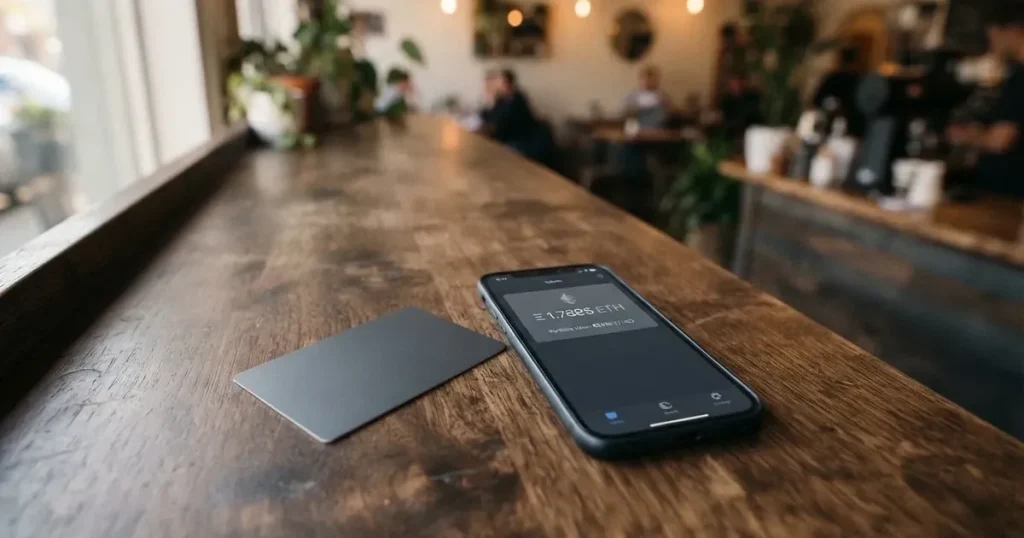
The SharPay card is a Mastercard debit issued by a Lithuanian e-money institution and marketed to people who want to spend a crypto balance through an ordinary payment card. It is built for non-EU residents, ships as both virtual and physical plastic, supports Apple Pay and Google Pay, and accepts a fairly wide set of coins. It is also, in its current form, an unusually expensive card to load and to use abroad, and the public material about who exactly is allowed to have one is thinner than for bigger brands. That is the short version; the rest of this page walks through the rules, the fees, the day-to-day experience and the things that could go wrong, so you can decide for yourself whether it belongs in your wallet.
The conditions described here are current as of October 28, 2026.
Verdict
SharPay earns 5.9 out of 10 in this review. That is a middling score, and the reason it sits in the middle is that the card is technically capable but commercially overpriced. You can open an account, verify, get a virtual card within minutes, and add it to Apple Pay or Google Pay without much friction; the issuing and processing licences are real EU and Canadian registrations, not a white-label in name only. On the other hand, every load costs you 2.00 EUR plus 1.99%, every non-EUR purchase picks up a 2.99% mark-up on top of whatever the network charges, and the card itself is sold for 1 EUR plus 3 EUR a month just to keep open — small numbers individually, painful when you add them up over a year of regular spending.
The people it suits best are non-EU residents who specifically want a Mastercard they can tokenise into Apple Pay, and who are willing to pay extra for that combination. If you live in the European Economic Area and only need to spend from crypto, you are explicitly outside the crypto side of this product; if you live anywhere on the SPEKA prohibited list, you cannot get one at all. If you just need a cheap way to spend stablecoins, or you do most of your spending in euros with no conversion involved, the math will frustrate you.
The breakdown below shows how that 5.9 is built up.
| Criterion | Mark | Why it scored there |
|---|---|---|
| Who can get it | 5 / 10 | Rules are by residence, not citizenship, but the prohibited list and the carve-out for EU residents are vague; the number of supported countries is not stated. |
| Cost | 3 / 10 | Account opening 10 EUR, card issuing 1 EUR, monthly service 3 EUR, card-to-card load 2.00 EUR + 1.99%, FX mark-up 2.99% — among the higher total costs in the category. |
| Top-up options | 6 / 10 | EUR, USDT, USDC, BTC, ETH, XRP, LTC, BCH, plus DAI and TUSD on the price page; USDC via Mastercard/VISA carries a 4% fee; networks are not named up front. |
| Reliability and complaints | 8 / 10 | Card issued by UAB Walletto under a Bank of Lithuania e-money licence; payments by SPEKA Payments Corp. with a Canadian MSB registration; no user complaints or news stories found. |
| Everyday use | 9 / 10 | Virtual card activates immediately, physical ships in about 15 working days, Apple Pay and Google Pay work, ATM withdrawals are possible, up to five cards per account. |
| Total | 5.9 / 10 | A real, regulated Mastercard that is technically fine but priced above most peers and aimed at a narrow non-EU audience. |
Who can actually get a SharPay card
The official rule is written by residence, not by citizenship. SharPay’s terms say you must not be a resident of a “restricted or prohibited” country, and that the crypto services it offers are not to EU residents. The two parts matter separately. The residence rule is what blocks people from applying at all. The EU carve-out is narrower: it says that the crypto side of the product is not made available to people who live in the EU, even if they are citizens of a non-EU country and would otherwise be allowed to hold the card. The public page does not list the exact number of supported countries, and the wording leaves enough grey area that you should treat the eligibility list as a soft filter rather than a hard one until you actually try to register.
The prohibited list itself comes from the payment processor SPEKA Payments Corp., whose PDF includes Russia, Belarus, the Crimea, Donetsk and Luhansk regions, Kherson, Zaporizhzhia, Iran, Cuba and Syria, among others. If your country of residence is on that list, you cannot sign up. The list is a sanctions and processor-policy document, so it can change without notice; the rule is also policed separately from the EU carve-out, which means a person who lives in an EU country but holds citizenship elsewhere may still be able to complete standard KYC and only later be refused on the crypto side. If you live in the United States, the United Kingdom, Switzerland, the wider European Economic Area, Georgia, Armenia, Kazakhstan or the UAE, the facts read here do not put you on either list, but the absence of an explicit “supported” list is itself part of the problem: there is no positive confirmation you can rely on before you start uploading documents.
For everyone else, the KYC documents are: a passport (the full page, good quality, no cropped copies) plus bank statements in English. The questionnaire asks about your expected turnover, your source of funds, and whether you have links to a politically exposed person or to the United States. You also need to do a video selfie. The page does not state a minimum age in the text reviewed, but regulated card products of this kind are almost always restricted to adults, and you should expect 18 as the working minimum.
How to sign up and order the card
The flow inside the SharPay Wallet app is: register with a phone number, an email and a password, complete Level 1 verification, then Level 2 for fiat accounts and cards, then order the card. The “level” naming is the provider’s own: Level 1 is the basic identity check, Level 2 is the additional review for products that involve fiat balances and card issuance. Document review is said to take from 1 to 72 hours, and the Level 2 step adds an extra review window of up to 5 days. The most common reasons for rejection are mechanical: a passport copy that is cropped or in the wrong format, a bank statement in the wrong language, or a video selfie with poor light, a hat, glasses or a filter. The “good quality” requirement on the passport is the single thing most people trip on, because the upload tool will accept almost anything but the human reviewer will not.
When verification is complete, you can order up to five cards per account (that claim is on the App Store listing and the homepage; it is not stated in the main help text). A virtual card is active immediately after you order it. A physical card is typically shipped within about 15 working days, with the exact delivery time depending on the destination; the page does not say which countries the card is shipped to, and the delivery cost is not stated. The card is a Mastercard debit in EUR, and the fee schedule is denominated in EUR. Replacing a virtual card costs 1.00 EUR; replacing a physical card is not priced in the text reviewed.
One thing worth flagging: the company that builds the website and the app is GTM Exchange Ltd, a Cyprus-registered company. The card itself is issued by UAB Walletto, an e-money institution in Lithuania with Bank of Lithuania e-money licence number 33. The payment services are run by SPEKA Payments Corp., registered in Canada as a money services business under FINTRAC registration M22046940. That is a three-company stack, and it is more separation than a small brand usually has, which is a positive sign for regulatory reach but also means a customer has to figure out which company answers which question.
Fees: what a SharPay card really costs
This is the section where the review turns cooler. The card’s headline is that you can spend crypto through a Mastercard. The unheadlined part is the price list.
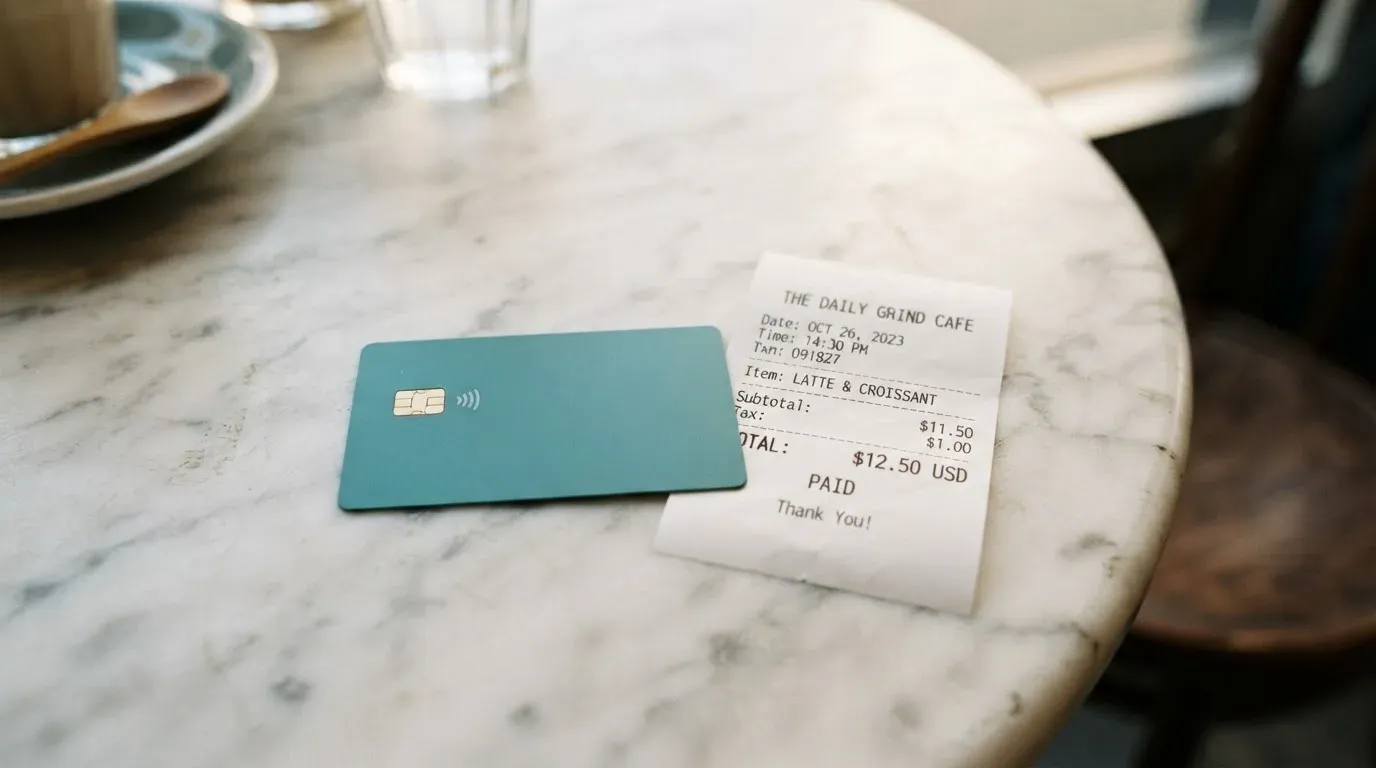
A new account costs 10 EUR to open (this is the payment account, not the crypto account, which is free), the card itself costs 1 EUR to issue, and there is a 3 EUR monthly service fee per card. Replacing a card is 1.00 EUR; processing a chargeback is 40.00 EUR; closing a personal account is 25.00 EUR and a business account is 100.00 EUR. None of those numbers on their own is shocking, but they are recurring, and the next layer is where the math starts to bite.
| Fee or limit | Amount | Notes |
|---|---|---|
| Payment account opening | 10.00 EUR | One-off, charged to the payment account. |
| Crypto account | Free | — |
| Virtual card issuing | 1.00 EUR | Active immediately after ordering. |
| Virtual card replacement | 1.00 EUR | — |
| Physical card reissue (stolen/lost) | Not stated | — |
| Monthly card service | 3.00 EUR | Per card, per month. |
| Card-to-card load (top-up) | 2.00 EUR + 1.99% | Charged on each top-up. |
| USDC deposit via Mastercard/VISA | 4.00% | Plus 3.00% on withdrawal via the same rails. |
| FX mark-up on personal card | 2.99% | On top of any network conversion rate. |
| FX mark-up on payments | 1.00% | A different line item, used when paying in non-card currency. |
| Purchase fee | — | Shown as “no fee” in the schedule. |
| Chargeback handling | 40.00 EUR | Per dispute processed. |
| Account closure (personal) | 25.00 EUR | — |
| Account closure (business) | 100.00 EUR | — |
| POS + e-commerce daily limit | 10,000 EUR | — |
| POS + e-commerce monthly limit | 30,000 EUR | — |
| SEPA crypto transactions | up to 14,500 EUR / day | — |
| Minimum top-up | Not stated | The amount is shown in the app’s top-up input field. |
| ATM withdrawal fee | Not stated | Withdrawals are possible, but the fee page does not publish an amount. |
| ATM allowance | Not stated | — |
Walking through three everyday situations makes the totals more concrete.
Paying 100 EUR at a eurozone supermarket with a euro balance already on the card. The merchant receives euros, so there is no FX conversion. The POS purchase fee is listed as “—”, which means nothing. The 3 EUR monthly service is the only fixed cost attributable to that single payment, and assuming you make the card pay for itself over a month, this 100 EUR purchase effectively cost you 3% before you even started. If you also had to top up to get to 100 EUR, the load cost 2.00 EUR + 1.99% = 3.99 EUR, so a 100 EUR payment effectively cost you about 7 EUR in fixed and percentage fees.
Paying 100 USD at a US merchant from a EUR balance. First the card converts EUR to USD at the card-network rate, then SharPay adds the 2.99% personal-card mark-up on top. If the network rate is roughly 1 EUR = 1.10 USD, you would need to load about 94 EUR to spend 100 USD, and the 2.99% on that 94 EUR is about 2.81 EUR of pure mark-up, before the load fee. So a 100 USD coffee at a US shop, paid from a EUR balance topped up via card-to-card, costs you the load fee (2.00 EUR + 1.99% of 94 EUR = 3.87 EUR) plus the FX mark-up (2.81 EUR) plus the monthly fee, for a combined hit of around 6.68 EUR on a 94 EUR load. That is a noticeable impact on the payment value in fees.
Buying USDC on Mastercard or VISA through the app, then spending it. This is the most expensive route. The USDC deposit is 4% and the USDC withdrawal via the same rails is 3%. If you top up with USDC this way and then spend in EUR, you eat the 4% on the way in, the 2.99% FX mark-up if the merchant is in a non-EUR currency, and the 3 EUR monthly fee, and you have not yet spent anything. This is the path of last resort for someone who has no other way to fund the card.
The monthly 3 EUR is the one that adds up quietly. If you keep the card open for a year and use it for 100 EUR of spending a month, you have paid 36 EUR in service fees on top of load and FX costs, which is a 3% effective drag on your spending before any percentage fees. That is one of the main reasons the cost score sits at 3 out of 10.
Top up: how the card is funded
The card is funded in two stages. The first is opening a balance in the app; the second is moving money onto the card itself. The app supports a fiat balance in EUR, and the listed crypto assets are USDT, USDC, BTC, ETH, XRP, LTC and BCH on the FAQ, with the price page adding DAI and TUSD for a total of nine supported assets. The FAQ does not name the networks those assets are accepted on; you are expected to pick the currency and the network in the top-up flow itself. XRP and Stellar deposits need a memo or tag, which is the kind of detail you only discover the first time you try to send.
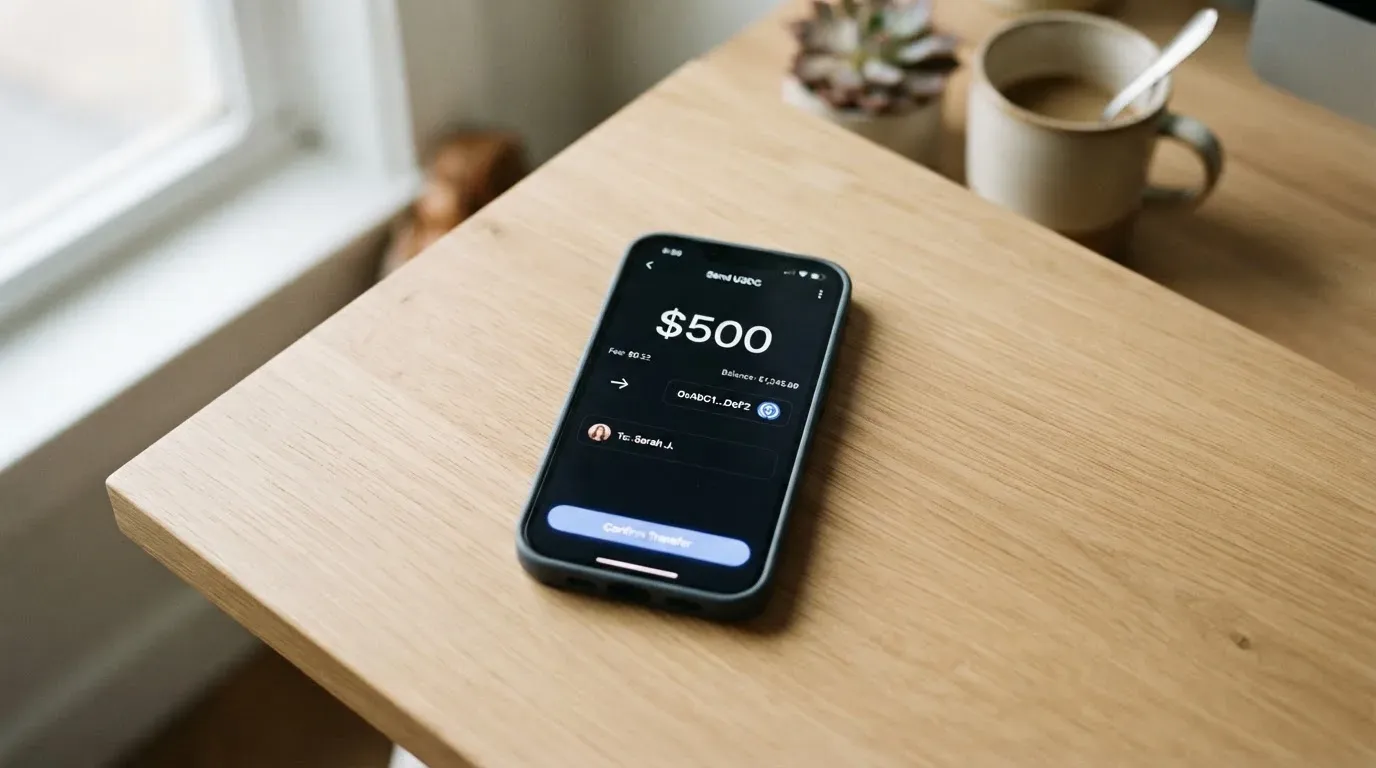
The card itself is in EUR. The page says “the SharPay card opens in EUR currency but you can purchase in any you wish”, and that “crypto in another currency is automatically exchanged at the system exchange rate”. That second clause is the one to watch: it means the conversion happens at the provider’s rate, not at the rate you would have got on a public exchange. The “system exchange rate” is the spread layer that sits behind the 2.99% mark-up; you do not see it as a separate line, but it is there.
A card-to-card load (moving money from another card onto the SharPay card) costs 2.00 EUR + 1.99% per top-up. Crypto deposits made on-chain are subject to the network fee of whichever blockchain you used, which the card provider does not control. USDC loaded through the Mastercard or VISA rails costs 4% on the way in and 3% on the way out. There is no published minimum top-up; the app is meant to show it in the top-up input field, which is a small but real risk: if you send below the minimum, the deposit can fail without an obvious error, and the funds can sit in limbo.
Practical advice. If you can, load in EUR via SEPA, then spend in EUR. If you have to load crypto, send it on a network you have used with the provider before, and send a small test transaction first — the FAQ specifically warns that the wrong network can lose the funds. Withdrawals (sending money out, as opposed to loading it in) are processed from 1 to 60 minutes to SEPA, other cards, e-wallets or crypto; card transfers out are only possible if the card was previously topped up via a card. The account-closure fee is 25.00 EUR for a personal account and 100.00 EUR for a business account, and the page does not say what happens to the balance when you close.
Paying with the card every day
Once the card is loaded and activated, the day-to-day experience is the part SharPay gets right.
The virtual card is active the moment you order it, which means you can use it for an online subscription or a one-off purchase the same minute verification finishes. The physical card arrives in about 15 working days; if you are in a region DHL or a comparable courier reaches, the wait is reasonable, but the page does not commit to a specific country list or a delivery fee. Both the physical and the virtual card can be added to Apple Pay and Google Pay, which matters more than it sounds: tokenising a card into a phone wallet lets you pay contactless at a shop without handing over the physical card, and it works at any terminal that takes Mastercard contactless.
Spending limits are generous enough for a personal card: 10,000 EUR per day at point of sale and e-commerce combined, and 30,000 EUR per month for the same. SEPA crypto transactions are capped at 14,500 EUR per day. Crypto purchases made by card in the app have their own monthly limit, which is shown in the app rather than on the public fee page.
There is no cashback or rewards programme on the page reviewed. The homepage does not advertise a points scheme, the fee table does not show a cashback line, and the help text says “rewards” are not stated; treat that as a no-rewards card.
The SharPay Wallet app is on Google Play and the Apple App Store; the number of ratings and the average score are not given in the text reviewed. The homepage claims “15k +” users, which is a small user base but consistent with a niche product aimed at non-EU residents. Support is reachable by phone (+357 2503-09-49, a Cyprus number), by email (the addresses are obfuscated on the page, which is itself a small negative signal — the most common reason to obfuscate email addresses is scraping protection, but it does add friction for users), through a website support widget, and on Facebook, X, Instagram and LinkedIn. The website itself is published in English, Ukrainian and German; the support hours are not stated.
If a payment goes wrong, the help text says duplicate debits are reversed automatically. The refund policy PDF is linked, but the time frame for resolving a non-automatic dispute is not stated, and a 40.00 EUR chargeback fee means disputing a 5 EUR transaction is uneconomic — the dispute cost would be eight times the value of the transaction.
What can go wrong
SharPay is small, regulated in three jurisdictions, and operationally clean as far as the public record goes. The risks are mostly price, scope and policy, not fraud or collapse.
Geographic and policy risk. The eligibility rule is by residence, the prohibited list is maintained by the payment processor SPEKA, and the list can change. If your country is added to the list, the card can be closed with whatever notice SPEKA’s policy requires. The same applies to the EU carve-out: a customer who is verified and then found to be an EU resident for the purposes of the crypto services can have the crypto side shut down while keeping the fiat side open, or vice versa. The terms do not give the user a specific notice period for these events.
Custodial counterparty risk. SharPay is a custodial product: the funds sit in an e-money account at the provider, and the crypto is held by SPEKA or by an entity acting on SPEKA’s behalf. That means the user is exposed to the credit and operational risk of the issuer and the payments processor in the same way a bank account holder is exposed to a bank. The page does not state whether customer funds are safeguarded in segregated accounts, insured, or covered by any deposit-guarantee scheme, and EU e-money rules require segregation but not deposit insurance. The card is not a bank deposit, and it should not be treated like one.
Stablecoin and network risk. Stablecoins are designed to hold a stable value, but the name is more of a programme than a guarantee: USDT and USDC have both held their peg through turbulent periods and both have, at different times, traded away from it. Sending USDT or USDC to the wrong network — for example, USDC on a chain the provider does not accept, or XRP without a memo — can lose the funds outright, and blockchain transfers are irreversible by design. The provider may be able to recover a misrouted deposit manually, but there is no commitment to do so.
Programme risk. SharPay does not own the card programme. UAB Walletto holds the licence; SPEKA Payments Corp. processes payments; the card network is Mastercard. Any of those three can in principle wind the programme down, as Visa did with FTX in 2022 and with WaveCrest in 2018. When a programme closes, the typical sequence is: a notice period, an end to new loads, an end to spending, and then a deadline to withdraw the balance. The page reviewed does not commit to a specific notice period for SharPay.
Cost risk. The structural problem is that the percentage fees — 1.99% on load, 2.99% FX, 4% on USDC-in via card — are high enough that the card only really pays for itself if you spend large amounts infrequently. If you use it for a coffee a day, the load fee and monthly service fee will eat a meaningful slice of your balance by the end of the month.
Complaints and reviews. The dedicated searches run for this review (SharPay card complaints, Reddit, Trustpilot) returned only unrelated brands (Shop Pay, OnePay, Shieldpay, b-sharpe). There is no dedicated SharPay page on Trustpilot at the time of writing, and no user complaints or news stories were found. The absence of complaints is not the same as a clean record — the user base is small — but it is also not a red flag.
What to take instead
SharPay is not the only crypto-backed Mastercard or Visa in this category, and three alternatives are worth comparing against. They are not the only options, but they cover the main trade-offs you are likely to be weighing.
RedotPay — 6.9 / 10. A Visa debit programme in USD and HKD, with a virtual and physical card. Virtual application is 10.00 USD, physical application 100.00 USD (non-refundable once paid), and account maintenance is waived. The transaction fee is 1.00% on the crypto conversion, with a separate 1.20% on non-default-currency purchases. RedotPay’s eligibility is more transparent than SharPay’s, with two published lists: a KYC list of 39 countries where identity verification cannot be completed, and a separate 47-place card-issuance list that adds India, Indonesia, Morocco, Nepal, Singapore and Turkey. Russia, Belarus, Ukraine and Serbia are on both lists. The welcome reward is 5 USD, usable only on spending and valid 30 days, and there is a RedotPay Pro tier at 12.90 USD per month or 129.00 USD per year. The card page lists “Points & Rewards” and “RedotPay Pro” as separate programmes, and no flat card cashback rate is published.
Bitpanda — 6.5 / 10. A euro-area-focused card, which is the trade-off you make for the cleaner regulation. Verified Bitpanda account and residence in a euro-area country are required, and users who verified through “Bankident” cannot order the card. It is a single-tie physical Visa debit in EUR, with account opening and the first shipment free, a EUR 5.90 reissue fee (EUR 9.90 for lost or stolen in the FAQ), and EUR 10 for each additional physical card. The headline number to compare against SharPay’s 2.99% FX is that Bitpanda’s non-EUR FX fee is listed at EUR 0, with VISA’s own mark-up applied on top; the crypto conversion spread is not stated. There is a stated cashback rate that is unreconciled in the public material: the body says 1% on crypto spending, the summary says “up to 2%”. Fiat, stocks, metals and stablecoins are excluded from cashback, and the payout currency is not stated.
Wirex — 6.7 / 10. The most internationally distributed of the four, with availability listed across the UK, EEA, APAC, Singapore and Australia plus an “Other” region, and a claimed 130+ countries on the homepage. Card issuance is free in those regions, the metal card costs 45 GBP on the UK page with free DHL Express and a 45 EUR delivery fee elsewhere. The card page’s marketing claim is “no annual or foreign exchange fees”, which is the cleanest FX line in this comparison; the underlying exchange rate is the Wirex app’s own rate, which the user sees before confirming. Cashback is in WXT (Wirex’s own token), at 0.5% on Standard, 3% on Premium and up to 8% on Elite (metal card); cash withdrawals in Singapore are not permitted, and a long list of merchant categories is excluded from cashback (ATM withdrawals, cash advances, crypto purchases, gambling, and a set of MCCs including money transfer and quasi-cash). Wirex is more complex than SharPay, but cheaper to run on a daily basis if you are in a supported region.
| Card | Score | Card type | Card currency | Load / FX | Monthly cost | Audience |
|---|---|---|---|---|---|---|
| SharPay | 5.9 / 10 | Mastercard debit, virtual + physical | EUR | 2.00 EUR + 1.99% on load; 2.99% FX | 3.00 EUR | Non-EU residents who want a Mastercard + Apple Pay |
| RedotPay | 6.9 / 10 | Visa debit, virtual + physical | USD, HKD | 1.00% conversion; 1.20% non-default | Account maintenance waived (Pro 12.90 USD / mo) | Users in the 47 supported issuance places who can pay the 100 USD physical fee |
| Bitpanda | 6.5 / 10 | Visa debit, physical | EUR | FX EUR 0 (VISA mark-up applies); spread not stated | No monthly fee listed | Euro-area residents with a non-Bankident Bitpanda account |
| Wirex | 6.7 / 10 | Visa debit (Signature metal option), virtual + physical | Per region | App rate, no annual fee | No monthly fee listed (one-off 30 GBP ToS fee) | Users in 130+ countries, especially the UK, EEA, APAC, SG, AU |
If you are choosing between these four, the decision reduces to a few questions. Do you need a Mastercard specifically, or is Visa acceptable? If you need Mastercard, SharPay is one of the few in this list that ships Mastercard. Are you inside the EU? If yes, SharPay’s crypto side is not for you, and Bitpanda or Wirex is the natural fit. Are you outside the EU and willing to pay for a one-off 100 USD physical card? RedotPay is the cheaper-to-run option. Do you want a metal card with crypto-back rewards and a global footprint? Wirex.
Who I would recommend it to
The recommendation comes down to whether you are in the narrow band of people SharPay is built for.
I would recommend SharPay if you are a non-EU resident who specifically needs a Mastercard (rather than a Visa), you intend to tokenise it into Apple Pay or Google Pay for contactless payments, you are happy to fund it from a euro balance rather than a stablecoin, and your spending pattern is large, infrequent purchases rather than many small ones. The 10,000 EUR daily POS limit and the 14,500 EUR daily SEPA crypto cap suggest the card is built for someone moving meaningful amounts, not for someone buying a coffee every other day. The clear separation between the issuing bank (UAB Walletto, Lithuania) and the payments processor (SPEKA Payments Corp., Canada) is a positive sign, and the public material is unusually clean: no complaints, no news stories, no data breaches.
I would not recommend SharPay if you live in the European Economic Area, your country is on the SPEKA prohibited list, you need a card that costs less than about 1% all-in to run, you want a cashback or rewards programme, or you need a published minimum top-up, ATM fee, or ATM allowance before you sign up. The card is also not a good fit for someone who needs the cheapest possible way to spend stablecoins, because the USDC-in-via-card route at 4% is one of the most expensive on-ramps in the category, and the FAQ does not list the networks on which crypto is accepted, which adds avoidable risk to every deposit.
Final thought. SharPay is a real, regulated product with a real licence behind it, run by three identifiable companies. The reason the score sits at 5.9 rather than 7 is not that the product is unsafe; it is that the pricing is heavy and the audience is narrow. If you are inside that audience, the card does what it says. If you are not, you will pay a premium for a service that bigger competitors deliver more cheaply.
Frequently asked questions
What is the SharPay card?
The SharPay card is a Mastercard debit card issued by UAB Walletto, a Lithuanian e-money institution, that lets you spend a euro balance funded from a SharPay Wallet account. The account can be topped up in EUR or in supported crypto, and the card can be used at point of sale, online, at ATMs and through Apple Pay or Google Pay.
How does the SharPay card work?
You open a SharPay Wallet account, verify your identity with a passport and bank statements, order a virtual card (active immediately) or a physical card (about 15 working days), load the card in EUR or crypto, and spend. Crypto is converted to EUR at the provider’s rate when loaded, and the card settles in EUR at point of sale; if you spend in a non-EUR currency, a 2.99% FX mark-up is added on top of the card-network rate.
Is SharPay a bank?
No. SharPay is operated by GTM Exchange Ltd in Cyprus, the card is issued by UAB Walletto under a Bank of Lithuania e-money licence (no. 33), and the payment services are run by SPEKA Payments Corp., a Canadian money services business (FINTRAC MSB M22046940). It is an e-money account, not a bank account, and EU rules on e-money do not give the same protections as deposit guarantee schemes.
Who owns SharPay?
The website and app are designed and operated by GTM Exchange Ltd, a Cyprus-registered company. The card programme is held by UAB Walletto in Lithuania, and payments are processed by SPEKA Payments Corp. in Canada. The public material reviewed does not name the ultimate beneficial owner of GTM Exchange.
Is the SharPay card available in my country?
The official rule is that you must not be a resident of a restricted or prohibited country, and the crypto side of the product is not made available to EU residents. The SPEKA prohibited list includes Russia, Belarus, Iran, Cuba, Syria, the Crimea, Donetsk and Luhansk regions, Kherson and Zaporizhzhia, among others; the page does not publish a positive list of supported countries, so the only reliable test is to start the registration and see whether your address passes.
How do I get a SharPay card?
Register in the SharPay Wallet app with a phone number, email and password, complete Level 1 verification (passport, bank statements, video selfie), then Level 2 for the card (additional check up to 5 days), then order a virtual or physical card. The virtual card is active immediately; the physical card is shipped in about 15 working days.
Does the SharPay card require KYC?
Yes. The minimum documents are a full-page passport (cropped copies are rejected), bank statements in English, a turnover and source-of-funds questionnaire, and a video selfie. Document review takes from 1 to 72 hours, and the Level 2 review for the card adds up to 5 days.
How do I top up the SharPay card?
The fastest route is a card-to-card load, which costs 2.00 EUR + 1.99% per top-up. Crypto deposits are supported in USDT, USDC, BTC, ETH, XRP, LTC and BCH, with DAI and TUSD also listed on the price page; the networks are not published in the FAQ and must be selected in the top-up flow, with XRP and Stellar requiring a memo or tag. There is no published minimum, and the app is expected to show the minimum in the top-up input field.
How do I add the SharPay card to Apple Wallet or Google Pay?
Once the card is issued and active, open the wallet app on your phone, choose to add a card, and either scan the card details or enter them manually; SharPay supports both Apple Pay and Google Pay for the virtual and physical cards.
Is the SharPay card safe?
The card is issued by a regulated e-money institution and processed by a registered money services business, and the public searches run for this review returned no complaints, no news stories and no data breaches. The risks are pricing (the load and FX mark-up are high), custodial (the funds sit with the provider, not in your own wallet), and policy (the residence-based eligibility and the SPEKA prohibited list can change). The page does not state whether customer funds are insured or covered by a deposit guarantee scheme.
App and neobank cards – cryptocardbasics
Content created by the «cryptocardbasics» team