
DigitalPurse, the privacy-leaning virtual card you fund with crypto
 Available in US

DigitalPurse is a virtual-only payment card you load with crypto and spend through Apple Pay, Google Pay or Samsung Pay. The pitch is simple: a quick, anonymous-style card funded with Bitcoin, Monero, USDT or USDC, no bank account required. The reality, once you read past the landing page, is more mixed. The card works, and it works in a lot of places, but the fee structure is opaque, the issuer is unnamed, and the platform makes clear that it cannot help you if a charge goes wrong.
This review walks through who DigitalPurse suits, what it actually costs, how the top-up flow works in practice, and where the rough edges sit. The review compares it against three alternatives so you can see where it earns its place and where it falls short.
Conditions are current as of October 28, 2026.
Verdict
DigitalPurse lands at 5.8 out of 10. That is not a damning score, but it is not a confident one either. The card is fast to set up, takes a useful range of crypto, and slots into the mobile wallets most people already use. The deductions come from missing information: the public pages do not publish creation fees, monthly fees, FX markups, or spending limits. The platform also states plainly that it does not support chargebacks, which removes the safety net people expect from a payment card.
It suits a specific reader: someone who wants a quick virtual card funded by crypto, who is comfortable with a privacy-style product and willing to read the in-app fee screens carefully before confirming. It does not suit anyone who needs transparent published fees, dispute resolution, ATM access, or a physical card.
Score breakdown
| Criterion | Mark | Why it scored that way |
|---|---|---|
| Who can get it | 6 / 10 | Country list and prohibitions are not published; no stated citizenship or residency restrictions; region of issuance not disclosed |
| Cost | 5 / 10 | No figures on the site; one unofficial source lists a $3 virtual card charge and a $6 minimum, another lists issuance, top-up and monthly fee as free; the official position is that fees are shown in-app during creation |
| Top-up options | 7 / 10 | BTC, LTC, XMR, ETH, USDT and USDC accepted; the underlying networks are not stated; USDT and USDC carry no extra charge |
| Reliability and complaints | 6 / 10 | Issuer is unnamed and the platform is not a bank; chargebacks are not supported; Trustpilot is 4.8 from 232 reviews, with complaints about declines at Google Cloud, Azure and DigitalOcean |
| Everyday use | 5 / 10 | Virtual only; Apple Pay, Google Pay and Samsung Pay supported; ATM use is prohibited |
The total of 5.8 / 10 reflects a product that does the basic job but withholds the information a careful cardholder wants before signing up.
Who will they give you the card
DigitalPurse does not publish a country list, a list of prohibited countries, or any citizenship or residency rules on its public pages. That is the headline finding. The site talks about creating an account and downloading the app, and leaves the rest to the sign-up flow.
What the public material does say: one account per individual, and you must be 18 or older. There is no mention of which region issues the card, which country the underlying issuer sits in, or which licences the platform operates under. The platform describes itself as “a technology platform, not a bank”, with services “may be facilitated by third-party licensed financial institutions”. The issuer is not named anywhere I could find, and the operating company (DECLASSIC TECHNOLOGIES LLC) does not have a stated regulatory footprint in the public documents.
For the practical reader, that means there is no simple “yes, my country is supported” check before you go through the effort of downloading the app. The honest answer is that eligibility is decided inside the application, and the platform reserves the right to refuse without explaining why.
The reader most likely to be approved is someone in a region where crypto card issuance is loosely regulated, who does not need a domestic Visa or Mastercard label on the card, and who is comfortable with a privacy-style product. The reader most likely to be refused is someone whose country of residence sits on a sanctions list or in a region the unnamed issuer has quietly turned off.
How to get the card
Sign-up is built around a mobile app, not a website form. The home page tells you to download the app and create an account; the site also points to a Telegram bot for those who prefer a chat interface.
The card itself is virtual only. There is no physical card option, and no plastic will arrive in the post. Virtual cards are created inside the app or via the Telegram bot and are described as “available instantly”, with orders processed right away and “may take up to 24 hours” as the upper end. Because the card is virtual, you spend it by adding it to a mobile wallet (Apple Pay, Google Pay or Samsung Pay) and tapping to pay in store, or by entering the card number for online checkout.
KYC is the part that needs the most care. The official position is that KYC “may” be required for some payments or products, and that unverified users face daily and monthly order caps whose amounts are not published. Verified users get higher limits. There is also a separate, more expensive product line called Non-KYC cards, which the platform sells at a higher price because it says they offer “greater privacy and flexibility”. If you want a card without uploading ID, expect to pay more for it, and expect lower load limits.
What is not stated publicly: which documents the platform accepts, how long KYC takes, and on what grounds an application is rejected. There is a help article called “Why is my KYC verification still pending?” but the body of that article was not part of the public material I could verify. The site does say one account per individual, and that you must be at least 18.
A practical first step before you sign up: decide which card type you actually need. A reloadable KYC card is the lower-cost option; a Non-KYC card costs more but skips the ID upload. Either way, read the fee and limit screens inside the app before you confirm, because the public site does not publish those numbers.
What it really costs: DigitalPurse fees
The honest summary is that DigitalPurse does not publish a fee schedule. The terms say purchases “may be subject to handling fees” and that the amounts are “detailed in the specific terms” of each product. Creation and top-up fees are shown in the card description in the app during creation, and on privacy (Non-KYC) cards they scale with the amount you load. Extra fees are possible for non-fiat methods, and BTC, ETH, LTC and XMR may cost more than USDT, USDC, bank transfer or mobile money because of volatility and processing.
Unofficial sources disagree. An App Store reviewer reports an extra $3 charge for a virtual card and a $6 minimum balance. A third-party comparison site, cryptocards.so, lists issuance, top-up and monthly fee as free. The official line is that figures are visible in-app, and the unofficial sources are not consistent with each other. Treat any specific number you read off a forum or review site as unconfirmed.
A few things are firm:
- ATM withdrawals are not permitted. The terms list “Manual Cash Disbursements” and “Automated Cash Disbursements” as prohibited, and a separate statement treats ATM use as a “transfer of value” that the card does not allow.
- Card balance is in USD. If you load USDT or USDC, it is converted to USD the moment it hits the card, and the spread on that conversion is not published.
- Non-KYC cards cost more than reloadable KYC cards, by design.
- Virtual cards come with a “starting balance of up to $1,000 – $10,000” — a range, not a flat figure.
- One unofficial source lists spending limits as “unlimited”, with the same caveat that the platform itself does not publish limits.
Costs at a glance
| Fee or limit | What is published |
|---|---|
| Card issuance | Not published; shown in-app; unofficial sources disagree ($3 per App Store reviewer; free per cryptocards.so) |
| Monthly fee | Not published; one unofficial source lists it as free |
| Conversion / top-up fee | Not published; scales with amount on Non-KYC cards; USDT and USDC carry no extra charge per official text |
| FX fee | Not stated |
| ATM fee | Not applicable; ATM use prohibited |
| Starting balance | $1,000 – $10,000 (range, not flat) |
| Daily and monthly limits | Not stated; unverified users face caps, verified users get higher limits |
| Minimum top-up | Not stated |
Three everyday payments and which fees apply
To make the costs less abstract, here is what a typical user would actually face.
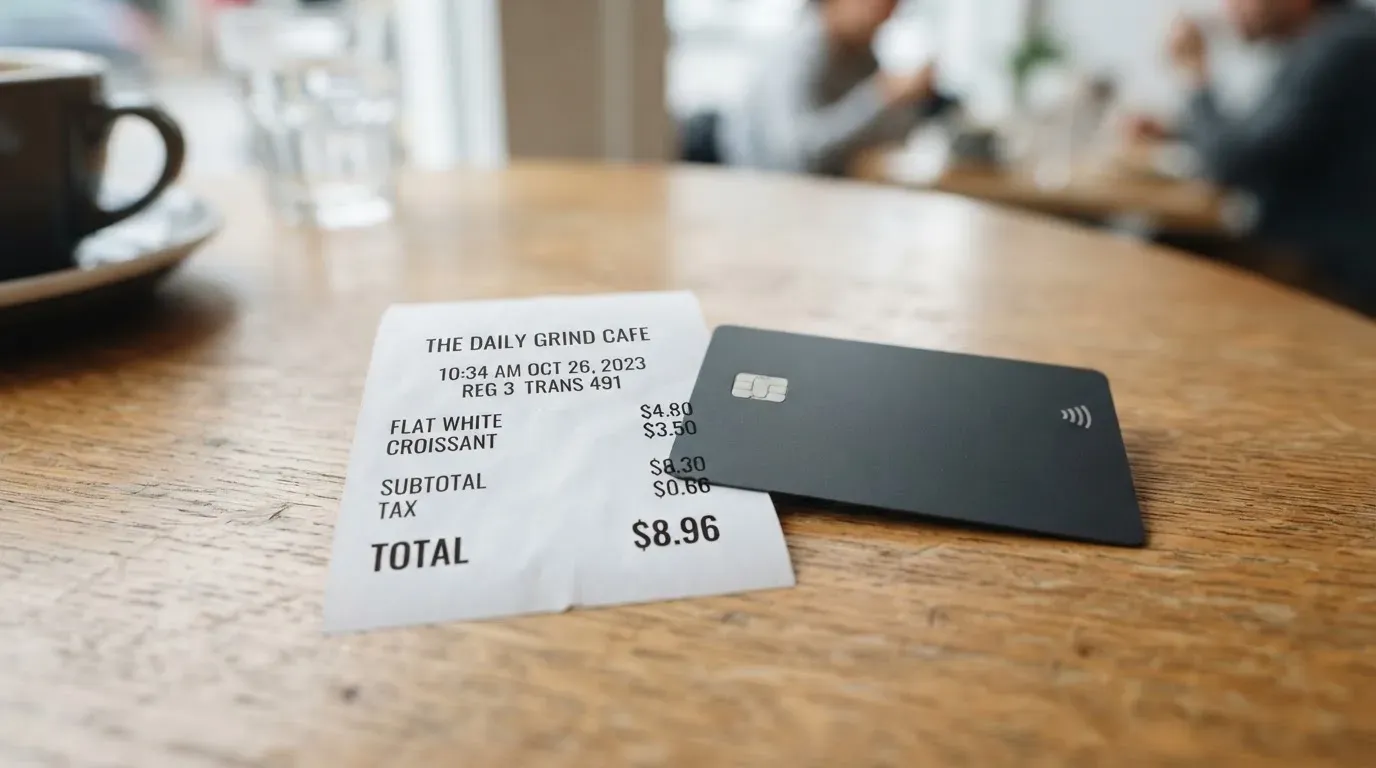
- Coffee at a local café, paid with Apple Pay, card loaded with USDC. The conversion from USDC to USD happens on load, so the only fees at this point are the network fee on the USDC transfer and whatever spread the platform took when it credited your card. The merchant sees a USD transaction, so no FX markup applies at the till.
- Online subscription in euros, card loaded with USDT. Two conversions happen: USDT to USD on load, then USD to EUR at the merchant. The second conversion is where a published FX markup would normally bite, but DigitalPurse does not publish one, so you have to watch the actual amount that lands in your subscription account.
- A small digital purchase from a US-only merchant, paid with a Non-KYC card funded with BTC. Here you are exposed to three unknowns: the BTC-to-USD spread on load, the platform’s privacy-card creation fee, and any extra fee for using BTC rather than a stablecoin.
The pattern is the same in all three: the card itself is straightforward, but the lack of a published fee table means every transaction deserves a moment of attention the first time.
How to top up DigitalPurse
Top-up is where DigitalPurse is most clearly a crypto product. The platform accepts BTC, LTC, XMR, ETH, USDT and USDC, and the public material does not state which blockchain networks it uses. That last point matters: send USDT on the wrong network and the deposit can be lost, because crypto transfers are irreversible.

The flow for a reloadable card is: open the app, select the active card, tap “Add Funds”, then send crypto from your external wallet to the deposit address the app shows you. Non-reloadable cards cannot be topped up at all — you buy them once, spend them down, and buy a new one if you need more. The platform lets you buy as many as you want.
A few practical notes:
- The cheapest way to load, per the platform’s own guidance, is USDT, USDC, bank transfer or mobile money. These avoid the “extra fees” the platform warns about for some non-fiat methods.
- BTC, ETH, LTC and XMR may cost more, both because of their volatility between the time you send and the time the card is credited, and because of the platform’s own processing.
- There is no published minimum top-up. If you are loading a small amount, check the fee screen in-app before you confirm; the unofficial report of a $6 minimum balance is a clue that small loads are not where this card shines.
- Withdrawal is possible. The FAQ says “Yes, you can withdraw your funds. Terms and conditions apply.” The help center walks you through More / Manage → “Withdraw Funds” on the active card. Fees, minimums, timing and destination are not stated publicly. ATM withdrawal is treated as a “transfer of value” and is not permitted, and the platform does not say what happens to a balance when you close the account.
If you are topping up for the first time, send a small test transaction. Crypto sent on the wrong network is one of the most common ways to lose money with cards like this, and the public pages do not give you a network list to double-check against.
Paying with DigitalPurse every day
Once a card is loaded, the daily-use story is straightforward. The site says the card works at any merchant that accepts mobile wallet payments: Apple Pay, Google Pay, or Samsung Pay. That covers the bulk of in-store contactless spending in most regions, and it covers in-app purchases on phones that have the card tokenised into a wallet. For online checkout where the merchant does not take a wallet, you type in the card number, expiry and CVV from the app.
The platform publishes a list of prohibited purchases and calls it “not exhaustive”: betting and casino gambling, government-licensed online casinos, non-sport internet gaming, dating and escort services, security brokers and dealers, foreign or non-fiat currency transactions, wire transfers and money orders, and cash disbursements. Some of these are standard for prepaid cards; the dating and gaming entries are tighter than what you would see on a mainstream debit card.
A few things that are not stated: any rewards or cashback, and a network on the card itself (Visa, Mastercard, or neither). Unofficial app store ratings are reasonable — about 4.6 on Android from roughly 170 reviews with over 50,000 installs, and around 4.5-4.7 on iOS from over a thousand ratings — but the official site does not show store ratings, and I am giving you those as unofficial numbers, not confirmed by the card.
If something goes wrong with a payment, the position is firm and not in your favour. The platform says it “cannot support chargebacks”, citing “unsustainable fraud”, blockchain finality and privacy. This also applies to sub-issuers. For returned items, the FAQ says refunds go “to the card originally used”, and the help center has articles on refunds not arriving, double charges, and merchants that declined but took the money — but those articles were not verified in detail. Gift-code orders are explicitly non-refundable once processed. There is no published dispute time frame. In practice, if a merchant keeps your money and your crypto is already converted and spent, you have very little recourse through the card itself.
The card also has no stated insurance, no stated spending controls beyond the cap you set when you load it, and no 2FA requirement called out in the public material. The platform does mention in-app card freeze as a feature, and “secure encryption, minimal data collection, and strict access controls” as the security posture.
What can go wrong
The risk picture has three layers: the product itself, the company behind it, and the user experience when things break.
On the product: DigitalPurse is custodial. Your crypto sits with the platform and its sub-issuers until you spend it, and the platform is upfront that it is “a technology platform, not a bank”. The issuer is unnamed, the operating company is DECLASSIC TECHNOLOGIES LLC, and the registration country and licences are not stated on the public site. In-app freeze is mentioned, 2FA is implied by the security wording, spending controls are limited to the cap you set on load, and insurance is not mentioned at all. Crypto transfers are irreversible, so a deposit sent on the wrong network or to the wrong address has no platform-level recovery.
On the company: no dated licence, issuer or programme events were found on the official site or help center. Help articles from 2025 and 2026 about non-reloadable cards and chargebacks are undated. The platform was not the subject of any official incident I could verify, but the lack of a stated issuer and the lack of published financials mean the usual “is this company still solvent tomorrow” check is harder to do.
On the user experience: Trustpilot shows 4.8 out of 5 from 232 reviews (60 in the last 12 months, latest 19 October 2026), and the company “hasn’t invited customers recently” — a Trustpilot phrase meaning it has not asked reviewers to leave feedback. The visible reviews are mostly positive. The recurring complaints, gathered by third-party sites and an App Store reviewer, fall into three buckets: cards declined at Google Cloud, Azure and DigitalOcean (a common pattern when merchants block prepaid BIN ranges), non-refundable balances when a card cannot be used, and an extra charge on small cards. Support is praised in some reviews and criticised in others; the platform offers 24/7 support through the app, a Telegram bot (t.me/digitalpurse_bot), a help center with 29 English articles, and a support email for failed purchases.
The pattern that matters for you: when this card works, it works well. When it does not — because a merchant blocks the BIN, because KYC is pending, because the network you sent on is not supported — your safety net is the support team and a help center, not a chargeback right or a regulator to escalate to.
What to take instead
DigitalPurse is not the only crypto-funded card on the market, and the comparison is worth doing because the alternatives publish more of their fee structure and operate under clearer regulatory frames. Here are three to weigh against it.
Bitrefill (6.8 / 10)
Bitrefill sells a Visa card in both virtual and physical form, with deposits in Bitcoin, Lightning, Ethereum, USDC, USDT, Solana, BASE, Polygon, Li.Finance, Apple Pay, Google Pay, Visa and Mastercard, plus SEPA transfer. The card page says it is free through the app, and there is a 2% total cashback with no cap (1% on each crypto deposit, 1% on each purchase). The catch: an inactivity fee kicks in after 12 months without spending or cashing out, the SEPA pay-in fee is 1.99%, and the spread on crypto-to-euro conversion is not published. Country list is not stated; the terms say access is “subject to eligibility criteria” and that partners may add “further eligibility requirements”.
UPay (6.1 / 10)
UPay offers virtual and physical cards, personal and business, with payments converting to USD, EUR, AED and other currencies depending on the network. The wallet accepts BTC, ETH, USDT and USDC, and the platform claims to support 180+ countries while reserving the right not to serve residents of certain countries (a list that “may change with regulatory/issuer policies”). The KYC partner accepts only ID documents issued by the same country as the user, which is a real restriction for expats. Cashback is not mentioned on the card page; the home page lists an “Earn While You Sleep” product but the card-specific economics are not stated.
Kemy (6.0 / 10)
Kemy publishes the most transparent fee schedule of the four. Unlimited virtual Visa cards cost $15 to issue (valid 3 years) and $2 a month; one physical Mastercard costs $250 with DHL Express (valid 3 years, one per user) and $10 a month. Top-up costs $1.50 under $100 or 1.25% from $100 (minimum $5 on virtual, $10 on physical). Transaction fee is 3.5% plus $1. Failed transactions cost $0.80. FX fee is not listed, and the published deposit fee has a stated conflict (8% in one section, 5% in another). Funding is via USDT and USDC on “the main networks” (specific chains not listed), plus BTC, ETH and SOL through an on/off ramp, and fiat via mobile money and virtual bank accounts. Kemy claims 190+ countries with “a few restrictions” checked at sign-up.
How they compare
| Product | Score | Card form | Cashback | Notable trade-off |
|---|---|---|---|---|
| DigitalPurse | 5.8 / 10 | Virtual only | Not stated | No published fees, no chargebacks, no ATM |
| Bitrefill | 6.8 / 10 | Virtual and physical Visa | 2% (1% deposit + 1% spend) | Inactivity fee after 12 months |
| UPay | 6.1 / 10 | Virtual and physical, personal and business | Not stated on card | KYC partner only accepts IDs from the user’s country of residence |
| Kemy | 6.0 / 10 | Unlimited virtual + one physical | Not mentioned | Higher monthly fee, transaction fee 3.5% + $1 |
If you want the most published information and a cashback that adds up, Bitrefill is the strongest of the three. If you need a physical card and are willing to pay a real monthly fee for transparent economics, Kemy is the most predictable. UPay sits in the middle on transparency. DigitalPurse is the most privacy-oriented of the four and the least forthcoming on fees.
Who I would recommend it to
DigitalPurse is a reasonable choice for a specific reader. If you want a quick virtual card, you are comfortable with a privacy-style product, you plan to load with USDT or USDC to avoid the platform’s “extra fees” on more volatile methods, and you do not need a physical card, ATM access, or chargeback rights, then it does the job. The 4.8 Trustpilot score suggests most users get through the experience without drama.
It is the wrong choice if any of the following apply: you need to know the fee before you sign up, you want a physical card, you need to draw cash from an ATM, you rely on your card issuer to reverse a fraudulent or mistaken transaction, or you want a clearly identified issuer regulated in a specific jurisdiction. For those cases, Bitrefill, UPay or Kemy — or a mainstream prepaid card from a regulated e-money institution — will give you more of what you are paying for.
The honest summary: DigitalPurse is a niche product that earns its niche. The score of 5.8 reflects a card that works in the situations it is designed for, and falls short in the situations it is not.
Frequently asked questions
What is the DigitalPurse card?
DigitalPurse is a virtual payment card you fund with crypto and spend through Apple Pay, Google Pay or Samsung Pay. The platform describes itself as a technology platform, not a bank, and the card balance is held in USD once you load it.
How does the DigitalPurse card work?
You create an account in the iOS or Android app (or via the Telegram bot), generate a virtual card, and load it with BTC, LTC, XMR, ETH, USDT or USDC. The crypto is converted to USD on the card, and you spend that USD balance at any merchant that accepts a tokenised mobile wallet payment or accepts the card number online.
Is DigitalPurse a bank?
No. The company states plainly on its site that it is “a technology platform, not a bank”. Card services are “may be facilitated by third-party licensed financial institutions”, and the issuer is not named in the public material.
Who owns DigitalPurse?
The site footer carries the line “© DECLASSIC TECHNOLOGIES LLC 2026”. The operating company is therefore DECLASSIC TECHNOLOGIES LLC, and the public pages do not list a registration country, a regulator, or a list of licences.
Is the DigitalPurse card available in my country?
The platform does not publish a country list, a list of prohibited countries, or any citizenship or residency rules. Eligibility is decided inside the application, and the platform does not commit to a reason for refusal.
Does the DigitalPurse card require KYC?
The official position is that KYC “may” be required for some payments or products, and that unverified users face daily and monthly order caps (amounts not published). Verified users get higher limits. A separate Non-KYC card is sold at a higher price with “greater privacy and flexibility”, and reloadable KYC cards are the lower-cost option.
How do I top up the DigitalPurse card?
For a reloadable card, open the app, select the card, and tap “Add Funds”, then send crypto from your external wallet to the deposit address shown. The platform does not publish minimum top-ups or the networks it accepts, and it warns that BTC, ETH, LTC and XMR may carry extra fees compared to USDT, USDC, bank transfer or mobile money.
Can I withdraw money from DigitalPurse?
The FAQ says yes, with terms and conditions applying. The help center walks you through More / Manage → “Withdraw Funds” on the active card. ATM withdrawals are not permitted; the platform treats them as a “transfer of value” and lists them among prohibited purchases.
Is the DigitalPurse card safe?
The platform describes “secure encryption, minimal data collection, and strict access controls”, offers in-app card freeze, and is custodial by design (your funds sit with the platform and its sub-issuers). It does not state insurance, does not support chargebacks, and does not name the issuer, so the usual checks on regulatory protection are not possible from the public material.
Is the DigitalPurse card worth it?
It is worth it if you want a quick virtual card funded by crypto, you are happy reading the in-app fee screens before you confirm, and you do not need chargeback rights, ATM access, or a physical card. It is not worth it if any of those features are deal-breakers for you, in which case Bitrefill, UPay or Kemy will give you a more complete picture before you sign up.
Virtual cards – cryptocardbasics
Content created by the «cryptocardbasics» team