
A euro-denominated Visa for crypto balances, with zero issuance and zero monthly fees — and a few question marks around the countries it actually serves.
 Available in US
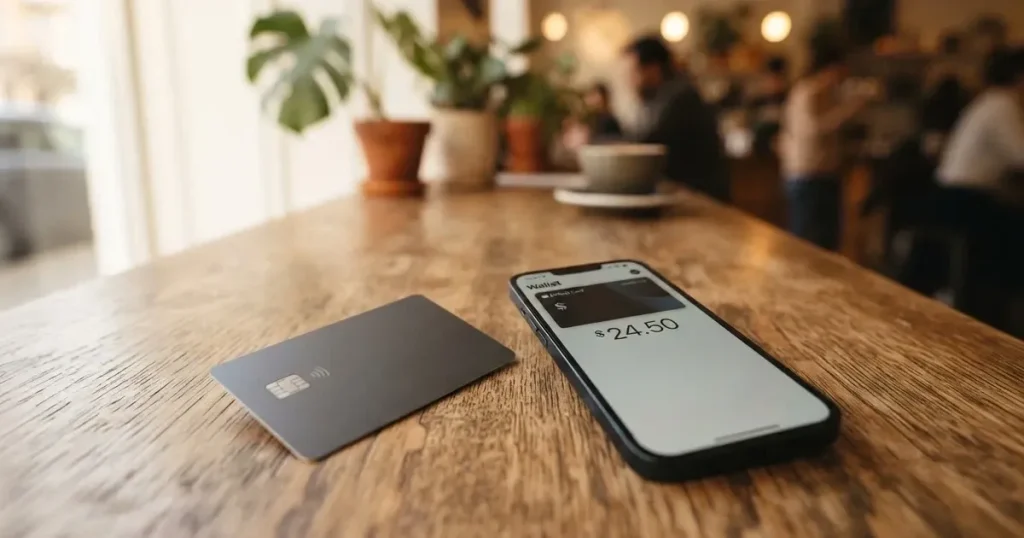
PayPilot is one of the more interesting crypto card products to surface in 2026, mainly because of how it presents its pricing. The card is free to issue, free to service, and a payment from a euro balance carries no commission. The 0.4% fee only kicks in when you convert crypto into euros, which means anyone who already funds their card in euros and tops it up with EUR — rather than BTC, ETH or USDT — pays effectively nothing to spend. That is unusual, and it shapes the rest of this review.
What the card is less clear about is geography. PayPilot’s public pages state that availability “depends on your country of residence and local regulations” and stop short of publishing a list of supported regions. The card is a Visa, issued by a Lithuanian electronic money institution (Walletto UAB) and built around a euro balance, so a European reader is the natural fit. If you are elsewhere, the rest of this review walks through what is confirmed, what is not, and where the questions sit.
Conditions are current as of October 28, 2026.
Verdict: 7.4 out of 10
The headline number sits in the high-7 range, but the score reflects an honest mix of strengths and gaps. Cost is where PayPilot shines — issuance 0 EUR, monthly service 0 EUR, payment in euros 0% — and everyday use is strong: Visa acceptance, virtual and physical card, Apple Pay and Google Pay, ATM cash withdrawal. Reliability looks solid in the absence of complaints and with a named, regulated issuer in Lithuania. The two areas that pull the score down are access (the country list is not disclosed) and top-up (only the assets BTC, ETH, USDT and EUR are listed, and the supported networks are not named anywhere on the public pages).
| Criterion | Score | Why it scored this way |
|---|---|---|
| Who can get it | 5 / 10 | Eligibility is by country of residence; the supported regions are not published |
| Cost | 9 / 10 | Zero issuance, zero monthly fee, zero payment fee on euro balance, 0.4% crypto-to-euro conversion |
| Top-up options | 6 / 10 | BTC, ETH, USDT and EUR are accepted; the networks they ride on are not stated |
| Reliability and complaints | 8 / 10 | Issuer is Walletto UAB under Bank of Lithuania EMI licence No 33 (29 March 2018); no public complaints found |
| Everyday use | 9 / 10 | Visa, virtual and physical card, Apple Pay and Google Pay, ATM withdrawal |
| Total | 7.4 / 10 | A euro-spender topping up with crypto is the natural fit |
The shape that falls out of those rows is straightforward: PayPilot is a good card if you live in a country where it is available, you want to spend in euros, and you treat crypto as a funding source rather than a speculative balance. If you are looking for a non-euro card, a US-dollar balance, a tiered rewards system or a transparent country list, the alternatives lower in this review will fit better.
Will They Give You the Card
PayPilot’s eligibility rule is short and not very specific. The card’s official pages state that availability “depends on your country of residence and local regulations” and that the list of “supported regions” is not published. The rule is framed around residence, not citizenship — there is no mention of nationality — but the practical effect is similar: if your country is not on whatever internal list the issuer uses, you will not be able to complete the application.
The closest the public material comes to a geography signal is the issuer itself. Walletto UAB is a Lithuanian electronic money institution (EMI), and the card is built around a euro balance, so the natural assumption is that the wider European Economic Area is supported. Lithuania-based EMIs are typically allowed to passport their services into other EU/EEA member states under a single licence. Outside the EEA, the position is genuinely unknown until you start the sign-up flow and try to enter an address.
For the reader who has had trouble getting an ordinary bank card — a non-trivial group, including people in countries with weak banking access, people whose documents do not match the typical KYC formats, or people who simply do not want a traditional bank account — PayPilot’s residence-based rule cuts both ways. It is a lower barrier than a US-style SSN or a UK-style credit check, but it is still a country gate, and the gate is not transparent. The single most useful thing you can do before signing up is to start the registration with the address you actually live at and see whether the system accepts it.
One more practical note from the card terms: the issuer may re-verify your identity and ask for additional documents at any time, so an account that works today can still be paused tomorrow if your situation changes. The base KYC is described as a “one-time” identity verification, but “one-time” here means a single upfront step, not “never again”.
How to Get It
PayPilot describes a three-step flow: register, verify, create card. The same flow appears in the FAQ, in slightly different words, and there is no separate “premium” or “business” track described. As far as the public material goes, this is a single-product card with a single sign-up path.
The verification step is what the card calls a “quick identity verification” — and it is, like every regulated card of this type, a KYC check. PayPilot names two KYC partners on its public pages, KycAid and Ondato, both established identity-verification vendors. The card’s own page does not state which documents are required, whether proof of address is needed, or what minimum age applies, so you should be ready to provide a government ID, a selfie and possibly a recent utility bill or bank statement, as is standard for EU-regulated e-money products.
Once verification is complete, you create the card. The card is a Visa, accepted online and in physical stores, and spends from a euro balance. PayPilot offers a virtual card that is usable immediately and a physical card that arrives by post and needs to be activated before it works. The card terms refer to the physical card’s issuance fee as including postal costs, and the pricing page lists an issuance fee — but the headline marketing page says the card is free to issue, which is consistent with 0 EUR for the digital version. The reconciliation here is: the standard virtual card is 0 EUR, and a physical card carries delivery costs that are bundled into whatever the issuer pricing shows for your country. The exact figure for your country is not visible on the marketing page and is only revealed once you are in the application flow.
A practical point worth flagging up front: because the issuer may re-verify identity at any time, the KYC step is not the end of the document asks. The first verification is the entry ticket, but ongoing re-checks are part of the contract.
What It Really Costs: Fees
Cost is where PayPilot is most distinctive, and the headline is simple enough to memorise: 0 EUR to issue, 0 EUR per month to keep, 0% commission on a payment made from a euro balance, and 0.4% when you convert crypto into euros. The card’s public pages are unusually clear about these four numbers, and they do not change based on country of issue, payment size or merchant type.

What the public pages do not show is the foreign-exchange fee. PayPilot’s card terms state that exchange fees are specified in the payment-account agreement and are calculated using Visa or Mastercard published rates at the time of exchange, but the value of that fee is not published. In practice, a card that spends from a euro balance and pays a euro-priced merchant will not hit the FX layer at all; a card that pays a USD-priced merchant or a merchant in a third currency will, and the cost of that step is not in the marketing material. The 0.4% is the crypto-to-euro leg, not the euro-to-merchant leg.
Cash withdrawal from an ATM works and the page confirms it, but the fee and the monthly allowance are not stated. Single, daily and monthly spending limits exist (the card terms refer to maximum payment amounts set by the issuer) but the values are not published either, so you will only see your personal limits once your account is open.
| Fee or limit | Amount |
|---|---|
| Card issuance | 0 EUR (virtual); physical card carries bundled postal costs per issuer pricing |
| Monthly service | 0 EUR |
| Payment from euro balance | 0% commission |
| Crypto-to-euro conversion | 0.4% |
| Foreign-exchange fee | not stated in the public material |
| ATM withdrawal fee and allowance | not stated |
| Single, daily and monthly payment limits | not stated |
| Cashback or rewards | not stated |
| Tiers (Standard, Premium, etc.) | not stated — single card product |
To make the cost picture concrete, here are three everyday situations and how the fees apply. First, paying for a 40 EUR lunch in Spain with a euro balance: 0% payment commission, no conversion needed, 0 EUR in fees. Second, paying the same 40 EUR at a New York coffee shop that bills in USD: the card will convert euros to USD at the FX rate in the card terms, and whatever fee applies to that conversion is on top of the 0% payment commission — the size of that fee is the gap in the published pricing. Third, topping the card up with 100 USDT and spending it on a 100 EUR train ticket: 0.4% on the USDT-to-euro conversion, which is 0.40 EUR, then 0% on the euro payment.
A subtle but useful way to read the costs: the only PayPilot-controlled fee that is visible is the 0.4% conversion fee. The rest — FX, ATM, top-up minimums — are either zero, not published, or charged by parties other than PayPilot (the blockchain, the ATM operator, the merchant’s bank).
How to Top It Up
The card terms and the FAQ together describe a top-up model that runs in two directions. You can add euros directly to the euro balance, or you can transfer crypto — BTC, ETH or USDT — into the wallet, where it is converted into euros at 0.4% before being spent. The card spends only from the euro balance, which means crypto top-up is really a two-step process: on-chain transfer in, conversion to EUR, then spend.
PayPilot’s public material names the four supported assets — BTC, ETH, USDT and EUR — and stops there. The networks those assets ride on are not listed on the marketing pages or in the FAQ. For BTC and ETH there is usually one main network each, but USDT is the asset where this matters most: Tether issues USDT on Ethereum (ERC-20), Tron (TRC-20), Solana, Polygon, Avalanche and others, and Circle has stopped supporting USDC on Tron, so a stablecoin sent on the wrong network is, in most cases, a lost deposit. PayPilot’s material does not say which USDT network is accepted, so the only safe path is to test with a small amount first, or to wait for a confirmation in the app, before sending a large top-up.
Top-up with EUR works, and the 0.4% conversion fee does not apply if the funding is already in euros. The minimum top-up amount and any fee on the EUR leg are not stated in the public material; you will see the actual minimum and the actual fee, if any, once you are in the app and looking at the funding screen. One-way off-ramp is also described: you can sell crypto for EUR and withdraw to an IBAN, subject to limits and compliance checks. If the payment account is closed the card becomes invalid, and the terms do not state what happens to a remaining balance in that case.
A point that does not show up in the cost section: blockchain network fees (gas, bandwidth, TRX burns) are charged by the network, not by PayPilot. A deposit of 50 USDT on Ethereum can cost several dollars in gas during busy periods, and that cost is borne by the sender, not absorbed by the card provider. If you are topping up small amounts, the network fee is a meaningful share of the total; if you are topping up larger amounts, it is a rounding error.
Paying With It Every Day
The card is a Visa, which means it works wherever Visa is accepted — in stores, online, at ATMs, and through the major mobile wallets. The card can be added to Apple Pay or Google Pay, which is a real practical advantage: tokenised mobile wallet payments use a one-time dynamic security code per transaction, and the card number itself is never stored on Apple or Google’s servers.
Online shopping works like any other Visa card. Where 3-D Secure is required (and it is required in the EEA for most online purchases under EU strong customer authentication rules), the issuer either approves the transaction in the background or sends a one-time code or biometric prompt. There is no public list of blocked merchant categories for PayPilot, which is good news if you are wondering whether a specific type of spend is restricted, and unhelpful if you are wondering whether, for example, gambling MCC 7995 is allowed. The card terms do not single out a category. By default, most crypto card programmes block gambling, crypto purchases and a handful of other MCCs, but the only way to be sure with PayPilot is to try a small test transaction or to ask support.
The PayPilot app is published on both major stores — Apple App Store (id6751874532) and Google Play (org.paypilot.app) — and the store ratings could not be read at the time of this review. The app is where you top up, convert, see your balance, freeze the card, view transactions and contact support. There is no separate web wallet described in the public material; the app is the user interface.
Cash at an ATM works, and the card terms are explicit that a physical card can be blocked after three wrong PIN entries. Beyond that, the practical ATM experience (daily cash limit, fee per withdrawal, ATM-owner surcharges) is not described in the public material. For anyone who treats an ATM as a backup rather than a primary use, the lack of a published ATM fee schedule is a soft negative; for someone who plans to use the card mostly in stores and online, it is irrelevant.
What is missing, and what readers often look for, is a rewards or cashback programme. PayPilot’s public pages do not publish a cashback rate, a points scheme, a sign-up bonus or a tiered reward system. The card terms do not mention one either. This is a card you choose for its fee structure, not for its rewards.
What Can Go Wrong
The honest answer, after a search across Trustpilot, Reddit and crypto-card news, is that no PayPilot-specific complaints, scam reports or unresolved disputes showed up in the review window. That does not prove the card is problem-free, but it is a meaningful signal: a card with a public pattern of complaints usually has one, and a clean search is a clean signal.
The structure behind the card is reasonably solid. The card is issued by Walletto UAB, an electronic money institution registered in Vilnius under company code 304686884, holding Bank of Lithuania electronic money institution licence No 33, dated 29 March 2018. The card terms are dated May 2024, which gives a recent anchor point for the contract you would sign. The platform’s development is attributed to Pilot Innovation Sp. z o.o. and the financial services to Nexora Fintech Limited “where applicable” — language that, in this industry, typically means the technology partner and the regulated partner are separate entities, with the regulator-facing role played by the EMI.
On the security side, the site describes the usual set of safeguards: AES-256 encryption, PCI-DSS, ISO 27001, cold wallet storage, two-factor authentication, and an audit reserve. The card terms add the operational safeguards: a client can request a block at any time, the physical card locks after three wrong PINs, and the issuer can block a card for suspected fraud. The custody model — whether user crypto is held in a pooled custodial wallet, segregated accounts or self-custody — is not stated in the public material, which is a real information gap for anyone who weighs counterparty risk carefully.
The support channels are a single email address ([email protected]) and a “Write to us” form, plus a presence on X, Telegram, Instagram, Facebook and LinkedIn. No support hours, no live chat, no phone line. For a regulated EMI in 2026, that is thinner than the industry norm, and it is the kind of detail that matters when something goes wrong at 11pm on a Saturday.
Three structural risks are worth naming even though they are not PayPilot-specific. First, the card is custodial — PayPilot (or its partners) hold the crypto on your behalf, and a custodian failure is a known failure mode in this industry. Second, programme closures happen: Visa terminated its global agreements with FTX in November 2022, WaveCrest-issued programmes were suspended by Visa in Europe in 2018, and other closures have followed. When a programme closes, users typically get a notice period, then a window to spend down the balance, then a request to withdraw. Third, sanctions and country rules can change without notice, and the card’s own terms put the right to block or restrict the account in the issuer’s hands.
Finally, the dispute and chargeback process is not described in the public material. The card terms state that a payment made with card credentials is “deemed authorised” and is not refundable unless the payee agrees to refund, which is standard contract language but is also a meaningful warning: if your card details are stolen and used, the recovery path is the card-issuer dispute route, and the time frames and reason codes for that route are not published.
What to Take Instead
Three cards come up repeatedly in the same conversation as PayPilot: RedotPay, Bitpanda and Wirex. None is a perfect substitute, and the choice between them is less about absolute quality and more about what you are optimising for.
| Card | Score | What it does well | Where it falls short |
|---|---|---|---|
| PayPilot | 7.4 / 10 | Zero issuance, zero monthly fee, 0% payment from EUR balance | Country list not published; networks not stated; no rewards |
| RedotPay | 6.9 / 10 | Two BIN currencies (USD and HKD), Pro tier with monthly fee | Country list is explicit and long, including US exclusion; 1% conversion fee by default |
| Bitpanda | 6.5 / 10 | Euro-area focus, EUR-only card, precious metals and crypto in one spend | Restricted to euro-area residents; non-EUR FX via VISA mark-up |
| Wirex | 6.7 / 10 | 130+ country reach, WXT cryptoback up to 8% on Elite | Cash withdrawals not permitted in Singapore; FX fee not in the published schedule |
RedotPay is the most direct alternative if you want a non-euro balance: it offers a USD card and an HKD card, each with its own BIN. The trade-off is the country list, which is unusually explicit and unusually long, with the United States, mainland China, Russia, Belarus, Ukraine, Serbia and a long list of others excluded for card issuance. The default conversion fee is 1%, the virtual card costs 10 USD, and the physical card costs 100 USD non-refundable, which is a meaningfully different cost shape from PayPilot’s 0 / 0 / 0.4%.
Bitpanda is the natural pick for a euro-area reader who wants a card tied to a broader investment platform. The card is a physical Visa debit in EUR, the account opening and the first card shipment are free, and a lost or stolen replacement costs 9.90 EUR. The catch is the residency rule: you need a verified Bitpanda account and residence in a euro-area country, and users who verified through “Bankident” cannot order at all. There is no virtual card option described.
Wirex is the broadest of the three, with a “130+ countries” service area on the homepage and a tiered reward programme in WXT (0.5% Standard, 3% Premium, up to 8% Elite on the metal card). The fees page is geographically segmented (UK, EEA, APAC, SG, AU, “Other”) and the metal card order fee is 45 GBP in the UK or 45 EUR elsewhere, with free DHL Express. The published materials say “no annual or foreign exchange fees” but the actual FX rate is shown in the app before you confirm, so the published “no FX fee” should be read as a marketing line. Singapore readers should note that cash withdrawals are not permitted in Singapore under the local terms.
If you are choosing between these cards and PayPilot, the decision tree is roughly: live in a euro-area country and want the lowest possible published fees → PayPilot. Need a USD or HKD balance, or are outside the EEA → RedotPay. Already use Bitpanda for investing and want a card attached to it → Bitpanda. Want the widest geographic reach and a token-based reward programme → Wirex.
Who I Would Recommend It To
PayPilot fits a specific reader, and the fit is tight enough that the recommendation is easy to write.
You are a good fit if you live in a country where the card is available (and the only way to find out is to start the sign-up), you spend primarily in euros, and you treat crypto as a funding source rather than the card’s native currency. You top up the card in EUR, you spend the EUR, you keep the 0.4% conversion fee for the moments when you need to convert a stablecoin or a Bitcoin balance. You want Apple Pay and Google Pay, a virtual card you can use the moment your KYC is approved, and a physical card for cash and in-store use. You do not need a rewards programme, a tiered card or a USD balance.
You are a poor fit if you need a non-euro balance, if you are in a country whose inclusion on a published list (or absence from one) you want to verify before you start, if you want a cashback or points programme, or if you need a card whose FX fee is published in advance. You are also a poor fit if your crypto-holding style is self-custody: PayPilot is a custodial product, and the custody model is not described in detail. If self-custody matters to you, the cards in the comparison section above are custodial too, so the trade-off is not with PayPilot specifically — it is with the category.
A short word on the country question, because it is the one piece of the puzzle you cannot resolve by reading the public material. The cleanest path is to start the sign-up, enter the address where you actually live, and see whether the system accepts you. If the country is supported, the rest of this review is what you will get. If it is not, the registration will fail at the address step, before you have shared any documents. That is a low-cost test.
Frequently Asked Questions
What is PayPilot card?
PayPilot is a Visa debit card tied to a euro balance, where the balance is held in an electronic money account issued by Walletto UAB, a Lithuanian e-money institution. You can top the balance up with euros directly or with BTC, ETH or USDT, which are converted to euros at a 0.4% fee. It works online, in stores, at ATMs, and through Apple Pay and Google Pay.
How does PayPilot card work?
The card spends from a euro balance on a Visa network. Crypto top-up is converted to euros before spending, and the euro balance is what the merchant sees at the till. If the merchant is in a non-euro currency, the card’s payment flow uses the Visa exchange rate at the time of the transaction, plus an FX fee whose value is not published in the public material.
Is PayPilot a bank?
No. PayPilot is a card product, not a bank. The card is issued by Walletto UAB, an electronic money institution licensed by the Bank of Lithuania, and the platform’s technology is attributed to Pilot Innovation Sp. z o.o. with financial services “where applicable” attributed to Nexora Fintech Limited. EMIs safeguard customer funds but those funds are not bank deposits and are not covered by deposit guarantee schemes.
Who owns PayPilot?
The public footer states that platform development is by Pilot Innovation Sp. z o.o. and financial services by Nexora Fintech Limited. The regulated role is held by Walletto UAB, the card issuer. Ownership beyond these named entities is not stated on the public pages.
How to get PayPilot card?
Register on PayPilot, complete the one-time identity verification through the card’s KYC partners, and create the card. A virtual card is usable immediately; a physical card is sent by post and needs activation. The exact document list and processing time are not published in advance.
Does PayPilot card require KYC?
Yes. A one-time identity verification is required before a card can be created, and the card terms reserve the right for the issuer to re-verify and to ask for more documents at any time. The KYC partners named on the public pages are KycAid and Ondato.
How to top up PayPilot card?
Top up with EUR directly to the euro balance, or with BTC, ETH or USDT from a wallet you control. Crypto top-up is converted to euros at 0.4%. The networks on which BTC, ETH and USDT are accepted are not stated in the public material, so a small test transfer is the safest first step. On-chain network fees are charged by the blockchain, not by PayPilot.
How to add PayPilot card to Apple Wallet?
Once the card is issued in the app, the standard Apple Pay add-card flow applies: open the Wallet app on iOS, tap the plus sign, and follow the prompts. The card uses tokenisation, so the card number itself is never stored on Apple’s servers and each payment uses a one-time dynamic security code.
Is PayPilot card safe?
The card is issued by a regulated electronic money institution in Lithuania and the site describes AES-256 encryption, PCI-DSS, ISO 27001, two-factor authentication, cold wallet storage and an audit reserve. The custody model is not stated in detail, which is a real information gap. The card is custodial: PayPilot and its partners hold the crypto on your behalf, and that carries the counterparty and hack risk common to all custodial products.
How to delete PayPilot account?
Close the payment account through the app or by writing to support at [email protected]. If the account is closed the card becomes invalid, and the terms do not describe how a remaining balance is returned. Sell or withdraw any balance before closing, and follow the in-app flow if one is available.
App and neobank cards – cryptocardbasics
Content created by the «cryptocardbasics» team