
A practical look at the Solayer card: what it costs, who can get it, and what to watch out for
 Available in US
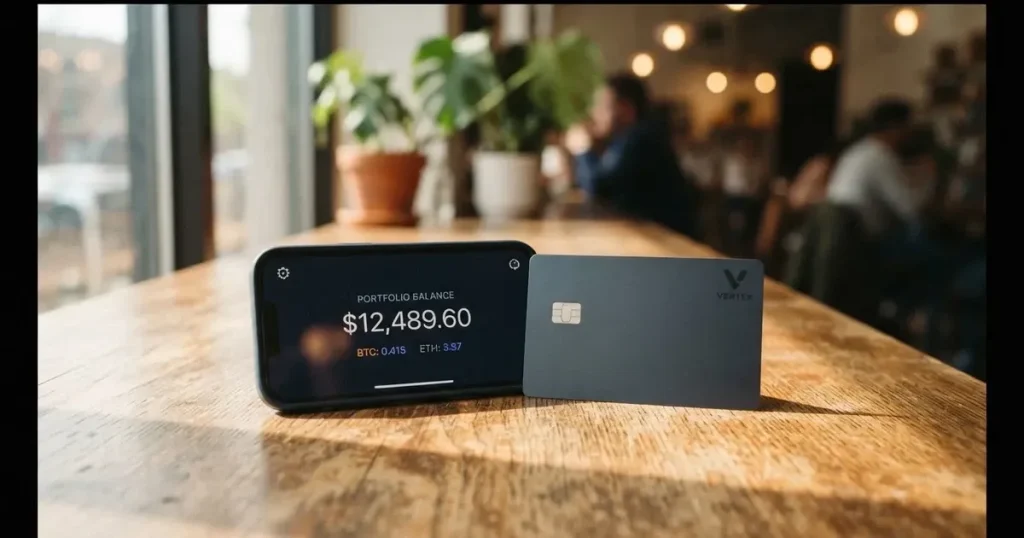
The Solayer card is a Visa payment card that draws on a crypto-backed balance, aimed at people who hold stablecoins on Solana and want to spend them through the regular card network. It launched in April 2025 as the Emerald Card and was later renamed Solayer Pay, with a physical card announced in May 2026. The pitch is straightforward: load stablecoins, pay anywhere Visa is accepted, and tap your phone with Apple Pay or Google Pay.
After going through the card’s own pages, the terms, and third-party listings, I find a product that does the everyday basics competently but leaves several practical questions unanswered, and on a few points the official pages disagree with each other. If you are a stablecoin holder on Solana living outside the restricted-country list, the card can work. If you are outside that audience, or if the gaps in the documentation matter to you, you will want to look at the alternatives at the end of this review.
Conditions are current as of October 28, 2026.
Verdict
The Solayer card scores 6.2 out of 10. The breakdown explains why.
| Criterion | Mark | Reason |
|---|---|---|
| Who can get it | 7/10 | Broad country list covering most of the EU, the UK, Switzerland, Turkey, the UAE, India, and China, but both residence and citizenship are checked, and the US treatment conflicts between documents. |
| Cost | 5/10 | $20/year membership and shipping fees for the physical card, with non-USD spending at $0.10 + 1.5% and a cross-border fee of up to 3%. The top-up fee is quoted three different ways on three different pages. |
| Top-up options | 5/10 | Stablecoins on Solana, with other networks added at the issuer’s discretion, but no specific stablecoins are named and no minimum top-up is stated. |
| Reliability and complaints | 6/10 | No public complaints found, but the legal entity behind Solayer and its licences are not disclosed, and the card’s own pages disagree on whether custody is provider-operated or non-custodial. |
| Everyday use | 8/10 | Virtual and physical Visa, Apple Pay and Google Pay, ATM withdrawals up to $250 on the physical card. The strongest area of the product. |
The card suits stablecoin holders on Solana who live outside the restricted-country list and who primarily want to spend in USD. It does not suit anyone who needs transparent fee schedules, detailed regulatory disclosure, or a card that can be confidently described as self-custodial. The documentation gaps are real, and you should factor them in before committing funds.
Who Can Get the Solayer Card
The eligibility rule covers both your country of residence and your citizenship. The card’s terms say residents or citizens of a listed set of countries are “not eligible to sign up for the Solayer Card, regardless of their current place of residence.” That is a stricter rule than many crypto cards, which usually check only where you live.
The restricted list is long. It includes Russia, Belarus, Georgia, Turkey, Serbia, Ukraine, Moldova, Montenegro, the UAE, most EU member states, the UK, and Switzerland. If you are a citizen of one of these countries, the card’s terms say you cannot sign up, regardless of where you currently live. The card terms also separately say the user attests not to be a US citizen, describing the product as “intended for those outside of the United States.” But the eligibility list itself does not bar the United States wholesale; it bars specific US states: Arizona, Delaware, Georgia, Idaho, Louisiana, Maryland, Montana, Nevada, New Mexico, North Dakota, Ohio, Oregon, Rhode Island, South Dakota, Vermont, Washington, Wisconsin. These two documents conflict on the US. The state-level list is more specific and probably the operative one, but it is worth asking support if you are a US citizen abroad.
Countries not on the excluded list, and therefore not explicitly barred, include Armenia, Kazakhstan, Azerbaijan, Uzbekistan, and Kyrgyzstan. Eligibility for those is not confirmed, however; the card says it does not publish a list of eligible countries. A third-party tracker, CryptoCardHub, counts 120 countries as available and 94 as restricted, which is a useful cross-check but not an official source.
You must also be at least 18 and pass KYC. The required documents are a government-issued ID: passport, driver’s licence, or Aadhaar card, plus a live face check. You do not need to upload a separate proof of address; the address is part of the KYC form, but no utility bill or bank statement is requested in the standard flow. Aadhaar is an Indian government-issued identification number, and accepting it signals the card is specifically targeting Indian users alongside the broader international list. Approval takes 3 to 5 business days after you submit your documents.
How to Get the Card
The process runs through the Solayer Pay app, available on the Apple App Store and Google Play. New users pay a one-time $20 account activation fee, which covers the virtual card for the first year. The $20 is a membership fee, not a card-issuance fee per se: it grants you card access and maintenance for 12 months.
Once your KYC clears, you get a virtual Visa card immediately. The virtual card is denominated in USD; if you spend in another currency, the transaction is converted to USD at the card-network rate.
For a physical card, the fee page lists two shipping options: US Express at $24.99 with 2 to 5 business days, tracked, and International Express at $59.99 with 5 to 11 business days, also tracked and including production. Shipping is the only charge for the physical card itself; there is no separate issuance fee. Two things to know before ordering: your delivery address cannot be changed after you place the order, and the list of countries the physical card ships to is not published beyond the general eligibility restrictions. If the card is lost or stolen, you freeze it in the app and order a replacement, but the replacement fee is not stated.
One inconsistency worth flagging: the card’s own pages disagree on whether the physical card is available. The fee page, when I read it, described the cards as digital only with the physical card “coming soon,” while the Physical Card page described ordering a physical card with the shipping options above. I would treat the Physical Card page as the more current source given the May 2026 press release announcing the physical card, but expect a support question if you run into the older copy.
Fees: What It Really Costs
The headline cost is the $20 annual membership, plus shipping if you want a physical card. Beyond that, the card has no stated monthly fee, no stated issuance fee, and the product page lists no card fees. But several fees do apply when you actually use the card, and the documentation for one of them (the top-up fee) is inconsistent.
| Fee or limit | Amount |
|---|---|
| Account activation (first year) | $20 one-time |
| Annual membership (after first year) | $20 |
| Physical card shipping (US Express) | $24.99 |
| Physical card shipping (International Express) | $59.99 |
| USD transaction | $0.15 |
| Non-USD transaction | $0.10 + 1.5% (fee page) or $0.10 + 1.75% (FAQ) |
| Cross-border fee | up to 3% |
| Crypto conversion fee | not stated |
| ATM withdrawal (physical card) | up to $250 per withdrawal, max 3 per 24 hours |
| Top-up fee | 1% (fee page), 0.5% (FAQ), or $0.10 per transaction (top-up tutorial) |
| Daily spending limit | not stated officially (unofficial: $10,000) |
| Monthly spending limit | not stated officially (unofficial: $30,000) |
| APR | 0% (may be introduced later) |
| Late payment | up to $40 |
| Returned payment | up to $29 |
To put this in everyday terms: if you buy a €40 dinner in Paris with the physical card, you pay the Visa wholesale conversion rate plus 1.5% on top of the $0.10 fixed fee, and if the merchant’s bank is in a different country from the issuer’s, you can pay up to 3% more. On a €40 transaction that works out to roughly €1.80 to €3.00 in fees, depending on the cross-border treatment. On a $100 domestic purchase you pay only the $0.15 USD transaction fee.
The crypto conversion fee is the one that matters most for a crypto-funded card, and the official pages do not state it. The $0.10 + 1.5% figure covers the moment your stablecoin is converted to USD at the point of sale, or at the moment it is loaded onto the card; which one applies is not spelled out. If you are sensitive to conversion costs, you should ask support before loading a large balance.
ATM use is described in the physical card documentation as available wherever Visa ATMs operate, up to $250 per withdrawal including any ATM surcharges, and up to three attempts per rolling 24 hours. Standard ATM and network fees may apply. The card’s terms, however, say cash advances are not available, which conflicts with the ATM description. I read the ATM description as the operative one for cash withdrawals with the physical card, but the terms-of-service conflict is the kind of thing that can matter if a dispute ever arises.
Spending limits are described as “dynamic and may be modified at any time,” with no specific figures published. An unofficial Chinese-language listing on cryptocards.so quotes $10,000 daily and $30,000 monthly spending, with a $500 ATM limit, but that listing is undated and may predate the current structure, so treat those numbers as indicative only. You are also limited to 10 cards in total per account, including cancelled ones.
How to Top Up the Card
The card spends from a balance you fund with stablecoins, and the only confirmed funding method is crypto. You do not have a fiat on-ramp: there is no bank transfer, no card-to-card transfer, and no option to buy stablecoins inside the app that I could see. The funding flow is: open the app, go to the Card tab, tap Deposit, and approve the transfer in your connected wallet.
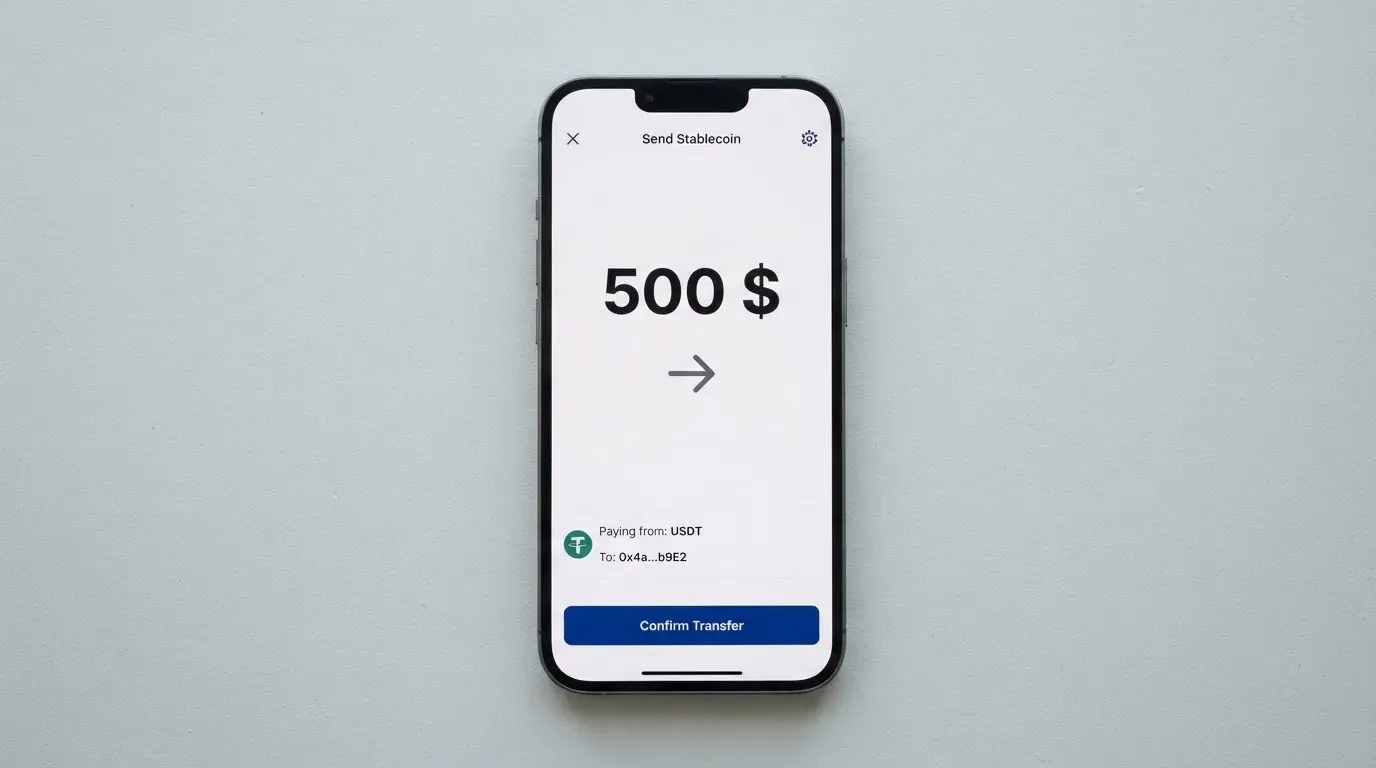
The card’s own pages name “stablecoins” as the funding asset but do not name specific coins. USDC and USDT are the obvious candidates given the Solana-first design, but you should not assume either is supported without checking in the app. The supported chain at launch is Solana; other networks are added “at the issuer’s discretion,” which means you have no guarantee that, say, Ethereum or Base will be added even if you want to fund from there.
The top-up fee is the most confused figure in the entire fee schedule. The fee page says 1% per top-up, the FAQ says 0.5%, and the top-up tutorial says $0.10 per top-up transaction. These three cannot all be right. My reading is that the 0.5% to 1% range reflects the on-chain network fee plus a service margin, and the $0.10 is a flat minimum, but the card should publish one number, not three.
Cards deactivate after 6 months of no activity. To reactivate, you need to order a new card, which means another $20 membership year and, for a physical card, another shipping fee. If you travel or use the card seasonally, keep that in mind.
Withdrawing your remaining card balance back to a wallet is not described on the top-up page or in the terms. The terms say the balance can be repaid at any time without penalty and that chargebacks resolved in your favour are credited to the Solayer Account, but they do not explain how to move that balance off the card. Ask support before you load a large amount if you think you might want to unload it.
Paying With the Card Every Day
For in-person payments, the card works like any other Visa contactless card. You can add it to Apple Pay or Google Pay and tap to pay at any terminal that accepts contactless Visa. Online, you enter the card number, expiry, and CVV like any other card. The product page confirms Apple Pay and Google Pay support; the card-network routing is Visa.
The card’s terms prohibit certain merchant categories, including gambling-related activity and cash-like transactions such as travellers cheques, foreign currency, money orders, wire transfers, and cryptocurrency. If you try to use the card at a currency exchange, the transaction will likely be declined. This is consistent with the card’s prepaid-style model but is worth knowing if you travel and expect to use the card for incidental purchases at, say, an airport bureau de change.
The rewards structure is points-based, not cashback. You earn points from spending and from referrals, and you can unlock ecosystem perks and yield on eligible balances. The product page does not publish a cashback percentage, and third-party listings mention a 1% cashback or 10% first-purchase offer that appears to have been a 2025 launch campaign. There is no published tier structure: it is one product with one membership level.
The Solayer Pay app is the control centre: you see your balance, manage your cards, freeze and unfreeze a lost card, and initiate chargebacks. App Store and Google Play presence is confirmed on the product page. The unofficial CryptoCardHub listing gives the app a 5.0 rating on the US App Store from only 2 ratings and 500+ downloads on Google Play, while a third-party report from March 2026 showed a 0.0 rating; both numbers are too thin to draw conclusions from, and I did not read the store pages directly. The app is functional but not heavily reviewed, which is itself a signal.
For disputes, the procedure is: contact the merchant first, and if that does not resolve the issue, or if the charge was unauthorised, start a chargeback through the Solayer Account. You have 60 days from the date the charge posts on your statement to report it. The disputed amount may remain due while the chargeback is pending, and a chargeback resolved in your favour is credited to your Solayer Account rather than refunded to an external card or bank. Card-network rules may require additional documents, so keep receipts.
What Can Go Wrong
The biggest category of risk is documentation, not fraud. I could not find any public complaints, Reddit threads, or Trustpilot page for the Solayer card. That can mean the product is too new to have attracted complaints, or it can mean the user base is small enough that complaints have not surfaced, or it can mean people are not talking publicly. CryptoCardHub’s own note is that independent feedback is minimal.
The issuer is listed as Third National in the card terms, but the legal entity behind Solayer and the licences it operates under are not disclosed on the pages I read. Third National is the bank that actually issues the Visa cards under its licence; Solayer is the programme manager, the brand, and the app. That structure is standard in the crypto card world, but the absence of any mention of which jurisdictions Solayer itself is regulated in is a gap. For comparison, a regulated EU EMI would publish its authorisation number and home regulator on its website. You will not find that here.
The second risk is the custody model. The card’s own documentation describes “provider-operated hybrid custody”: hot wallets hold a small operational balance, cold wallets hold most assets offline, with multi-signature controls and “circuit breakers that freeze suspicious activity.” That is a custodial model. The marketing material calls the card “non-custodial” and “fully on-chain.” Those two descriptions are not consistent. If you care about whether you hold your own keys, ask support directly which description is accurate before loading significant funds.
The third risk is support. The FAQ points to Solayer’s Discord (discord.gg/solayerlabs) as the support channel. The terms list an email ([email protected]) and a US phone number (+1 (734) 510 1402). Discord is fast for community questions but is not a regulated support channel; email is slow and there is no published response-time commitment; a US phone number is of limited use to users in, say, India or the EU. If timely, accountable support matters to you, the support model is a weak point.
Other risks to be aware of: the card can be frozen or closed if your KYC information changes or if transaction monitoring flags activity, and the terms give the issuer broad discretion to do so. Stablecoins themselves can depeg, and while USDC and USDT have largely held their peg, the May 2022 TerraUSD collapse and the March 2023 USDC depeg during the US banking crisis show that pegs are not guarantees. A blockchain transfer sent on the wrong network, or to an address on a chain the card does not support, can be lost permanently because crypto transfers are irreversible.
The card has no published insurance on customer funds and no mention of fund segregation. In the EU, an EMI must segregate customer funds; if Solayer’s card programme is run through an EMI, that protection would apply, but the card’s pages do not say so. In the US, prepaid-card coverage varies and should not be assumed.
What to Take Instead
If the Solayer card’s gaps are a deal-breaker, three alternatives cover similar ground with different trade-offs.
MetaMask Card (7.1/10). The MetaMask Card is a Mastercard issued by Monovate with Crypto Life as card provider. The Virtual card is free with no annual or maintenance fee; the Metal card is $199/year. It spends directly from your connected wallet on Linea, Base, Monad, and Solana, with named tokens including mUSD, wETH, EURe, GBPe, USDC, and USDT. Cashback is paid in mUSD into the Money Account: 1% on Virtual, headline 3% on Metal with a footnote limiting the 3% to the first $10,000 spent and then 1%. Sign-up is open in 45 listed countries (Andorra, Argentina, Brazil, Canada, Mexico, Germany, France, Spain, Uruguay among them) with other regions on a waitlist. US and UK sign-ups are temporarily closed per the FAQ. There is no foreign transaction fee, and the Mastercard rate is used for conversion. Compared to Solayer, MetaMask is stronger on the self-custody story (spends directly from your wallet), clearer on fees, and has a real cashback percentage, but it is weaker on country coverage for US/UK users.
KAST (6.1/10). KAST offers virtual and physical Visa cards (Platinum Standard, Infinite metal Premium, gold-plated Infinite Private) with up to 10 cards per user, denominated in USD with stablecoin deposits converted at 0% spread. Annual membership is tiered: Standard $0, Premium $1,000, Private $10,000. Stablecoin top-up is 0% and card spend in USD is 0% with a 0% transaction fee; non-USD FX is 0.5% to 1.75% depending on residence, transaction country, and card programme. Cashback in USD is 1.5% on the first $2,000/month for Standard, 2% on the first $10,000/month for Premium, 3% on the first $40,000/month for Private. Funding accepts USDT, USDC, PYUSD, and RLUSD on Ethereum, Solana, Polygon, Arbitrum, and TRON (the app lists current networks). The trade-off versus Solayer is the cost: $0 Standard is cheaper than Solayer’s $20/year, but Premium and Private are dramatically more expensive. KAST is the right pick if you spend heavily and want tiered rewards.
Zeal (6.1/10). Zeal is a Visa card that spends from balances in a card Safe denominated in EUR, USD, and GBP stablecoin accounts on Gnosis Chain and Celo. It charges no additional FX fee beyond the Visa wholesale rate and publishes up to 4% cashback paid in GNO on Gnosis Chain, with the requirement that you hold GNO in the card Safe to qualify. The card programme is live in the EU, the UK, Brazil, Colombia, Mexico, Japan, Singapore, the Philippines, Indonesia, and Thailand, with spend accepted in 150+ countries. Zeal’s edge is multi-currency balances and the GNO rewards; the catch is that the reward is paid in a token you have to actively hold, and Zeal does not publish a fee schedule on its site or in the App Store. Compared to Solayer, Zeal is better on multi-currency, weaker on fee transparency.
| Card | Network | Annual cost | Foreign tx fee | Cashback | Funded from |
|---|---|---|---|---|---|
| Solayer | Visa | $20 + shipping | $0.10 + 1.5% + up to 3% cross-border | Points, no published rate | Stablecoins on Solana |
| MetaMask | Mastercard | $0 (Virtual) / $199 (Metal) | None | 1% (Virtual) / 3% then 1% (Metal) | Wallet on Linea, Base, Monad, Solana |
| KAST | Visa | $0 / $1,000 / $10,000 | 0.5%–1.75% | 1.5% / 2% / 3% USD | USDT, USDC, PYUSD, RLUSD on 5 chains |
| Zeal | Visa | Not published | None (Visa wholesale) | Up to 4% in GNO | EUR/USD/GBP stablecoin balances on Gnosis, Celo |
Who I Would Recommend the Solayer Card To
The Solayer card is a reasonable fit if you are a stablecoin holder on Solana, you live in one of the 120 countries a third-party tracker counts as available, you are not a citizen of a restricted country, and you are comfortable treating the card as a USD-denominated prepaid spend account rather than a full bank account. In that case, the Apple Pay and Google Pay integration, the up to $250 ATM withdrawals, and the no-monthly-fee design are genuinely useful, and the $20 annual membership is fair for what you get.
The card is not a good fit if you want a cashback percentage published in advance, if you need a self-custodial product in the strict sense, if you need a card that you can confidently describe to a tax adviser as spending from your own wallet at the moment of purchase, or if you want a fee schedule that does not contradict itself. The three different top-up fee figures across three official pages, the two different descriptions of custody, and the disagreement on whether the physical card is shipping or “coming soon” are not the kind of polish you want to see from a card handling your money.
If you are in the core audience, the card works. If you are on the edge of the audience, or if the documentation gaps worry you, the alternatives are stronger on at least one of those dimensions.
Frequently Asked Questions
What is the Solayer card?
The Solayer card is a Visa payment card that draws on a balance funded with stablecoins, primarily on the Solana network. It comes as a virtual card available immediately after KYC, and a physical card that can be ordered for an extra shipping fee.
How does the Solayer card work?
You complete KYC, get a virtual Visa, top it up with stablecoins from your wallet, and spend wherever Visa is accepted. The card converts your stablecoin balance to USD at the point of sale (or at load), and you can tap to pay with Apple Pay or Google Pay. Spending limits are described as dynamic and can be changed at any time.
Is Solayer a bank?
No. Solayer is a crypto brand and programme manager. The card is issued by Third National under a Visa licence, which is the bank side. Solayer’s own legal entity and the licences it operates under are not disclosed on the card’s pages.
Who owns Solayer?
The card’s own pages do not name the owners of the Solayer entity. Third National is named as the card issuer in the terms. Ownership and corporate structure are not published.
Is the Solayer card available in my country?
Eligibility is checked by both residence and citizenship. A long list of countries is excluded by either rule, including Russia, Belarus, Turkey, the UAE, most EU states, the UK, and Switzerland. A third-party tracker counts 120 available and 94 restricted. The card does not publish a list of eligible countries, so for a definitive answer you have to start the sign-up flow or ask support.
How do I get the Solayer card?
Download the Solayer Pay app, create an account, pay the $20 one-time activation fee, and complete KYC with a government ID and a face liveness check. Approval takes 3 to 5 business days. You get a virtual card on approval, and can order a physical card for $24.99 (US Express) or $59.99 (International Express).
Does the Solayer card require KYC?
Yes. You must be at least 18, submit a passport, driver’s licence, or Aadhaar card, complete a live face check, and provide your address, occupation, and annual salary. There is no separate proof-of-address document required in the standard flow.
How do I top up the Solayer card?
In the app, go to the Card tab, tap Deposit, and approve the transfer in your connected wallet. Stablecoins are the only confirmed funding method, and Solana is the primary network. Other networks are added at the issuer’s discretion. The top-up fee is quoted as 1%, 0.5%, or $0.10 per transaction on different official pages, so check the app for the current figure.
Is the Solayer card safe?
The card uses hybrid custody with hot and cold wallets and multi-signature controls, lets you freeze a lost card instantly in the app, and uses 3-D Secure for online payments. The marketing calls the card non-custodial, which conflicts with the custody description in the documentation. There is no published insurance on customer balances. No public complaints or Trustpilot reviews were found, but that may reflect a small or new user base.
Is the Solayer card worth it?
It depends on your situation. For a stablecoin holder on Solana in an eligible country, paying a $20 annual fee for a USD-denominated Visa with Apple Pay and ATM access is fair value. If you need a published cashback rate, a self-custodial model, transparent fees, or a card that ships to your country without ambiguity, one of the alternatives in this review will likely suit you better.
Wallet cards – cryptocardbasics
Content created by the «cryptocardbasics» team