
What I found when I read the FlexCard terms closely
 Available in US
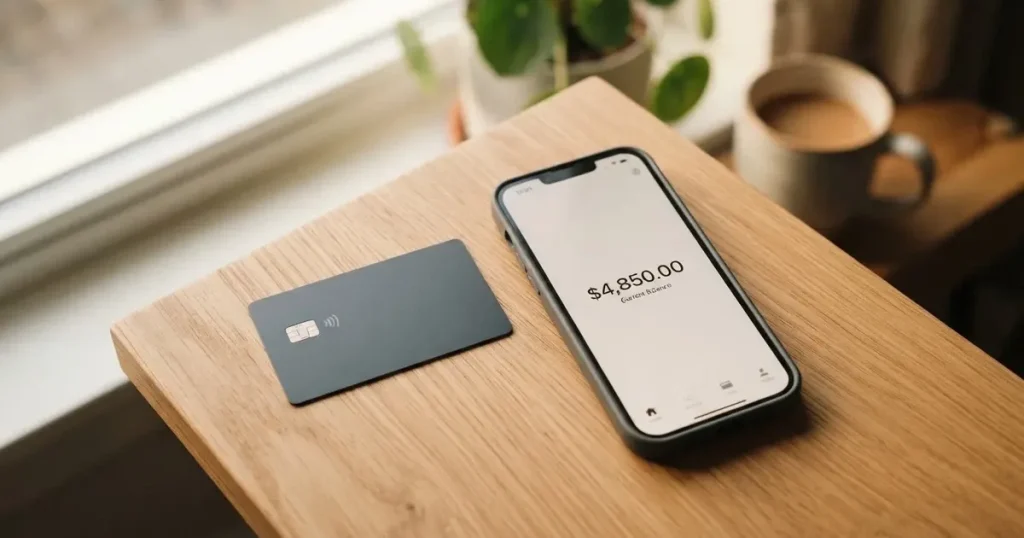
FlexCard is a custodial card you load with crypto and spend like an ordinary payment card. You register in a web cabinet, pay an issuance fee, receive virtual cards in USD, EUR or GBP, and top them up with USDT or USDC on named networks, or with a bank transfer. On paper it is a small, tidy product aimed at people who need a card that ordinary banks will not give them — and at people who pay for online advertising and SaaS subscriptions.
I read the terms, the public pages and the visible reviews with that use in mind. My verdict is 5.1 out of 10. Not because the product is a fraud, but because it asks you to hand over money and your spending to an entity that does not name itself, issues cards on a BIN it does not identify, and publishes a fee schedule with a start price and no end price. The good parts are real: the top-up options are among the widest I have seen in this category, the terms are unusually specific about several things, and the complaints I found mostly come from people using the card for the one thing it works well at. The weak parts are the ones that should make you hesitate before you transfer your first USDT.
Conditions here are current as of October 28, 2026.
Verdict: 5.1 / 10, built for ad spend and crypto habituates
Let me give you the score first and then the reasoning. FlexCard scores 5.1 out of 10. It suits you if you are paying for Meta and Google ads, SaaS tools and similar online subscriptions from a crypto balance, if you want virtual cards only and you are comfortable with a custodial setup, and if you treat the balance as spending money rather than savings. It does not suit you if you need a physical card, if you want to hold a balance and withdraw it, if you want a named, regulated institution behind the card, or if you need to know what a payment will cost before you make it.
| Criterion | Mark | Why, in short |
|---|---|---|
| Who can get it | 7 / 10 | No list of permitted or excluded countries is published; the terms only name banned advertising topics |
| Cost | 3 / 10 | Issuance from USD 2.5 (terms say 2-4 USD/EUR by card type), 10 free ADS cards at registration, top-up commission from 3.5% |
| Top-up options | 8 / 10 | USDT (TRC20), USDT (ERC20), USDC (ERC20) and bank transfer in EUR and USD |
| Reliability and complaints | 3 / 10 | No legal entity, address or issuer named; Trustpilot 4.2 from 51 reviews, with reports of accounts blocked without warning and silence from support |
| Everyday use | 5 / 10 | Virtual cards in USD, EUR and GBP only; no ATM described; unofficial reports say Google Pay and Apple Pay can be added |
That table is the whole review in miniature, and it is worth noticing which rows scored highest and lowest. Top-up options scored 8 because the list of networks is concrete and complete. Reliability and complaints scored 3 because the same page that lists networks cannot tell you who you are dealing with. Cost scored 3 not because the numbers are high — an issuance fee from USD 2.5 is at the cheap end — but because the top-up commission has a floor and no ceiling, and nothing tells you what a foreign-currency payment costs.
The audience this product is built for is media buyers: people paying for ads and SaaS. If that is you, the card does one job well. If you came here for a card to spend your salary from, you are reading the wrong review.
Will they give you the card?
Yes to almost anyone, and that is both the promise and the problem. The service publishes no list of supported countries and no list of excluded ones. The public pages simply do not say who is eligible or who is not, so I cannot tell you that your country works. That is not the same as a country being refused; it means the question is unasked in public. The terms themselves only restrict the subject matter of advertising placed through the cards: human trafficking, child sexual abuse material, illegal substances, weapons and malware.
No MCC list is published, so in theory nothing at the merchant-category level is formally blocked — but that is an absence of rules, not a permission.
So the honest answer is: there is no stated gate. Which means you find out by trying, and a refusal, if it comes, comes as a closed account rather than as a published rule you could have read.
How to get it
Registration is by email in the cabinet on the website. There is no app listing on the App Store or Google Play, and none is described. After registering, you top up and the cards appear in the cabinet.
On identity checks, the terms are unusually blunt. Section 2.3 says the service does not verify user data unless required by law or needed to provide the services. There are no tiers, no levels, nothing. So from the official pages alone, expect no document upload at signup.
Unofficial sources tell a consistent story but you should hold it loosely. A third-party review updated in December 2025 says registration needs only an email address with no document verification, and that no KYC documents are requested at signup with levels unpublished. That matches the terms as written, which is reassuring, but it is third-party reporting, not the card’s own statement.
What you get is virtual cards only. No physical card is described, and no delivery process exists. The card network is not specified on the official pages; the terms say only that cards are issued on a BIN in the currency you select, which is USD, EUR or GBP. Unofficial sources describe the product as Visa Business debit cards with European BINs (Estonia, the UK, Spain) and Latin American options, one partner page claiming over 20 BINs. Take that as indicative. A third-party description of the card type is not a commitment from the issuer.
So: three currencies, virtual only, one BIN you do not get told the name of. If you are planning to use this in a shop that declines prepaid or foreign-issued cards — and several do — that is where the anonymous BIN description matters.
Fees: what it really costs
Here is where I would slow down. The card’s own numbers are these, and they are the only ones the public pages give.

| Fee or limit | What the card says |
|---|---|
| Card issuance | From USD 2.5 on the home page; the terms say 2-4 USD/EUR depending on card type (s.4.11) |
| Monthly fee | Not stated |
| Top-up commission | From 3.5%, depending on deposit amount and spending volume (s.4.10) |
| Conversion fee | The page claims no hidden conversion fees but gives no FX rate |
| Foreign-currency payment | Not stated (the page says no hidden conversion fees) |
| ATM | Not stated — no cash withdrawal described |
| Card limits | Stated as unlimited for number of cards, cardholders and spend per user (s.4.6-4.9); adjustable free of charge (s.4.12) |
| Deposit minimum | Set by the service; amount not given |
| Decline rate | Above 20% can lead to suspension |
Let me run three ordinary payments through that table, because that is where the fee schedule either holds up or does not.
Paying a $30 SaaS subscription with USDT already in your balance. Here the top-up commission is the number that matters. It starts at 3.5% and scales with deposit amount and spending volume. On a small deposit that is 3.5% of everything you loaded, charged at the point of funding rather than at the point of spending. On a large deposit the published rate is lower but the formula is not published, so you are told it gets cheaper without being told how much cheaper. The card claims no hidden conversion fees. If the merchant charges in dollars and your card balance is already in dollars, there is no conversion at all and the 3.5% may be the whole cost.
Paying a EUR 60 invoice from a GBP card. The terms say the card shows funds in the currency of the BIN it was issued on, and that you set that at the moment of request. So you can reduce mismatches by choosing the right BIN. But if the merchant charges in a currency your card does not hold, the fee for paying in another currency is not stated. The site says there are no hidden conversion fees and gives no rate. That means the conversion cost, if any, is not something you can price in advance. I would not want to place a large recurring payment on that basis.
Withdrawing cash at an ATM. Not described anywhere. There is no ATM section, no fee, no limit. Treat cash withdrawal as unavailable rather than free.
Two further cost points. There is a single tier — no VIP or plan levels — so the only thing that varies is that “from 3.5%” top-up commission (s.4.10), plus the 10 free ADS cards you get at registration. And the terms say refunds come back reduced by payment-system fees. Money going out of the system costs more than money coming in.
The limits picture is unusual. The terms state the number of cards, the number of cardholders and spending per user as unlimited (s.4.6-4.9), and card limits adjustable free of charge (s.4.12). The minimum deposit is set by the service and the amount is not published — one unofficial source says USD 50, and several affiliate blogs say the same, but that is third-party. If your minimum is higher than expected, you will find out from a rejected transfer rather than from a published table.
Top up: four ways in, and they are not equal
This is the strongest part of the product. You can fund with USDT on TRC20, USDT on ERC20, USDC on ERC20, or a bank transfer in EUR and USD (s.4.13). In a category where many cards take one token on one chain, four clearly named routes is genuinely good.
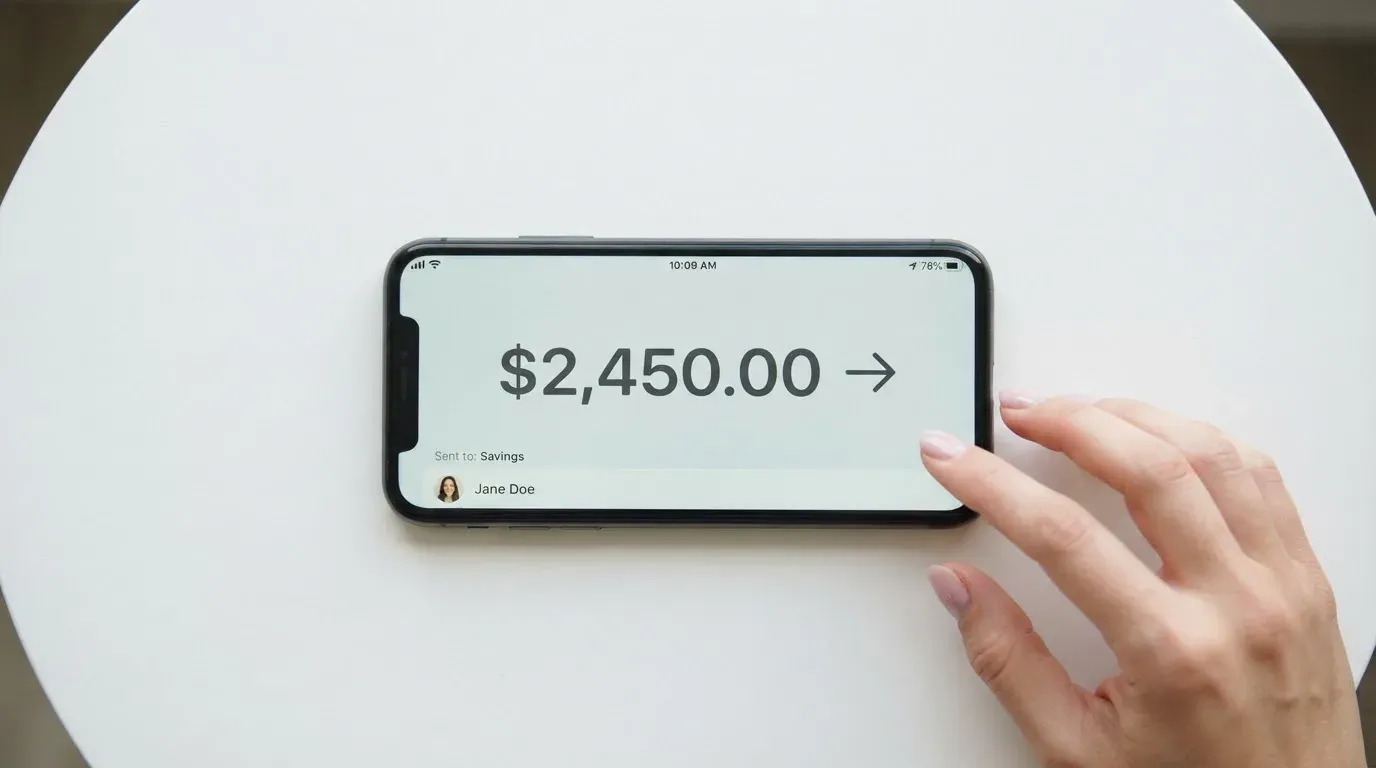
The mechanics are simple. Top up, then spend. The terms say the top-up commission is from 3.5% (s.4.10), depending on deposit amount and spending volume. The minimum deposit is set by the service and may be changed by it — the amount is not stated. Deposits below the minimum, or sent with the wrong asset, network, amount or address, may be rejected or lost (s.5.2).
That last clause deserves a pause, because it is where people lose money. Getting the network wrong is the classic self-inflicted loss in this category. USDC on TRC20, for example, is not a native option — Circle stopped supporting USDC on Tron in February 2024 — and if you send the wrong thing to the wrong place, blockchain transfers are irreversible. The network cannot freeze or return funds; recovery, if it happens at all, is manual support work with no guarantee.
On getting money back out: there is no withdrawal feature. What exists is a refund process: you request it through the support or feedback form and it is handled manually (s.4.14, 5.3). It is allowed only if the total balance of all team accounts is zero or positive (5.4). Payment-system fees are deducted (5.5). The money goes back to the original deposit method, not to cash (5.6), and never to a third party (5.7). You can terminate with 30 days’ notice (6.1); the service can terminate with five days’ notice (6.3a); accounts suspended or terminated under 6.3 get no refund. The site mentions a commission refund on unused funds, but that is a site mention, not a term I would rely on.
Read that sequence again in your own situation: refund goes back to where it came from, minus fees, only if your team balance is not negative, and only if the account has not already been suspended. If your balance is sitting in the card and the account is fine, a refund is plausible. If your account has been suspended, the terms say no refund.
Paying with it every day
Daily use is where a card lives or dies, and FlexCard’s picture is narrow but coherent for its audience.
You get virtual cards in USD, EUR and GBP, no physical card. Where it is accepted is not a list of shops so much as a list of categories. The named platforms are Facebook, TikTok, Google ads, OpenAI, Midjourney, Adobe and Zoom. The restrictions are on advertising topics — human trafficking, CSAM, illegal substances, weapons, malware — not on merchants. No MCC list is published.
Wallets: the official pages do not say whether Apple Pay or Google Pay work. A third-party review updated December 2025 says the cards can be added to both. Unofficial, but plausible, and in any case worth asking support before you plan around it.
Rewards: no cashback is stated. The only number on that front is a 30% referral share mentioned on the page.
The cabinet lives on the website; no mobile app is described. For ad buyers used to juggling many cards, several virtual cards and adjustable limits (free of charge, per s.4.12) is a workable setup. For daily household spending, virtual-only, no ATM and no stated wallets is thin.
One thing to know about how payments behave: a declined authorisation can leave a hold on funds for several days, and closed cards can keep generating decline fees that leave a negative balance — a complaint theme I found in reviews. The terms allow suspension above a 20% decline rate (s.6.3c), so repeated declines are not a nuisance; they are a risk to the account.
What can go wrong
This is the section I would not skip.
You cannot name the company. The service is called “Flexcard.cards”. No legal entity, registration or address is given, and the issuer is not named. The card’s own terms say the jurisdiction for disputes is the service’s location (s.3), which is not a location you can identify. Ask yourself honestly whether you would be comfortable having a dispute with a party you cannot locate.
Accounts blocked without warning. The terms allow suspension without refund for a decline rate above 20% or for links to blocked accounts (s.6.3c). Beyond the terms, one Trustpilot report describes a crypto top-up, a failed card payment, a withdrawal request ignored for 5 days, then an account blocked without explanation, with support citing a “$100 penalty” the reviewer says is not in the terms; the company’s reply asked for the account email via Telegram. Other reviews are positive, specifically about ad-account use.
The broader review picture, as of the ca page read on 2026-10-20: 4.2 out of 5 from 51 reviews, 41 of them in the last 12 months; 72% five-star, 18% one-star. The company replies to negative reviews within about 24 hours. Complaint themes are accounts blocked or frozen without notice (September 3, 2026, after auto-pay declines; July 23, 2026), unresponsive support, and company replies citing policy violations — prohibited categories, high decline rate — and saying closed cards kept generating decline fees, leaving a negative balance. Praise: fast issuance, USDT and USDC top-up, and working with Google and Meta ads.
The custody is the risk. This is a custodial service: the balance sits with the provider. Two-factor authentication, card freeze and spending controls are not described. You are responsible for your credentials and card details (s.2.7). Crypto sent to a wrong address is irreversible (7.1, 7.3). No insurance or safeguarding is stated. Broader context: custodial platforms have a real history of failure — Mt. Gox (about US$350 million reported stolen, 2011-2014), Coincheck (about US$400 million, 2018), Ronin Network (US$625 million, 2022). Holding funds with a custodian carries counterparty and hack risk.
Support is thin and quiet at the wrong hours. Contact is Telegram (@flexcard_support1), a client manager (@flexcardClientManager), email ([email protected]) and a feedback form in the cabinet. Languages and hours are not stated officially; one unofficial source says 10:00-22:00 GMT+3 by email and Telegram. The service mentions Telegram as a channel even in replies to public complaints. In a block, a Telegram channel is not much of a remedy.
Nothing is moving. No news, blog or dated programme changes were found on the official pages. For a card whose issuer is unnamed, a quiet official page is one more thing you cannot verify.
Disputes and chargebacks. Disputes with the service are resolved by email (s.2), under the service’s jurisdiction. Users resolve third-party claims on issued payment solutions themselves (s.2, clause 6.2). Chargebacks are not addressed in the terms at all — and a chargeback is a refund ordered by your issuer to settle a dispute, with reason codes such as fraud, duplicate billing or goods not received. If a merchant takes your payment and delivers nothing, the terms do not tell you what recourse you have through the card.
Use it for what it is for. Restrictions are on advertising topics, and accepted merchants are named platforms. This is a card for buying ad space and software subscriptions, not one for a holiday.
What to take instead
If the shape of the product is right but the specifics are not, the category has better-documented options. Here is how the three main alternatives I checked compare, with their own scores from the same exercise.
| Alternative | Score | Card | Cost detail worth knowing |
|---|---|---|---|
| Bitrefill | 6.8 / 10 | Virtual and physical Visa; EUR-denominated | Free through the app (no amounts published); inactivity fee after 12 months; deposit spread on crypto-to-euro conversion; SEPA pay-in 1.99%; 2% cashback, no cap |
| UPay | 6.1 / 10 | Virtual and physical, personal and business; converts to USD, EUR, AED and others | Fees not stated; conversion may occur at payment depending on network and settlement; KYC partner accepts only ID issued in the user’s own country |
| Kemy | 6.0 / 10 | Unlimited virtual cards and one physical Mastercard (contactless) | Virtual $15 issuance (valid 3 years) + $2/month, transaction fee 3.5% + $1, failed $0.80; physical $250 issuance with DHL + $10/month |
Three things to take from that. Bitrefill publishes more of its numbers — a stated cashback rate, a stated SEPA fee, a stated inactivity trigger — where FlexCard publishes floors and no ceilings. UPay’s identity-check partner accepts only documents issued in the same country as you, which is a sharper eligibility rule than FlexCard’s silence. Kemy is the one with a physical card and the one whose fees are spelled out line by line — including a conflict on its own deposit fee, shown as 8% in one place and 5% in another, which is itself a small lesson in how much a fee table proves.
None of these is a clean bill of health either. But if your reason for hesitating on FlexCard is that it will not tell you who it is or what a payment costs, then any of them is a more legible place to start.
Who I would recommend it to
I would recommend FlexCard to someone paying for online advertising or SaaS subscriptions day to day from a crypto balance, who only needs virtual cards, who is comfortable with a custodial provider, and who keeps a working balance rather than a savings pile. For that person, four top-up routes, fast issuance and no stated card limit are a real advantage, and the 10 free ADS cards at registration are a nice touch for an ad buyer.
I would not recommend it as a first card. Not to someone who wants to withdraw money — there is no withdrawal feature, only a manual refund to the original method. Not to someone who needs a physical card or cash. Not to someone who needs to know the issuer or the legal entity behind it, because there is not one you can read. And not as a place to hold balance you would be upset to lose.
The blocking question, the one I would put to you before anything else: if this account was frozen tomorrow and you could not reach anyone for a week, would the money in it be money you could afford to have frozen? If the answer is yes, this card is a reasonable tool. If the answer is no, the missing entity name and the missing issuer are not details to look past — they are the decision.
Frequently asked questions
What is FlexCard card?
FlexCard is a custodial virtual payment card you load with crypto and spend as ordinary balance. You register by email in a web cabinet, pay an issuance fee from USD 2.5, and receive virtual cards in USD, EUR or GBP on an unnamed BIN. Top-ups can be made with USDT on TRC20 or ERC20, USDC on ERC20, or a bank transfer in EUR and USD. It is aimed at people paying for advertising and SaaS subscriptions. There is no physical card and no cash withdrawal.
How does FlexCard card work?
You transfer stablecoins or bank money into your FlexCard balance, then spend from virtual cards issued on a BIN in a currency you choose at request. The card draws on that stored balance, so it cannot overdraw, but a declined payment can leave a hold for several days. Spending per user is stated as unlimited, limits are adjustable free of charge, and there is a 30% referral share. There is no app; everything happens in the website cabinet.
Is FlexCard a bank?
No — it does not present itself as a bank, and no legal entity, registration number, address or card issuer is named on the public pages. The service is called “Flexcard.cards” and its terms put disputes under “the service’s location”, which is not a location you can identify. That absence of a named entity is the single biggest reason I would be cautious, rather than any evidence that the service is illegitimate.
Is FlexCard card available in my country?
The public pages do not say. No list of permitted countries and no list of excluded countries is published, and the terms only restrict the subject matter of advertising placed through the cards. So you cannot check eligibility before registering, as you can with Kemy, which names 190+ countries. You find out by trying, and a refusal, if one comes, arrives as a closed account rather than a published rule.
Does FlexCard card require KYC?
Not at signup, as far as the official pages say. The terms state the service does not verify user data unless required by law or needed to provide the services (s.2.3), and no verification levels are published. Unofficial third-party reporting updated December 2025 says registration needs only an email. Expect the possibility of later checks if law or the issuer requires them, which is normal, but do not expect a KYC-free promise beyond what is written.
How much does FlexCard cost?
Issuance is from USD 2.5 on the home page, and the terms say 2-4 USD/EUR depending on card type (s.4.11), with 10 free ADS cards at registration. The top-up commission is from 3.5%, depending on deposit amount and spending volume (s.4.10). No monthly fee is stated. The fee for paying in a currency other than your card’s is not stated, and no ATM fee exists because no ATM is described.
How do I top up FlexCard card?
Transfer USDT on TRC20, USDT on ERC20, USDC on ERC20, or a bank transfer in EUR or USD. The top-up commission is from 3.5%, and the minimum deposit is set by the service with no published amount — one unofficial source says USD 50. Read the network carefully before sending: deposits below the minimum, or sent with the wrong asset, network, amount or address, may be rejected or lost (s.5.2), and blockchain transfers are irreversible.
Can I withdraw money from FlexCard?
Not directly — there is no withdrawal feature. What exists is a refund: you request it through the support or feedback form and it is handled manually. A refund is allowed only if the total balance of all team accounts is zero or positive, payment-system fees are deducted, the money returns to the original deposit method rather than to cash, and never to a third party. Accounts suspended or terminated get no refund.
Can I add FlexCard card to Apple Wallet or Google Pay?
Officially, the pages do not say either way. A third-party review updated December 2025 reports that cards can be added to Google Pay and Apple Pay, which I would treat as unofficial until the card or support confirms it. If a mobile wallet is important to how you pay, ask before you rely on it — this card has no app of its own, so a wallet may be your only phone-side path.
Is FlexCard card safe?
The funds are custodial — the provider holds them. Two-factor authentication, card freeze and spending controls are not described, and no insurance or safeguarding is stated. Reviews include reports of accounts blocked without notice, and the terms allow suspension without refund above a 20% decline rate. It is not anonymity software and not a privacy product: it is a custodial spending card, and you should judge it as one.
Virtual cards – cryptocardbasics
Content created by the «cryptocardbasics» team