
A free Visa debit card for eToro Club members in the EU and UK, weighed against its limits
 Available in US

The Etoro Money card is a Visa debit card that draws on a euro or pound fiat account sitting next to an eToro investment account, so anyone who already keeps money on eToro can spend it without first wiring it to a separate bank. The card itself is free to issue, free to run, and free to replace up to three times a year, with no monthly subscription, and the issuer advertises zero foreign-exchange fees abroad. That pricing is the headline. What follows in this review is a closer look at who can actually get the card, what is not stated on the public pages, what it costs in everyday situations, and how it compares with the alternatives.
The conditions described here are current as of October 28, 2026.
Verdict
Etoro Money earns a 6.8 out of 10 in this review. The card is essentially free, supports Apple Pay and Google Pay, and is issued by a regulated e-money institution with funds held in safeguarded accounts. The reason it does not score higher is that the eligibility window is narrow: only residents of the EU or the UK who hold a eToro Club tier can apply, and the public pages do not spell out the KYC documents required, the conversion fee when crypto is moved onto the card, or the daily and monthly transaction limits. For an EU or UK resident who already invests on eToro and wants a simple way to spend a fiat balance, this is a reasonable, low-cost card. For anyone outside the EU/UK, for non-Club members, or for anyone whose main need is rich crypto cashback, the card is the wrong tool.
| Criterion | Mark | Why it matters |
|---|---|---|
| Who can get it | 5 / 10 | EU or UK residents only, plus an eToro Club tier; the public pages do not list supported countries or required KYC documents |
| Cost | 9 / 10 | Card issue, maintenance and replacement up to three a year are free; no monthly fee; zero FX fees abroad; the crypto conversion fee is not disclosed |
| Top-up options | 4 / 10 | The card spends a fiat account; crypto must first be converted to GBP or EUR through the eToro crypto wallet, and the EUR account is fed by SEPA bank transfer |
| Reliability and complaints | 8 / 10 | Issued by eToro Money Malta Ltd (EU) or eToro Money UK Ltd (UK, FCA-authorised for e-money), funds in safeguarded accounts; the eToro Trustpilot score is 4.0 from 32,233 reviews, with no card-specific complaint threads found |
| Everyday use | 7 / 10 | Visa debit with Apple Pay and Google Pay; ATM withdrawals free up to GBP 2,000 a month on Green and GBP 10,000 on Black, then 1%; the public pages do not say whether the card ships as virtual, plastic or metal |
| Total | 6.8 / 10 | A free, regulated card for a narrow audience |
The audience this card fits is an EU or UK resident who already invests on eToro at Silver tier or above, who wants a no-fee Visa to spend a euro or pound balance, and who does not need rich cashback on every coffee. It does not fit a non-European looking for a global card, a heavy crypto user chasing tiered cashback, or someone who wants the issuer to be a household-name bank.
Who will give you the card
The headline rule is short: you have to be a resident of the EU or the UK, and you have to hold a eToro Club tier. The public pages do not list which specific EU countries are supported — that sits behind a separate availability page that this review did not read — so the practical check is whether your country of residence is treated as part of the EU or UK for eToro’s purposes. If you live elsewhere, the card is not for you, and the rest of this review is mostly background.
Inside the EU, the eligibility story is a little tangled. One FAQ section says only Diamond-tier Club members can apply, while the fee page and other parts of the same site set the bar lower, with Green cards going to Silver through Platinum and the Black card to Platinum+ and Diamond. The safest reading, until eToro cleans the contradiction up, is that being a Club member of at least Silver tier is the working minimum, with the higher tiers unlocking the Black card. The reason this matters is that Club tiers are not free: they are reached by holding a portfolio of eToro equity tokens or by other thresholds set by eToro, and the cost of getting there is part of the real cost of the card.
The card itself is a Visa debit card issued in two programmes, Green and Black, and it links to either a euro or a pound account — not both at once. Holding both a euro and a pound account at the same time is “not currently possible” on these pages. So the choice is partly geographic (which currency do you actually spend in) and partly about tier (Green versus Black).
The public pages do not state the KYC documents you have to send, the verification time, or the reasons an application might be rejected. They list the three conditions above (EU or UK residence, a Club tier, a euro or pound account) and then refer to a separate account-opening flow. If identity verification matters to you — and on a regulated card it usually does — that gap is worth raising with eToro’s support before you go through the application.
How to get it
The path to the card runs through the eToro app. The public pages describe the result, not the step-by-step: open a euro account (for EU residents) or a pound account (for UK residents), reach an eToro Club tier, and the card is offered to you. There is no separate sign-up form described in the materials this review was given.
A few practical points the public pages do spell out. The first card, on either tier, is delivered free in both standard and urgent shipping, and replacement cards are also delivered free. Replacement cards are free up to three per year on the pound card; on the euro card, Green is listed as not applicable and Black is free up to three a year. The delivery time itself is not given — the page links to a help article rather than quoting a number of days — so anyone planning around a specific date should ask support.
Beyond residency, Club tier and the right currency account, the KYC requirements, the documents accepted, and the rejection grounds are not stated on the public materials this review read. That is one of the clearer gaps in the eToro Money story: the marketing pages make the card sound instant, but anyone who has been through regulated onboarding knows that “not stated” usually means “we’ll ask for what we need when we look at your file.” Plan for a check, and plan for it to ask for more than the marketing page lists.
Fees: what it really costs
This is the section where the Etoro Money card is most attractive, and the table below lays out the headline costs. After the table, three everyday situations show how the fees actually play out.
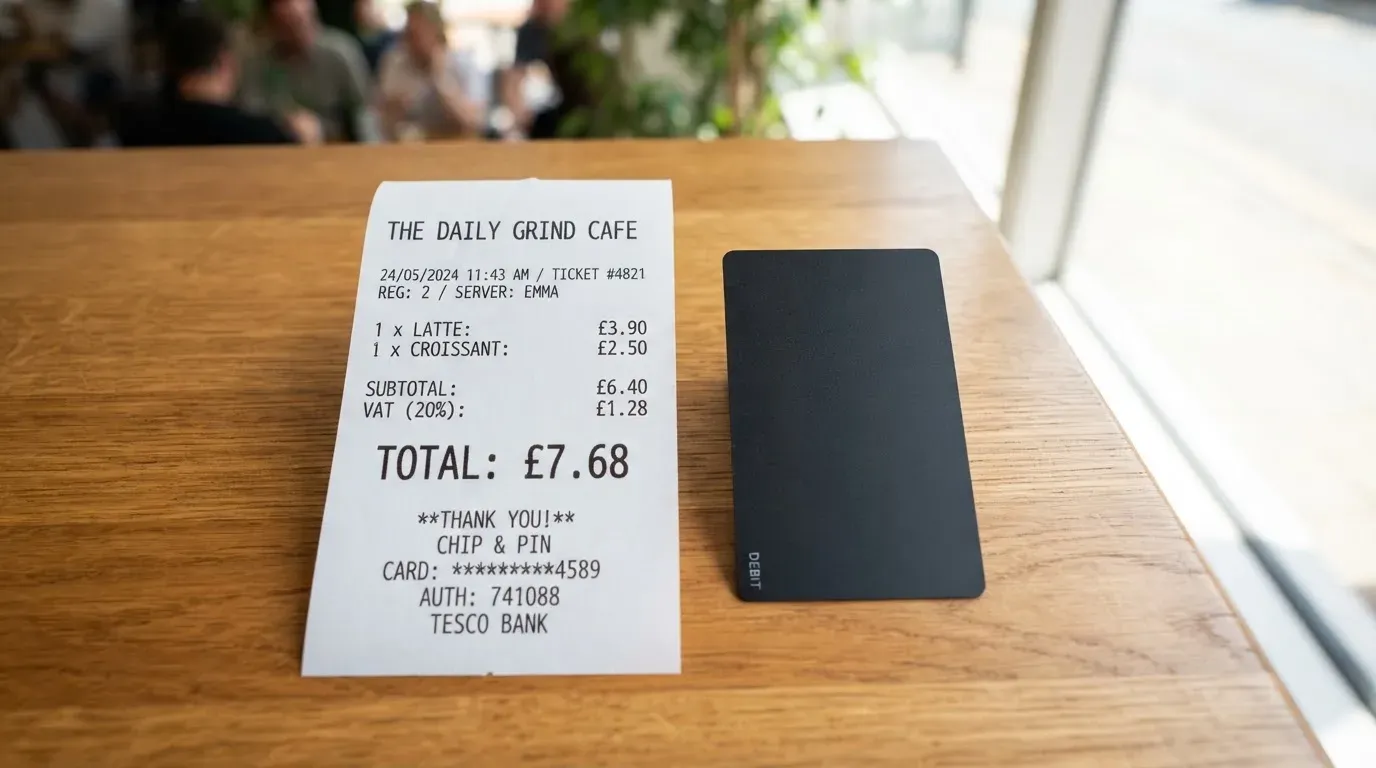
| Fee or limit | Value |
|---|---|
| Card issue | Free |
| Monthly subscription | None |
| Card maintenance | Free |
| Replacement card | Free up to 3 per year (pound card); Green euro card not applicable, Black euro card free up to 3 per year |
| First-card delivery | Free (standard or urgent) |
| Replacement delivery | Free |
| Card payments | Free |
| FX fees abroad | Zero (“No FX fees*”, with the asterisk pointing to separate FX terms) |
| ATM withdrawal, Green | Free up to GBP 2,000 / EUR 2,500 per month, then 1% |
| ATM withdrawal, Black | Free up to GBP 10,000 / EUR 12,000 per month, then 1% |
| Crypto-to-fiat conversion | Not stated on these pages |
| Daily and monthly transaction limits | Not stated (page refers to a separate “Account Activity Limits” article) |
Three things stand out. First, the absence of a monthly fee or annual fee is genuine and the issue and replacement numbers are concrete. Second, the “zero FX fees abroad” line is a real marketing claim, and the asterisk is the kind of fine print that tends to matter in unusual currencies or for unusual transaction types; the FX terms page is where that is spelled out. Third, two important numbers are not stated on the public materials this review read: the crypto-to-fiat conversion fee and the daily and monthly limits. For someone whose main use of the card is to spend crypto, the missing conversion fee is the single most important unknown, because it is the fee that hits every single payment funded from a Bitcoin or Ethereum balance.
A coffee abroad on a pound card. You tap to pay €4.50 at a café in Paris. The card advertises zero FX fees abroad, so eToro does not add a percentage on top of the Visa rate. What the public pages do not show is the spread inside the conversion from pounds to euros, and that is where most “zero FX” cards actually make their money. The honest answer is that the headline is true as written and the practical cost depends on terms the public page does not display.
A monthly ATM run. You withdraw GBP 300 from a UK ATM on a Green card. The first GBP 2,000 a month is free, so this withdrawal costs you nothing in eToro fees, although the ATM operator may add its own surcharge. Push the same habit up to GBP 2,400 a month and you cross the free allowance, after which every pound above the threshold costs 1% to eToro on top of any ATM fee. On a Black card the free allowance is GBP 10,000 a month, which is more than most people will ever draw out of an ATM.
A month of crypto-funded spending. You hold USDT on eToro and pay for everything on the card. Each payment requires eToro to sell the USDT for pounds or euros first; the fee for that conversion is the one number the public pages do not give. If you spend the equivalent of GBP 1,000 over a month, a 0.5% conversion fee is GBP 5 and a 1% fee is GBP 10; over a year those small percentages add up to real money, and the public materials do not let you price them in advance.
Top up: how to fund the card
The card does not have its own balance in the way some prepaid cards do. It draws on a eToro Money fiat account, and that account has to be funded before the card can spend. There are two ways to get money onto that account, and they run through the same wallet in the app.
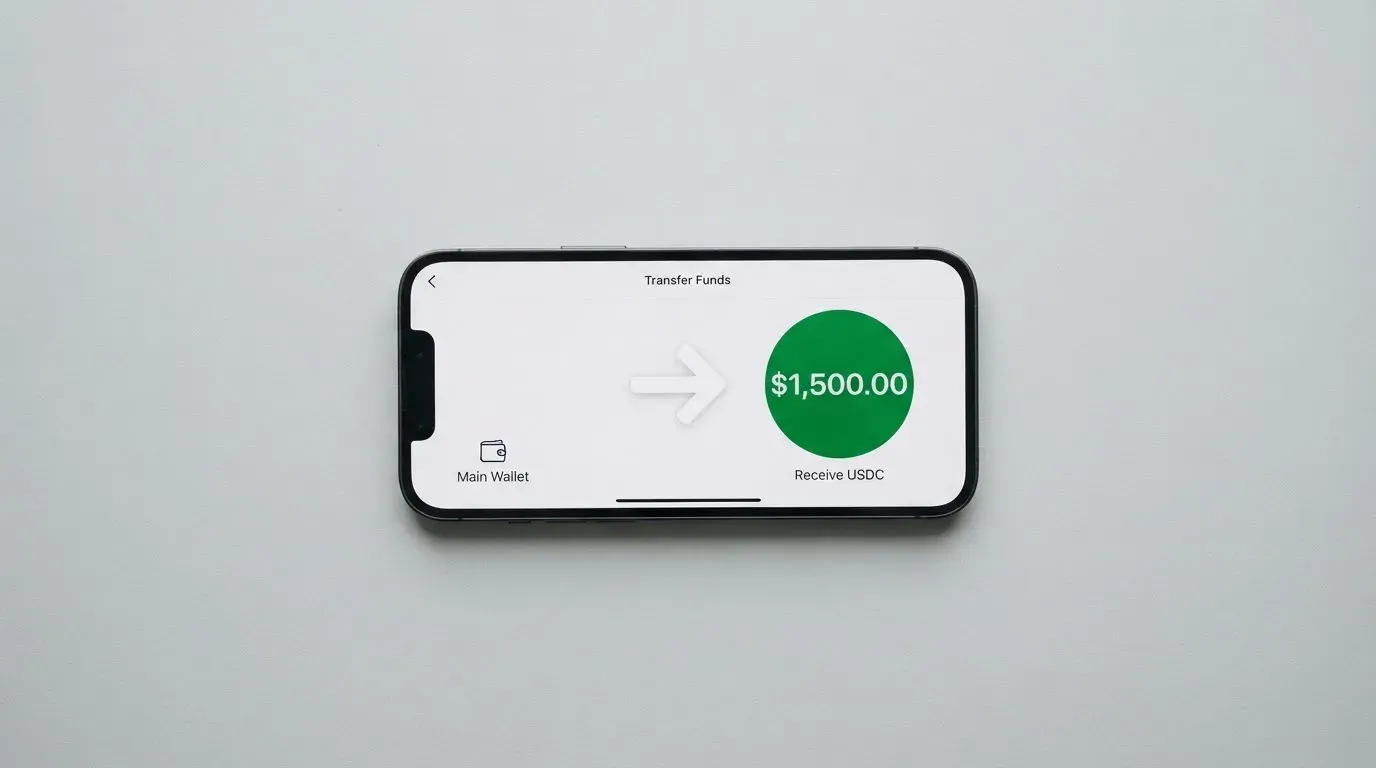
The straightforward path is a bank transfer. The euro account is funded by a SEPA bank transfer, and the public pages describe SEPA in and out as free, with no fee for opening, closing or maintaining the account. The minimum top-up amount and any card-specific top-up fee are not stated. The pound account works the same way in principle, through a UK bank transfer. The withdrawal side mirrors that: a euro account holder sends money back to a linked bank account via SEPA, free of charge on the eToro side.
The crypto path is the one most people reading a card review are interested in, and it is the one the public pages describe least. Crypto held on eToro has to be converted to pounds or euros first, through the eToro crypto wallet, before the fiat account is credited. The conversion fee is the gap in the pricing — it is the fee the marketing pages do not quote, and it applies to every payment that is ultimately funded from a crypto balance. The page also says explicitly that “Conversion requires the eToro crypto wallet,” so there is no way to spend raw Bitcoin or Ethereum at the till; the conversion is mandatory.
A second practical gap is the country list. The euro account is fed by SEPA, which works across the EU and a few other SEPA-area countries, and the pound account is fed by UK faster payments-style transfers. The public pages do not describe alternative top-up routes, so anyone whose income or savings arrive in USD, in a stablecoin on a non-eToro wallet, or through a non-SEPA channel needs to plan for an extra step.
Paying with it every day
In normal use, the Etoro Money card behaves like a contactless Visa debit card. It supports Apple Pay and Google Pay, so a cardholder who prefers to leave the plastic at home can load the card onto a phone or watch and pay by tap or in-app. The public pages do not list which merchant categories are restricted — gambling, crypto purchases, adult content and the like are sometimes blocked on cards of this type, and the public materials do not say one way or the other.
The ATM story is the cleanest part of the everyday-use picture. Green-tier cardholders get GBP 2,000 a month free on the pound card, or EUR 2,500 on the euro card; Black-tier cardholders get GBP 10,000 or EUR 12,000. Anything above those allowances costs 1% on top of any ATM operator fee, which is competitive but not free. For most people, the free allowance is more than enough; for someone who treats the card as a primary cash source, the Black tier’s free allowance is generous.
The rewards structure is the most confusing part of the public information. The card page advertises up to 4% back in stocks, up to $100 worth a month in GBP or EUR equivalent, with the stock reward going to Platinum, Platinum+ and Diamond tiers. The page is internally inconsistent: one section says Bronze, Silver and Gold get no rewards, another says rewards are opt-in for those tiers. The press release adds detail — the user picks a European-listed stock, the cashback is paid in that stock, and a monthly email confirms the deposit — but the same press release also gives different monthly caps and describes a launch offer that may have changed by the time you read this. The conservative reading is that Platinum and above reliably get the headline 4% in stock, lower tiers get less or nothing, and the details should be confirmed in the app before you rely on them.
A handful of Visa perks come with the card through the network itself rather than through eToro: the Visa Luxury Hotel Collection, up to 10% off Sixt car rentals, and Visa AirRefund for flight delays. These are network-level benefits available on many Visa cards and are worth knowing about, but they are not the reason to pick this card over another Visa.
The app side is straightforward. eToro’s app sits on the App Store and Google Play and there is also a web platform, so day-to-day management does not depend on a single device. The store ratings and the number of ratings are not stated on the public materials this review read, so a sense of how other users rate the app is something to check on the store listings themselves.
For disputes, the fee table lists chargebacks as free, which is the right baseline. The process and the time frames for a chargeback are not described on the public pages, and the only linked document is a Complaints Policy PDF. In practice, a chargeback is a Visa process and not something the cardholder controls beyond filing the dispute, so “free” is the part that matters and the rest is paperwork.
What can go wrong
The risks on a card like this fall into three buckets: the platform behind the card, the regulatory framework, and the gaps in the public information. None of these are reasons to avoid the card on their own, but they are reasons to go in with eyes open.
The platform behind the card is eToro, and eToro has a mixed public reputation. The main eToro Trustpilot page, read on 20 October 2026, sits at 4.0 out of 5 from 32,233 reviews, with 20% of reviews at one star. The themes of the negative reviews are around withdrawals held pending ID checks, restricted accounts, slow support, and trading and closing fees. Review themes regarding the Etoro Money card were not found among public discussions, and card-specific complaint threads did not appear. A separate Trustpilot page for the Australian entity sits at 2.5 from 6 reviews, with the complaints again about the broker account, not the card, and a single UK Financial Ombudsman decision (DRN-4221697) records a complainant who did not receive a promised debit card because of their account type. None of this is a smoking gun against the card itself, but it is the operating environment the card lives in, and the user experience of an eToro account is part of the user experience of an Etoro Money card.
The regulatory framework is the second bucket, and it is mostly reassuring. In the UK, the card services are provided by eToro Money UK Ltd, which is authorised by the Financial Conduct Authority for e-money. In the EU, the card services come from eToro Money Malta Ltd. Card funds in euros are held in a designated safeguarding account at a regulated EU bank, separate from eToro’s own money, not usable for investing or lending, and not covered by the Malta Depositor Protection Scheme — meaning if the bank holding the safeguarded funds collapsed, the funds would be returned to cardholders but the deposit guarantee that covers normal bank accounts does not apply. That is the standard arrangement for e-money institutions and is one of the trade-offs of using an EMI rather than a full bank.
The third bucket is the gaps in the public information. The crypto-to-fiat conversion fee, the daily and monthly transaction limits, the KYC documents required, the verification time, the delivery time, the list of supported EU countries, and the reasons an application might be rejected are all not stated on the public pages this review read. Some of these are minor — the delivery time, for example, is something support can answer in a day. Others, like the conversion fee, are recurring costs that change the economics of the card for crypto-funded spending. A reader who plans to use the card heavily should treat the public information as a starting point and confirm the missing numbers through support before relying on them.
The general risks of the category apply too. Crypto transfers are irreversible, so a deposit sent on a network eToro does not support, or to an address on the wrong network, can be lost. Card networks can suspend programmes — Visa terminated its agreements with FTX in November 2022, and WaveCrest was suspended in 2018 — so a cardholder’s balance is only as safe as the issuer’s standing with the network. And the broader history of custodial platforms includes Mt. Gox, Coincheck and the Ronin Network hack, which is the reason any card that spends a balance held by a third party is a card with counterparty risk.
What to take instead
Three alternatives cover most of the cases where the Etoro Money card is the wrong fit. Each is rated on the same 10-point scale; the figures below are taken from the same research, so any inconsistencies between sources reflect the underlying public materials rather than this review.
Bybit Card (6.0 / 10). The Bybit Card is available in Argentina, AIFC (Kazakhstan), Georgia, Kazakhstan, Australia, Mexico, Brazil, Peru and an Asia Pacific region, and the application explicitly says it is “not meant for European Economic Area customers” — so this is the card to look at if you are outside the EU. It comes as virtual and physical on Mastercard or Visa, depending on country, with cashback tiers from 2% (Base) up to 10% (Infinite), paid in USDT, with the catch that only crypto-funded transactions earn rewards since 5 October 2026. The fees are higher in places: a 2% FX fee on top of the network rate in the Australia/Asia Pacific/Georgia/Mexico group, 7% in Argentina, 1.5% in Brazil, 1% in Peru, and a 0.5%–0.9% crypto conversion fee on top of the One-Click Sell rate. The Bybit Card suits a non-European crypto user who spends USDT regularly and wants tiered cashback, less so a European.
Coinbase Card (6.4 / 10). The Coinbase Card is the US-only alternative, available in every US state except Hawaii, with onboarding that follows the USA PATRIOT Act identity rules. It is a Visa prepaid debit card that spends a US dollar balance, with crypto converted at the moment of payment; Coinbase says there are no spending or annual fees, and the cost shows up as a spread on the crypto conversion. The rewards are optional crypto rewards on every purchase, with the rate variable and shown in the app, and the user picks from a rotating set of cryptos. The Coinbase Card fits a US-based crypto holder who already keeps funds on Coinbase; it does not fit anyone outside the US.
OKX card (6.2 / 10). The OKX card is the newest alternative in this comparison, launched in the EU plus Norway on 28 January 2026 (Iceland and Liechtenstein excluded, with the explainer saying “entire EEA” inconsistently). It is a Mastercard euro-denominated virtual debit card linked to OKX Pay, with no card fee and no transaction fee, and the conversion spread is given as 0.1% in the May 2026 explainer (a newer figure than the 0.4% in the launch press release). Funding is in USDC or USDG held in OKX Pay, and the cashback is paid only on USDG purchases — USDC earns none — with monthly caps in euros ranging from 2% up to 10% for the top tier. The OKX card fits an EEA resident who holds USDG and is happy with a virtual card and OKX’s product.
| Card | Best for | Score |
|---|---|---|
| Etoro Money | EU/UK eToro Club members who want a free Visa to spend a fiat balance | 6.8 / 10 |
| Bybit Card | Non-EEA crypto users who want tiered USDT cashback | 6.0 / 10 |
| Coinbase Card | US residents who already keep funds on Coinbase | 6.4 / 10 |
| OKX card | EEA residents who hold USDG and want a euro Mastercard | 6.2 / 10 |
Who I would recommend it to
The Etoro Money card is a good answer to a specific question. If you are an EU or UK resident, you invest on eToro at Silver tier or above, and you want a no-fee Visa to spend pounds or euros from a balance you already hold on the platform, this card is one of the cheaper ways to do it. The free ATM allowance on the Black tier is generous, the absence of a monthly fee is real, and the regulatory setup is the standard e-money institution arrangement with funds in safeguarded accounts. For someone whose spending is mostly in pounds or euros and who tops the card up by bank transfer, the card does what it says on the tin.
It is the wrong card in three situations. The first is geography: anyone outside the EU and UK is excluded. The second is status: anyone who is not a eToro Club member is excluded, and reaching Club tier has its own cost in equity tokens held on the platform. The third is heavy crypto-funded spending: the public pages do not disclose the crypto-to-fiat conversion fee, and the actual cost of paying for everyday items from a Bitcoin or stablecoin balance cannot be priced in advance from the materials a reader can see.
If you fall into one of those three groups, the Bybit Card, the Coinbase Card or the OKX card above is a more honest match for your situation. And before you commit, the two questions worth asking eToro support directly are: what is the crypto-to-fiat conversion fee, and what is the actual delivery time on the first card? Those two answers will tell you more than the marketing page.
Frequently asked questions
What is the Etoro Money card?
The Etoro Money card is a Visa debit card issued by eToro Money UK Ltd in the UK and eToro Money Malta Ltd in the EU. It draws on a pound or euro fiat account held next to a eToro investment account, so the cardholder can spend fiat at any merchant that takes Visa.
How does the Etoro Money card work?
The card spends a fiat balance, not a crypto balance directly. Crypto held on eToro has to be converted to pounds or euros through the eToro crypto wallet first; the converted amount lands in the fiat account and the card then draws on that account at the point of sale.
Is eToro Money a bank?
No. eToro Money is an e-money institution, not a bank. In the UK it is authorised by the Financial Conduct Authority for e-money, and in the EU it operates under eToro Money Malta Ltd. Card funds are held in safeguarded accounts at regulated banks, but they are not covered by deposit guarantee schemes in the way bank deposits are.
Who owns Etoro Money?
Etoro Money is part of the eToro group. The UK entity is eToro Money UK Ltd and the EU entity is eToro Money Malta Ltd; both sit under the eToro parent company, which also runs the investment platform. The Visa BIN sponsor behind the programme is not named on the public materials this review read.
Is the Etoro Money card available in my country?
The card is available to residents of the EU and the UK only. The full list of supported EU countries sits on a separate availability page that this review did not read, so the practical check is whether your country of residence is treated as EU or UK for eToro’s purposes.
How do I get the Etoro Money card?
The path runs through the eToro app: open a euro or pound account, reach a eToro Club tier, and the card is offered to you. There is no separate sign-up form described in the public materials, and the KYC documents required are not listed on those pages.
Does the Etoro Money card require KYC?
Yes, the card is a regulated e-money product and KYC applies. The public pages state the three conditions (EU/UK residence, a Club tier, and a euro or pound account) but do not list the documents required, the verification time, or the rejection grounds — those are part of the account-opening flow rather than the marketing pages.
How do I top up the Etoro Money card?
The euro account is topped up by SEPA bank transfer, and the pound account by a UK bank transfer, with SEPA transfers described as free in and out. To spend crypto, the crypto has to be converted to pounds or euros through the eToro crypto wallet first, with the conversion fee not stated on the public pages.
Is the Etoro Money card free?
The card is free to issue, free to maintain, and free to replace up to three times a year, with no monthly subscription. Card payments are free, and the issuer advertises zero FX fees abroad. The one fee the public pages do not disclose is the crypto-to-fiat conversion fee, which applies to every payment funded from a crypto balance.
Is the Etoro Money card safe?
The card sits inside the standard e-money safeguards: funds are held in safeguarded accounts at regulated banks, separate from the issuer’s own money, and the issuer is FCA-authorised in the UK and operates as a regulated e-money institution in the EU through Malta. The card can be frozen instantly in the app, and there is a 24/7 stolen-card phone line for UK cardholders. The two-factor authentication setup and any other app-level safeguards are not described on the public pages.
Exchange cards – cryptocardbasics
Content created by the «cryptocardbasics» team