A crypto card that's easy to fund and spend, but hard to fully trust
 Available in US
The KAST card is a Visa debit product built around a USD stablecoin balance, with a free Standard tier, broad network support for deposits and a rewards programme that pays in cashback and points. Those are real strengths. The weaknesses are equally real and harder to miss once you look: the card issuer is not named, the operating entity sits in Anjouan (Comoros) under Seychelles law, user reviews describe frozen balances and repeated document requests, and Trustpilot sits in the low 2s. If you already hold USDT or USDC across several networks and want to spend them at Visa’s checkout, KAST is one of the more flexible ways to do it. If you don’t, and especially if you live somewhere your bank already works, the case gets thin fast.
The conditions in this review are current as of October 28, 2026.
Verdict
KAST earns 6.1 / 10 in this review. The score reflects a product that is genuinely good at what it does day to day, wrapped in a corporate and regulatory structure that asks the user to take a lot on trust.
| Criterion | Score | Why it lands there |
|---|---|---|
| Who can get it | 5 / 10 | The supported-country list is only shown at KYC; Visa acceptance is claimed in 170+ countries |
| Cost | 6 / 10 | Standard tier is free, conversion in USD is 0%, but FX adds 0.5%–1.75% and the inactivity fee is real |
| Top-up options | 9 / 10 | USDT, USDC, PYUSD and RLUSD on Ethereum, Solana, Polygon, Arbitrum and TRON, with 0% on the deposit |
| Reliability and complaints | 3 / 10 | Issuer not named, no licence numbers, KAST Tech in Anjouan, Trustpilot 2.5–2.7 with frozen-account reports |
| Everyday use | 9 / 10 | Virtual and physical cards, Apple Pay and Google Pay, Visa acceptance worldwide |
The card is best suited to stablecoin holders who already have USDT or USDC across multiple networks and want a low-friction way to spend that balance in USD around the world. It is less suited to anyone who needs a fully regulated EU or US bank-style card, anyone who cannot tolerate the possibility of a frozen balance, or anyone whose home country is not on the list that KAST only reveals after you start signing up.
Who will they give you the card
KAST does not publish a list of supported countries. The way you find out whether you can have the card is to start the sign-up flow and reach the KYC step. At that point, the app shows you a residence-based list, and the wording is direct: “If your country isn’t listed, it means KAST is not available there.” The Terms also reference a Restricted Locations list, but no countries are named on the public pages. If you live in an unsupported country, you can still create an account, but KYC stays locked and you cannot move past it.
Residence is not the only check. The published guidance is unusually blunt about this: “If you currently live in a supported country but only hold an ID from a restricted region, you may still be ineligible to pass KYC.” That is the citizenship filter. A dual citizen whose ID is from a supported country can pass; the rule is about the document you hold, not the country you sleep in. The ID you submit has to be your own; you cannot pass verification on someone else’s documents. Using a VPN to fake your location is not a way around any of this, because the check happens against your ID.
In short, the access question has three layers: where you live, what you hold as ID, and whether the card programme is actually live in your country. Only the first and the third of those overlap; the second is a separate gate. The card itself rides on Visa, which KAST says is accepted in 170+ countries, but acceptance is not the same as being able to get the card. A card accepted everywhere still has to be issued to you somewhere first.
How to get it
The product is sold in three tiers, each tied to a card and a Visa tier:
- Standard — free, Visa Platinum, two free cards (virtual or physical), 1.5% cashback, no KAST Points, no Reserve on idle balances.
- Premium — $1,000/year, Visa Infinite in metal, physical shipping included, 2% cashback, +1% in KAST Points, 10% Reserve, plus Visa Infinite benefits (travel, purchase protection, lounge, eSIM) once registered on the Visa Benefits portal.
- Private — $10,000/year, a gold-plated Visa Infinite, three cards in total (one plated plus two from the other tiers), 3% cashback, +2% in KAST Points, 12% Reserve, and a VIP Concierge.
Annual fees are billed upfront in one shot; there is no monthly subscription. Outside those tiers, you also see themed designs — Pengu, Solana, Bitcoin — and the card programme runs on Visa Platinum for Standard, Visa Infinite metal for Premium and Visa Infinite gold-plated for Private. Each user can hold up to ten cards at once, and the account itself sits in USD, with stablecoin deposits converted 1:1 at zero spread.
The sign-up itself runs in three KYC levels:
- Level 1 (account) — phone number with a one-time code, PIN, email, country of residence. You get app access but no cards and no sending or receiving.
- Level 2 (identity) — a government-issued ID (passport, national ID card or driver’s licence, valid), plus a selfie with a liveness check. This unlocks cards and the ability to move funds.
- Level 3 (address and enhanced checks) — proof of address and a deeper review, including a request for citizenship. This unlocks USD and EUR accounts and global payouts. Source-of-funds documents can be requested at any level. US residents have to provide an SSN. The minimum age is the legal age in your country, which is generally 18.
The order is straightforward: download the app → create the account → complete KYC → order a virtual or physical card. The app is listed on the iOS App Store as “KAST: Global USD Account” by developer Troia Limited, with a 3.97 rating from 276 ratings as of 2026-10-08; the Google Play rating was not read for this review.
A physical Standard card costs nothing in card fee but $40 for delivery. Premium and Private ship free. Delivery is quoted at 7–10 business days. The countries KAST ships to, and the cost of replacing a card, are not stated on the public pages.
There is no published processing time for KYC, and no published list of reasons for rejection beyond the obvious ones: an expired ID, a country that is unsupported, or a restricted country of citizenship.
What it really costs
The cost story has two sides. On the cheap side: the Standard tier is free, spending in USD is free, and topping up with stablecoins is free. On the not-so-cheap side: shipping the Standard physical card is $40, FX on non-USD spending is real, and a few smaller fees can sting if you don’t see them coming.
KAST card fees and limits
| Fee or limit | Value |
|---|---|
| Standard annual fee | 0 USD |
| Premium annual fee | 1,000 USD (billed yearly upfront) |
| Private annual fee | 10,000 USD (billed yearly upfront) |
| Standard virtual card | 0 USD |
| Standard physical card | 0 USD card fee + 40 USD delivery |
| Extra virtual card | 2 USD (“in some regions” 2 USD also on the included Standard virtual cards) |
| Stablecoin top-up | 0% |
| Card spend in USD | 0% |
| Apple Pay / Google Pay | 0% |
| Non-USD FX fee | 0.5%–1.75% (depends on residence, transaction country, programme) |
| Non-USD transactions under 25 USD | 0.10 USD |
| Declined transaction (insufficient balance) | 0.50 USD |
| ATM fee | 3 USD flat + 2% of amount (plus any FX fee) |
| Inactivity fee | 1 USD/month after 12 months of no activity |
| Transaction limit, deposit limit, balance limit | “Unlimited” (large transactions may be flagged) |
| Renewal / reactivation fees | exist, amounts not stated |
| KAST Tag transfers | free, max 10,000 USD/day, 5 transfers/day |
The non-stablecoin-token question is worth a separate look. KAST may auto-convert non-stablecoin tokens you hold into a spendable balance, and that auto-conversion carries a fee that the app shows at the time. So if you deposit a volatile token and let the system do the work, the cost is the conversion spread, not a flat number.

The FX band is the number to watch in everyday use. 0.5% to 1.75% is a wide range, and the page does not pin down which country pairs sit at which end. If you are spending in non-USD currencies, treat the upper end as the realistic one until you have seen your own statement for a few transactions. The two KAST ATM pages do not even agree with each other: the concierge page caps ATM use at $500 per withdrawal and three withdrawals or $1,500 per 24 hours; the card marketing page caps it at $250 per withdrawal including fees and three withdrawals per rolling 24 hours ($750/day). That kind of mismatch is small in itself but worth knowing.
Renewal and reactivation fees exist, but the amounts are not stated. If you keep a card open for years, this is a number you may want to ask the support team about before you sit on the card for a long time.
Three everyday payments, three fee outcomes
To make the cost table less abstract, here is what the same three purchases look like for a Standard cardholder, all converted from a USDT balance.
- A 50 USD coffee subscription, charged in USD. Stablecoin deposit 0% (network fees for the original top-up aside). Card spend in USD 0%. Total KAST-side fee: 0.00 USD.
- A 100 EUR train ticket bought in Germany while your balance is in USD. FX fee between 0.5% and 1.75% of 100 EUR. Total KAST-side fee: between 0.50 EUR and 1.75 EUR, depending on which side of the band your country pair sits on.
- A 40 USD cash withdrawal at a local Visa ATM, not in USD. 3 USD flat + 2% of 40 USD = 3 USD + 0.80 USD = 3.80 USD, plus the FX fee of 0.5%–1.75% of 40 USD. Total KAST-side fee: roughly 4.00–4.50 USD before any ATM operator fee, which is on top.
Top up: how to fund the card
KAST is built around stablecoins, and the funding list is the strongest part of the product:
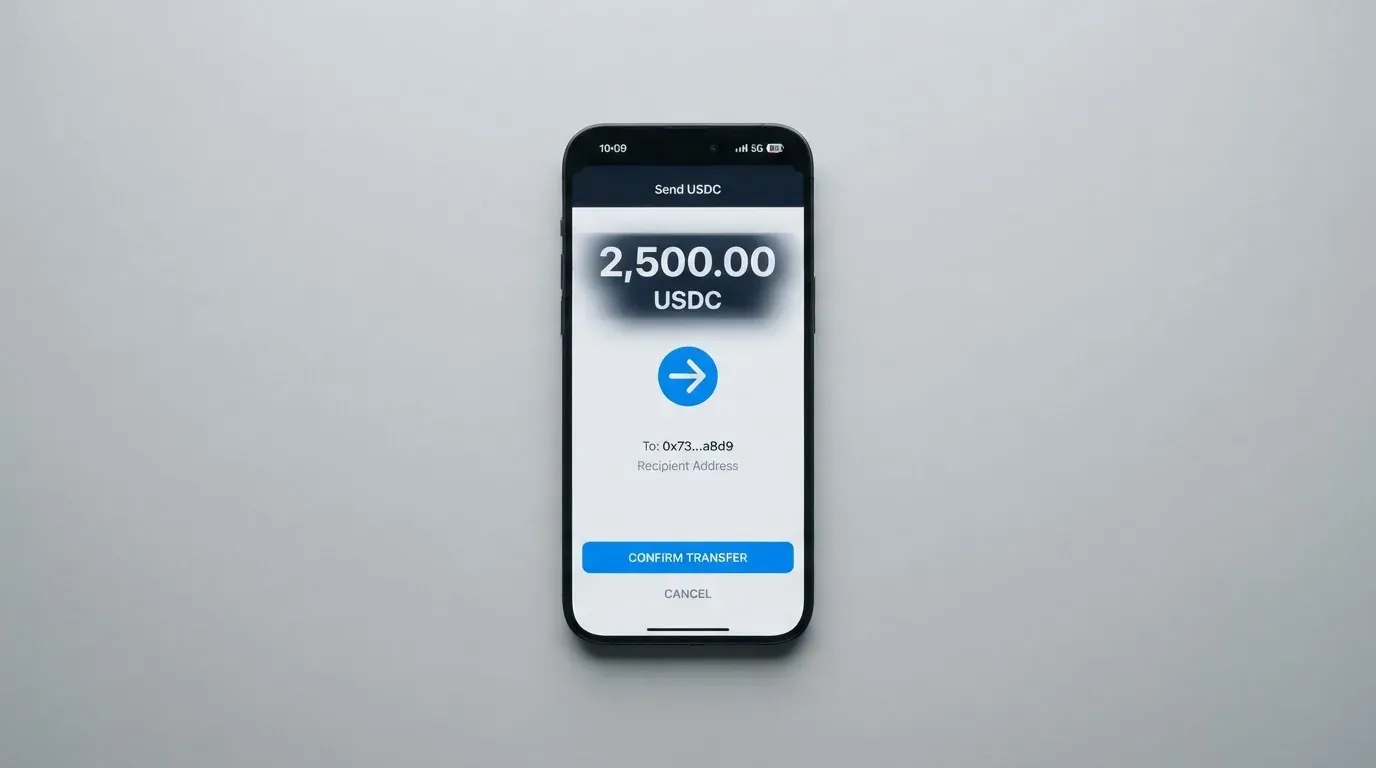
- Tokens accepted: USDT, USDC, PYUSD and RLUSD.
- Networks listed in the app for USDT and USDC: Ethereum, Solana, Polygon, Arbitrum and TRON. (USDC on TRON is not a native option from Circle, so check that the app is not offering a wrapped version.)
- Stablecoin deposit fee: 0%. Network fees (gas, bandwidth, energy) are charged by the blockchain, not by KAST.
- Bank deposits (for USD and EUR accounts at Level 3): USD ACH 2 USD, FedWire 15 USD, SWIFT 30 USD, EUR SEPA 0.5%.
No bank account is required to fund the card, and there is no published minimum top-up. The Terms describe acceptable tokens as “currently USDT and USDC,” which conflicts with the marketing page that also lists PYUSD and RLUSD. Treat the app as the source of truth, since it is what you will actually send to.
The card is a pre-loaded balance product: each top-up is converted to a USD balance at 1:1 with no spread, and each card payment debits that balance at the moment of authorisation. The card cannot go overdrawn, because there is nothing to overdraw against; if the balance is too low, the transaction is declined. The decline itself costs 0.50 USD. That is small per attempt, but it is the kind of fee that can quietly compound if an app retries a small recurring charge against a near-empty balance.
Withdrawing crypto back out
Withdrawal fees on stablecoins are not free, and they depend on the network you send on:
| Network | Token | Fee |
|---|---|---|
| Solana | USDT, USDC | 1 USD + 0.1% |
| Arbitrum | USDC | 0.20 USD + 0.1% |
| Ethereum | USDT, USDC | 6 USD + 0.1% |
| Tron | USDT | 5 USD + 0.1% |
| Minimum withdrawal | — | 5 USD |
If you intend to move funds in and out frequently, Solana and Arbitrum are the cheap options by a wide margin. Whether your balance on account closure is recoverable is not stated on the public pages, so a clean exit plan is worth thinking about before you go in.
Paying with it every day
KAST cards work wherever Visa is accepted, which KAST puts at 150M+ merchants in 170+ countries. That figure is the network’s, not KAST’s; the practical point is that if the shop takes Visa, the card works.
- Mobile wallets: Apple Pay and Google Pay, on both virtual and physical cards, with 0% fee. Samsung Pay is not mentioned in the pages read for this review.
- Cashback: Standard 1.5% on the first 2,000 USD of eligible spend per month, Premium 2% on the first 10,000 USD, Private 3% on the first 40,000 USD. Cashback is paid in USD when the transaction is authorised.
- KAST Points: Standard gets none, Premium +1% and Private +2% of eligible spend, on top of cashback. SOL staking rewards paid in Points come to 0.25 Points per 1 SOL roughly every two days for Standard, and 0.5 for Premium and Private.
- Reserve on idle balances: 8% (Standard), 10% (Premium), 12% (Private). The Reserve offer ends on 1 July 2027, so the headline number is a time-limited rate.
- Disputes: Terms ask you to contact KAST within 90 days of the transaction; KAST’s own liability is capped at 500 USD per dispute. The full chargeback process is not described.
The rewards line is genuinely competitive against most bank debit cards, especially at the Standard tier where 1.5% cashback is well above the typical bank rate of nothing. The catch is that the cashback and Points are paid in USD, while the underlying value proposition is funded by stablecoins, so what you are earning is a yield on the spend side, not a yield on the deposit side. The Reserve is what rewards you for holding a balance, and the Reserve number falls back to nothing after 1 July 2027 unless the programme is extended.
The Terms also spell out a list of prohibited merchant categories: weapons, controlled substances, Ponzi/pyramid/MLM schemes, counterfeit goods, darknet or Tor purchases, adult content and pseudo-pharmaceuticals. Gambling (MCC 7995) is not specifically called out in the pages read, which is unusual for a crypto card but not the same as a green light. Merchants can place pre-authorisation holds, and these can keep funds unavailable for several days, which matters if your balance is small.
What can go wrong
This is the section where the KAST story gets harder. The product itself is straightforward; the company around it is less so.
The company behind it. KAST describes itself as “a financial technology company, not a bank,” with cards, custody and on/off-ramp “provided by licensed partners.” The Terms name the operating entity as KAST Tech (registration number 16223), incorporated in Anjouan in the Comoros, with governing law in Seychelles and arbitration at SIAC in Singapore. The iOS app lists the developer as Troia Limited. The card issuer and BIN sponsor are not named publicly; the page refers only to “one of our Partner” and does not list a licence number. Named partners in the Terms include Tazapay and BitGo; the homepage also shows logos for Stripe, Privy, Fireblocks, Visa, Sardine and Elliptic, which is a long partner list but not the same as a published licence.
Complaints and Trustpilot. Trustpilot sits at roughly 2.5 on regional pages and 2.7 on the main page (around 170 reviews, read 2026-10-20). The recurring themes are:
- Frozen or restricted accounts shortly after deposit, with funds held pending review.
- Repeated 0.50 USD declined-transaction fees that push balances negative.
- Failed ATM dispensing where the card is debited but no cash comes out.
- Repeated document requests on self-transfers, with users describing slow support.
KAST’s responses to negative reviews tend to say that accounts can be restricted by the security and compliance systems, and that users should provide the requested documents. The official position is that this is a feature, not a bug; the user experience on the Trustpilot side suggests that the trigger for those restrictions is not always obvious to the user.
Security features. KAST positions the product as a stablecoin money app with custody handled by licensed partners. Users can set lower spend limits in the app. Two-factor authentication, card freeze, and insurance are not stated on the pages read. The Visa Infinite benefits (travel, purchase protection, lounge, eSIM) apply only on the Premium and Private tiers and require registration on the Visa Benefits portal.
Regulation. No licence numbers or a regulator are named on the public pages. Availability is “subject to regulatory approval,” and no regulatory action against KAST was found in search results. The Terms require arbitration in Singapore and the seat of the company is the Comoros, which is a long way from a typical EU or US financial regulator.
Support. A 24/7 KAST Concierge help centre is available to all tiers, with a VIP Concierge for Private. The support email that appears in company replies is [email protected]. The membership page does not offer Russian in its language selector, only English.
The deeper pattern. None of these facts, taken alone, would be unusual for a young crypto card. Read together, they describe a product where the user is asked to deposit value with a company that does not name its issuer, does not list a licence, and has a public review profile dominated by frozen-account stories. That is the trade you are being asked to make in exchange for cheap spending, broad top-up support and a rewards programme. For a small amount of monthly spending, the trade is often worth it. For a large balance held on the platform for a long time, the trade is harder to justify.
What to take instead
KAST is one option in a market of crypto cards that all look similar at the top of the page and feel very different in practice. Here is how three of the closest alternatives compare, based on the public pages of each. As before, these are the products as the providers describe them; confirm the details on their own sites before you commit.
| KAST | MetaMask Card | Zeal | Rizon | |
|---|---|---|---|---|
| Score | 6.1 / 10 | 7.1 / 10 | 6.1 / 10 | 6.7 / 10 |
| Network | Visa | Mastercard | Visa | Visa |
| Virtual / physical | Both | Virtual, then Metal | Virtual; physical not stated | Virtual, physical, metal coming |
| Annual fee | 0 USD (Standard) | Virtual 0 USD; Metal $199 | Not stated | Free account; Emerald subscription from $5.59/month |
| FX fee | 0.5%–1.75% | None on top, Mastercard rate | None on top, Visa wholesale | 1.7% (Emerald 1.02%, page garbled, verify) |
| Who can get it | List shown at KYC | 45 listed countries/territories; other regions waitlist | 150+ countries spend; issuance depends on regional availability | For U.S. and LATAM residents; 122+ countries claimed |
| Cashback headline | 1.5% (Standard) | 1% (Virtual), 3% on first $10,000 then 1% (Metal) | Up to 4% in GNO, must hold GNO in card Safe | 2.5% on eligible purchases |
| Top-up networks | Ethereum, Solana, Polygon, Arbitrum, TRON | Linea, Base, Monad, Solana | Gnosis Chain, Celo (per docs) | Not stated |
A few notes on how to read this table.
- MetaMask Card spends directly from a connected wallet rather than from a pre-loaded balance, which is a different model: the funds stay in your own wallet until the moment of payment. Issuance is open in around 45 countries/territories with a waitlist elsewhere, and US/UK sign-ups are temporarily closed. The Metal tier is $199 a year. Cashback is paid in mUSD into the Money Account; the 3% headline is capped at the first $10,000 of spend and falls to 1% after that, so the headline is generous only inside a band.
- Zeal runs on Gnosis Pay, with virtual cards usable online and in Apple Pay, and balances in EUR, USD and GBP stablecoin accounts on Gnosis Chain and Celo. No FX fee on top, conversion at Visa wholesale. Cashback is paid in GNO on Gnosis Chain, and you have to hold GNO in the card Safe to qualify. The fees page is sparse: nothing published on zeal.app or in the App Store listing for this review.
- Rizon is positioned for U.S. and LATAM residents, with virtual, physical and a forthcoming metal Visa Platinum. The published fee line is “check the app for the price” on most card costs; a 2.5% rewards rate and RizPoints on spending are the main draws. The non-USD fee is 1.7% plus $0.10 (Emerald 1.02% plus $0.05), so it is worth checking the app to confirm the exact rate for your country.
The deeper point is not that one of these is “better” in the abstract. KAST’s edge is the broad set of stablecoin networks on the way in and the free Standard tier; MetaMask’s edge is the self-custody model; Zeal’s edge is the FX story; Rizon’s edge is the rewards rate. The right pick depends on which trade you care about most: cheaper top-up versus less platform risk, or higher cashback versus a more transparent corporate structure.
Who I would recommend it to
I would recommend the KAST card to a fairly specific kind of reader.
You already hold USDT or USDC across multiple networks and you want a low-friction way to spend a USD balance in shops and online, with a free Standard tier, broad token and network support on the way in, and a rewards programme that pays in cashback. You are happy to keep the balance small. You treat the account as a spending account, not a savings account. You understand that the card issuer is not publicly named, that the operating entity sits in Anjouan, that user reviews are dominated by frozen-balance stories, and that the platform does not publish a list of supported countries until you start KYC. You are not relying on the card for a long-running subscription that needs to clear every month, and you are not planning to leave a large balance sitting on the platform indefinitely.
If any of that is not true, the case gets weaker. If you cannot tolerate the possibility of a frozen balance, look at a self-custody card like MetaMask, where the funds stay in your own wallet until the moment of payment. If you need a more transparent corporate structure with a named issuer, look at a card run by a regulated e-money or bank issuer. If you live somewhere the KAST list does not include, none of the rest of this matters; you cannot get the card. And if you are not already holding stablecoins, the case for going through KYC to deposit fiat, pay the FX fee and earn 1.5% cashback is much harder to make against a normal bank card with no such risk profile.
The honest summary: KAST is a useful tool for what it is, used the way it is meant to be used, with eyes open.
Frequently asked questions
What is the KAST card?
The KAST card is a Visa debit card tied to a USD balance inside the KAST app, funded by stablecoin deposits. The Standard tier is free and runs on Visa Platinum, while Premium ($1,000/year) and Private ($10,000/year) use Visa Infinite cards with higher cashback and additional Visa benefits. The card works wherever Visa is accepted and can be added to Apple Pay and Google Pay at no extra cost.
How does the KAST card work?
You complete KYC inside the KAST app, deposit a supported stablecoin (USDT, USDC, PYUSD or RLUSD) on a supported network, and the deposit is converted to a USD balance at 1:1 with no spread. From that point, every card payment is a direct debit against that balance in USD; if the transaction is in another currency, an FX fee of 0.5%–1.75% is added. The card is prepaid in the sense that it cannot go overdrawn, but it is issued as a Visa debit card, not a credit card.
Is KAST a bank?
No. KAST describes itself as a financial technology company, not a bank, and says cards, custody and on/off-ramp are provided by licensed partners. The Terms name the operating entity as KAST Tech, incorporated in Anjouan in the Comoros; the card issuer and BIN sponsor are not named on the public pages, and no licence numbers are published.
Where is the KAST card available?
KAST does not publish a supported-country list. The list is shown inside the KYC flow, with the wording “If your country isn’t listed, it means KAST is not available there.” Citizenship matters separately: living in a supported country with an ID from a restricted region can still disqualify you. Visa acceptance is claimed in 170+ countries, but acceptance is not the same as being able to obtain the card.
Does the KAST card require KYC?
Yes. Level 1 (account creation) gets you app access only. Level 2 (government ID plus a selfie and liveness check) is required to order a card and move funds. Level 3 (proof of address and enhanced checks, including citizenship and possibly source-of-funds) is required to unlock USD/EUR accounts and global payouts. US residents also have to provide an SSN.
How do I top up the KAST card?
Send USDT, USDC, PYUSD or RLUSD from a non-custodial or custodial wallet to the deposit address inside the KAST app, on one of the listed networks (Ethereum, Solana, Polygon, Arbitrum or TRON for USDT and USDC). Stablecoin deposits are free on the KAST side; you only pay the network fee. Alternatively, Level 3 users can fund via bank: USD ACH, FedWire, SWIFT or EUR SEPA.
Is the KAST card free?
The Standard tier is free, spending in USD is free, and stablecoin deposits are free. The Standard physical card costs 0 USD with 40 USD delivery, extra virtual cards are 2 USD, the inactivity fee is 1 USD/month after 12 months, the FX fee on non-USD spending is 0.5%–1.75%, and the ATM fee is 3 USD plus 2%. Premium is 1,000 USD/year and Private is 10,000 USD/year.
Is the KAST card safe?
The card uses standard crypto-card security: 2FA in the app, user-settable spend limits, and tokenised Apple Pay and Google Pay numbers. Beyond that, the public pages do not state a card-freeze feature, insurance, or 2FA in detail, and the card issuer and licence are not named. Trustpilot sits in the low 2s, with user reports of frozen balances, repeated document requests and small declined-transaction fees that compound. Treat the account as a spending account, not a custody account.
How do I add the KAST card to Apple Wallet or Google Pay?
Open the KAST app, go to the card detail screen for your virtual or physical card, and select the option to add the card to a wallet. Apple Pay and Google Pay are supported on both virtual and physical cards at 0% fee. The process is the same as adding any other Visa debit card; if 3-D Secure is required at checkout, the issuer-side authentication flow will run from the wallet.
Is the KAST card worth it?
For a user who already holds USDT or USDC across multiple networks and wants a low-cost way to spend a USD balance with a free Standard tier and broad network support on deposits, the card is worth the risk for a small, actively used spending balance. For a user who needs a fully regulated bank-style card, who cannot tolerate the possibility of a frozen balance, or who is not already holding stablecoins, the case is much weaker, and a self-custody card like MetaMask or a regulated e-money card will usually fit better.
Wallet cards – cryptocardbasics
Content created by the «cryptocardbasics» team