
Coinbase card: a US-only Visa that spends your crypto, with limits worth knowing
 Available in US
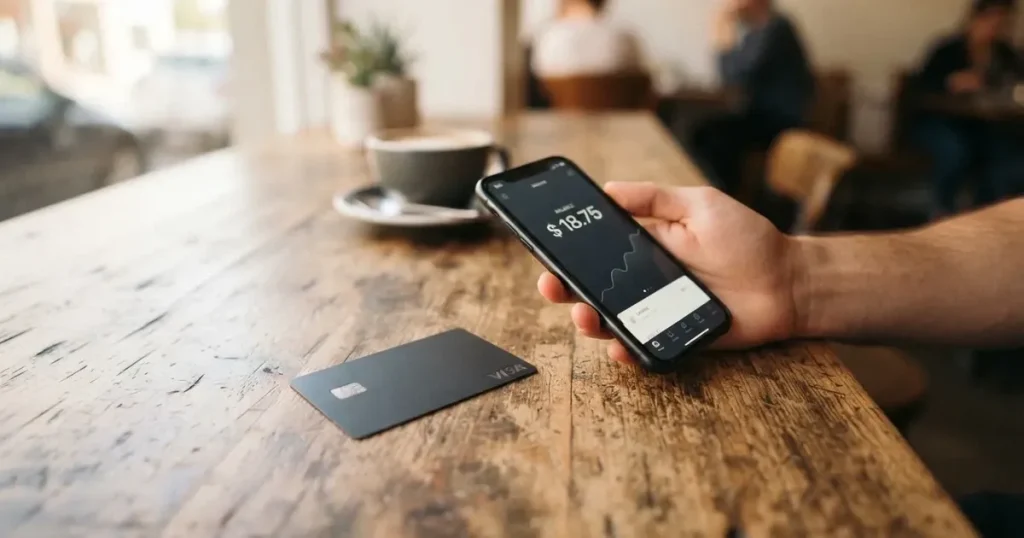
The Coinbase card turns the crypto sitting in your Coinbase account into something you can swipe at a shop, tap at a terminal, or pull out at an ATM. It is a Visa prepaid debit card, issued by Pathward, N.A. (Member FDIC) under a licence from Visa U.S.A. Inc., and it runs on Marqeta’s payment platform. The crypto-to-spend part happens in the background: at the moment you pay, Coinbase sells the coin you chose and converts the proceeds into US dollars, which is the only currency the card actually holds. That makes it a familiar shape of card, but the rules around who can get one, what it costs in the long run, and what happens when things go wrong are very different from a normal bank card.
Conditions are current as of October 28, 2026.
This review walks through those rules using the card’s own published materials, the older cardholder agreement that still covers some operational details, and user reports on Trustpilot. Where a number or country list comes from a third party rather than the card’s own pages, I say so. Where the card’s public materials are silent, I say that too. The conditions described here are current as of 2026-10-20.
Verdict
The Coinbase card lands at 6.4 out of 10. The everyday experience is genuinely good: it is a Visa, it works in stores and at ATMs, and there is no monthly fee or annual fee. The two things that drag the score down are eligibility and how you fund it. The card is only available to US residents, and only outside Hawaii, so most of the world cannot use it at all. Funding is also narrower than it looks: you link a bank account or route part of your paycheck into Coinbase, and the only “crypto top-up” happens automatically when you pay, with Coinbase applying a spread to convert your coins into dollars.
| Criterion | Mark | Why |
|---|---|---|
| Who can get it | 4 / 10 | US-only, all states except Hawaii; identity verification required |
| Cost | 8 / 10 | Zero spending fees, zero annual fees, zero ATM fees from Coinbase; the spread on conversion is the real cost |
| Top-up options | 4 / 10 | Bank account or paycheck deposit; no direct crypto deposit, conversion happens at payment |
| Reliability and complaints | 7 / 10 | Issued by a real US bank on a major card network; Trustpilot for Coinbase is 4.0/5, but account freezes and slow support are recurring themes |
| Everyday use | 9 / 10 | Virtual or physical Visa, accepted everywhere Visa is taken; ATM withdrawals work; mobile wallets reported as supported |
| Total | 6.4 / 10 |
This card suits US residents who already hold crypto on Coinbase, want a low-friction way to spend it, and are comfortable with the platform’s verification and support process. It does not suit anyone outside the US, anyone who wants to deposit specific coins from an external wallet, or anyone who needs a card denominated in anything other than US dollars.
Will they give you the card
The short answer is: only if you live in the United States, and not in Hawaii.
The card is available in all US states except Hawaii. That is the only geography on the card’s public pages. No other countries are listed. The application lives inside the Coinbase app, and the account opening follows the USA PATRIOT Act identity rules: you need to give your name, address and date of birth, and Coinbase “may also ask to see your driver’s license or other identifying documents.” There is no credit check, and no staking or minimum balance is required to be eligible.
If you are 18 or older, a US citizen or permanent resident, and can complete the identity check, you are in the right shape to be offered the card. Until that identity check is finished, your use of the card may be limited, per the older cardholder agreement. What that limit looks like in practice is not stated in the current materials; the older terms describe a general “limited use” until verification clears.
Two things are worth flagging here, because they are easy to miss. First, the eligibility rules are about residence, not citizenship, but the identity check still records your nationality and runs it through sanctions screening, so a US residency permit alone is not always enough on its own. Second, the card’s terms reserve the right to cancel the card and return the balance if your address changes to one outside the US, so the card is tied to staying in the country.
How to get it
The signup path is built into the Coinbase app. You open an account, complete the identity check described above, and then either create a virtual card straight away or order a physical card. The physical card is mailed to you; the delivery time is not stated in the current materials, though the older agreement notes there is no fee for a replacement card sent because the previous one expired.
A few practical points:
- No credit check is run, and no staking is required to qualify.
- The card is a Visa prepaid debit card, available as a virtual card or a physical one. The same application gives you both.
- It spends cash or crypto from your Coinbase balance, but all crypto is converted to US dollars for the actual purchase or ATM withdrawal.
- The identity check is the step that takes time. Reviews on Trustpilot repeatedly mention multi-day holds on larger deposits and slow verification, so it is worth having your documents ready before you start.
If you want a sense of what the application looks like in practice, the Coinbase help center describes the same flow: sign up, verify, then in the app go to the Card section, create a virtual card, and order the physical card if you want one.
What it really costs — Fees
This is where the card looks its best, with one important asterisk.
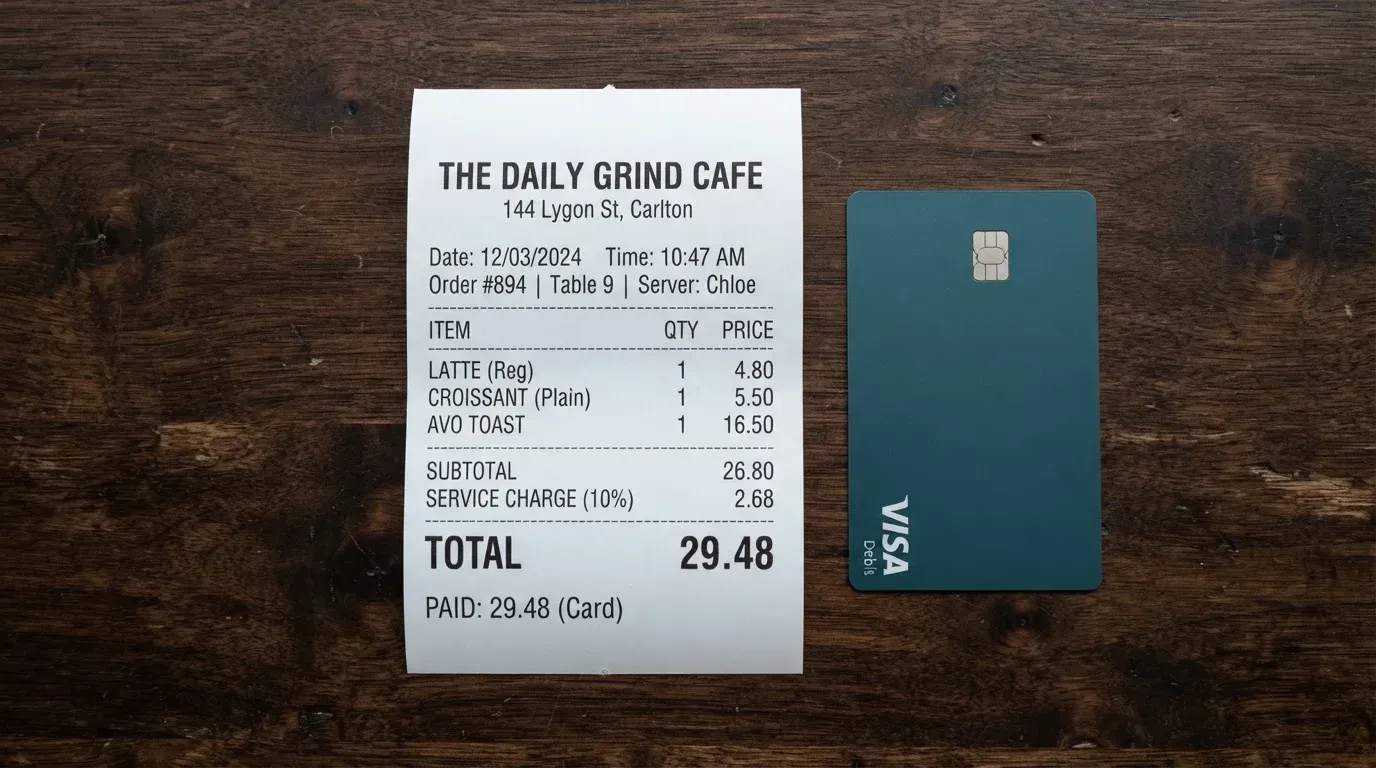
The card’s own page states: “Zero spending fees and no annual fees.” Coinbase does not charge a transaction fee for spending, and there is no monthly or annual charge. ATM withdrawals from Coinbase are $0, and balance inquiries at ATMs are $0. International transactions carry a 0% fee from the issuer, though the network will still convert any foreign-currency purchase into dollars, and the older fee schedule notes that Coinbase “may also charge a fee” — so the absence of a stated international fee is not the same as a guaranteed zero cost abroad.
The asterisk is the spread. When you pay in crypto, Coinbase has to sell your coin and turn it into dollars, and that sale happens at a rate that includes a spread — the gap between the market price and the price Coinbase uses. The card’s own page describes this as “a spread” that applies when Coinbase buys, sells or trades crypto. The exact size of that spread is not published in a single number; it varies by coin, by market conditions, and by the size of the trade. For everyday small purchases the difference can be small in absolute terms, but for larger transactions it is the real cost of using the card.
| Fee or limit | Value |
|---|---|
| Card issuance | Not stated for current card; older agreement lists no fee for replacement on expiry |
| Monthly fee | $0 |
| Conversion fee | No Coinbase transaction fee; a spread applies at the moment of conversion |
| FX fee (issuer) | 0% |
| ATM withdrawal | $0 from Coinbase; ATM operator may charge |
| Balance inquiry at ATM | $0 |
| Daily limits | Not stated for current card; older Combined Terms cap ATM and over-the-counter cash withdrawals at $1,000 per 24 hours, max 6 withdrawals per day |
| Monthly limits | Not stated |
To make this concrete, three everyday payments:
- Coffee at home, paid in crypto. You tap the card, Coinbase sells a tiny amount of your chosen coin at the current rate plus a spread, the merchant receives dollars, and you pay no separate transaction fee. The only cost is the spread, which for a few dollars of crypto is unlikely to be visible.
- Online subscription in euros. The card is denominated in US dollars, so the network converts the euro price into dollars. The issuer charges 0% on top, but the network rate and the spread on the underlying crypto sale both apply. If the spread is wide that day, you feel it.
- ATM withdrawal abroad. Coinbase charges $0 for the withdrawal itself, but the ATM operator may charge its own fee, and the foreign-currency amount is converted into dollars at the network rate. Limits are set per customer, with risk checks able to lower them — the help center points you to the in-app Card > Support > “View spending and ATM limits” screen for your specific numbers.
In short, the headline fees are genuinely zero, but the spread is the price you pay for the convenience of crypto-to-card, and the size of that price is not something the card publishes in advance.
Top up
Funding the card is narrower than it first appears.
The card’s own page lists two ways to add money: link a bank account and fund from it, or deposit part of your paycheck into Coinbase. Both are described as “zero fees.” The older cardholder fee schedule confirms $0 for funding from the Coinbase USD Wallet and $0 monthly fee.
What is not there is a direct crypto top-up. The card does not accept a deposit of, say, USDC from an external wallet on a chosen network. Instead, the crypto you hold on Coinbase sits in your Coinbase balance, and when you pay with the card, the system converts what you need into US dollars at that moment. The coins and networks supported for that conversion are not stated in the public materials, and the minimum top-up amount, if any, is also not stated.
A few things to keep in mind:
- There is no published list of supported coins for card spending. In practice the Coinbase app will show you which of your holdings are eligible.
- There is no published list of supported deposit networks for any external transfer, and network fees are not described in the card’s materials. The card’s funding model is built around the Coinbase USD Wallet, not around on-chain deposits.
- The older agreement notes that the card balance does not expire after the card’s “Valid Thru” date, and that funds transferred from the Coinbase USD Wallet are eligible for FDIC insurance up to $250,000 if deposit-insurance requirements are met.
If you are used to topping up a card with a stablecoin from an external wallet on a specific network, this is a different model: the card is funded by the dollars already in your Coinbase account, and the crypto lives on the same platform.
Paying with it every day
The card is a Visa, so it is accepted wherever Visa is taken — physical stores, online, in apps. It works as a contactless tap, a chip-and-PIN, a swipe, and an online card entry. ATM withdrawals work at any Visa-accepting ATM, with the caveats on fees and limits above.
Optional crypto rewards are available on every purchase for US card users. The rate is variable and shown in the app, and you pick which of the rotating crypto rewards you want to earn. The older card materials describe this as a user-selected reward rather than a fixed percentage, so the headline number will move.
Mobile wallet support is reported but not stated in the card’s official materials. According to third-party reports, the card works with Apple Pay and Google Pay. That is consistent with how prepaid Visa cards generally behave on those wallets, but it is not confirmed by the card’s own pages, so treat it as unofficial until you see it in your own app.
A few practical points about the day-to-day:
- The app is the control center. You can see transactions, manage the virtual card, freeze the physical card, and view your limits in the Card section. The app is available on iPhone (iOS 16.4 and up), Mac and Vision, with 18 interface languages including Russian and Turkish, and an App Store rating of 4.7 from 1.8 million ratings.
- If something goes wrong with a transaction, the older agreement describes a process: report unauthorized transactions, the issuer decides within 10 business days (and may take up to 45), credits the account within 10 business days meanwhile, and losses reported more than 60 days after the statement may not be recovered. Merchant refunds are handled by the merchant and may post with delay.
- Blocked merchant categories are not documented in the public materials. Some issuers block gambling or other high-risk MCCs by policy; the Coinbase card’s policy on this is not stated.
What can go wrong
Crypto cards live in the overlap between a regulated bank product and a custodial crypto platform, and the risks of both worlds apply.
Counterparty risk. The card is custodial: the dollars sit with Coinbase and the issuing bank, and the crypto you spend sits in your Coinbase account. The older agreement describes FDIC insurance eligibility for funds transferred from the Coinbase USD Wallet, up to $250,000 if the deposit-insurance requirements are met. The crypto itself is not FDIC-insured, and the card is not a deposit account.
Account freezes and verification. Trustpilot ratings for Coinbase (not the card specifically) sit at 4.0/5 from 23,282 reviews, with 45% five-star and 43% one-star. The recurring themes in low-rated reviews are slow or absent support in fraud cases, account lockouts, heavy verification, and multi-day holds on larger deposits. A 2026 US PIRG study ranked Coinbase third among digital wallets by CFPB complaints, with “difficulty retrieving money” as a common theme. Third-party reviews disagree on FX fees and supported regions, and those figures are unverified.
Operational incidents. One news report noted that Coinbase confirmed mistakenly overcharging users’ bank accounts, and a recurring complaint on user forums is unexpected debits from linked bank accounts. The older cardholder materials describe the dispute process but do not enumerate specific incidents.
Issuer change. The card’s older agreement names MetaBank, N.A. as issuer (with Marqeta as program manager), while the current card page names Pathward, N.A. as issuer. That kind of change is normal in the prepaid card industry, but it is worth knowing: the bank on your statement may not be the same as the bank on the original agreement.
Lost or stolen card. The older agreement requires you to report a lost or stolen card at once. Visa Zero Liability applies, but only if you report promptly and have not acted fraudulently or negligently. After 60 days from the statement, recovery of losses is harder.
Crypto price movement. Because conversion happens at the moment of payment, the dollar value of your crypto is locked in only at that moment. If the price moves sharply between when you intended to pay and when the transaction actually settles, you can end up with a different effective price than you expected.
What to take instead
The right alternative depends on where you are and what you want from the card.
Bybit Card (6.0 / 10). The standout difference is geography: the Bybit card is available in Argentina, the AIFC in Kazakhstan, Georgia, Kazakhstan, Australia, Mexico, Brazil, Peru, and Asia Pacific. It does not serve the US or the European Economic Area. It offers a wider range of supported cryptos (BTC, ETH, XRP, USDT, USDC, GRAM) and a tiered cashback system that goes from 2% at Base to 10% at Infinite, with monthly caps. The trade-off is that only crypto-funded transactions earn rewards since October 2026, and there are FX fees on top of the network rate in most regions. If you live outside the US and want a card with a clearer rewards structure, Bybit is worth a close look.
OKX Card (6.2 / 10). Launched in the EU plus Norway in January 2026 (Iceland and Liechtenstein excluded in the explainer), the OKX card is a euro-denominated Mastercard debit card linked to OKX Pay. It has no card fee, no transaction fee, and no OKX FX fee, with a conversion spread of 0.1% (per the May 2026 explainer). Cashback is paid only on USDG purchases, with rates from 2% to 10% depending on VIP tier, and monthly caps in euros. If you are in the EU and want a euro card that pays stablecoin cashback, this is the closer fit.
BingX Card (5.8 / 10). Available in Europe (EEA), APAC, LATAM and other selected regions, with no country list published. The card is a Visa debit that settles in USD, available as a virtual card (instant) or a metal card (15-30 business days). Funding is USDT only from the BingX Fund Account, and no cashback is currently described. It is a simpler product, more of a “convert and spend” card than a rewards card.
| Card | Regions | Currency | Cashback | Card fee |
|---|---|---|---|---|
| Coinbase | US (not Hawaii) | USD | Variable, user picks | $0 |
| Bybit | Argentina, AIFC, Georgia, Kazakhstan, Australia, Mexico, Brazil, Peru, Asia Pacific | USD, ARS, MXN, BRL, PEN | 2%-10% tiers | Free virtual; physical varies by region |
| OKX | EU + Norway (Iceland, Liechtenstein excluded) | EUR | 2%-10% on USDG only | $0 |
| BingX | EEA, APAC, LATAM, selected | USD | Not stated | Not stated |
Who I would recommend it to
The Coinbase card is a good fit for a narrow group:
- US residents outside Hawaii who already hold crypto on Coinbase and want a low-friction way to spend it without moving it to a bank first.
- People who value zero fees over high rewards. The headline fees are genuinely zero, and the rewards are real but variable — if you want a flat percentage back, a tiered cashback card from a competitor will likely pay more.
- Anyone comfortable with Coinbase’s verification and support process. The card inherits the platform’s strengths and weaknesses, including the volume of support complaints.
It is not a good fit for:
- Anyone outside the US. The card is not available, and the address-change rule means even temporary relocation can put the card at risk.
- Anyone who wants to deposit specific coins or stablecoins from an external wallet. The card does not have a published list of supported networks for external transfers, and the funding model is built around the Coinbase USD Wallet.
- Anyone who needs a non-USD card. The card holds US dollars only; foreign-currency purchases go through the network’s conversion.
- Anyone who needs a card with strong customer service as a top priority. Trustpilot themes around slow support and account freezes are real, and the dispute process described in the older agreement can take up to 45 days.
If your situation is on the “yes” side, the card is genuinely easy to live with day to day. If you are on the “no” side, the alternatives above give you a clearer match for what you actually need.
Frequently asked questions
What is the Coinbase card?
The Coinbase card is a Visa prepaid debit card issued by Pathward, N.A. under a licence from Visa U.S.A. Inc., and run on Marqeta’s payment platform. It is available as a virtual card or a physical card, and it spends the cash or crypto in your Coinbase account. When you pay in crypto, the coin is converted into US dollars at the moment of payment.
How does the Coinbase card work?
At payment, Coinbase sells the crypto you chose and converts the proceeds into US dollars, which the card then uses to pay the merchant. The card itself only ever holds dollars. The conversion happens at Coinbase’s rate, which includes a spread — the gap between the market price and the price Coinbase uses.
Is Coinbase a bank?
No. Coinbase is a crypto exchange and a programme manager for the card. The card itself is issued by Pathward, N.A., which is a Member FDIC bank. Funds transferred from the Coinbase USD Wallet may be eligible for FDIC insurance up to $250,000 if the deposit-insurance requirements are met, but the card is not a bank account and the crypto held on Coinbase is not FDIC-insured.
Who owns Coinbase?
Coinbase is a publicly listed company. The card programme is owned and operated by Coinbase, Inc., and the issuing bank is Pathward, N.A. The card is powered by Marqeta.
Is the Coinbase card available in my country?
The card is available in all US states except Hawaii. No other countries are listed in the card’s public materials. If you live outside the US, the card is not available, and changing your address to a non-US address may result in the card being cancelled and the balance returned.
How do I get the Coinbase card?
You open a Coinbase account, complete the identity check (name, address, date of birth, and possibly a driver’s license or other ID), and then in the app create a virtual card or order a physical card. There is no credit check and no staking requirement.
Does the Coinbase card require KYC?
Yes. The account opening follows US identity-verification rules under the USA PATRIOT Act, and Coinbase may also ask for a driver’s license or other identifying documents. Until that check is complete, your use of the card may be limited.
How do I top up the Coinbase card?
The two published options are linking a bank account to Coinbase, and depositing part of your paycheck into Coinbase. Both are described as zero fees. There is no direct crypto top-up; the crypto lives in your Coinbase balance and is converted to dollars at the moment you pay.
How do I add the Coinbase card to Apple Wallet or Google Pay?
Third-party reports indicate that the card works with Apple Pay and Google Pay, but the card’s own public pages do not confirm this. The safest path is to open the Coinbase app, go to the Card section, and look for the option to add the card to your mobile wallet. If the option is not there, the feature is not currently enabled for your account.
Is the Coinbase card safe?
The card is issued by a US bank (Pathward, N.A., Member FDIC), runs on Visa with Visa Zero Liability, and supports standard safeguards like a virtual card you can freeze in the app. The risks to weigh are the spread on conversion, the platform-level complaints about account freezes and slow support on Trustpilot, and the fact that the crypto is held custodially on Coinbase, not in your own wallet. As with any prepaid or debit card, prepaid-card coverage is not the same as credit-card coverage under US regulations, so do not assume protections you have not verified.
Exchange cards – cryptocardbasics
Content created by the «cryptocardbasics» team