
The ETHFI cashback card is easy in daily use and unclear on paper
 Available in US
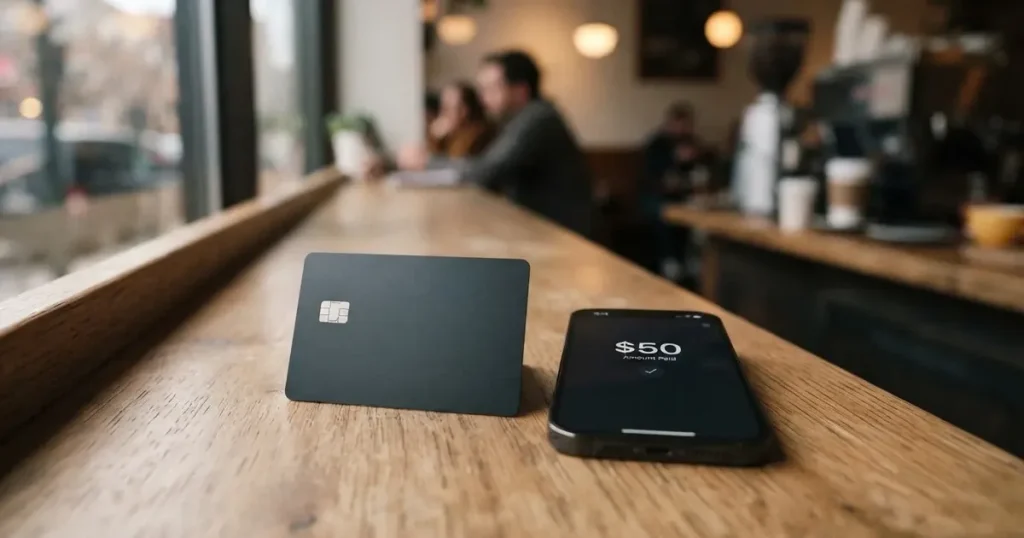
The ether.fi card pays you back in ETHFI when you spend, works as a Visa in both virtual and plastic form, and tops up from crypto you already hold. That is the pitch, and for daily spending the day-to-day experience scores well: 9 out of 10. Where it gets murky is everything around the edges — the issuing bank is not named in the official material, several fees are described only as “available” without numbers, and in November 2025 the cards were suspended after fraudulent transactions. Add 6.7 out of 10 overall, and you have a card that many people will enjoy using and that a careful reader will want to hold loosely.
Conditions described here are current as of October 28, 2026.
Verdict: 6.7 out of 10, strong for daily use, unsettled underneath
The score is not a shrug. This card does the basic thing well. It is a Visa, virtual and physical, it goes into Apple Wallet and Google Pay, you can withdraw up to $5,000 from an ATM, and you get 3% cashback in ETHFI on your first $2,000 a month on the entry tier. If your problem is that ordinary bank cards are hard to get in your country, and you already hold crypto, this is a plausible answer. The intended reader is exactly that person: a resident of a listed country who wants to spend from a crypto balance and get a little back while doing it.
But the paper is thinner than the product. The legal entity and the issuer behind the card are not named in the public help articles. Some figures circulate on third-party sites — a 1% foreign-exchange fee outside USD and EUR, a 2% ATM fee — and those are not confirmed by the card’s own documentation, so treat them as rumour with a number attached. Trustpilot sits around 3.3 out of 5 across 47 reviews, with the recurring themes being verification limbo lasting weeks to months, denials after approval with no specific reason given, compliance freezes with slow automated support, and deposited funds lost during activation. That last one is the one that should make you pause before sending anything.
My read: good card, uncertain institution. Spend small amounts, keep only what you can afford to have frozen, and read the section on risks before you deposit.
| Criterion | Mark | Why |
|---|---|---|
| Who can get it | 7 / 10 | Issued in listed jurisdictions: Austria, Australia, Brazil, Canada, Germany, Hong Kong, Japan, Singapore, Switzerland, UAE, the UK and others, plus 31 US states |
| Cost | 7 / 10 | Core: one free virtual card, plastic is free but delivery is charged (amount not disclosed); FX 0.5%; unofficial: 1% FX outside USD and EUR, 2% at ATMs |
| Top-up options | 7 / 10 | Any supported token can be deposited to the Safe; deposits from several networks; list of coins and networks not disclosed |
| Reliability and complaints | 4 / 10 | Issuer not officially named (unofficial: Rain or Third National, sources disagree); Trustpilot 3.3 of 47 reviews; in November 2025 cards were suspended after fraudulent transactions; complaints about freezes |
| Everyday use | 9 / 10 | Virtual and physical Visa, Apple Wallet and Google Pay, ATM up to $5,000 per withdrawal |
| Total | 6.7 / 10 | Strong in the hand, unclear on the paperwork |
Will they give you the card?
They will only give it to you in listed jurisdictions, and the card’s own wording is blunt about the rest: if your jurisdiction is not listed, you will not be able to apply. The list includes Andorra, Argentina, Australia, Austria, Brazil, Canada, Cyprus, Czech Republic, France, Germany, Hong Kong, Hungary, Italy, Japan, Mexico, Poland, Portugal, Singapore, Spain, Switzerland, the UAE and the UK, plus 31 US states. Belgium and Ireland are eligible, though without physical delivery.
Two things worth understanding about that rule. First, it is residence- and jurisdiction-based, not citizenship-based. The card’s public pages do not state any citizenship rules, so if you live in one listed country and hold a passport from another, the residence address is what the application turns on. Second, ATM withdrawals are blocked in North Korea, Iran and Myanmar.
If you are browsing from a country you moved from rather than live in, check the list before you create anything. The failure mode here is an application that is accepted, verified, and then declined later — which is exactly what some reviewers describe.
How to get it
The sequence the card describes is short. You deposit tokens to your Safe, you complete KYC, then you order either a virtual or a physical card inside the app.
KYC is not optional. The activation flow asks you to verify your identity, and the single KYC flow runs through: a one-time code to your phone, an identity document (passport, national ID card or driving licence), a selfie liveness check, your address, and sometimes a questionnaire from the card issuer. There are no KYC “levels” — one flow, not a ladder. Proof of address is requested only in some cases; when it is, it must be no older than three months, and phone bill screenshots are not accepted.
That last point catches people out. If you are one of the unlucky ones asked for address proof, a screenshot will get you bounced. What does get people bounced is an expired or cropped document, screenshots in general, information that does not match between the document and the form, and an address mismatch.
Most reviews describe approval “within 48 hours”. That is a review-reported figure, not a promise from the card. There is a separate and more troubling pattern in the complaints: weeks to months of verification limbo, and denial after approval with “suspected fraud” and no specific reason given. One undated 2025–2026 review describes exactly that.
On delivery: the physical-card article does not state delivery countries, delivery time or price. PO boxes are not allowed, the address must be in Latin characters only, and shipping details cannot be changed after you order — so check your address carefully before you press the button. On the Core tier a shipping fee applies, though the amount is not stated; on Luxe+ shipping is included.
The card is a Visa. Both virtual and physical versions exist. The card currency is not stated, although USD and EUR purchases are both referenced throughout the help material.
One odd but useful detail: a $10 crypto deposit must be in place before KYC can complete, in all regions. If verification fails, that deposit can be withdrawn.
Fees: what it really costs
The costs table is the part of this card that most deserves slow reading, because several rows are deliberately vague. Here is everything the card’s own material states.

| Fee or limit | What the card states |
|---|---|
| First virtual card | Free for Core members normally; $10 in regional-pricing countries (Argentina, Angola, Bangladesh, Bolivia, Colombia, Ecuador, Indonesia, Malaysia, Mexico, Nigeria, Peru, Philippines, South Africa, Thailand) |
| Monthly or annual fee | Not stated |
| Physical card fee | Core: card free, shipping fee applies (amount not stated). Luxe+: metal card and shipping included |
| FX fee | Core 0.5%, Luxe 0.25%, Pinnacle and VIP none, on top of the base rate; EUR purchases have a separate 0% FX article |
| Crypto conversion fee | Not stated |
| ATM fee | Not stated in the ATM article; free withdrawals up to 10 per month for Pinnacle and VIP, listed as “Available” for Core and Luxe |
| Daily and monthly limits | Set by you in the Cash tab; changes take effect after a security delay |
| Weekly per-card limits by merchant category | $500 crypto purchases, gambling, FX, prepaid loading; $1,000 money transfers, stock brokers, dating; $3,000 pharmacies, licensed online casinos (MCC 7800–7802), funding crypto accounts; advertising $30,000 per transaction |
| ATM withdrawal ceiling | Up to $5,000 per withdrawal; 5 withdrawals and $25,000 per rolling 24 hours (Core/Luxe/Pinnacle/VIP). Another help article says $1,000 per ATM withdrawal (MCC 6011), 5 per 24 hours |
| Overall tier limits | Not stated |
Two figures to keep separate from the card’s own statement. Unofficial sources — cryptocards.so in 2026, and an OzBargain post — put the FX fee at 1% outside USD and EUR, and cryptocards.so puts the ATM fee at 2% with a $250 per day cap. The card does not confirm these. I include them because you will encounter them, not because they are established.
Note the ATM contradiction inside the official material itself: one article says up to $5,000 per withdrawal, another says $1,000. If cash machines matter to you, that is a question to ask support in writing before you rely on it.
Now three everyday payments, with what applies to each.
Coffee in your own country, paid in dollars or euros. No FX fee — you are spending in USD or EUR. Cashback at 3% on the Core tier up to $2,000 a month, paid in ETHFI. This is the clean case, and it is the one the card is built around.
A subscription billed in a currency you do not hold. The FX fee applies on top of the base rate by tier — 0.5% on Core, 0.25% on Luxe, none on Pinnacle or VIP. If the currency is neither USD nor EUR, the unofficial 1% may apply on top. And the crypto conversion fee, which the card does not state, sits somewhere in this path. This is the payment where the total cost is genuinely unknown from public information.
Withdrawing cash at an ATM. The card states the ceiling but not the price. The unofficial figure is 2% with a $250 per day cap. On Pinnacle and VIP, free ATM withdrawals are explicitly listed, up to 10 per month; on Core and Luxe the line reads “Available”, which tells you the withdrawals are possible and not what they cost.
One more everyday case that catches people: a declined authorisation can leave a hold on your funds for several days, typically up to seven. Your balance is not the same as your available balance.
Top up: how money gets onto the card
Top-up is the part that makes this a crypto card rather than a normal one, and it is also where mistakes are expensive. You deposit “any supported token” to your Safe, which acts as collateral in Credit mode; in Direct Pay mode the card spends the balance as it is.
The coin and network list is not stated on the card’s main pages. It lives in two help articles — “Supported assets and networks for your Vault with Cash” and “USDC and USDT deposit networks and addresses”. You need to read those before you send anything, because blockchain transfers are irreversible: a deposit sent on a network the provider does not support, or to an address belonging to a different network, can be lost or need manual support recovery with no guarantee.
There is also a network-fee reality that applies to the whole category. On-chain fees for your deposit are charged by the blockchain, not by the card provider. A USDT balance held on Ethereum cannot move without ETH in the wallet to pay gas; Tron-priced transfers burn TRX. Small deposits can be eaten by network costs, which is worth remembering before you split a payment across chains to save a few cents.
Fiat top-up by bank transfer has its own article with its own country list; the fees in it were not read.
Withdrawing is the reverse: you request a withdrawal with the token, amount and recipient address, and it executes once the required Safe owners sign. Cross-chain withdrawals have a separate article. Fees are not stated. Deleting the account requires a $0 balance, no active borrows and no pending card transactions, then a 14-day waiting period — and because the balance must be emptied first, what happens to any residual balance is not stated.
Paying with it every day
This is where the card earns its 9 out of 10. It behaves like an ordinary Visa, which is the whole point.
You add it to Apple Wallet or Google Pay using the card details. Under the hood, Apple Pay replaces the card number with a device-specific number stored in the Secure Element, never on Apple’s servers, and each payment uses a one-time code — so tokenised mobile wallets are among the better-behaved ways to use this card.
Cashback is the headline feature and it is paid in ETHFI, locked for seven days and then claimable. The ladder on Core runs 3% on the first $2,000 a month, then 1% up to $3,000, then 0.5%. Luxe pays 3% up to $10,000, Pinnacle 3% up to $50,000, and VIP pays 4% up to $50,000. EUR purchases use a lower ladder. Business pays 1%. No payout cap is stated.
Read the exclusions, because they are where the enthusiasm goes: ATM withdrawals, cash advances, peer-to-peer payments and gambling merchant categories are all excluded from cashback. That last one is enforced through merchant category codes — four-digit numbers assigned to businesses under ISO 18245 that classify what they sell. Gambling sits under MCC 7995, and issuers block it by policy rather than by law, with wildly different policies between issuers. The card’s limit for gambling is $500 per week; it is capped, not stated as fully blocked.
More MCCs are flagged as cashback-excluded or limited: 6011, 6012, 6211, 6513, 6532 and 7995.
The tiers beyond Core are where the cashback maths starts to make sense for heavy spenders, and they are also where the commitment gets expensive. Core includes one free virtual card, a free physical card with a shipping fee, and balance protection up to $10,000. Luxe is $199 a year or earned by monthly points: 3% on the first $10,000, two free virtual cards, a free metal card with shipping, category cashback at 10% up to $10 a month, protection up to $50,000. Pinnacle is $999 a year or points: 3% on the first $50,000, ten virtual cards, free ATM withdrawals up to 10 a month, express shipping, protection up to $100,000. VIP is 4% on the first $50,000, unlimited virtual cards, a free Gold metal card, and protection up to $500,000. Whether $999 a year is worth it depends entirely on your monthly spend, and at 3% you need to be spending well over $30,000 a month for the cashback alone to clear the fee.
The app is an iOS app, “ether.fi: Crypto Card & Spend”, requiring iOS 16.0 or later, rated 4.9 across 141 ratings in the US storefront as I read it. The Google Play listing was not found.
Disputes work through in-app chat with support. If a transaction is unauthorised, you delete the card and contact support, and it goes to Visa’s fraud process. If the merchant is at fault — non-delivery, duplicate charges, subscriptions — that goes through Visa’s dispute process, and the card’s guidance is to contact the merchant first. Disputes may take up to 90 days to complete. No dispute fee is mentioned. Refunds come from the merchant, on a timeline given in a separate article.
What can go wrong
Start with the event that shook the card most. In November 2025 the cards were suspended after fraudulent transactions, with the CEO promising refunds. That is the clearest evidence anyone has about how this programme behaves under stress, and it is not the behaviour of a boring, well-supervised card programme.
The complaints cover these recurring themes. Trustpilot shows roughly 3.3 out of 5 across 47 reviews, citing changed account details and lost deposited funds during card activation. KYC and address verification limbo lasts weeks to months. Denial after approval happens with “suspected fraud” and no specific reason. Compliance freezes with slow automated support are flagged by the aggregator cryptocards.so. And lost deposited funds on activation occurred in 2025.
Underneath the reviews sits a structural question: who is actually behind this card? The legal entity and issuer are not stated in the help articles, which mention Visa and describe a Cash Protection Program. Unofficial sources disagree — a bleap.finance blog says the card is issued via Rain, a slash.com blog says Third National under a Visa licence. Neither is official. Searches in 2026 found no confirmed licence loss or issuer change, but blogs still disagree. The ether.fi site itself was returning a 429 when checked, which is not reassuring either.
Now the security side, which is genuinely better than the complaints suggest. The Safe vault is self-custody in style: withdrawals need Safe owner signatures, so the provider cannot quietly move your balance. There is passkey sign-in, email one-time codes, a PIN, immediate card freeze in the app, and user-set daily and monthly spend limits — with the caveat that limit changes take effect after a security delay, so do not rely on lowering a limit as an instant kill switch.
The Cash Protection Program exists and is explicitly not insurance. It reimburses unauthorised smart-contract asset movement, with caps of $10,000 on Core, $50,000 on Luxe, $200,000 on Pinnacle and Business, and $500,000 on VIP, against a total programme capacity of $5 million. There is a $100 claim fee, refunded if the claim is approved. Compromised keys, credentials or devices are excluded — which means the protection does not help you if someone gets your seed phrase.
That last point deserves emphasis, because it is category-wide rather than card-specific. A seed phrase is typically 12 to 24 words in an unencrypted form of the private key; anyone who obtains it can restore the wallet and spend the funds. Crypto transfers are typically irreversible, and a stolen private key has no built-in recovery — the network cannot freeze or return the funds. Custodial platforms have a long record of this: Mt. Gox reported about US$350 million stolen in 2011–2014, Coincheck about US$400 million in 2018, and the Ronin Network US$625 million in 2022.
Support is in-app and web live chat plus email at [email protected]. Pinnacle members get a dedicated account-manager team and VIP gets executive support. On the other tiers, “slow automated support” is the phrase that appears in reviews, and complaint threads are the place to check how long a real answer takes before you need one.
Two practical warnings about everyday use. Merchants can look up the card’s BIN — the 6 or 8 digit issuer identification number at the start of the card number — and see which institution and country issued it, and may apply extra scrutiny if the issuer country differs from your billing address. That is why a card issued in one country can look foreign to a shop in another. Some merchants decline prepaid or foreign BINs for exactly that reason. Relatedly, Address Verification Service compares the numeric parts of the billing address you type against issuer records; it is mainly offered in the US, Canada and the UK and is generally unavailable for foreign-issued cards, which can cause declines at checkout.
What to take instead
None of these is a clear winner over ether.fi — they trade different things. Here is the comparison as I would weigh it.
| Card | Score | Key facts |
|---|---|---|
| ether.fi | 6.7 / 10 | Visa, virtual and physical; 3% ETHFI cashback up to $2,000/month on Core; 0.5% Core FX; issuer not officially named |
| Xplace | 7.7 / 10 | Visa; virtual instant, physical on Silver with Gold/Platinum coming soon, delivery 7–14 business days; annual fee Basic free, Silver $99, Gold $249, Platinum $999; “0% FX on Platinum”; Solana network, deposits in BTC, ETH, SOL, JitoSOL, USDC, USDT, xStocks; Credit-mode cashback 0.5% to 2% paid in USDC |
| Nexo | 6.3 / 10 | Virtual and physical, Mastercard trademark on the page but network not stated explicitly, issued by DiPocket UAB; no monthly, annual or inactivity fee; FX 0.2% on weekdays in the EEA/UK/CH and 2% elsewhere, 0.7% and 2.5% at weekends; virtual card needs at least $50 to activate, physical is free but needs a balance above $5,000 in digital assets and at least Gold tier; cashback only in Credit Mode with more than $5,000 held |
| Exa | 6.2 / 10 | Virtual Visa Signature, accepted at over 150 million merchants in more than 150 countries; issued in 45 countries and 31 US states, 18 ineligible countries including Belarus, China, India, Iran, Israel, Turkey, Ukraine, Vietnam and Russia; residents of Russia cannot be issued a card, and spending is blocked in Cuba, Iran, North Korea, Russia, Syria, Ukraine and Venezuela; marketed as free with no amounts on the page |
A few comparisons worth drawing out.
If the cashback is what draws you in, ether.fi pays in ETHFI, which is locked for seven days and then claimable — so the value you receive moves with that token’s price and is not cash. Xplace pays in USDC to your wallet at settlement, which is a different proposition entirely: stablecoin-denominated, immediately usable. Nexo pays in NEXO tokens or Bitcoin, again exposed to price. Exa states no cashback at all.
If you want the widest country coverage, Exa names 45 countries and 31 US states explicitly, and — unusually — names the 18 countries where you cannot get one. ether.fi lists its eligible jurisdictions but leaves citizenship rules unstated, which is a smaller thing that can still block you at the KYC stage. Nexo’s page refers to “selected European countries, including the EEA and the United Kingdom” without a list. Xplace does not state a country list, only that services are not available in all jurisdictions.
If fee transparency is your priority, ether.fi is the weakest of the four on paper: the monthly fee, physical card fee, crypto conversion fee and ATM fee are all unstated. Xplace states annual fees and promises no hidden spread on stablecoin spending. Nexo states its FX fees in full detail, weekday and weekend, by region.
One note on Nexo, which is not from the card: news outlet Cointelegraph reported a 2025-era Bulgarian police raid on Nexo’s Sofia office over alleged Russia-sanctions and AML violations, with no official Nexo statement about Russians found. That is not an official finding and not a Nexo statement, but it is the kind of regulatory attention worth knowing about.
Who I would recommend it to
I would recommend this card to someone who already holds crypto, lives in a listed jurisdiction, has a genuine problem getting an ordinary bank card, and is comfortable treating the balance as money that might be frozen for weeks. If that is you, the daily experience is genuinely good: a Visa that goes into your phone’s wallet, cashback that pays you back, and cash withdrawals up to $5,000.
I would be more cautious if any of these apply. If you are verifying the issuer before you deposit — and given that the issuer is not officially named, you should be — then wait for a clear answer from support in writing. If you cannot afford a balance sitting still for weeks during an address check. If you plan to live on ATM cash rather than card payments, because that is where the fee information is thinnest. If you are in one of the tiers’ target markets for gambling or crypto-purchase merchant categories, which carry tight weekly caps of $500 and no cashback. If you intend to run balances of $50,000 a month or more, where Pinnacle at $999 a year becomes arithmetically interesting but the support you get is also the thing people complain about not having on Core.
My own sequence would be: deposit the $10 the KYC requires, complete verification, use the virtual card for a couple of weeks, and only then decide whether to order the plastic and move anything larger. That sequence costs almost nothing and answers most of the questions the public pages cannot.
Frequently asked questions
What is the ether.fi card?
It is a Visa payment card, available in virtual and physical form, that spends from crypto you already hold. You deposit supported tokens to your Safe, and the balance is converted and loaded for card spending, which makes it behave much like a prepaid card rather than a bank debit card. Card purchases earn cashback in ETHFI, the card’s own token. The issuer behind the programme is not named in the card’s own public help articles.
Is ether.fi a bank?
No — and this matters for what happens to your money. Ether.fi appears to operate the crypto side and market the card, while a licensed issuer holds the card programme underneath; the help articles mention Visa but do not name the issuer or the legal entity. Unofficial sources disagree, naming Rain in one case and Third National in another. In the EU, an e-money institution can issue payment cards but cannot lend, and customer funds must be safeguarded in a way that is not the same as a bank deposit.
How do I get the ether.fi card?
The order is: deposit tokens to your Safe, complete KYC, then order a virtual or physical card in the app. A $10 crypto deposit is required before KYC can complete in all regions, and it can be withdrawn if verification fails. KYC means a phone code, an identity document, a selfie liveness check and your address, with proof of address only sometimes requested.
Does the ether.fi card require KYC?
Yes, and there is one flow with no tiers or levels. You verify with a one-time code to your phone, a passport, national ID card or driving licence, a selfie liveness check, and your address, plus sometimes an issuer questionnaire. Most reviews report approval within 48 hours, though complaints describe weeks to months of limbo and denial after approval with no reason given. Screenshots and cropped or expired documents are common rejection triggers.
What does the ether.fi card cost?
Core members normally get one free virtual card, though the first costs $10 in regional-pricing countries including Argentina, Colombia, Indonesia, Mexico, Nigeria, Peru, the Philippines, South Africa and Thailand. The physical card is free on Core with a shipping fee whose amount is not stated. The FX fee is 0.5% on Core, 0.25% on Luxe and none on Pinnacle and VIP. Monthly fees and the crypto conversion fee are not stated.
Is the ether.fi card free?
Partly. There is no stated monthly or annual fee, and the entry tier includes a free virtual card and a free physical card. But the shipping fee on Core is charged without a published amount, the ATM fee is not stated, and the paid tiers are not cheap once you get there: Luxe is $199 a year, Pinnacle $999 a year, and VIP is invitation-shaped. Paying $999 a year only makes sense at very high monthly spend.
How do I top up the ether.fi card?
You deposit any supported token to your Safe, and deposits are accepted from multiple chains. The card’s main pages do not list which coins and networks are supported — that information sits in two help articles on supported assets and networks and on USDC and USDT deposit addresses. Read those before sending, because a deposit to the wrong network or address can be lost. Network fees are charged by the blockchain, not by the card.
How do I add it to Apple Wallet and where can I use it?
You add the card using its details in the Apple Wallet or Google Pay app, and the tokenised number stays on your device rather than on Apple’s servers, with a fresh one-time code per payment. Because it is a Visa, it is accepted wherever Visa is accepted, and the card itself references spending in 160-plus countries through the wider network. Some merchants decline foreign-issued or prepaid BINs, so a rare decline is a category feature, not necessarily a fault.
Is the ether.fi card safe?
Safer than its complaint page suggests, and riskier than a bank account. Funds sit in a self-custody-style Safe requiring owner signatures to withdraw, there is passkey sign-in, an instant card freeze in the app, and a Cash Protection Program — though that programme is explicitly not insurance, has a $5 million total capacity, a $100 claim fee refunded on approval, and excludes compromised keys or devices. In November 2025 the cards were suspended after fraudulent transactions.
Is the ether.fi card worth it?
For someone spending steadily in USD or EUR who already holds crypto, the 3% cashback on the first $2,000 a month is real value, and the everyday mechanics are excellent. It stops being obviously worth it if you spend mainly in other currencies, rely on cash withdrawals, or hold a large balance — the FX and conversion costs are not fully published, and the issuer is not officially named. Start with the virtual card and the $10 deposit before committing more.
Credit and cashback cards – cryptocardbasics
Content created by the «cryptocardbasics» team