
HPX card review — prepaid USD card from a crypto wallet, with gaps you should know about
 Available in US
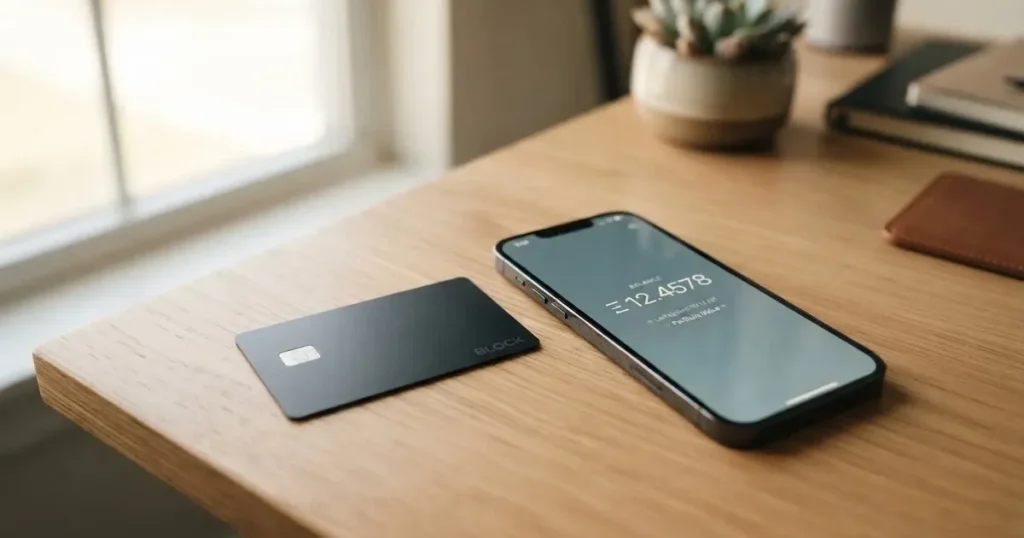
HPX is a crypto wallet that ships a prepaid payment card alongside it. The wallet holds your coins; the card converts crypto deposits to US dollars (or euros) and spends that balance wherever Visa or Mastercard is accepted. On paper, it sounds like a clean way to turn Bitcoin, Ethereum or USDT into everyday spending money. In practice, the HPX card has a thin public profile: the issuer and its licences are not named, the fee schedule is mostly missing, and the App Store rating sits at 3.3 out of 5 from 135 ratings, with recurring complaints about frozen funds.
This review walks through who can actually get the card, what it costs to run, how topping up works, and where the gaps and risks sit. By the end you should know whether HPX fits your situation, and which alternatives cover the same ground with more transparency.
The information below is current as of October 28, 2026.
Verdict
HPX earns a 4.7 out of 10. That score reflects a product that does the basic job — converting crypto to fiat and spending it through a card — but leaves too many questions unanswered for a reader who needs to trust a card programme with their money.
The card suits a narrow audience: existing HPX wallet users who already hold USDT, BTC or ETH on the platform and want a USD-denominated card to spend that balance. If you are already inside the HPX ecosystem and you understand the conversion and fee structure, the card removes the friction of moving crypto off the platform and onto an exchange before spending it.
The card does not suit a reader who needs clear, published terms. The card issuer and its licences are not stated. The conversion fee, the foreign-exchange fee, ATM fees, daily limits and monthly limits are not stated on the public pages. A $60 annual fee is deducted from your first deposit for the physical card, and a card-opening fee is paid before KYC review without the amount being disclosed. Two-thirds of the 135 App Store reviews lean negative, with recurring themes of coins stuck in review, frozen accounts and unanswered support tickets.
Here is how the score breaks down:
| Criterion | Mark | Reason |
|---|---|---|
| Who can get it | 6 / 10 | Application restricted in Mainland China, Russia, Turkey, Pakistan and other countries; the list changes with policy; other countries are not named |
| Cost | 3 / 10 | $60 annual physical card fee deducted from the first deposit; card-opening fee paid before review with no published amount |
| Top-up options | 6 / 10 | USDT, BTC and ETH convert to USD or EUR on the card; the networks used for those deposits are not named |
| Reliability and complaints | 3 / 10 | Issuer and licences not named; developer listed as CIPHERBC PTE. LTD.; App Store 3.3 / 5 from 135 ratings; complaints about stuck coins and frozen accounts |
| Everyday use | 6 / 10 | Physical and virtual USD cards; “tens of thousands of ATMs worldwide”; Apple Pay and Google Pay support not disclosed |
| Total | 4.7 / 10 |
Will they give you the card
The HPX card is restricted by residence, not by citizenship. The help center states that application is limited in Mainland China, Russia, Turkey, Pakistan and other countries, and that the list can change with policy. Users who already hold a card in a restricted region are generally unaffected, with the exception of Russia, where existing users may also be affected.
That is the full extent of the published geography. The card does not list which other countries fall under the restriction, and the help center does not enumerate the countries that are accepted. If you are reading this from a country not named in the restricted list, the default reading is that you can apply — but you will not find a confirmation in the public pages before you start the KYC process.
Citizenship rules are not stated. The card looks at where you live, not at the passport you hold. That matters for dual citizens and for people who have moved countries, because the address on your proof of residence is what the system checks, not the country printed in your passport.
Beyond geography, the KYC requirement is passport-only. National ID cards are not accepted, and the name on the application must match the name in the passport. The card arrives within 30 days of approval, and a card-opening fee is paid before the review begins. The amount of that fee is not published. Proof of address, minimum age and the criteria for rejection are not stated.
A “Global Travel Virtual Card” product is mentioned in the help notices but suspended for new applications, so it is not something you can currently apply for.
How to get it
The application flow has three stages. First, you download the HPX app and create an account. Second, you submit KYC: a passport photograph, with the name matching the passport exactly. Third, you pay a card-opening fee before the review starts, and the card arrives within 30 days of approval.
The App Store description frames the card as a prepaid card linked to a crypto wallet, converting crypto to USD or EUR. Both physical and virtual USD cards are available. The network (Visa or Mastercard) is not stated on the public pages. Unofficial third-party sources mention both virtual and physical cards in US dollars and euros, but you should treat that as unconfirmed — the card’s own materials do not specify.
One detail to watch: the card-opening fee is paid before KYC review. If your application is rejected, the policy on refunds is not stated. With a $60 annual fee deducted from your first deposit on top of that, the upfront cost of applying is not trivial, and the worst-case outcome (rejection after paying) is not addressed in the public terms.
Fees: what it really costs
The published fee schedule is thin. Here is what the card’s own pages state, and what they leave out:
| Fee or limit | Amount |
|---|---|
| Physical card annual fee | $60 (deducted from first deposit) |
| Card-opening fee | Not stated |
| Conversion fee | Not stated |
| Foreign-exchange fee | Not stated |
| ATM fee | Not stated |
| ATM allowance | Not stated |
| Daily spending limit | Not stated |
| Monthly spending limit | Not stated |
Two figures are confirmed. The physical card carries a $60 annual fee, and that fee is deducted from your first deposit, not billed separately. A card-opening fee is paid before the KYC review, and the amount is not published. Beyond those two numbers, the conversion fee, the FX fee, the ATM fee and the ATM allowance are all absent from the App Store listing and the help center.
Unofficial third-party sites mention a “daily spending limit of 50,000 US dollars / no limit” — that figure is not in the card’s own materials, and you should not rely on it.
A time-limited zero-fee offer for a USD virtual card PRO product is mentioned in passing but may be outdated; the help center does not confirm whether it is still running.
To make this concrete, here is how three common purchases would work in practice — though the actual cost depends on the conversion and FX fees the card does not publish:
- Buying coffee in a US city with a USD balance. The merchant is paid in dollars, no FX conversion is needed, and the only fee that would apply is the conversion fee when you originally topped up the card. That fee is not stated, so the cost of funding the card is the unknown.
- Buying lunch in Berlin with a EUR balance. The merchant is paid in euros, and again no FX is triggered at the point of sale. The cost is the conversion fee at the moment you swapped crypto for euros, which is not disclosed.
- Buying a train ticket in Tokyo with a USD balance. The merchant wants yen, the card network converts dollars to yen, and a foreign-exchange fee should apply on top of the network rate. That fee is not stated, so the cost of spending outside the card’s base currency is the unknown.
The pattern is the same in every case. You can see what you spend at the till, but you cannot see what the card charges you for the privilege of spending it.
Top up: how to fund the card
The card is funded by crypto. USDT, BTC and ETH can be deposited, and the app converts them to USD or EUR for the card balance. The networks used for those deposits are not stated. That is a meaningful gap, because USDT exists on Ethereum, Tron, Solana, Polygon and several other chains, and sending USDT on the wrong network is a common way to lose funds.
If you hold USDT in an external wallet, you need to know which network HPX supports before you send. The help center does not list the supported networks, and the app does not appear to publish a network selector with a clear warning. The safest reading is that the card will only credit deposits sent on the network HPX expects, and any deposit sent on a different network may be lost or require manual support intervention with no guarantee of recovery.
Beyond crypto, the published funding options are not stated. There is no mention of bank transfer, debit card funding or third-party payment processors in the materials I read. The card appears to be crypto-only at the top-up stage.
Withdrawal — moving money off the card back to a bank account — is not stated in the public materials.
Paying with it every day
The card is a prepaid USD card. You load it by converting crypto, and you spend the loaded balance. It cannot overdraw, because the balance is what it spends. That is the basic mechanics; the practical questions are about where it works and how smoothly.
The App Store description claims “tens of thousands of ATMs worldwide.” The ATM fee and the ATM allowance are not stated, so the cost of withdrawing cash is unknown. For a reader who relies on ATM access, that is a real gap.
Apple Pay and Google Pay support are not disclosed. Many crypto cards skip mobile wallet tokenisation, and some merchants decline cards that are not tokenised. If mobile wallet support matters to you, the public materials do not confirm it.
Blocked merchant category codes (MCCs) are not stated. Some cards block gambling (MCC 7995), and the blocked list varies by issuer. HPX does not publish its blocked list.
Rewards, cashback and spending incentives are not stated. The App Store description does not mention any.
The app itself has a 3.3 out of 5 rating on the US App Store from 135 ratings, requires iOS 15 or later, sits at version 5.6.270301 and is rated 16+. The Google Play rating was not retrieved. The developer states the app collects no data.
Dispute and chargeback processes are not stated. If a transaction goes wrong — a duplicate charge, a merchant that does not deliver — the process for raising a dispute is not described in the public materials.
What can go wrong
The risk picture for HPX has three parts: transparency gaps, user complaints, and the underlying custody model.
On transparency, the card does not name its issuer. The App Store developer is listed as CIPHERBC PTE. LTD., with copyright attributed to HYPER BC PTE. LTD. The site hyperpay.tech redirects to hpx.com. The card’s BIN sponsor, the bank or e-money institution behind the programme, and the licences held are not stated. Without an issuer, a reader cannot check a regulator’s register, cannot confirm segregated client funds, and cannot know which jurisdiction’s complaint process applies.
On complaints, the 3.3 out of 5 App Store rating is the headline number. Justuseapp’s analysis of those 135 reviews rates two-thirds as negative. The recurring themes, drawn mostly from 2022 to 2024 reviews, are:
- Coins stuck in “reviewing” status for days, with support tickets unanswered.
- Inability to withdraw or transfer funds out of the wallet.
- Accounts frozen without explanation.
- One report of funds removed to an unknown address.
- One report of an excessive fee that did not match expectations.
- Some positive reviews praising ease of use.
A 2022 review calls the product a scam, describing a card charge labelled as an airline ticket and an inability to withdraw funds. The developer’s response points to in-app or Telegram support, not to a published dispute or chargeback process. Trustpilot and Reddit searches for “HPX” turned up nothing specific to this card — only HyperX and HP printer results — so the complaint base is concentrated on the App Store, which is a smaller and less searchable surface than a dedicated review site.
On custody, the app offers two wallet types. The off-chain wallet is platform-held, with an “SBC risk control system” and multi-signature co-management. The on-chain wallet stores private keys locally using BIP32, BIP39, BIP44 and BIP45 standards. If you keep a balance on the card in the off-chain wallet, you are trusting the platform to hold it. The card freeze policy, two-factor authentication, insurance on customer funds and the segregation of client money are not stated.
The brand changed from HyperPay to HPX in July 2025. The Global Travel Virtual Card was suspended for new applications per a help notice. Russia is named among the restricted regions. No licence or issuer events were found in the search.
Taken together, the gaps and the complaint pattern point to a product where the reader carries more uncertainty than with a card from a named issuer with a published fee schedule and a regulator-backed complaint process.
What to take instead
If the gaps above are dealbreakers for you — and for many readers they will be — three alternatives cover similar ground with more transparency.
MetaMask Card (7.1 / 10). Sign-up is open in 45 listed countries and territories, with other regions joining a waitlist. Proof of residency is required, and the card is a Mastercard — virtual first (instant issuance), with a Metal tier available for pre-order after virtual approval. The virtual card is free, with no annual or maintenance fee; the Metal card is $199 a year. The card spends directly from the connected wallet, supporting mUSD, wETH, EURe, GBPe, USDC and USDT on Linea, Base, Monad and Solana. Cashback is paid in mUSD into the Money Account: 1% on Virtual, a headline 3% on Metal that drops to 1% above $10,000 spent. US and UK sign-ups are temporarily closed per the FAQ, and the issuer is Monovate, with Crypto Life as the card provider. Compared with HPX, MetaMask Card publishes its fee structure, names its issuer and supports a broader token set on named networks.
KAST (6.1 / 10). KAST is a Visa programme with virtual and physical cards, up to 10 cards per user, and three tiers: Standard (free, with a $40 physical card delivery fee), Premium ($1,000 a year) and Private ($10,000 a year). The card supports stablecoin top-ups in USDT, USDC, PYUSD and RLUSD on Ethereum, Solana, Polygon, Arbitrum and TRON, with 0% spread on stablecoin deposits. Non-USD FX fees run 0.5% to 1.75% depending on residence, transaction country and card programme, and there is a $0.50 declined-transaction fee. Cashback in USD runs 1.5% (Standard), 2% (Premium) and 3% (Private), with monthly caps. The country list is shown at KYC rather than published in advance, and citizenship or ID from a restricted region can disqualify an applicant even if they live in a supported country. Compared with HPX, KAST publishes its full fee schedule, names its tiers and supports a wider set of stablecoins on named networks.
Zeal (6.1 / 10). Zeal is a Visa card that can be spent in 150+ countries, with the card programme live in the EU, UK, Brazil, Colombia, Mexico, Japan, Singapore, the Philippines, Indonesia and Thailand. The card is virtual-first, addable to Apple Pay, and holds balances in EUR, USD and GBP stablecoin accounts on Gnosis Chain and Celo. Zeal charges no additional FX fee beyond the Visa wholesale rate, though Gnosis Pay’s own fees (such as ATM fees) may still apply. Cashback is up to 4%, paid in GNO on Gnosis Chain, and the app also advertises up to 5% variable APY on EUR and USD balances. The fee schedule is not published on zeal.app or the App Store. Compared with HPX, Zeal names its card programme (Gnosis Pay), publishes the networks it supports and offers token-based cashback.
The trade-off across all three alternatives is the same: you give up some of the simplicity of a single wallet-plus-card product in exchange for clearer fees, a named issuer and a published complaint process.
Who I would recommend it to
I would recommend the HPX card to a reader who is already an active HPX wallet user, who already holds USDT, BTC or ETH on the platform, and who understands the conversion and fee structure through their own use of the app. For that reader, the card removes a real friction point: moving crypto off the wallet, onto an exchange, and then onto a spending card. If the card can be loaded and spent without leaving the HPX environment, and if the reader has tested the withdrawal flow with a small amount, the convenience may justify the $60 annual fee.
I would not recommend the HPX card to a reader who is choosing a crypto card for the first time. The issuer is not named, the licences are not published, the fee schedule is mostly absent, and the complaint pattern on the App Store is heavy on stuck funds and frozen accounts. A first-time user has no benchmark for whether their experience is normal, and no regulator to escalate to if it is not.
I would also not recommend it to a reader in a restricted region, or to a dual citizen whose documents may not match the residence rules. The help center’s geography is a short list of named restrictions with no published accepted-country list, and the citizenship rule is not stated at all.
For a reader who needs ATM access, mobile wallet support, a published fee schedule or a clear dispute process, the alternatives above cover the same ground with more transparency. The HPX card is a reasonable add-on for an existing user. It is not a standalone product I would build a spending strategy around.
Frequently asked questions
What is the HPX card?
The HPX card is a prepaid payment card linked to the HPX crypto wallet. It converts crypto deposits such as USDT, BTC and ETH into US dollars or euros, and spends that balance wherever card payments are accepted. The card comes in physical and virtual USD versions, and the card network is not stated on the public pages.
How does the HPX card work?
You deposit crypto into the HPX wallet, the app converts it to USD or EUR at an undisclosed rate, and the card spends from that loaded balance. Because it is prepaid, the card cannot overdraw. The conversion fee, the FX fee and the daily and monthly limits are not published.
Is HPX a bank?
HPX is not described as a bank on its public pages. The app developer is listed as CIPHERBC PTE. LTD. The card issuer, the BIN sponsor and the licences behind the programme are not stated. Treat HPX as a wallet and card programme, not as a regulated bank.
Who owns HPX?
The App Store developer is CIPHERBC PTE. LTD., and the copyright is attributed to HYPER BC PTE. LTD. The site hyperpay.tech redirects to hpx.com. The brand changed from HyperPay to HPX in July 2025. Ownership beyond those entities is not stated in the public materials.
Is the HPX card available in my country?
The help center states that application is restricted in Mainland China, Russia, Turkey, Pakistan and other countries, and that the list can change with policy. The countries that are accepted are not published. If your country is not named in the restricted list, the default reading is that you can apply, but you will not find a confirmation before you start the KYC process.
How do I get the HPX card?
You download the HPX app, create an account, submit KYC with a passport (national ID cards are not accepted), and pay a card-opening fee before review. The card arrives within 30 days of approval. The card-opening fee amount is not published, and the policy on refunds if your application is rejected is not stated.
Does the HPX card require KYC?
Yes. KYC requires a passport, with the name on the application matching the name in the passport. Proof of address, minimum age, processing time and the criteria for rejection are not stated. KYC levels and the difference between basic and enhanced verification are not described in the public materials.
How do I top up the HPX card?
You deposit crypto such as USDT, BTC or ETH into the HPX wallet, and the app converts it to USD or EUR for the card balance. The networks supported for those deposits are not stated. Sending a deposit on the wrong network can result in lost funds, so check the supported network in the app before transferring.
Can I add the HPX card to Apple Wallet or Google Pay?
Apple Pay and Google Pay support are not disclosed in the public materials. If mobile wallet tokenisation matters to you, treat that as unconfirmed and check with support before applying.
Is the HPX card safe?
The app offers an off-chain wallet (platform-held, with multi-signature co-management) and an on-chain wallet (private keys stored locally). The card freeze policy, two-factor authentication, insurance on customer funds and the segregation of client money are not stated. The App Store rating is 3.3 out of 5 from 135 ratings, with recurring complaints about stuck coins, frozen accounts and unanswered support tickets. The absence of a named issuer and published licences means a reader has limited recourse if something goes wrong.
Wallet cards – cryptocardbasics
Content created by the «cryptocardbasics» team