
A self-custody card that spends straight from your wallet — and where it bites
 Available in US
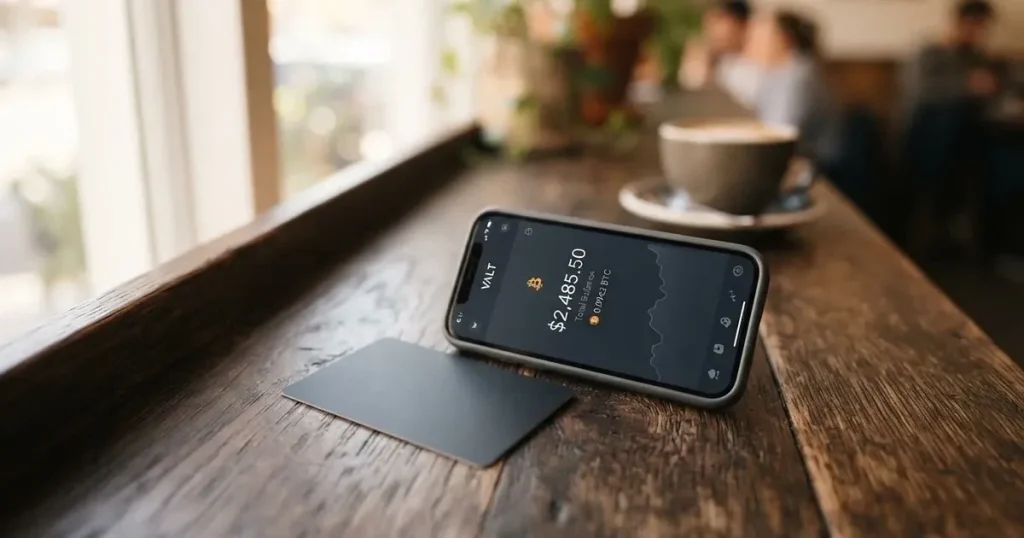
If you already keep your crypto in a MetaMask wallet, the card is a genuinely interesting idea: there is no pre-loaded balance sitting on a platform’s books, no need to move money to a custodial exchange first. You delegate tokens to the card, and it spends them. That design has real appeal, and the card scored 7.1 out of 10 on my assessment. It also has three documented rough edges that you should weigh before you apply: a per-transaction fee with no published amount, contradictory official pages on limits and cash withdrawals, and a steady stream of user complaints about refunds landing in a balance the card company calls “Credits.”
This review covers the free Virtual card and the $199-a-year Metal card as MetaMask describes them on its own pages. The conditions are current as of October 28, 2026.
Verdict: 7.1 out of 10
MetaMask scored 7.1 / 10 in my assessment. That is a good card with real friction, not a problem card — but the score sits below what I would want for something most people would use as their only everyday card.
Who it suits: people who already hold their crypto themselves and want to spend it directly, in Europe, Latin America and Canada. If you are comfortable with networks, gas fees and the fact that a card payment is a crypto transaction that can fail, the design is clean and the cashback is real.
Who it does not suit: anyone who wants a card that behaves predictably without reading the small print, anyone who needs a physical card in their hand next week, and anyone whose bank blocks crypto-linked transactions. If a merchant declines you and you cannot explain why in two sentences, this is a poor fit.
The fee picture drives a lot of that. There is no annual or monthly fee on Virtual, no foreign transaction fee, and Metal is a flat $199 a year. But every transaction carries what MetaMask calls a “minimal fee,” and the amount is not printed on the pages I read.
| Criterion | Mark | Why |
|---|---|---|
| Who can get it | 7 / 10 | Sign-up is open in 45 listed countries and territories across Europe, Latin America, Canada and elsewhere; other regions join a waitlist. Sign-ups in the US and UK are temporarily closed. |
| Cost | 8 / 10 | The Virtual card is free with no annual or maintenance fee, and Metal costs $199 a year. A “minimal fee” applies per transaction with no stated amount, and there is no currency-conversion fee. |
| Top-up options | 8 / 10 | It spends directly from the connected wallet on the Linea, Base, Monad and Solana networks, and names mUSD, wETH, EURe, GBPe, USDC and USDT as tokens. A Solana-only wallet cannot withdraw. |
| Reliability and complaints | 4 / 10 | The issuer is Monavate and the provider is Crypto Life. Reports describe refunds stuck in “Credits,” tickets circling through automated replies, and frozen cards. Unofficially, a physical card took over a month to arrive. |
| Everyday use | 9 / 10 | Virtual is instant, Metal adds Apple Pay and Google Pay, and the ATM limit is $1,000 a day on Virtual and $5,000 on Metal. |
| Total | 7.1 / 10 | Strong on cost and everyday mechanics, weak on support and on published clarity. |
The gap between 9 for everyday use and 4 for reliability is the whole story. Spending this card is well covered. Getting help when something goes wrong is where the complaints sit, and that is the part I would not want to discover for myself.
Will They Give You the Card?
Sign-up is open in 45 listed countries and territories. Examples named on MetaMask’s own pages include Andorra, Argentina, Brazil, Canada, Mexico, Germany, France, Spain and Uruguay; other regions join a waitlist. Proof of residence is required, and the card company’s own phrasing is worth reading closely: ineligible regions limit sign-ups, not spending. In other words, a card obtained in an eligible country can still be spent abroad. The card does not state a citizenship rule.
The full published list is: Andorra, Argentina, Austria, Belgium, Brazil, Bulgaria, Canada, Chile, Colombia, Costa Rica, Croatia, Cyprus, Denmark, Dominican Republic, El Salvador, Finland, France, Germany, Gibraltar, Greece, Guatemala, Guernsey, Hungary, Iceland, Ireland, Isle of Man, Italy, Jersey, Liechtenstein, Luxembourg, Malta, Mexico, Monaco, Netherlands, Norway, Panama, Poland, Portugal, Romania, Slovakia, Slovenia, Spain, Sweden, Switzerland, Uruguay. Russia, Belarus and Turkey are not in it.
Sign-ups in the United States and the United Kingdom are temporarily closed, per MetaMask’s FAQ. That sits awkwardly beside a separate page stating the Metal card is available in the US — the same conflict I flag again in the risks section. If you are in either country, assume you are waiting rather than applying.
If you are outside all 45, the honest answer is that there is nothing to do but join the waitlist. Nobody I can check will tell you how long it is.
How to Get It
The sequence is short. You register in the app, pass verification, and a Virtual card is issued instantly. The Metal card can be pre-ordered inside the app once your Virtual card is approved, and you get one card per user.
The card runs on Mastercard. Monavate is the issuer and Crypto Life is the card provider. The currency the card is denominated in is not stated.
On documents: MetaMask does not specify which KYC documents are required. What is stated is proof of residence, handled by Crypto Life, with no credit check. A verified address is needed for Metal shipping. The minimum age is not stated either — prepaid and debit cards are generally available to adults at 18 and up, some issuers set higher limits, so expect to be asked for your date of birth and expect that to be the practical gate.
An unofficial community summary of the flow, from a third-party card comparison site in 2026, describes it as email, phone and ID with no selfie and no separate address proof, and describes approval as fast or near-instant. Treat that as unconfirmed by MetaMask and check what the app actually asks you for.
Nothing physical is mailed at sign-up. The Virtual card activates instantly. Metal “ships securely to a verified address” — the delivery time, delivery cost and replacement cost are not stated on the pages I read. MetaMask Card Support is available 24/7 for assisted replacement in your region.
That last sentence matters more than it sounds. Delivery timing is the one thing users complain about concretely: one App Store reviewer reports a promised two-week delivery that took over a month. That report is unofficial and single-sourced, but if a fast physical card matters to you, order early and treat the estimate as soft.
Fees: What It Really Costs
Two products, one fee line you cannot see. Here is the structure as MetaMask publishes it:
| Fee or limit | Virtual | Metal |
|---|---|---|
| Issuance | Free | Ordered in app after Virtual approval |
| Annual fee | None; no maintenance fee | $199/year |
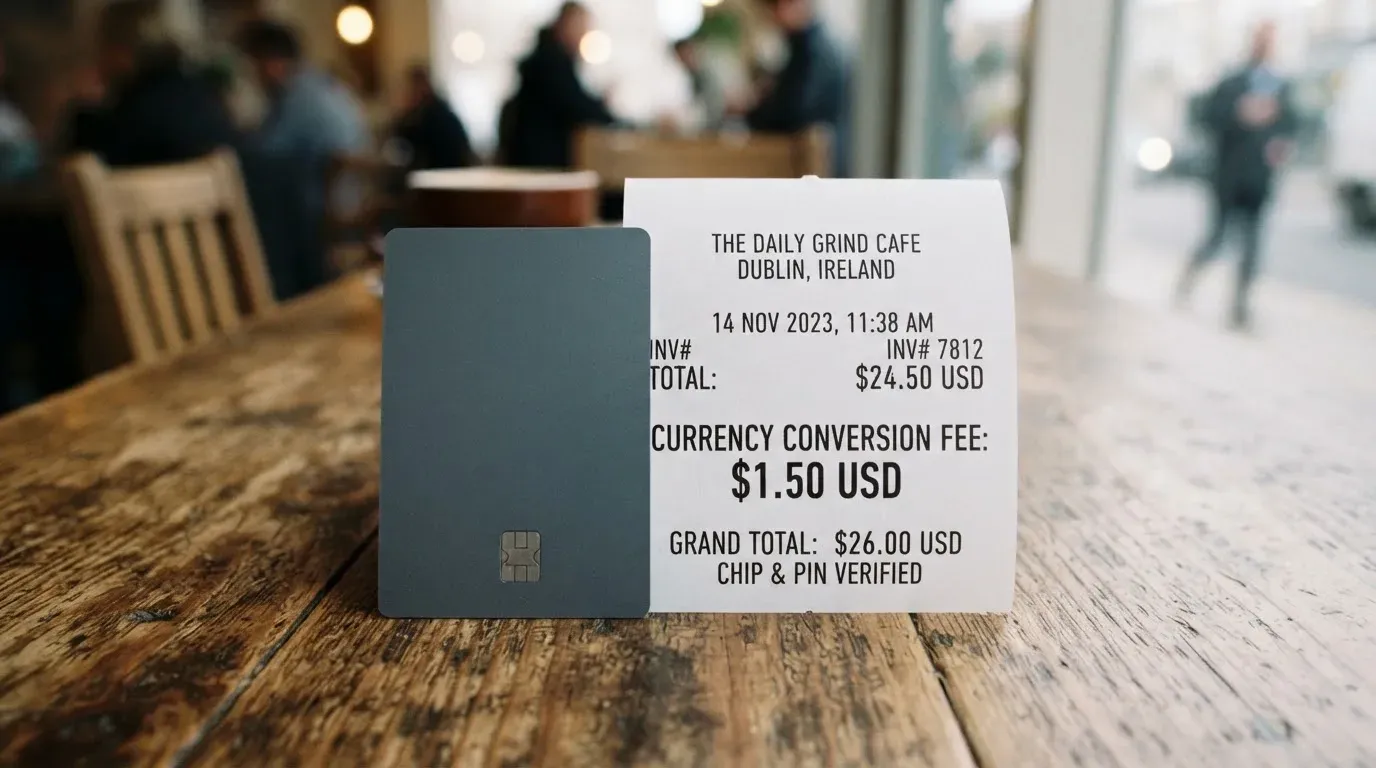
| Per-transaction fee | “Minimal fee for each transaction”, amount not stated; “no additional MetaMask fees” | Same |
| Foreign transaction fee | None; Mastercard rate used | Same |
| Card spend limit | $15,000/day | $30,000/day |
| ATM limit | $1,000/day | $5,000/day |
| Free ATM allowance | “Up to $1,200/mo” (tier unclear) | Same, tier unclear |
| Cashback | 1% | Headline 3%; footnote caps 3% at the first $10,000 spent, then 1% |
| $FLY bonus | 5X | 7X |
Three limits deserve a caveat. An older FAQ version states an ATM for Metal and US Virtual users only, which conflicts with the ATM limits shown on the card page; another older FAQ cites 8,750 EUR or 10,000 USD per day against the $15,000 and $30,000 on the card page. The card page is the newer document, but a limit that appears in two versions of the same FAQ is a limit worth confirming for yourself before you rely on it. You can set your own daily, weekly and monthly limits, which is the practical answer to all of this.
Now three everyday payments, and which fees actually apply.
Coffee, 4 EUR, in a eurozone country. You spend from tokens delegated to the card. The per-transaction “minimal fee” applies. No foreign transaction fee, because there is no conversion. Cashback is 1% on Virtual, credited in mUSD.
A $40 online subscription billed in USD while your balance is in euros. The Mastercard rate is used and MetaMask adds no conversion fee, but the per-transaction fee still applies on top. If the merchant also runs an address verification check — which compares the numeric parts of your billing address with issuer records and is generally unavailable for foreign-issued cards — that is a decline risk that has nothing to do with your crypto. Some merchants also decline prepaid or foreign BINs because the issuer country is visible in the card’s identification number.
Withdrawing $200 in cash. The ATM limit of $1,000/day on Virtual or $5,000/day on Metal applies, and there is a free allowance stated as up to $1,200 a month with the tier unclear. Here the official FAQ’s older statement bites: cash withdrawals are described there as available only to US card users, which does not match the card page’s ATM limits at all. And regardless of the fee table, the underlying network charges for a blockchain withdrawal on your side — those gas or bandwidth fees come from the chain, not from the card.
One more number, because third-party comparison sites publish it and you will meet it: a 2026 third-party summary lists monthly, issuance, ATM, FX, top-up and decline fees as free. That contradicts MetaMask’s own “minimal fee for each transaction” and the $199 Metal charge. Where a third-party table disagrees with the issuer’s own pages, the issuer’s pages win.
How to Top Up
There is no preloading. You do not buy a balance; the card draws on tokens delegated to it from your connected wallet, and the card balance screen shows the highest-priority token set you can manage under Manage.
Supported networks are Linea, Base, Monad and Solana. Tokens named on the page are mUSD, wETH, EURe, GBPe, USDC and USDT, though the page says there are nine — so the list you see in the app may be longer than the one published.
Two constraints stand out. A Solana-only wallet cannot withdraw credit. And withdrawals go out as mUSD: Money Account holders receive it as Monad mUSD into the vault, everyone else as Linea mUSD to a priority EVM address. Monad withdrawals have sponsored gas, so that leg is not where your money leaks.
The MetaMask limits-and-fees support page returned no figures for network fees, deposit fees or minimum top-ups, and no fiat top-up is described. That is a real gap: you are spending from a self-custody wallet, and the on-chain cost of getting value onto the right network is yours to price, not the card’s.
The reason this design is worth understanding at all is the category logic behind it. A prepaid card draws on a stored balance; a standard debit card asks your bank for money at the moment of purchase. Many crypto cards behave like the prepaid model — crypto converted and loaded as fiat. MetaMask skips the load. Your tokens stay in your wallet until the payment happens, which also means the exchange-rate slippage and the balance risk both sit on you.
Paying With It Every Day
The mechanics of daily use are the strongest part of this card. Apple Pay and Google Pay are supported, and the card is managed inside the MetaMask app. The blocked-merchant-category list is not stated — a gap worth knowing about if you expect to use it anywhere unusual, because merchants are classified by a four-digit merchant category code assigned when the business starts accepting cards, and gambling sits under one such code that many issuers block by policy rather than by law. Which of those codes MetaMask blocks is not on the pages I read.
Rewards are straightforward. Cashback is paid in mUSD into the Money Account: 1% on Virtual; on Metal the headline is 3%, with a footnote capping 3% at the first $10,000 spent and dropping to 1% after that. Read the footnote rather than the headline. There is also a $FLY bonus at 5X on Virtual and 7X on Metal through the Blackbird dining app, and Metal holders can opt into a 90-day Club Regular trial.
Refunds and disputes have a defined path that is worth memorising before you need it. You ask the merchant for a refund first. If that fails, you request a chargeback from Crypto Life support. Refunds go to the Credits balance. That last clause is the single most repeated complaint I found, and it is the one to think about hardest: a refund from a merchant is not necessarily a refund to the card that paid.
One more general hazard, not specific to this card: a declined authorisation can leave a hold on your funds for several days, typically up to seven. Budgeting around a declined payment matters more than the fee did.
What Can Go Wrong
Complaints are the weakest mark on my scorecard, so let me be specific rather than vague.
Officially, MetaMask notes the temporary US and UK sign-up pause, limited Metal availability, and FAQ versions on limits and ATM that contradict each other and the card page. It reads no user reports itself. What follows is community and third-party reporting, and it is the substance of why I scored reliability 4.
- Refunds parked in Credits. Card-specific reports in 2026 describe merchant refunds landing in a Crypto Life “Credits” balance rather than back where you could spend them.
- Tickets circling. The same reports describe support tickets looping through automated replies, with slow responses and copy-paste emails and no live chat — unofficial, from a third-party card comparison site in 2026.
- Cashback erosion. Bridging to Linea or Base can eat into cashback, which is a structural cost of the delegation model rather than a bug.
- Cards frozen at limits. Community posts describe cards freezing at lifetime transaction limits until a manual upgrade, and account closure for inactivity.
- Slow delivery. A physical card promised in two weeks arriving after more than a month — one App Store reviewer, unofficial.
Behind all of it is a structural point about who is actually responsible. The payment network routes messages and sets rules, the issuer holds the card programme under the network’s licence, and the crypto brand is often only a programme manager and front end. Here that means Mastercard routes, Monavate issues, Crypto Life provides and handles KYC and support, and MetaMask markets it. The site footer reads “Copyright 2026 Consensys, Inc.” but the FAQ does not say Consensys provides the card. So when a refund stalls, you may end up negotiating with a company whose name is not on your card. One unofficial community post names Monavate Limited as the FCA-regulated entity for UK complaints; the issuer’s registered country and licences are not stated on MetaMask’s pages.
The self-custody design also cuts both ways, and honesty requires saying so. Your keys stay with you, and MetaMask can freeze or replace the card instantly in-app while your funds stay in the wallet, with the Virtual card left active for subscriptions. That is a genuinely good posture. But a seed phrase — typically 12 to 24 words — is the private key in unencrypted form, anyone who gets it can restore the wallet and spend it, and blockchain transfers are typically irreversible with no built-in recovery path. Control and burden move together.
Two further exposures sit outside the card entirely. A deposit sent on a network the provider does not support, or to an address of another network, can be lost. And Tether states it disables tokens in wallets on the OFAC sanctions list and has frozen funds tied to illicit activity, so stablecoins are not censorship-proof. Insurance is not stated. Age is not stated. Processing time, KYC rejection reasons and KYC levels are not stated.
If a payment goes wrong in the other direction, there is recourse: a chargeback is a refund ordered by the issuer, with reason codes such as fraud, duplicate billing or goods not received. US debit reversal rights come from Regulation E, credit card rights from Regulation Z, and prepaid-card coverage varies and should not be assumed. Note that the debit framework assumes a linked bank account, which is not quite what you have here.
I should say plainly what this review is not. I am not telling you how to get past an identity check, a sanctions list or a country rule, and nothing here should be read as advice on what to declare to anyone. If your question is tax, that is a conversation with a professional in your own country, though one general fact is worth knowing: digital assets are generally treated as property, so exchanging them for goods or dollars produces a taxable gain or loss measured in local currency at the fair market value on the date of the transaction, which makes each card payment its own disposal.
What to Take Instead
If your reason for looking at a crypto card is that an ordinary bank card is hard to get — and that is the situation this card genuinely solves for many readers — then the honest comparison is not only between crypto cards. It is between a crypto card and a plain prepaid or debit card from a regulated e-money institution, which will be duller, cheaper in surprises and far easier to reason about. What you give up is spending from a self-custody wallet. For most people who are not already holding crypto, that is a good trade.
Against the crypto-card field specifically, here is how the three main alternatives I checked line up. All three scored 6.1–6.7 in my assessment, below MetaMask’s 7.1.
| MetaMask | KAST | Zeal | Rizon | |
|---|---|---|---|---|
| My score | 7.1 / 10 | 6.1 / 10 | 6.1 / 10 | 6.7 / 10 |
| Network | Mastercard | Visa | Visa | Visa Platinum |
| Membership cost | Virtual free; Metal $199/yr | Standard 0; Premium $1,000/yr; Private $10,000/yr billed annually upfront | Not stated on zeal.app or the App Store | Virtual/physical priced in app; Emerald subscription from $5.59/month |
| Non-USD conversion | No FX fee; Mastercard rate | 0.5%–1.75% depending on residence and country; 0.10 USD on non-USD transactions under 25 USD | No additional FX fee; Visa wholesale rate | 1.7% + $0.1 non-USD; Emerald rate stated as 1.02% but the page is garbled — verify |
| Custody | Self-custody; spends from your wallet | Platform balance; stablecoin deposits converted 1:1 at 0% spread | Card Safe with EUR/USD/GBP accounts | Not stated |
| Cashback | 1% Virtual; 3% Metal to the first $10,000 | 1.5% / 2% / 3% by tier on capped monthly spend | Up to 4%, paid in GNO, which must be held in the card Safe | 2.5% on eligible purchases |
| Key catch | Per-transaction fee with no stated amount; contradictory limit pages | Premium and Private membership costs are steep; declined transaction 0.50 USD | Rates can change; GNO holding requirement | Funding coins and networks not stated; fee page not read |
A few patterns stand out. KAST publishes real numbers, including the uncomfortable ones — a $0.50 fee for a declined transaction and a $1/month inactivity fee after 12 months — but its upper tiers cost thousands a year, and its own terms conflict: the terms say acceptable tokens are “currently USDT and USDC” while the app lists PYUSD and RLUSD too. Zeal is the quiet one: no extra FX fee, spending in 150+ countries, accounts in EUR, USD and GBP. What you cannot assess is the cost, which is not published on its site or its App Store listing. Rizon targets people living in and domiciled in the US or LATAM, publishes a 1.7% non-USD fee plainly, and leaves the coin and network list unstated.
If you are already deep in self-custody, MetaMask’s advantage is specific and hard to copy: it spends straight from your own wallet on four networks with no pre-loading step. If you are comparing on published clarity alone, KAST wins. If you want the least conversion markup, Zeal.
Who I Would Recommend It To
I would recommend the MetaMask card to people who already run a self-custody wallet in Europe, Latin America or Canada, who can afford to read the fee table inside the app before their first purchase, and who treat spending crypto as an operation with steps rather than a tap.
I would not recommend it as a first card, as your only card, or if you need the physical one immediately. I would not recommend it to anyone who has been turned down by a bank for a crypto-linked transaction and is hoping this is the workaround — it is a Visa-and-Mastercard card with a crypto funding rail, and the merchant’s view of it is exactly the same as any other card from an unfamiliar issuer.
And if you are in the United States or the United Kingdom, start from the assumption that sign-ups are closed.
Frequently asked questions
What is the MetaMask card?
It is a Mastercard payment card, available as a free Virtual card or a $199-a-year Metal card, that spends crypto directly from a wallet you control rather than from a pre-loaded platform balance. MetaMask issues it through the card provider Crypto Life, with Monavate as the issuer. Spending happens on the Linea, Base, Monad and Solana networks, and cashback arrives in mUSD.
Is MetaMask a bank?
No. MetaMask is a crypto wallet company — the site footer names Consensys, Inc. — and it markets the card. The card itself is issued by Monavate and provided by Crypto Life. The site footer is not the same statement as Consensys providing the card, and the FAQ does not say that it does. If you need a bank, this is not one.
Who can get the MetaMask card?
Sign-up is open in 45 listed countries and territories, including Andorra, Argentina, Austria, Belgium, Brazil, Canada, Chile, Colombia, Cyprus, Denmark, Finland, France, Germany, Greece, Ireland, Italy, Luxembourg, Malta, Mexico, Netherlands, Norway, Panama, Poland, Portugal, Romania, Slovakia, Slovenia, Spain, Sweden, Switzerland and Uruguay. Proof of residence is required. Sign-ups in the US and UK are temporarily closed; other regions use a waitlist.
How much does the MetaMask card cost?
The Virtual card is free, with no annual or maintenance fee, and no foreign transaction fee. Metal costs $199 a year. Every transaction carries a “minimal fee” whose amount is not stated on the public pages — you would need to check inside the app. An unofficial 2026 third-party summary lists all fees as free, which contradicts MetaMask’s own pages, so I would not plan around it.
Do I need to top up the MetaMask card?
There is no preloading. The card spends tokens delegated to it from your connected wallet, and the balance screen shows the highest-priority token set under Manage. You can manage your own daily, weekly and monthly limits. No fiat top-up is described, and network fees, deposit fees and minimum top-ups are not stated on the support page.
Can I use the MetaMask card in Apple Pay and Google Pay?
Yes, both are supported. The Virtual card is issued instantly and works in-app without any physical card being mailed. Metal adds a physical card that ships to a verified address, and Metal holders can opt into a 90-day Club Regular trial. Delivery times and replacement costs for Metal are not stated.
Which countries and networks does the MetaMask card work in?
You can spend in ineligible regions — MetaMask says ineligible regions limit sign-ups, not spending. The networks it draws on are Linea, Base, Monad and Solana, with mUSD, wETH, EURe, GBPe, USDC and USDT named on the page, which says there are nine tokens. A Solana-only wallet cannot withdraw credit, so keep an EVM wallet connected.
Is the MetaMask card safe?
Your keys stay in your own wallet, and you can freeze or replace the card instantly in the app while the Virtual card stays active for subscriptions. That is the strong side. The weak side is support: reports describe refunds stuck in a Crypto Life “Credits” balance, tickets looping through automated replies, and cards frozen at lifetime limits. Funding sources are not stated, and blockchain transfers are typically irreversible.
What are the MetaMask card’s limits?
The card page lists $15,000 a day on Virtual and $30,000 a day on Metal, with ATM limits of $1,000 and $5,000 a day and a free ATM allowance of up to $1,200 a month with the tier unclear. Older FAQ versions give different figures — 8,750 EUR or 10,000 USD a day, and cash withdrawals only for US card users. Because the official pages disagree, set your own limits low until you have confirmed yours.
Is the MetaMask card worth it?
For someone already holding crypto in self-custody in Europe, Latin America or Canada, the 1% or 3% cashback and the no-preload design make it worth setting up. If you want predictable banking rather than crypto spending, a regulated e-money prepaid card is the better buy. Weigh the free Virtual card against the $199 Metal card carefully: the main differences are the spend limit, ATM limit and cashback rate.
Wallet cards – cryptocardbasics
Content created by the «cryptocardbasics» team