
The PEXX card is cheap to hold and quick to spend from, but its 0.6% transaction fee and unclear issuance pricing make it a specialist tool rather than a mainstream one.
 Available in US
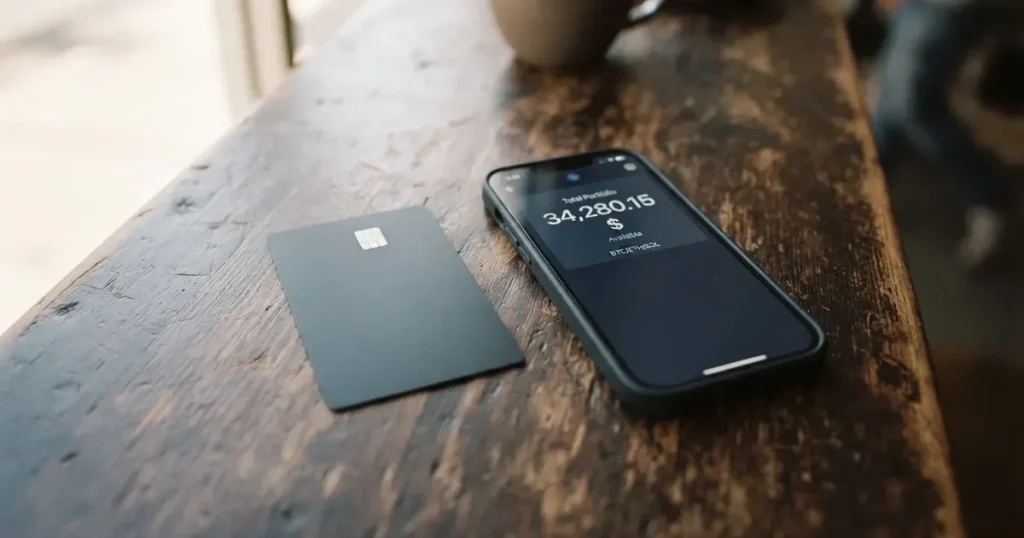
The PEXX card is a crypto payment card aimed at people who already hold dollars or stablecoins and want to spend them like ordinary money. It scores 6.8 out of 10 in my assessment: good enough at the mechanics, weak at the disclosure. If you keep dollars or stablecoins, want high spending limits, and mostly pay in USD, it will do its job. If you want a card with no percentage charge on every purchase, or you want to know exactly what it costs to open one, the numbers here will irritate you. The 0.6% platform fee on every transaction is not small, and the price of issuing the card is not published.
The conditions described below are current as of October 28, 2026.
Verdict: 6.8 out of 10
Six point eight is a middling score, and that is exactly what PEXX is: a competent instrument with real gaps in the paperwork. It does the core things well — the card arrives fast in virtual form, the spending limits are high, the Apple Pay and Google Pay path exists — and it charges a percentage on every purchase that is easy to understand once you have read it, and annoying forever after.
| Criterion | Mark | Why |
|---|---|---|
| Who can get it | 7 / 10 | Availability follows your country of residence: across Europe, Australia, Japan, Latin America, Africa, the UAE, Georgia, Kazakhstan and others |
| Cost | 6 / 10 | A 0.6% platform fee on every transaction and a 1.2% markup on non-USD payments; the issuance fee is not disclosed |
| Top-up options | 6 / 10 | USD, USDT and USDC; the blockchain networks are not named; the USD account is funded through ACH, Fedwire and SWIFT |
| Reliability and complaints | 7 / 10 | PEXX Technology Pty Ltd holds AUSTRAC DCE and FinCEN MSB registrations; the partner bank is not named; Trustpilot shows 3.5 out of 5 on 3 reviews, with complaints about fees above the stated ones |
| Everyday use | 8 / 10 | Physical and virtual cards, Apple Wallet and Google Pay; cash-point terms are not disclosed |
Total: 6.8 / 10.
So who is it for? In the first place, for someone holding dollars or stablecoins who needs high spending limits — the PEXX card’s stated limit of $30,000 a day and $70,000 a month is genuinely more than most retail cards offer, and for someone whose income arrives in crypto and whose normal bank has declined them, that headroom matters. It is also for anyone comfortable with a balance you top up in advance, because that is how this card works: it draws on money already loaded, not on a credit line.
It is not for the person who wants to spend an ordinary salary from a linked current account, because there is no such link. It is not for someone who wants the card to be free to open, since the issuance fee is not disclosed. And it is not for anyone whose main spending is outside the United States, where a 1.2% markup on top of the 0.6% platform fee adds up quickly.
Who they will give you the card to
Yes, in most countries — but the rule is your country of residence, and the list is long and specific.
PEXX publishes its availability by where you live. The card’s pages say availability follows country of residence, and the countries they name fall into these groups:
- Europe, roughly 35 countries and territories, including the UK, France, Germany, Italy, Spain and Switzerland
- Asia-Pacific: Australia, Japan, Macao, Malaysia, the Philippines, South Korea, Taiwan, Thailand
- Latin America: Argentina, Brazil, Chile, Colombia, Ecuador, El Salvador, Mexico, Panama, Peru
- Africa and the Middle East: Bahrain, Ghana, Kenya, Nigeria, South Africa, Uganda, the UAE
- The Caucasus and Central Asia: Azerbaijan, Georgia, Guernsey, the Isle of Man, Jersey, Kazakhstan, Moldova, Ukraine, Uzbekistan
What the card does not do is publish an eligibility or exclusion list. There is no stated rule about age, no stated minimum balance, no stated proof-of-address requirement, and no stated disqualification list to check yourself against before you apply. That absence is worth pausing on: you cannot pre-qualify from the public pages, so the only way to find out whether you are eligible is to try.
The line that matters most for you is that availability is keyed to residence, not citizenship. Those are different things in practice, and a card that decides by residence will usually want an address document that matches. Where a card is not offered, there is no waiting list mentioned; it simply is not available.
How to get it
You need a valid ID and a phone number. That is the stated requirement — and for the U.S. virtual bank account specifically, the card also requires “level 1 KYC”. Proof of address and age requirements are not stated.
Two things about this step catch people out. First, level 1 KYC is not a formality you skip; it is tied to the US account feature. Second, there is an extra identity check specifically to activate the card, which is separate from opening the account.
Once you are in, the sequence runs like this:
- Apply in the app or online, with a valid ID and phone number
- An application usually sits at “In Review” for 1–2 business days; rejection reasons are not listed, so a refusal will not necessarily come with an explanation
- Pass the extra identity check to activate the card
- The virtual card is instant — available within 1 minute after a confirmed deposit, and usable online as soon as you have it
- The physical card, PEXX Physical, is loaded with USD and stablecoins and arrives later; its delivery time, delivery cost and replacement cost are not stated
The card page title carries both Visa and Mastercard. The currency of the card is USD by implication rather than by explicit statement, so do not read that as a guarantee.
My honest read on the signup flow is that it is fast once you are inside it and slow to tell you anything useful before you are inside it. Two business days of “In Review” with no published reasons for rejection is not a great experience if something is wrong with your documents. If a bank has already turned you down once, this may still be your way in — but you will not find out from a published eligibility list.
Fees: what it really costs
The honest answer: 0.6% on every card payment, plus 1.2% if you spend outside dollars, plus an issuance fee the card does not publish.
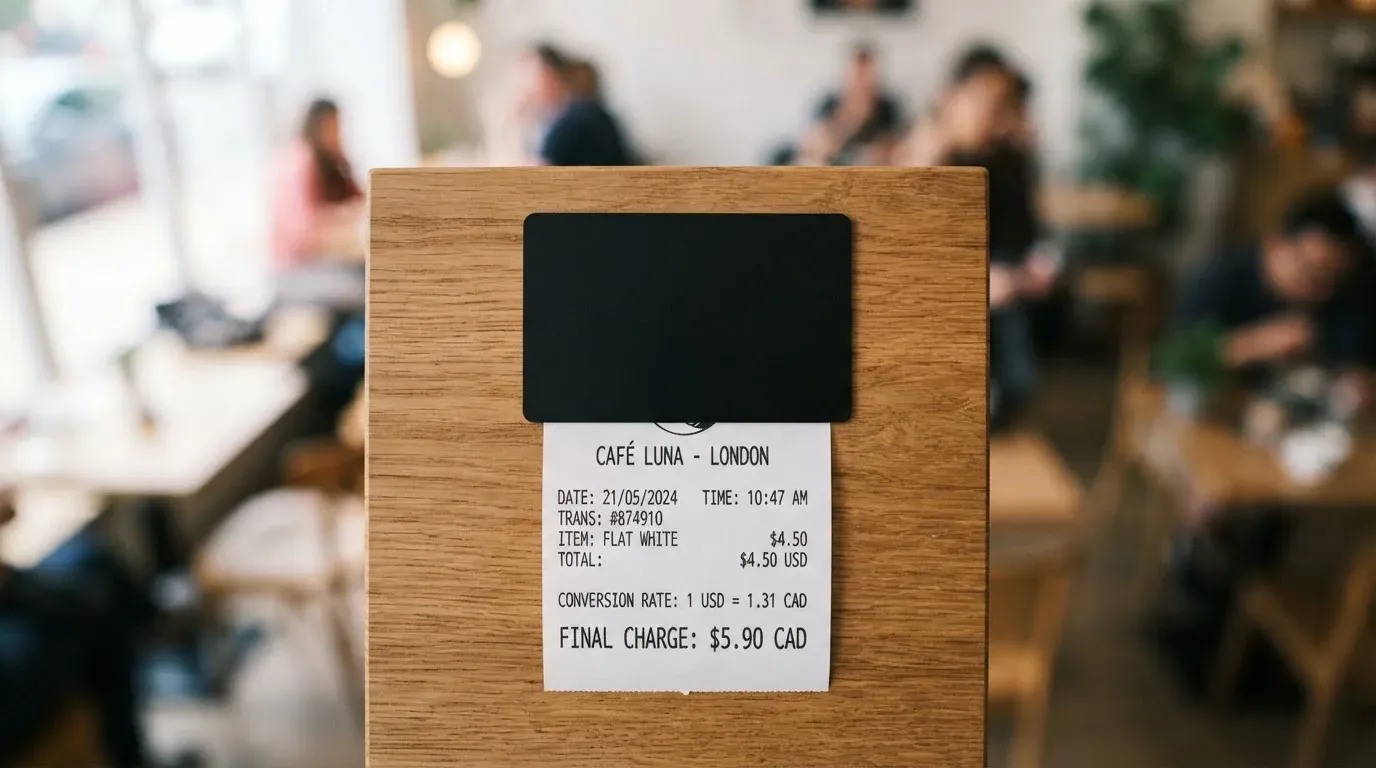
| Item | Fee or limit as stated |
|---|---|
| Card issuance | Not stated |
| Monthly fee | Not stated |
| Platform fee, every card transaction | 0.6% |
| Non-USD purchases, FX markup | 1.2% |
| Stated pricing basis | “True mid-market pricing” |
| ATM / cash withdrawal | Not stated |
| Daily spending limit | $30,000 per day |
| Per-transaction limit | $30,000 per transaction |
| Monthly spending limit | $70,000 per month |
| Spending limits | “There are currently no spending limits” |
Three everyday payments, and what each one costs you:
Coffee in New York, $5. You pay 0.6% of $5 — about 3 cents — and that is it. In dollars with no conversion, the fee is genuinely small, and this is the case PEXX handles best.
A €40 dinner in Berlin. Two charges land. The 0.6% platform fee is about 24 cents, and the 1.2% FX markup on the non-dollar purchase is about 48 cents. Together, roughly 72 cents on a €40 spend. It is not ruinous, but it is no longer the cheap coffee case.
A $900 online purchase. The platform fee alone is $5.40. On a large payment that is visible enough to notice, and it is the single biggest reason people with an ordinary bank card do not switch.
The two figures that would change the calculation are the ones the card will not tell you: what the physical card costs to issue, and what cash withdrawals cost. Both are “not stated” on the public pages. If ATM access matters to you — which for many people who cannot get a normal card is precisely the point — that silence is the biggest obstacle to deciding.
There are no tiers to negotiate. No paid plan, no premium product, no volume discount. There are two products, PEXX Physical and PEXX Virtual, and one fee schedule.
How to Top up the card
Three ways in, and one of them is much slower than you would like.
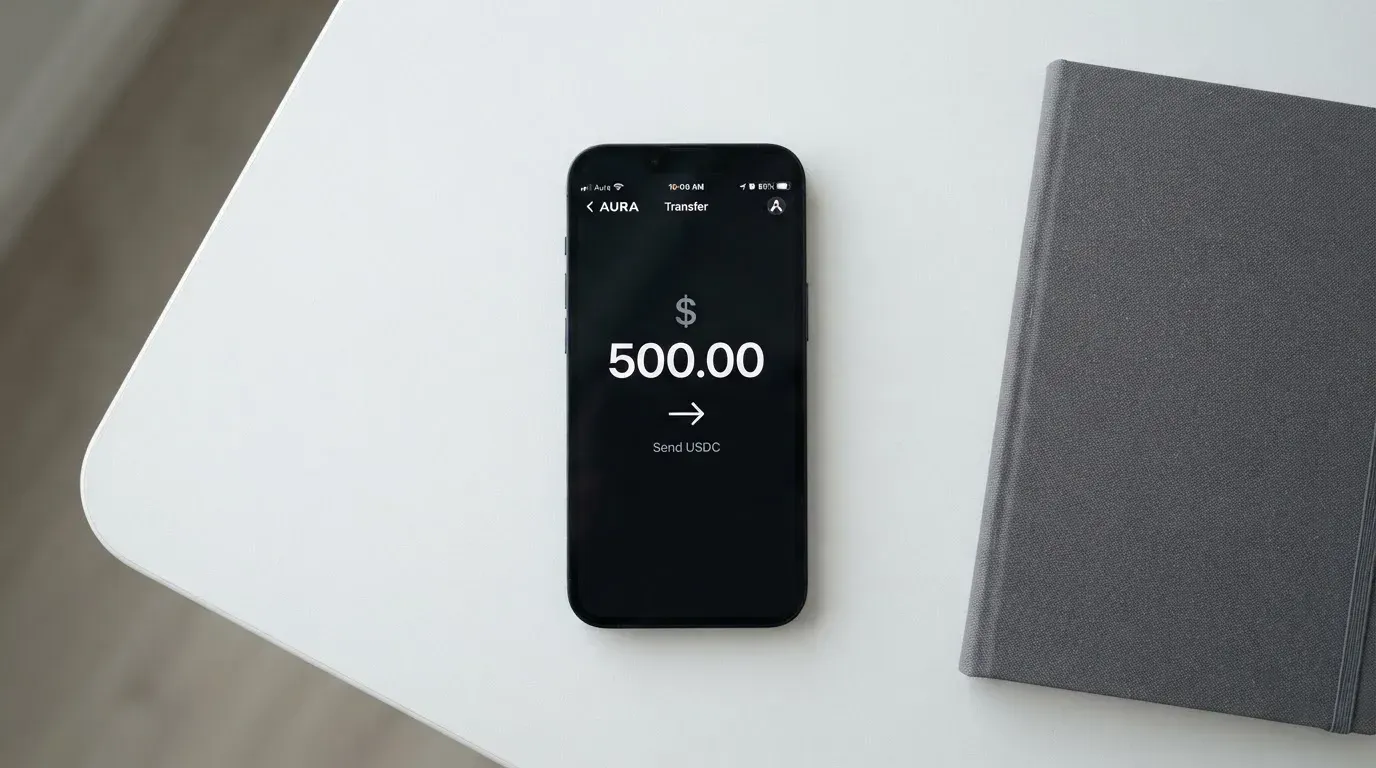
You can fund the card with USD, USDT or USDC. For the USD account, deposits come through three rails, and the card is honest about the timing:
| Method | Stated time |
|---|---|
| ACH | 1–3 US business days |
| Fedwire | A few hours to 1 business day |
| SWIFT | 1–5 US business days |
No deposit fee is listed. That is the good news. The thing to watch is that the blockchain networks for USDT and USDC are not specified — which network your token must arrive on is exactly the detail people get wrong.
That last point deserves more than a line, because it is the most common way a top-up goes wrong. Stablecoins exist on many networks, and a transfer sent on a network the provider does not support, or to an address belonging to a different network, can be lost or need manual recovery with no guarantee. If you are depositing USDT or USDC, confirm the network and the address in the app before you send. This matters especially because USDC on Tron is not a native option — Circle stopped supporting it in February 2024 — so “USDC over TRC20” is not something you can assume will work.
The minimum top-up for the card is not stated. If you are funding from an exchange, check the network it will send on before you withdraw.
Separately, there is PEXX Earn, which pays daily interest tied to U.S. Treasury bill rates and has no minimum balance. Funds in Earn “can withdraw anytime”. How a withdrawal from the card balance itself works, and what happens to a balance if you close the account, is not stated — the card has a withdrawal section in its help centre, but the treatment of closing is not published. If you are planning to move money through this card, ask that question before you load it, not after.
Paying with it every day
This is where PEXX scores best. Physical and virtual cards, both networks, and the phone wallets work.
In practice the daily routine is simple. You add the card to Apple Wallet or Google Pay from the Cards tab in the app, confirm with a one-time password by email or SMS, and then tap to pay. Adding to a wallet replaces your card number with a device-specific number held on the phone, and each payment uses a one-time code — that is how tokenised wallet payments work generally, and it is why adding to a wallet is safer than waving the physical card.
What is not stated is as relevant as what is. Apple Pay and Google Pay support is not described in the card’s fee pages, and the list of blocked merchant categories is not published. That last omission is the one I would want answered before I relied on the card: casinos, betting and lottery businesses carry a specific merchant category code, and many issuers block those on crypto cards by policy rather than by law, with the blocked list differing from issuer to issuer. If gambling or adult-adjacent spending is part of your life, you will not find out from these pages whether it works.
One more small signal, worth taking with a pinch of salt. The Australian App Store listing of the app shows 5.0 out of 5 — but on 3 ratings, version 3.6.2, requiring iOS 16.0 or later, English only. Three ratings is not a track record; it is a rounding error that happens to look good. The Google Play app exists but its rating was not read.
The mobile wallets do not fix address verification. Address verification compares the numeric parts of a billing address you type with the issuer’s records, and it is mainly offered in the US, Canada and the UK. For a foreign-issued card it is often unavailable, which causes declines at checkout for reasons that look inexplicable. That is a general property of cards issued in one country and used in another, not a PEXX fault, but it will land on you if you are somewhere new.
What can go wrong
Four things stand out, and the complaints are the most concrete of them.
Fees higher than advertised. This is the recurring user complaint. Trustpilot shows PEXX at 3.5 out of 5 from 3 reviews. A January 2026 one-star review says fees were higher than advertised, naming a “0.5$ per transaction” charge and deductions that appeared without a transaction history. A December 2025 five-star review praises the fees and the speed. Two reviews praising or criticising the same thing is not a sample — but the specific claim, an extra fifty-cent charge per transaction on top of the stated percentage, is the kind of thing that would make the 6/10 cost score feel generous if it is true. Treat it as an unverified user report, not as established fact.
Deposits that go wrong. One user report describes a failed crypto deposit with only a partial refund. This sits alongside the general risk that a transfer on an unsupported network, or to a wrong-network address, can be lost or need manual recovery without guarantee. Crypto transfers are essentially irreversible, and there is no mechanism to freeze or return them.
No named bank. The issuer is described only as a “partner bank” or “licensed partners” — no bank is named on the public pages. The company behind the card is PEXX Technology Pty Ltd, an Australian entity, registered with AUSTRAC as a digital currency exchange and remittance dealer, and with FinCEN as a money services business. Those registrations are real and checkable, and they mean the business is regulated and accountable. But the bank that actually issues the card sits behind a generic phrase, and that is a real limit on how much you can verify.
Deposits are not deposits. USD deposits are held with licensed partners and are explicitly not FDIC-insured. That is normal for this category — an e-money balance is not a bank deposit and is not covered by a deposit guarantee scheme — but it is a different thing from insured money, and worth being clear about.
On the other side: no dated enforcement action or scandal surfaced against the company; PEXX says it follows AUSTRAC guidelines and runs an anti-money-laundering and counter-terrorism-financing programme with enhanced due diligence; the app has bank-grade encryption and real-time alerts, and in-app payment approval; help is available in the app or by email, with an FAQ site and social channels. Support hours are not stated, and the site is English only — no Russian, which matters if that is your first language.
The category’s own history is worth knowing too. Card programmes do close: Visa terminated its global agreements with FTX in November 2022, and the FTX US debit card was wound down; WaveCrest, a Visa issuer that supplied crypto card brands, was suspended by Visa in Europe in 2018, closing all its Visa programmes. Closures typically run in a fixed order: a notice period, then spending and loading stop, then you are asked to withdraw remaining balances. PEXX is a young operation, and the rate at which crypto card programmes fail is not something any of them advertise.
What to take instead
Three comparable options, each with a different trade-off. I have used the same lens on each — who can get it, what it costs to open, what a payment costs.
| Option | Score | Opening cost | Payment cost | Main trade-off |
|---|---|---|---|---|
| PEXX | 6.8 / 10 | Not stated | 0.6% per transaction, 1.2% on non-USD | Generous limits, undisclosed opening cost |
| RedotPay | 6.9 / 10 | Virtual 10.00 USD; physical 100.00 USD | 1.00% conversion, 1.20% non-default currency | Everything is published, including the harsh parts |
| Wirex | 6.7 / 10 | Free in the UK, EEA, APAC, SG, AU; metal card 45 GBP | No FX fee stated; exchange rate varies and is shown in the app | No annual or FX fee claimed, region-dependent card availability |
| Bitpanda | 6.5 / 10 | Free, first shipment free; reissue EUR 5.90 | FX fee EUR 0, but Visa mark-up applies | Euro-area residents only; one active card |
RedotPay publishes everything, which is a strange kind of comfort. Virtual card application costs 10.00 USD, physical card application costs 100.00 USD and is not cancellable or refundable once paid, with account maintenance waived — no monthly or annual fee, no inactivity fee mentioned. Transactions cost 1.00% conversion, waived in the default currency, and 1.20% in a non-default currency. Small authorisations of 1.00 USD or less have the first five per card per month waived, then 0.2 USD; declined transactions have the first three per month waived, then 0.5 USD. Some merchants add 1.5% with a 0.50 USD minimum, first three per month waived. There is a 5 USD welcome reward usable only on spending, valid 30 days — and it cannot be applied toward the issuance fee. And it is stricter than PEXX about who it serves: two official lists word the rule differently, one of them a KYC list of excluded countries and one a card-issuance list that adds India, Indonesia, Morocco, Nepal, Singapore and Turkey, where residents of those areas are ineligible for both virtual and physical cards and cannot use those addresses as billing addresses. Note the contrast: PEXX does not publish such a list.
Wirex is the one to consider if your objection to PEXX is the 0.6%. Card issuance is free in the UK, EEA, APAC, Singapore, Australia and “Other”, and the card page claims no annual or foreign exchange fees. The catch is that its availability “depends on your region” — which region gets which card is not fully fixed in advance, the exchange rate varies by pair and liquidity and is shown in the app before you confirm, and there is a one-off administrative fee of 30 GBP for accounts violating the general terms. Its cryptoback runs 0.5% on Standard, 3% on Premium, up to 8% on Elite.
Bitpanda is the narrowest. It requires a verified account and residence in a euro-area country, issues a physical Visa debit card in EUR only, one active card at a time, and spends from a chosen asset converted to EUR at payment. Its cashback figures are inconsistent between the body text and the summary — 1% versus “up to 2%” — which is a small but telling detail.
The pattern across all four is worth naming: none of them is dramatically cheaper than the others, and the real difference is disclosure. RedotPay is the most transparent and the most expensive to open. PEXX is the most open on limits and the least transparent on fees. Wirex claims the lowest running cost and varies most by region.
Who I would recommend it to
I would recommend the PEXX card to someone specific: a person who holds dollars or stablecoins, needs spending limits well beyond what a normal retail card offers, is comfortable topping up a balance in advance, and does most of their spending in dollars. If that is you, the card does its job, the limits are the best in this group, and the 0.6% is a known quantity rather than a surprise.
I would not recommend it if any of these apply to you. You are planning to withdraw cash regularly, because ATM terms are not published and that is a dealbreaker. You want a card you can open without paying an undisclosed amount, and that is the entire offer here. You spend mostly outside the US, where 0.6% plus 1.2% adds up. You want to know which bank stands behind the card, and the answer on the public pages is a phrase, not a name. Or you need support in a language other than English, because there is only English.
And the general caution that applies to everyone reading this, whatever the score: this is an e-money balance, not a bank account. The USD you load is held with licensed partners and is not FDIC-insured. Funds in a prepaid-style balance can be drawn down by an issuer decision or a programme closure, and the crypto you convert is irreversible once sent. What a crypto card is good at is convenience and access; what it cannot be is a safe place to keep money you would be upset to lose.
Frequently asked questions
What is the PEXX card?
The PEXX card is a payment card that spends a balance you load in advance with USD, USDT or USDC. It comes as a physical card, PEXX Physical, and an instant virtual card for online use, with Visa and Mastercard named on the card page. It works like a prepaid card rather than a debit card: money goes in first, then the card spends only that balance, so it cannot overdraw.
How does the PEXX card work?
You load dollars or stablecoins, then the card spends that stored balance. A 0.6% platform fee applies to every card transaction, and 1.2% is added on purchases made outside USD. Card payments involve several parties: the network routes the payment, an issuer holds the card programme, and the crypto brand markets it. PEXX names only “partner bank” or “licensed partners” as the issuer.
Is PEXX a bank?
No — PEXX is not a bank. The company behind the card is PEXX Technology Pty Ltd, an Australian entity registered with AUSTRAC as a digital currency exchange and remittance dealer and with FinCEN as a money services business. Your USD balance is held with licensed partners and is explicitly not FDIC-insured, so it is not a bank deposit and is not covered by a deposit guarantee scheme.
Which countries can I use the PEXX card in?
Availability follows your country of residence, not citizenship. It is offered across about 35 European countries and territories including the UK, France, Germany, Italy, Spain and Switzerland; in Australia, Japan, Macao, Malaysia, the Philippines, South Korea, Taiwan and Thailand; across much of Latin America; in Bahrain, Ghana, Kenya, Nigeria, South Africa, Uganda and the UAE; and in Azerbaijan, Georgia, Guernsey, the Isle of Man, Jersey, Kazakhstan, Moldova, Ukraine and Uzbekistan.
How do I get the PEXX card?
You need a valid ID and a phone number, and the U.S. virtual bank account specifically requires “level 1 KYC”. Applications usually sit at “In Review” for 1–2 business days, with rejection reasons not listed. An extra identity check activates the card, and the virtual card is available within about 1 minute after a confirmed deposit.
Does PEXX require KYC?
Yes. A valid ID and phone number are required for the card, and the U.S. virtual bank account needs “level 1 KYC”. There is a separate identity check to activate the card itself. Proof of address and age requirements are not stated, so you cannot confirm from the public pages exactly what documents will be asked for.
How much does a PEXX transaction cost?
Every card transaction carries a 0.6% platform fee. Purchases made outside USD add a 1.2% foreign-exchange markup on top. The card also states “true mid-market pricing” as the basis. Card issuance, the monthly fee and ATM withdrawal charges are all not stated.
How do I top up the PEXX card?
You can deposit USD, USDT or USDC. The USD account is funded by ACH in 1–3 US business days, Fedwire in a few hours to 1 business day, or SWIFT in 1–5 US business days, with no deposit fee listed. The blockchain networks for USDT and USDC are not specified, so confirm the network and address in the app before sending, or the transfer can be lost.
Can I add the PEXX card to Apple Wallet or Google Pay?
Yes, from the Cards tab in the app, confirmed with a one-time password by email or SMS. Adding the card to a wallet replaces the card number with a device-specific number stored on the phone, and each payment uses a one-time dynamic code, which is why wallet payments are safer than handing over the physical card.
Is the PEXX card safe?
The company is registered with AUSTRAC and FinCEN and says it follows AUSTRAC guidelines with an anti-money-laundering programme, and the app uses bank-grade encryption with real-time alerts. But deposits are held with licensed partners and are not FDIC-insured, the issuing bank is not named, and some users report fees higher than the published 0.6% and unexplained deductions.
App and neobank cards – cryptocardbasics
Content created by the «cryptocardbasics» team