
A Visa debit card that draws on a crypto balance, useful where ordinary banking is closed off
 Available in US
RedotPay is one of the better-known crypto-to-card products on the market today. It offers a virtual and a physical Visa debit card tied to a balance you fund with stablecoins or other crypto, and it is available in a long list of countries. The product has real strengths: cheap top-ups, broad crypto support, and tight integration with Apple Pay and Google Pay. It also has real weaknesses: the issuer is not publicly named, the complaints picture is uneven, and the country restrictions are tighter than the marketing suggests.
This review is written for someone considering RedotPay because a regular bank card is not an option, or because they want to spend a crypto balance without first cashing out. I will walk through who RedotPay will accept, what it costs to run, how you fund it, what paying with it actually feels like, and where it has tripped up. By the end you should know whether this is the right card for you, and what to check before you sign up.
The information below reflects the card’s stated terms and published fees as of October 28, 2026.
Verdict
RedotPay earns 6.9 out of 10 in my scoring, which puts it in the upper half of crypto cards without reaching the top tier. The card’s strongest points are its breadth of supported countries and its everyday usability. Its weakest points are the trust gap created by an unnamed issuer and a steady stream of complaints about frozen funds.
In short, RedotPay is a good fit for crypto holders outside the restricted country list who want a virtual or plastic card, do most of their spending online or through mobile wallets, and are comfortable managing their own risk on a product where the issuer is not transparent. It is a poor fit for people who need the protection of a fully regulated bank behind their card, who live in a country where RedotPay has explicitly stopped issuing cards, or who cannot tolerate the possibility of a hold during a source-of-funds review.
Below is how I scored each criterion. The numbers are not changed from the underlying research; the reasoning is my own.
| Criterion | Score | Why it scored this way |
|---|---|---|
| Who can get it | 8 / 10 | 47 places are blocked from card issuance, but the rest of the world is open, and the company says 9 million users |
| Cost | 6 / 10 | 10 USD virtual, 100 USD physical, no monthly fee, but a 1% conversion fee, 1.20% non-default currency, and 2% ATM |
| Top-up options | 8 / 10 | On-chain crypto including USDT-TRC20 from 1 USDT, plus USDC and ETH; loading the card balance is free |
| Reliability and complaints | 4 / 10 | Issuer not named, programme manager is Redotpay Technology Pte. Ltd., and Trustpilot users report KYC-related freezes and slow support |
| Everyday use | 9 / 10 | Virtual and physical, Apple Pay and Google Pay, ATM worldwide |
| Total | 6.9 / 10 | A capable card held back by trust and complaints |
Will they give you the card
Two separate official lists govern who can hold a RedotPay card, and they are worded differently, so it is worth understanding both.
The first list is the KYC list, which RedotPay calls “Unsupported Countries/Regions.” If you are a citizen of any of these countries or regions, you will not be able to complete identity verification or use RedotPay’s services at all. The list covers Afghanistan, Albania, Belarus, Bosnia and Herzegovina, Bouvet Island, Burkina Faso, Burundi, Central African Republic, Congo (DR), Croatia, Cuba, Eritrea, Ethiopia, Guinea-Bissau, Haiti, Iran, Iraq, Kosovo, Lebanon, Liberia, Libya, Mainland China, Mali, Montenegro, Myanmar, Netherlands Antilles, Nicaragua, North Korea, North Macedonia, Russia, Serbia, Slovenia, Somalia, South Sudan, Sudan, Syria, Ukraine, United States, Venezuela, Yemen and Zimbabwe. The wording is important: this restriction is based on citizenship, not on where you live, and the rationale given is “local regulations and sanction policies, not on individuals.”
The second list, dated August 28, 2026, sets where cards can be issued. It adds India, Indonesia, Morocco, Nepal, Singapore and Turkey to the restrictions and says “Residents of these areas are ineligible for both virtual and physical cards,” and that those places also cannot be used as billing addresses. Citizenship is not mentioned here. The two lists overlap on Russia, Belarus, Ukraine and Serbia, but several places with sizeable crypto communities, including Georgia, Armenia, Kazakhstan and the United Arab Emirates, are on neither list, so they are open.
For a US citizen or a resident of one of the issuance-restricted countries, RedotPay is simply not available. For someone in the rest of the world, the next question is whether you meet the basic KYC requirements: minimum age 18, an original physical ID valid for at least three months from the date of submission, with both sides if the back carries any data, and a real current address. The app may ask for additional documents in JPG, PNG or PDF format, up to 10 MB. There is no separate proof-of-address requirement mentioned, but the address you enter must be your “true, current address in full.”
How to get it
The sign-up flow is straightforward. You install the RedotPay app, create an account with an email or through Google or Apple ID, complete identity verification, fund the account, open the Card section, and choose a virtual or physical card. The whole process is in the app; there is no separate web form to fill in.
A few practical points are worth flagging before you start. Your ID must be an original document, not a copy, a screenshot or a photo of a screen, and it must be valid for at least three months from the day you submit it. For a physical card, both the billing and shipping address need to be in English, and the cardholder name printed on the back of the card cannot be changed once the card is produced, so spell it carefully.
The verification process has only one documented level: identity plus address, with the system asking for extra documents if it needs them. The official processing time and the official grounds for rejection are not stated, so do not assume same-day approval.
There are two card types. The virtual card is a digital number you can use online or tokenise into a mobile wallet. The physical card is a Visa debit card in the Singapore terms, though the card page itself only says “leading card networks.” You can hold a USD card on a USD bank identification number or an HKD card on an HKD bank identification number, and the choice determines what currency the card settles in by default.
For the physical card, standard mail shipping is free; DHL Express is available at a cost that is calculated at checkout and varies by country. As of July 21, 2026, delivery is unavailable in the issuance-restricted places plus Egypt, Palestine and Tunisia, “due to logistical and customs constraints.” The actual delivery time is not stated.
Fees: what it really costs
The headline numbers look reasonable, but the everyday charges are where the cost story lives. Below is what RedotPay’s published fee table says, effective December 1, 2025.
| Fee or limit | Amount |
|---|---|
| Virtual card application | 10.00 USD |
| Physical card application | 100.00 USD (non-cancellable, non-refundable) |
| Virtual card replacement | 5.00 USD first, 10.00 USD each later |
| Account maintenance | Waived (no monthly or annual fee) |
| Transaction fee (crypto conversion) | 1.00% |
| Default-currency transaction | Waived |
| Non-default currency | 1.20% |
| Small authorisation (1.00 USD or less) | First 5 per card per month waived, then 0.20 USD |
| Declined transaction | First 3 per month waived, then 0.50 USD |
| ATM (USD card) | 2% up to 10,000 USD monthly, 3% above |
| ATM (HKD card) | 2.00% |
| Per-transaction limit | 100,000 USD |
| Daily limit | 1,000,000 USD (both BINs) |
| ATM: number of withdrawals | 3 per day, 30 per month |
| ATM: daily withdrawal | 23,000 HKD or 3,750 USD |
| ATM: monthly withdrawal | 75,000 HKD or 50,000 USD |
| USD card daily/monthly cap in some regions | 3,000 USD / 10,000 USD |
| Balance limit | Unlimited |
| RedotPay Pro subscription | 12.90 USD monthly or 129.00 USD annual |
Now let me walk you through what these fees mean in three everyday situations, because the published table does not always show where the costs actually land.
Buying a 50 USD coffee in your default currency. The crypto conversion fee of 1.00% applies, because your crypto is being converted into fiat at the moment of payment. If the merchant charges in USD and you hold a USD card, the default-currency transaction fee is waived, so the only charge is the 1% conversion. Your 50 USD coffee costs you 50.50 USD from your crypto balance.
Buying a 50 EUR item with a USD card. You pay the 1.00% crypto conversion, plus the 1.20% non-default-currency fee on the FX leg. On 50 EUR that means paying both the 1.00% conversion and the 1.20% non-default currency fee. For someone who buys abroad frequently, the 1.20% non-default currency fee is the line item that hurts most.
Withdrawing 200 USD from an ATM with the USD card. The 2% ATM fee applies, and the per-withdrawal cap is 3,750 USD a day, so a 200 USD withdrawal incurs a 4 USD charge. Note that the ATM fee is waived for annual RedotPay Pro subscribers, which is one of the few concrete benefits of the paid tier.
There is also a 5 USD welcome reward for new users, but the terms say it cannot be used toward the issuance fee, and it expires after 30 days. It is a small incentive on spending, not a discount on getting the card.
Finally, a quirk that catches people out: some merchants carry a separate 1.5% fee (with a 0.50 USD minimum), with the first three per month waived. The named merchants are Gulf Health Counsel, Free Fire, PUBG Mobile, Brawl Stars, eFootball, Facebook Ads and Discord. If you spend regularly on any of these, the 1.5% is in addition to the 1% conversion fee.
Top up: how to fund the card
Funding the card is one of RedotPay’s clearer areas. The app supports on-chain crypto deposits and, depending on your region, buying crypto inside the app with a credit card. The supported assets include ETH, USDC and USDT, and each asset is accepted only on the networks shown on the Deposit page. RedotPay reserves the right to change that list.
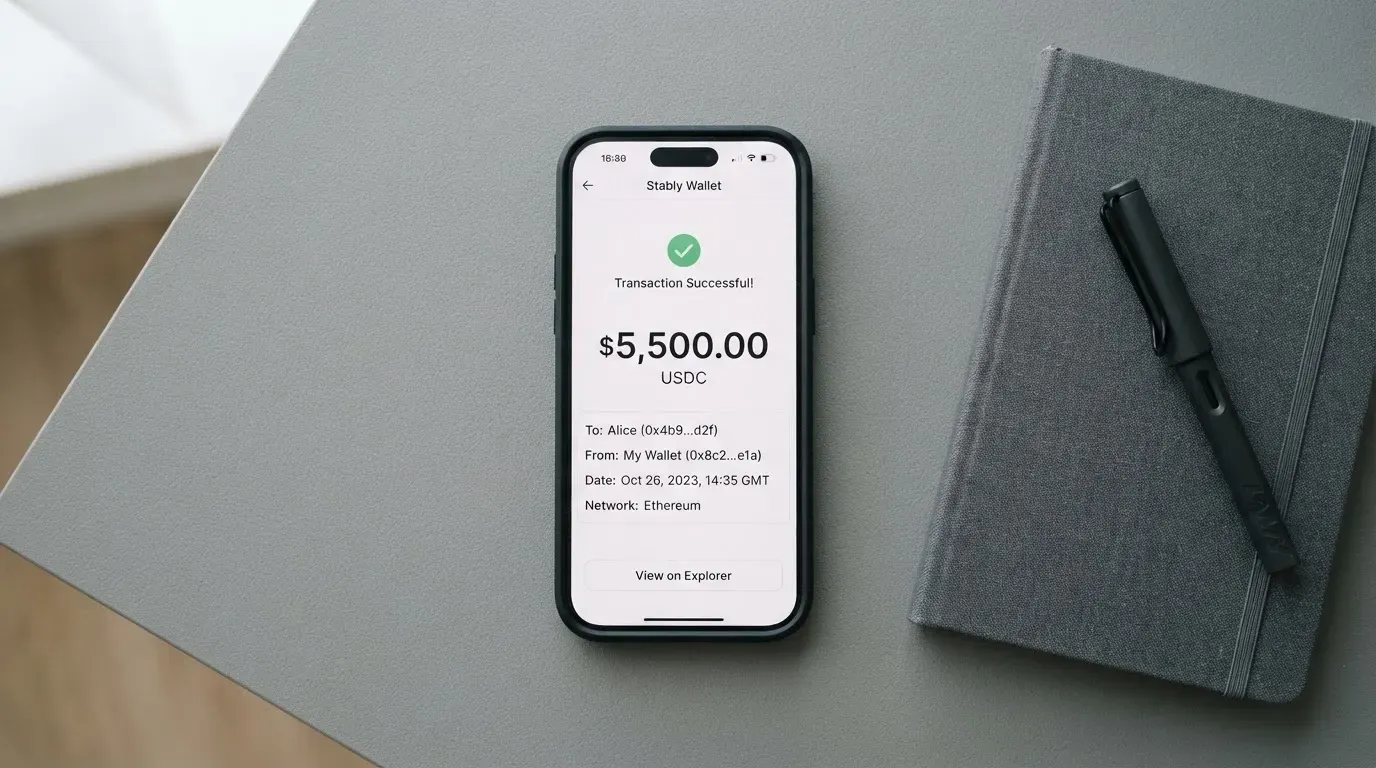
The minimum deposit is small, which is a plus. On USDT-TRC20 the minimum is 1 USDT after network fees, which is one of the lowest practical minimums in the category. The network fee is paid by the sender and counts against the minimum, so if the network fee on TRC20 is around 1 USDT, your effective minimum is essentially 2 USDT in your wallet. The deposit to the card balance is free, so the only cost on the RedotPay side is the conversion fee when you actually spend.
The page you check before sending is the Deposit page in the app, because the supported networks per asset can change. The general background worth knowing is that blockchain transfers are irreversible: if you send USDT on a network RedotPay does not support for that asset, or to an address belonging to a different network, the funds can be lost or sit in support for manual recovery, with no guarantee of return. Always match the network and the address, and send a small test transaction first if you are not familiar with the asset.
If you prefer to fund with fiat directly, RedotPay also supports buying crypto with a credit or debit card inside the app, with a 3% fee and a 1 USD minimum. This is the more expensive route, but it is the path of least resistance for someone who is new to crypto and does not yet hold stablecoins.
The withdrawal side, meaning moving money off the RedotPay balance back to a bank or a wallet, is not stated in the public material I reviewed.
Paying with it every day
Day-to-day, RedotPay behaves like a standard prepaid Visa debit card. The virtual card is for online and in-app purchases; the physical card works at point of sale and at ATMs. Both tokenise into Apple Pay and Google Pay, which is one of the most useful features for someone who has moved away from physical cards entirely.
The card is not formally restricted by merchant category code. The terms do not publish a blocked MCC list, and the well-known gambling MCC 7995 is not specifically called out either way. The official line is that “some individual merchants may have their own internal policies regarding prepaid or crypto cards,” which in practice means a payment can be declined for reasons unrelated to RedotPay, and you should not assume every merchant will accept it. The card is also not usable in sanctioned countries, regardless of where you are physically located, and illegal use is banned.
In-app controls give you meaningful flexibility. You can switch online, point-of-sale and ATM toggles per card, set per-card limits, and toggle which currencies the card will transact in. A disabled currency is declined, which is useful for preventing accidental FX fees when you only want to spend in USD.
There is no card-level cashback rate published. The card page lists “Points & Rewards” and “RedotPay Pro” as separate programmes, and the 5 USD welcome reward is the only card-side benefit quantified in the public material. The paid RedotPay Pro plan, at 12.90 USD a month or 129 USD a year, includes ATM fee waivers among other perks, but the full list of Pro benefits is not laid out in the fee page.
For support, the iOS app currently holds a 4.75 rating across 4,312 ratings, last updated on September 28, 2026. The Android rating is not stated. The dispute process for unauthorised or incorrect charges is also not stated in the public material, which is something to be aware of if you plan to rely on the card for large purchases.
What can go wrong
The trust story is the part of the RedotPay picture that needs the most attention. Two pieces of information drive this.
First, the issuer is not named in the public terms. The Singapore terms describe a “BIN Sponsor” as the actual issuer and name “Redotpay Technology Pte. Ltd.” as the programme manager. The iOS App Store seller is listed as “Red Dot Technology Limited,” and the website footer cites a registration with the PSAV registry of the Argentine securities commission (CNV), under number 144. None of this tells you which regulated bank stands behind the card. For a card product, that is an unusual gap: most issuers prominently disclose their banking partner because that is where the regulatory accountability sits.
Second, the user reviews paint a familiar pattern for crypto cards. Trustpilot shows 778 reviews in 2026, with the most common complaints being KYC-related holds on funds, slow support escalations that can go unanswered for days, and limited daily payment allowances. A review-analysis site flagged freezes tied to source-of-funds reviews, sometimes lasting weeks, as the most serious complaint. RedotPay’s own communications tie freezes to peer-to-peer orders and dispute handling, which is the company’s explanation rather than an independent finding. There is no published dispute process or resolution timeline, so if a hold happens, you are largely dependent on support.
Other risks are less dramatic but worth noting. The fee table is dated December 1, 2025, and the country lists are dated August 28, 2026 and July 21, 2026, so the product is actively evolving. Insurance, safeguarding of customer funds, and 2FA are not explicitly stated in the card’s published terms. The 100 USD physical card issuance fee is non-refundable and non-cancellable, so a rejected KYC after payment is a real loss. In some countries and regions, USD card daily limits drop to 3,000 USD and monthly limits to 10,000 USD, which is much tighter than the headline numbers suggest.
A general point about the category, not just RedotPay: crypto card programmes have been shut down before. Visa terminated its global agreements with FTX in November 2022, and WaveCrest, which supplied several crypto card brands, was suspended by Visa in Europe in 2018, closing all WaveCrest-issued Visa programmes. Crypto cards depend on a card-network licence held by an issuer, and that issuer can lose access. The terms explicitly allow RedotPay to freeze accounts, and fees are non-refundable, so the trust assumption has to be made with eyes open.
What to take instead
RedotPay is not the only option, and the alternatives differ from it in ways that may matter more than the headline features. Below is a brief comparison with three other cards I have looked at, with the same scoring approach so the numbers are directly comparable.
| Card | Score | Key differences from RedotPay |
|---|---|---|
| Bitpanda | 6.5 / 10 | Euro-area residence and a verified Bitpanda account required; physical Visa in EUR only; no separate conversion fee but Visa mark-up applies; up to 2% cashback on crypto spending |
| Wirex | 6.7 / 10 | Free issuance in most regions; 0.5%–8% Cryptoback in WXT on spending; metal card available; no published FX fee on the card page |
| COCA | 6.4 / 10 | Available in the UK, EEA, Asia, South America, Middle East and Africa; up to 8% stablecoin cashback on spend and up to 50% on subscriptions; physical and virtual Visa |
Bitpanda is a reasonable alternative if you live in the euro area, hold your crypto on Bitpanda already, and want the simplest possible conversion model. There is no stated crypto conversion fee because assets are auto-converted to EUR on spending, but the published fees mention a Visa mark-up, and the “Bankident” verification path is excluded from card ordering. The cashback rate of 1% on crypto spending—with the page summary mentioning ‘up to 2%’—is not fully explained.
Wirex sits in a similar place to RedotPay but is more generous on rewards. Cryptoback ranges from 0.5% on the Standard tier up to 8% on Elite, paid in the WXT token, and the metal card is a Visa Signature debit card. The catch is that the FX fee is not a fixed number, just a “market-leading rate” shown in the app before you confirm, and a long list of merchant category codes is excluded from rewards, including gambling, crypto purchases and several financial categories. Card issuance is free in the regions where Wirex is fully published.
COCA is a more niche product. It is available in the UK, EEA, Asia, South America, the Middle East and Africa, and offers up to 8% cashback in stablecoins on card spending plus up to 50% on subscriptions, with higher tiers requiring $COCA held in the wallet. The cost side is less transparent: there is no published fee table in the same way, and the terms simply say fees are “disclosed at the time you access the Service.”
If RedotPay’s trust gap is what is putting you off, the closest competitor on usability is Wirex, but the Cryptoback model introduces a different kind of complexity around token rewards. If the country restriction is the problem, the best move is to check which of these three is fully open in your jurisdiction, because their restricted-country lists differ.
Who I would recommend it to
Pulling the threads together, RedotPay is a competent crypto card with a clear use case, but it is not the right choice for everyone.
It is a good fit if you hold crypto in USDT, USDC or ETH and want a card you can fund in minutes, you live outside the issuance-restricted and KYC-restricted country lists, you do most of your spending online or through Apple Pay or Google Pay, and you do not need a named, regulated bank behind the card. The 1 USDT minimum on TRC20, the free deposit to the card balance and the broad network support make it one of the easier products to fund at low cost.
It is a poor fit if you live in the US, India, Indonesia, Morocco, Nepal, Singapore, Turkey, Russia, Ukraine, Belarus or any of the KYC-restricted countries on the longer list; if you need the consumer protection of a fully named issuer; if your spending pattern involves heavy use of non-USD currencies and you would feel the 1.20% non-default currency fee; or if a freeze during a source-of-funds review would be a serious problem for you. The complaints around KYC holds and slow support are not isolated incidents, and they should be priced into your decision.
Before you sign up, check five things. First, that your country is not on either restricted list. Second, that the 1% conversion and the 1.20% non-default currency fee match your expected spending mix. Third, that the 100 USD physical card fee is something you can lose if KYC is rejected after payment. Fourth, that you are comfortable holding funds on a platform where the issuer is not publicly identified. And fifth, that you have a plan for a card hold lasting weeks, which the user reports describe and which RedotPay does not deny.
Frequently asked questions
What is the RedotPay card?
The RedotPay card is a Visa debit card, virtual and physical, that spends from a balance you fund with crypto. Redotpay Technology Pte. Ltd. is the programme manager and an unnamed “BIN Sponsor” is the actual issuer. The card is available as a USD card or an HKD card, and you can hold a virtual card for online and mobile-wallet use and a physical card for point-of-sale and ATM use.
How does the RedotPay card work?
You install the RedotPay app, complete identity verification, fund your account with a supported crypto such as USDT, USDC or ETH, and choose a virtual or physical card. When you pay, your crypto is converted to fiat at the moment of the transaction, and the card settles in USD or HKD depending on which card you hold. The crypto conversion fee is 1.00%, and non-default currency transactions add a 1.20% fee on top.
Is RedotPay a bank?
No, RedotPay is not a bank. The Singapore terms name an unnamed “BIN Sponsor” as the issuer of the card and Redotpay Technology Pte. Ltd. as the programme manager. The website cites a registration with the Argentine securities commission’s PSAV registry, but the company does not describe itself as a bank in any of its public material.
Is the RedotPay card available in my country?
The card is unavailable to citizens of the KYC-restricted list, which includes the US, Russia, Belarus, Ukraine, Serbia, Cuba, Iran, North Korea, Syria and several other countries. It is also unavailable for residents of India, Indonesia, Morocco, Nepal, Singapore and Turkey, the card-issuance list dated August 28, 2026. Most other countries are open, but the list changes, so check the app or the site before applying.
Does the RedotPay card require KYC?
Yes. The card requires identity verification, a minimum age of 18, an original physical ID valid for at least three months from the date of submission and a real current address. The system may request additional documents in JPG, PNG or PDF format up to 10 MB. There is no separate proof-of-address document mentioned in the public material.
How do I top up the RedotPay card?
The main method is on-chain crypto deposit, with assets including USDT, USDC and ETH accepted on the networks shown on the Deposit page. USDT-TRC20 has a 1 USDT minimum after network fees. You can also buy crypto in the app with a credit or debit card, which carries a 3% fee with a 1 USD minimum. The deposit to the card balance itself is free.
Can I add the RedotPay card to Apple Wallet?
Yes. RedotPay supports Apple Pay and Google Pay for the virtual card, and tokenisation replaces the card number with a device-specific number, so adding the card to Apple Wallet works the same way it does for a regular Visa debit card. The card issuer can restrict a tokenised number, for example blocking it on certain transaction types, but in normal use mobile wallet support is part of the product.
Is the RedotPay card safe?
Safety depends on what you mean. The card has standard controls: per-card limits, online, point-of-sale and ATM toggles, currency toggles, and 3-D Secure for online payments. The card balance is held by a custodian, so you carry the usual counterparty risk of any custodial product. The issuer is not publicly named, insurance and safeguarding of customer funds are not stated, and user reports describe KYC-related holds and slow support. Read the terms and decide whether the trust gap is acceptable for your use case.
How do I withdraw money from the RedotPay card?
The public material does not state a withdrawal process for moving money from the RedotPay balance back to a bank or external wallet. ATM cash withdrawal is supported with the physical card, subject to the per-day and per-month limits, with a 2% fee on USD cards up to 10,000 USD monthly and 3% above that, and 2% on HKD cards.
Is the RedotPay card worth it?
Whether it is worth it depends on your country, your spending mix and your tolerance for the trust gap. It scores 6.9 out of 10 in my review, with strong marks for top-up options, everyday usability and country coverage, and weak marks for the unnamed issuer and the complaints pattern. If you are outside the restricted countries, hold USDT or USDC, spend mostly in your default currency and online, and are comfortable with the custodial structure, the fees are competitive at 1% conversion plus 1.20% on non-default currency. If you need a fully named issuer behind the card, or you live in a restricted jurisdiction, look at Wirex or one of the other alternatives.
App and neobank cards – cryptocardbasics
Content created by the «cryptocardbasics» team