
The card is free and the fees are low — but the card itself is gated on one country
 Available in US
Belo’s pitch is unusually clean. Issuance is free, shipping is free, there is no monthly fee, and a payment draws on pesos or crypto sitting in your Belo balance rather than on a bank account that may refuse you. For someone who cannot open an ordinary account, or who wants a card that spends crypto directly, that is a genuinely useful thing.
Then there is the catch, and it is a large one. Belo’s own pages enable accounts in twelve countries — Argentina, Bolivia, Brazil, Chile, Colombia, Ecuador, Mexico, Panama, Paraguay, Peru, Uruguay, Venezuela — for anyone holding identity documents issued there. The Mastercard, the part you actually pay things with, is different: it is issued only to people with an Argentine DNI or Argentine passport and a delivery address in Argentina. For the other eleven countries the card is marked unavailable. So the account is wide and the card is narrow. Anyone reading a review of this product from outside Argentina should understand that before spending ten minutes on it.
I score Belo 5.5 out of 10. The score is not a verdict on the product’s quality; it is a verdict on how much it can do for the person reading this page.
The conditions described here are current as of October 28, 2026.
| Criterion | Mark | Why |
|---|---|---|
| Who can get it | 2 / 10 | Accounts open in 12 countries, but the Mastercard is issued only to holders of an Argentine ID with delivery inside Argentina |
| Cost | 8 / 10 | Issuance, delivery and maintenance are all free; card replacement 2.50 USDT, international payments from 0.30 USDT, ATM 3% or 0.50 USDT minimum |
| Top-up options | 5 / 10 | The balance must be funded in pesos or crypto, but the pages read name neither the coins nor the networks |
| Reliability and complaints | 5 / 10 | Issuer not named, processor is Pomelo; unofficial: registration with Argentina’s CNV; App Store reviews complain about international transfers and thin support |
| Everyday use | 8 / 10 | Virtual and physical Mastercard, Google Pay, cash at ATMs across Argentina; Apple Pay not mentioned |
| Total | 5.5 / 10 | Strong economics, narrow eligibility, and several things the public pages simply do not tell you |
Who it suits, who it does not
This card is for someone who already has Argentine identity documents and a home in Argentina to send it to. That is not a small caveat; it is the whole product. The card is described as a local prepaid card (“tarjeta prepaga local”) with international validity, which means it is an Argentine instrument first and an international one by permission.
It is also for someone who wants to spend from a crypto balance without converting at a separate exchange step. Belo lets you choose the order in which the balance is debited, and the card draws on pesos or crypto held in the account. If you are paid in stablecoins, this removes a conversion hop and one more party in the chain.
It is *not* for someone in Bolivia, Brazil, Chile, Colombia, Ecuador, Mexico, Panama, Paraguay, Peru, Uruguay or Venezuela hoping for a working card. You can open the account. The card is marked unavailable for those eleven countries. I would not open an account expecting a card and then find out otherwise at the delivery step.
It is also not for anyone who needs to know exactly what a card payment will cost them in crypto. Belo states a minimum charge on international transactions but does not state the conversion spread or a percentage foreign-exchange fee. You are being asked to trust the arithmetic of a conversion you cannot inspect.
Will they give you the card?
Account: twelve countries are enabled — Argentina, Bolivia, Brazil, Chile, Colombia, Ecuador, Mexico, Panama, Paraguay, Peru, Uruguay and Venezuela — for people with identity documents issued in those countries. The rule works on two axes at once: the document you hold and where you live. Holding a Brazilian passport does not by itself make you eligible for a card, and the card side does not care about your residence either — it wants an Argentine document and an Argentine address.
That double rule is worth pausing on, because it is a common misunderstanding that a crypto card is “for anyone.” Here the card is genuinely one country’s product. The account being wider than the card is exactly the sort of detail that gets lost in a comparison table.
Documents accepted, per the country page:
- Argentina — DNI, a foreigner’s national ID, or a passport.
- The page is blunt about the rest: only the documents listed will be accepted, and anything unlisted is rejected automatically.
- Proof of address and proof of age are not stated on that page, although proof of address is described as something you will need in order to raise your limits.
- Nothing beyond that is stated about verification — no mention of how far checks go, or what happens if one stalls.
Two practical consequences follow. First, if the document you happen to hold is not on the list, the answer arrives automatically and immediately rather than after a review. Second, if you need higher limits, you will be asked for proof of address later, at that moment, not during sign-up.
How to get it
The sequence Belo describes is short: open an account, verify with your ID, request the card in the app under “Tarjetas”, then activate the physical card when it arrives.
You get both a virtual and a physical card. The virtual one is usable as soon as the account exists, which is what makes the product useful in the days before the plastic arrives. There is no tier structure and no paid upgrade — one card, two forms, and a section of the app where limits can be adjusted.
Delivery of the physical card goes to an address in Argentina only. Belo says approximately three business days from request to arrival, shipping is free, and a replacement physical card costs 2.50 USDT. There is no fee to activate it.
What is not stated: what happens to the virtual card if the physical one does not arrive, whether the three business days is a commitment or an average, and what the delivery options are if you are not near a courier route.
Fees: what it really costs
Belo’s headline numbers are the best part of this product. Three fees are zero — issuance, delivery and maintenance — and that alone puts it ahead of most cards in this category, where a virtual card commonly carries an issuance charge and a monthly one.
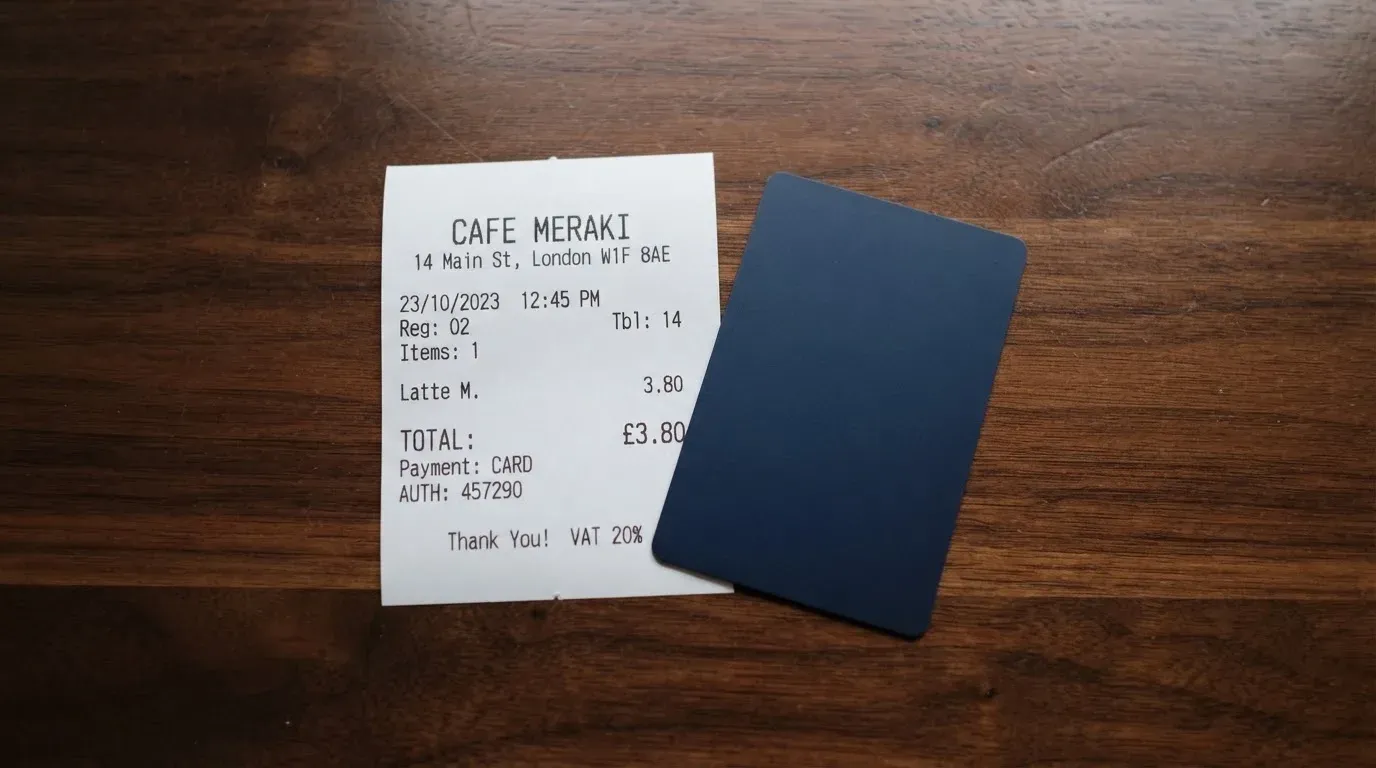
What you cannot see is as important as what you can. Belo states a minimum cost on international transactions but does not state the crypto conversion spread and does not state a percentage foreign-exchange fee. For a card whose entire premise is spending crypto, an unstated spread is not a rounding detail — it is the main number you are paying.
| Item | Amount as stated |
|---|---|
| Card issuance | $0 |
| Shipping | $0 |
| Monthly maintenance | $0 |
| Replacement physical card | 2.50 USDT |
| International transaction minimum | 0.30 USDT (0.40 USDT at selected merchants) |
| Crypto conversion spread | not stated |
| Percentage FX fee | not stated |
| ATM withdrawal in Argentina | 3% or 0.50 USDT minimum |
| Free ATM allowance | not stated |
| Cash withdrawal at participating merchants | available; fee not stated |
Three everyday payments, worked through what is stated:
A coffee in Buenos Aires, 3.000 ARS. No conversion, no foreign exchange, no international charge — this is a domestic purchase from a local balance in the currency the card was built for. The conversion question does not arise, so the unstated spread is not part of this transaction.
An online subscription billed in USD, 10.00. This is an international transaction. The stated minimum charge is 0.30 USDT, or 0.40 USDT at selected merchants. On top of that sits the part that is not disclosed: the conversion spread and any percentage FX fee. Payments abroad settle in USD and carry the same taxes as any Argentine-issued card, with the amounts not listed. I cannot tell you what this cost you as a percentage of 10.00, because the card’s pages do not say.
Withdrawing 20.000 ARS at an ATM in Argentina. The fee is 3% or 0.50 USDT minimum — whichever applies is not spelled out, so treat 3% as the useful figure at that size and the minimum as the floor for small withdrawals. PIN is set in the app. Withdrawals are available at any ATM in Argentina, 24 hours. No free allowance is mentioned. Withdrawals abroad are not mentioned at all: the ATM offer is scoped to Argentina.
Limits sit on top of all this. The default daily purchase limit is $20,000,000 in ARS and is editable in the app. There is a consolidated monthly cap of 5,000 USDT and an annual cap of 50,000 USDT across both the physical and virtual cards — and that is the number that will actually shape your month if you spend crypto, not the very large peso figure. Raising either cap means going through your profile with proof of address and proof of funds origin. The ATM limit is not stated.
Top up: how money gets in
The rule is short and it is the whole of top-up. The card needs funds in your Belo account balance — “Tener fondos en tu cuenta de belo” — in pesos or crypto, with the order of debit under your control.
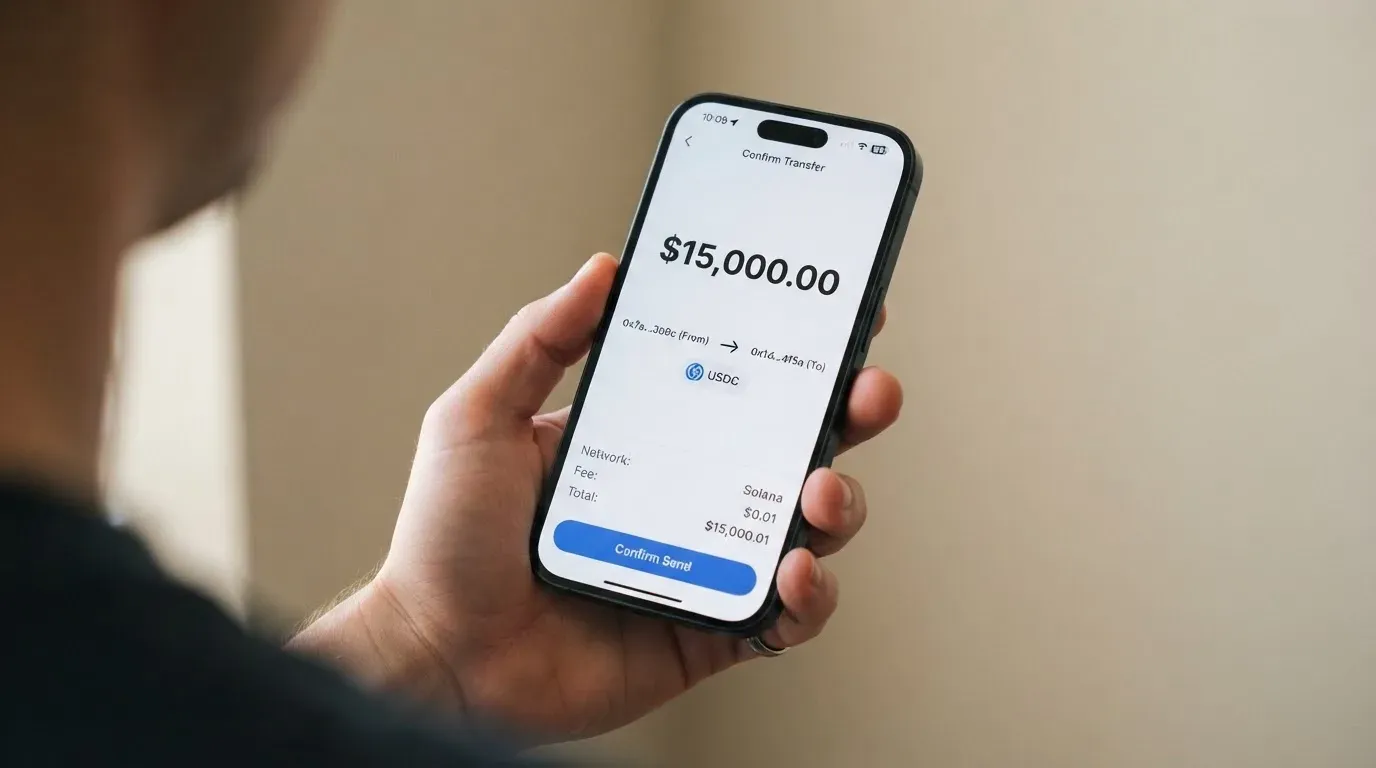
That is the gap. The pages read do not name a single coin or a single network. For a category where the network decides whether your deposit arrives, that silence is expensive. Stablecoins live on many chains, and a transfer sent on a chain the provider does not support can be lost or need manual recovery with no guarantee — irreversible by design, because the network cannot undo a transfer. Some of the general risks are avoidable if you know the chain in advance and cannot be avoided at all if you do not.
What the card pages also do not tell you: deposit fees, minimum deposit amounts, or whether there are direct fiat top-up options such as a bank transfer or a card load. So the shape of a top-up is: something arrives in the Belo account, and the card can then spend it. The middle is where the detail would be, and it is absent.
For completeness, the reverse direction: cash comes out at ATMs in Argentina, at 3% or 0.50 USDT minimum, and also at participating merchants. A virtual card can be deleted in seconds from the app. What happens to money left in the balance when you close the account is not stated — and that question matters more here than with an ordinary bank, because the balance is where crypto sits.
Paying with it every day
The card is a Mastercard, virtual and physical, and it works as a payment card from a crypto balance. Google Pay is confirmed. Apple Pay is not mentioned anywhere on the pages I read — which, for a phone-first product, is worth noticing on its own. The card can also be saved in Mercado Pago.
Category blocking is not stated, so you cannot tell from the public pages whether gambling merchants or similar are refused. If that matters to you, ask in the app before you rely on it.
Card control is where Belo does well. A lost or stolen physical card is reported in the app — “Reportar” — and deactivates in seconds. The card can be paused and resumed. ATM withdrawals use a 4-digit PIN set in the app. Two-factor authentication and any insurance are not stated on the card pages, and I would want to see both before trusting the balance to anything larger than a week of spending.
Disputes are documented, which is better than many cards in this category manage. Refunds for a rejected or reported purchase are credited in pesos within 8 to 30 calendar days. An unrecognised-charge dispute “can take 30 to 120 days.” A controversy claim waits 31 days from the transaction, and claims must be filed within 90 days. Escalation goes first to the processor, Pomelo, then to Mastercard. Those timelines are long enough that you should keep receipts if you plan to use this abroad.
On rewards, the official pages say nothing. Third-party reporting is more enthusiastic: Rankia in 2026 put crypto cashback at up to 21%, and an earlier interview with the CEO described a range of 2% to 21% (The Fintech Times, undated). Both are unofficial and neither is confirmed by Belo’s own pages. Cashback figures of this size move a card’s real economics more than any fee on the list above, so I would treat them as unverified until you see the terms.
What can go wrong
The obvious risks are the category ones. Crypto transfers are irreversible and a stolen private key has no recovery path — the network cannot freeze or return funds. Custody with a provider carries counterparty and hack risk with real precedents: Mt. Gox at about US$350 million reported stolen between 2011 and 2014, Coincheck at about US$400 million in 2018, and Ronin Network at US$625 million in 2022. Belo’s own published pages do not say who holds your funds.
That is the finding I keep returning to: the issuer is not named. The card is described as a local prepaid card and the company and its licences are not stated on the pages I read. The payment processor is Pomelo — named, because Pomelo appears in the dispute procedure. An unlicensed name is not an accusation; it is an absence, and it is exactly the absence a depositor should care about.
Wider category context helps here. Visa and Mastercard do not issue crypto cards to consumers themselves; they license issuers, and they can suspend a programme. Visa said in November 2022 that it had “terminated our global agreements with FTX,” and the FTX US debit card was being wound down. WaveCrest, a Visa issuer that supplied crypto card brands, was suspended by Visa in Europe in 2018, closing all its Visa programmes. Closures follow a pattern: a notice period, then spending and loading stop, then users are asked to withdraw remaining balances. A 2026 closure reported by a secondary source stopped new loads on 8 July 2026 and spending on 8 August 2026 — single source, unconfirmed, but the shape is what you would be exposed to.
Argentina is its own jurisdiction with its own rules. MiCA in the EU is not what governs this card, and neither is FinCEN guidance in the US; a third-party source reported in 2026 (Rankia) that Belo is registered as a crypto asset service provider with Argentina’s CNV — unofficial, not confirmed by the card’s own pages. No dated official news was found.
Complaints, honestly reported: officially, none found. A dedicated search turned up no Reddit or Trustpilot threads about the Belo Mastercard and no Trustpilot or Google Play rating. Undated third-party reports of Brazilian App Store reviews — a paid-report page, secondhand — mention problems with international transfers, delayed transactions, weak support and account verification, and a similar Kimola summary cites inability to access funds and thin support. I would not build much on undated secondhand app reviews, but the theme they share is the one that matters: the moment something goes wrong with an international payment, does anyone answer? The support pages list an in-app Help Center and an email address, in Spanish, with hours not stated.
Three payment mechanics are worth knowing before they surprise you. A merchant category code is a four-digit classification of what a business sells, and gambling (MCC 7995) is frequently blocked by issuer policy rather than by law, with the list differing per issuer — Belo’s is not stated. Address verification compares the numeric parts of your billing address with issuer records, is mainly offered in the US, Canada and the UK, and is generally unavailable for foreign-issued cards, which can cause declines; a card issued in one country can look “foreign” to a shop in another, because the six- or eight-digit BIN at the start of every card number identifies the issuer and its country, and some merchants decline prepaid or foreign BINs on sight. And a declined authorisation can leave a hold on your funds for several days, typically up to 7 — while the monthly cap of 5,000 USDT is still counting it.
Two more: transfers are not censorship-proof, because Tether disables tokens in wallets on the OFAC sanctions list and has frozen funds tied to illicit activity; and being on a card means being screened. Sanctions screening and issuer risk policy are often applied to citizenship and country of birth, not just your address, which is why document and residence are checked separately.
What to take instead
If you are in Argentina with Argentine papers, the alternatives below are hard to recommend over Belo — none of them is cheaper. If you are in one of the other eleven countries, or anywhere else, they are what you are actually choosing between. All three scores are mine on the same scale.
| Option | Score | Card | Cost | Eligibility as stated |
|---|---|---|---|---|
| Belo | 5.5 / 10 | Virtual + physical Mastercard | Free to issue, no monthly fee | Account in 12 countries; card only on Argentine ID and Argentine delivery address |
| Bitrefill | 6.8 / 10 | Virtual & physical Visa | Free through the app; inactivity fee after 12 months without spending or cash-out, amount not stated | Country list not stated; access “subject to eligibility criteria” set and verified by partners |
| UPay | 6.1 / 10 | Virtual and physical, personal and business; network not named | not stated | Does not serve residents of certain countries, list may change; KYC partner accepts only IDs issued in the same country as the user |
| Kemy | 6.0 / 10 | Unlimited virtual cards, one physical Mastercard contactless | Virtual $15 issuance, $2/month; physical $250 issuance, $10/month | “190+ countries”, “a few restrictions apply” checked at sign-up |
Bitrefill is the most interesting alternative, and the only one that beats Belo overall — but note *how* it beats it. Its 2% total cashback with no cap is split as 1% on each crypto deposit and 1% on each purchase, which is a real, stated reward rather than an unconfirmed headline. Its costs are the open ones: a spread on crypto-to-euro conversion with no percentage published, a SEPA pay-in fee of 1.99%, spreads from payment processors and ATM operators on spending, and no FX fee stated. Its funding list is the most explicit of any of these — Bitcoin, Lightning, Ethereum, USDC, USDT, Solana, BASE and Polygon, plus SEPA transfer. The catch is that “subject to eligibility criteria” with criteria established by partners is not an eligibility rule you can check before applying.
UPay is mid-table. It claims support in 180+ countries and lists virtual and physical options in personal and business flavours, converting payments to USD, EUR, AED and others. Funding is BTC, ETH and USDT, with USDC also listed, networks not stated. No cashback on the card page. Its own warning that it does not serve residents of certain countries, and that the list may change with regulatory or issuer policy, is the kind of line that should make anyone pause — and its KYC partner accepting only IDs from the same country as the user is the same document-vs-residence logic Belo uses, just applied the other way round.
Kemy is the expensive one. Unlimited virtual cards at $15 for three years and $2 a month, or a physical Mastercard at $250 with DHL Express and $10 a month — and those fees are before the transaction fee of 3.5% + $1 on virtual, $0.80 for a failed transaction, top-up of $1.5 under $100 or 1.25% from $100, and a deposit fee shown as 8% in one summary and 5% in another section of the same pricing page. That internal conflict is worth noticing on its own: if a provider cannot keep one number consistent on its own pricing page, the unstated numbers on Belo’s pages are a pattern rather than an accident. Kemy’s reach is the widest (“190+ countries”) and it says outright that restrictions apply. Cashback is not mentioned.
Who I would recommend it to
I would recommend Belo to an Argentine resident with a DNI or Argentine passport who wants to spend from a crypto balance without a separate exchange step, and who can live with a card whose issuer is not named on the public pages. The economics are the best in this comparison: nothing to pay for the card, nothing to pay to keep it, and the only charges named are 2.50 USDT for a replacement, 0.30 USDT on an international payment, and 3% or 0.50 USDT at an ATM.
I would not recommend it to anyone in the other eleven countries, because the card is not offered there, and I would not recommend it to anyone planning to live on a 5,000 USDT monthly cap who cannot tell me what the conversion spread is.
Before you decide, check three things, in this order. First, whether your document and your delivery address put you inside the card’s eligibility, not just the account’s. Second, the conversion spread and FX treatment for the currency you actually spend in — get it in writing, because the pages do not say. Third, whether a declined or reversed transaction is worth the wait: 8 to 30 days for a refund, 30 to 120 for an unrecognised charge, 90 days to file.
Belo, at 5.5 out of 10, is a well-priced card behind a narrow door, with more than its share of things it does not tell you.
Frequently asked questions
What is Belo?
Belo is a financial app that pairs a stored account balance in pesos or crypto with Mastercard cards, virtual and physical. The Mastercard is an Argentine product: an account can be opened from twelve countries, but the card itself requires an Argentine DNI or Argentine passport and a delivery address in Argentina. It is described as a local prepaid card with international validity.
How does the Belo card work?
Money arrives in your Belo account, and the card spends from that balance — you choose whether pesos or crypto are debited first. Because the balance is pre-loaded rather than linked to a bank account, the card cannot overdraw it. Payments abroad settle in USD and carry the same taxes as any Argentine-issued card.
Is Belo a bank?
The public pages I read do not say. The card is described as a local prepaid card, and neither the issuer, the sponsoring bank behind the BIN, nor the company’s licences are named. Pomelo appears as the payment processor in the dispute procedure. A third-party 2026 report put Belo on Argentina’s CNV register — unofficial, unconfirmed by Belo.
Who owns Belo?
Not stated on the pages I read. That is a real gap rather than an omission on my part, and it matters most for the question of who holds your funds if something goes wrong.
Can I use the Belo card outside Argentina?
Spending abroad is intended — international validity is stated, with a minimum charge of 0.30 USDT per transaction, or 0.40 USDT at selected merchants. Cash withdrawal, however, is described as available at ATMs in Argentina only, at 3% or 0.50 USDT minimum. Withdrawals abroad are not mentioned.
Is the Belo card free?
Issuance, delivery and monthly maintenance are all $0, which is the strongest part of the offer. Replacing a lost physical card costs 2.50 USDT, and ATM withdrawals cost 3% or 0.50 USDT minimum. There is no free-ATM allowance mentioned, and the conversion spread is not stated.
How do I top up the Belo card?
The balance must hold pesos or crypto before the card can spend anything. The pages I read name no coins and no networks, and give no deposit fees, minimums or direct fiat options — so confirm the supported assets and chains in the app before sending anything, since blockchain transfers cannot be reversed.
Does the Belo card need KYC?
Yes, identity verification is part of the process. In Argentina the accepted documents listed are DNI, a foreigner’s national ID or a passport, and unlisted documents are rejected automatically. Proof of address and proof of age are not stated on that page, though proof of address is needed to raise limits.
Is the Belo card safe?
Reasonable operational controls, unclear backing. You can freeze a lost card in seconds, pause and resume it, and set a 4-digit ATM PIN. Two-factor authentication and insurance are not stated, and the issuer is not named, so the question of who holds the balance has no public answer.
Is the Belo card worth it?
For an Argentine resident spending crypto who values a zero-fee card, yes. For anyone in the other eleven enabled countries, the card is unavailable, and for anyone who wants to know the conversion spread in advance, the pages do not say. Judge it on the cap of 5,000 USDT a month and on how much of your money sits with a provider you cannot fully identify.
Virtual cards – cryptocardbasics
Content created by the «cryptocardbasics» team