Tonhub card: a self-custody crypto Visa, but with thin public detail
 Available in US

The Tonhub card is a Visa Debit that spends from a crypto balance held in your own wallet. It targets EU residents, supports TON and USDC, and bills itself on a non-custodial model where you keep your private keys. On paper that combination is appealing to anyone who values self-custody and wants a familiar card interface on top of it. In practice the public information is thin: official fees are not published, the card issuer and operating entity are not named on the card’s pages, and the only Trustpilot score available at the time of writing is 3.2 out of 5 from a single one-star review describing a chargeback dispute that dragged on for months.
This review describes the card’s eligibility, sign-up, costs and risks, based on its public pages and independent reports. I have not used the card; this information is taken from public data, checked 2026-10-20.
Conditions are current as of October 28, 2026.
Verdict
Tonhub is a niche product, and the score reflects that. It earns credit for being non-custodial and for getting the smart contracts audited by Trail of Bits, but the absence of published fees, an unnamed operator, and a single review describing a long, unresolved chargeback dispute are hard to overlook.
| Criterion | Mark | Note |
|---|---|---|
| Who can get it | 5/10 | 18+ and EU residence required; broader reach not stated |
| Cost | 7/10 | No published fee schedule; unofficial 1.5% per transaction |
| Top-up options | 5/10 | TON and USDC on the page; SEPA and SWIFT offered; USDT in a user review |
| Reliability and complaints | 4/10 | Issuer and operator not named; one Trustpilot review, chargeback unresolved |
| Everyday use | 5/10 | Virtual Visa Debit only after verification; Apple Pay and Google Pay unconfirmed |
| Total | 5.3 / 10 | A self-custody Visa with good bones and not enough public detail |
The audience is, broadly, EU residents who already hold TON or USDC and want to spend them through a Visa without giving up their own wallet. If you fall outside that group, or if published fees and a named issuer are non-negotiable for you, the alternatives later in this review will probably fit better.
Who will they give you the card
Tonhub states two conditions for eligibility: you must be at least 18 years old, and you must reside in the European Union. The card’s pages also mention a “25+ countries” figure, but that is presented as a usage statistic rather than a list of eligible countries, so it does not tell you whether your country is among them. Citizenship is not addressed; the rule is about residence. The platform has not published a country list, a sanctions-screen statement, or notes on dual citizenship, so anyone whose situation does not match a straightforward EU resident is left guessing.
The broader point is that the eligibility screen is narrow by design. EU residence is a regulatory anchor for any payment product, and the EU’s KYC framework, with name, address, date of birth, nationality and a sanctions check, is what the card sits on top of. A US or UK resident is, in practice, looking at a different product; the alternatives in this review are clearer on that.
What is not stated is just as telling. There is no public list of excluded regions, no list of accepted identity documents, no statement on what happens if your country later leaves the EU’s equivalence list, and no clarification of whether the “25+ countries” usage stat is the same set as the eligibility list or a different one. If any of that matters to your decision, you would need to ask Tonhub directly.
How to get it
Sign-up is built around identity verification. The card’s pages describe a flow where you add a wallet, tap the Tonhub Card banner, complete a “Verify Your Identity” step and, once that is approved, receive a virtual Visa Debit. A physical card is not mentioned, which means the product is digital-only at issuance; the only way to use it at a point-of-sale terminal is via a mobile wallet or a virtual-card number at an online checkout.
The verification step itself is light on detail. The pages do not state which documents are accepted, whether a proof of address is required, how long review takes, or what causes a rejection. There is no published list of supported ID types by country, no reference to sanctions screening, and no description of the on-chain identity layer that several self-custody cards now use. The card inherits the EU’s customer-due-diligence framework, so expect a passport or national ID, a selfie check and a proof of address, but the card’s own copy does not confirm any of that.
There is also no published statement about levels, the way some cards offer a starter tier before full KYC, so the assumption is that the card is a single product: verify, get a virtual card, start spending. The non-custodial angle shows up here in the form of “Set custom spending limits directly on-chain” rather than as a separate tier. If you are someone who likes to know the full menu before you start, this is a thin section of the page.
Fees: what it really costs
This is the part of the review that I would urge you to take your time over, because the official answer is mostly silence. The card’s site has a “Fees & Conditions” section, but at the time of writing the amounts are not published there. The card does not disclose an issuance fee, a monthly fee, a conversion spread, a foreign-exchange fee, an ATM fee, daily or monthly caps, or a tier structure. There is one card product, and there are no published limits on what you can spend with it.
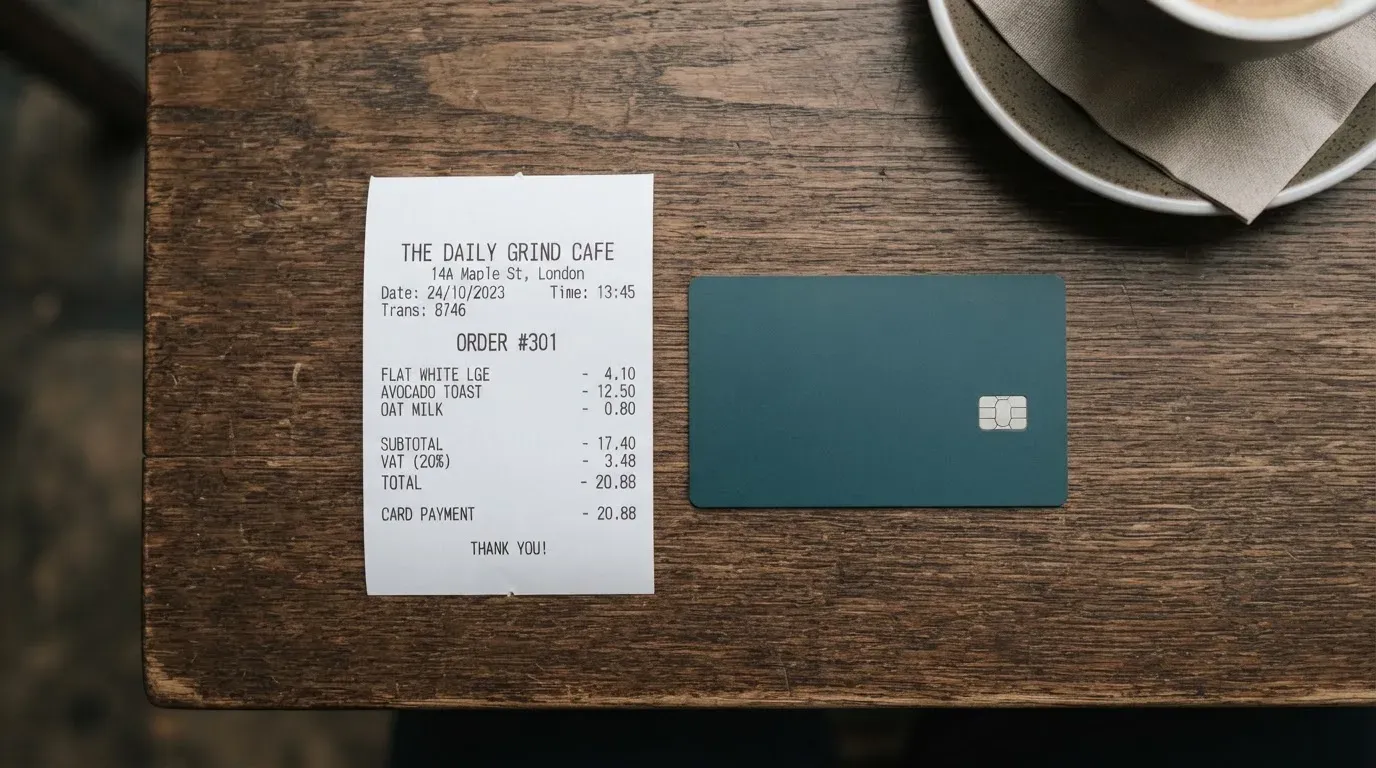
What we do have is an unofficial figure. Forklog, in a November 2024 piece on the card launch, reports a 1.5% transaction fee, and a company profile on Dealroom repeats the same number. Unofficial is the right word: that figure is not on Tonhub’s own page and is not confirmed by the card. Treat it as the best available estimate rather than a guarantee, and check the fee schedule inside the app before you put any meaningful balance through.
| Fee or limit | Amount |
|---|---|
| Issuance | not stated |
| Monthly fee | not stated |
| Conversion | not stated (unofficial 1.5% per transaction) |
| Foreign-exchange fee | not stated |
| ATM | not stated |
| Daily and monthly caps | not stated (user-set on-chain limits only) |
The non-custodial model is meant to keep the cost down, and on-chain spending limits are a real feature: you decide in your own wallet how much can be spent. But “set your own cap” is not a substitute for a fee schedule, and the absence of an ATM fee figure is a real gap if you ever want to take cash out. Until the official numbers appear, budget for a transaction fee in the 1%–2% range, and keep an eye on the in-app disclosure for any updates.
To make this concrete, three everyday situations:
- Buying a coffee for €3. With an unofficial 1.5% transaction fee, that is about €0.045 on top of the price. Any FX or conversion spread would be on top of that. The merchant pays the network fee; you do not see a gas charge.
- A €50 online subscription in euros. The same 1.5% comes to about €0.75. If the merchant’s currency is in dollars and your balance is in euros, a conversion line will appear, and the size of that line is the part the card does not publish.
- A €500 purchase, perhaps a flight, paid from a USDC balance. The transaction fee is roughly €7.50 at the unofficial rate, and a 1% FX spread on a USDC-USD-to-EUR round trip would add another €5 or so, depending on the rate. These are not exact numbers, because the official ones are not there; they are the shape of the cost to expect.
Top up: how to fund the card
The card spends from a crypto balance in your own wallet, which means topping up is a transfer of crypto from your wallet into the card’s payment flow. Tonhub pre-funds the payment and then debits the balance after the network and the merchant confirm; if the balance is insufficient, the payment is declined. This non-custodial model keeps funds in your own wallet until the moment of payment, and you keep the keys.
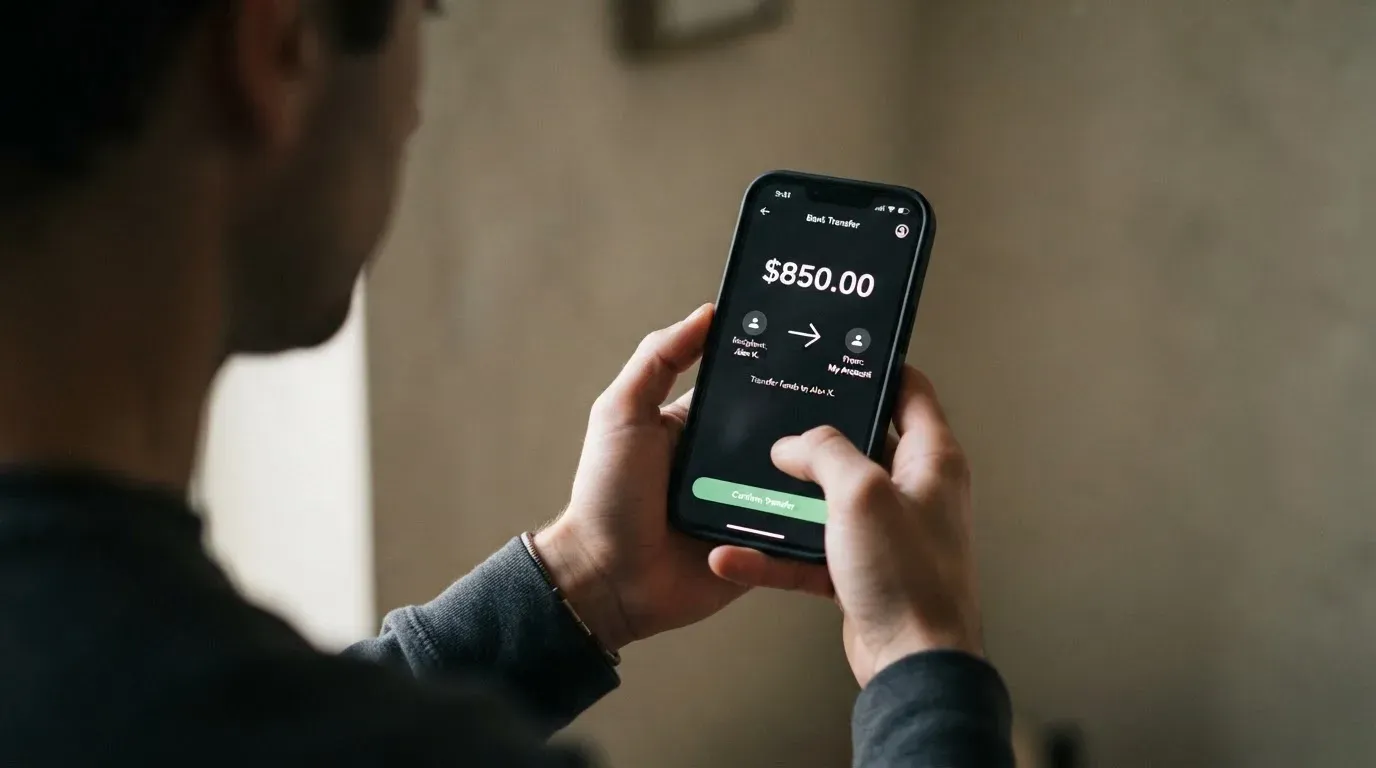
The card’s pages show TON and USDC as the supported assets. A user review quoted on the page mentions paying with USDT, which is not on the official list, so treat USDT as unconfirmed. The card also offers bank transfers: SEPA for euros and SWIFT for other currencies. The fees and minimums for those bank transfers are not published.
A few practical points from how the model is described:
- The card needs a positive crypto balance before payment. There is no “credit” element and no overdraft.
- Network fees (gas on the relevant chain) are paid by you, not by Tonhub. The cost is set by the network, not by the card.
- If you send a deposit on the wrong network, the transfer is at risk. Blockchain transactions are irreversible, and a deposit sent to an address of another network may need manual support recovery with no guarantee. This is true of crypto in general, not just Tonhub.
- For on-chain tokens, the wallet must hold the gas token for the relevant network. For example, ERC-20 transfers on Ethereum are paid in ETH, so a balance of USDT alone cannot move without an ETH top-up for gas.
The “Emergency Withdrawal” feature is worth flagging: designated heirs can retrieve card-linked funds on-chain. This is a self-custody recovery mechanism rather than a refund, and it is described as part of the wallet tooling, not as a customer-service promise.
Paying with it every day
The day-to-day experience is, by design, a virtual Visa Debit. After verification you get a card number, expiry and CVC, and that number is what you use at an online checkout or add to a mobile wallet. The card’s pages do not describe in-app freeze, ATM access, or the merchant categories that may be blocked, and the only wallet integration mentioned on the card’s own page is a user review that refers to Apple Pay. A November 2024 Forklog piece reports Apple Pay and Google Pay support, though this is unofficial and not confirmed by the card’s own documentation.
A few points on what to expect:
- Online checkout: the card behaves like any other Visa. 3-D Secure (Visa Secure on the Visa side) can add an identity check at checkout; this is a network-level step rather than a Tonhub setting.
- In-store: without a physical card and without a confirmed mobile-wallet integration, the options at a terminal are limited. This is the part of the everyday story that has the most uncertainty, and it is where the unofficial Apple Pay and Google Pay support matters most if true.
- ATMs: the card’s pages do not describe ATM access. It is officially not stated, and the fee and limit for cash withdrawal are not published.
- Declines: a failed or declined payment leaves the funds in your wallet untouched, according to the card’s description of the pre-fund flow. Authorization holds can still tie up a balance for several days in general, even when the transaction is later released, and that is a network behaviour, not a Tonhub one.
- Disputes and refunds: the card’s pages say “refunds are issued only for legitimate, verified transactions” and that Tonhub pre-funds purchases, debiting the balance after the network and the merchant confirm. Chargeback time frames are not stated. The single Trustpilot review describes a process to file a dispute and money not yet returned at the time of writing.
The everyday story is workable for an EU resident who already keeps TON or USDC and is comfortable using a virtual card for online and mobile-wallet payments. It is much less workable for someone who needs to swipe a card in a shop, take cash out, or rely on a published dispute timeline.
What can go wrong
The non-custody pitch is genuine, and it is the card’s strongest claim. The smart contracts are audited by Trail of Bits, the keys stay with the user, Ledger hardware wallets are supported, and the user can set on-chain spending limits. The anti-fraud and AML layer is described as monitoring every transaction and automatically blocking suspicious activity. These are all real features.
What is missing is the layer around them. The card’s pages do not name the operator entity behind the Tonhub brand; “Holders” is referenced, but the issuer of record is not on the card’s public pages. Without a named issuer, a reader has no place to direct a complaint, no regulator to escalate to and no clear way to check the licence under which the card is issued. The Help Center is help.holders.io, which is one channel, and there is no published support SLA.
The Trustpilot situation is the clearest early warning. The card has a 3.2/5 score from a single review read 2026-10-20. That review, dated 18 February 2026, describes a chargeback dispute filed in early December 2025, won in January 2026, and money not yet returned at the time of writing. It also mentions extra AML video-call identity checks despite prior verification, and slow copy-paste answers from support. A single review is not a pattern, and a small sample is easy to read too much into, but the combination of an unnamed issuer and a complaint about dispute handling is worth weighing.
A few general risks worth keeping in mind, taken from the broader category:
- Self-custody means you own the seed phrase and the loss of it. There is no recovery hotline that can hand you back a wallet.
- Crypto transfers are irreversible. A deposit on the wrong network or to the wrong address can be lost, and manual recovery is not guaranteed.
- Programme closures happen. Visa terminated its global agreement with FTX in November 2022, and WaveCrest, a Visa issuer that supplied several crypto card brands, was suspended in Europe in 2018, closing the programmes it ran. A crypto card can be wound down with notice, and balances are not the same as bank deposits.
- Stablecoins can depeg, and stablecoins are not covered by deposit guarantee schemes. The card spends from a crypto balance; the value of that balance is not underwritten.
- Sanctions screening is separate from residence and is run on citizenship and country of birth as well as address. If your situation is unusual, the screen can take longer or fail.
For a card that asks you to keep funds in your own wallet, the question is not just “is the card safe” but “is the card issuer safe, and would I know if the programme were closed”. With Tonhub, the second question is harder to answer than it should be.
What to take instead
A short list of alternatives, with a score, a one-line summary and a different angle:
- MetaMask Card (7.1/10). A Mastercard from the MetaMask wallet, virtual and Metal, spending from your connected wallet on networks like Linea, Base, Monad and Solana. Sign-up is open in 45 listed countries, with a waitlist elsewhere. Cashback is paid in mUSD: 1% on Virtual and headline 3% on Metal, with a footnote that limits the 3% to the first $10,000 spent before stepping down to 1%. A separate Metal tier carries a $199 annual fee; the virtual card is free. The angle for the reader is broader geographic reach and a Mastercard rail, at the cost of an annual fee on the Metal tier.
- KAST (6.1/10). A Visa product with three tiers (Standard, Premium and Private) and annual fees of 0, $1,000 and $10,000. Cashback is paid in USD: 1.5%, 2% and 3% on the first $2,000, $10,000 and $40,000 a month, with a non-USD FX fee of 0.5%–1.75%. Supports USDT, USDC, PYUSD and RLUSD on multiple chains. The angle is a published fee schedule, multiple card designs, and a tiered cashback structure; the cost is the high Premium and Private fees and a residency-based eligibility screen.
- Zeal (6.1/10). A Visa that spends from balances in EUR, USD and GBP on Gnosis Pay. No additional FX fee from Zeal, conversion at the Visa wholesale rate, up to 4% cashback paid in GNO when GNO is held in the card Safe. Programmes are live in the EU, UK, Brazil, Colombia, Mexico, Japan, Singapore, the Philippines, Indonesia and Thailand. The angle is multi-currency balances and a published lack of an extra FX fee; the cost is that the fee schedule is not published, and cashback is paid in a token that must be held to qualify.
| Card | Score | Card type | Networks and tokens | Cashback | Annual fee | Notable |
|---|---|---|---|---|---|---|
| Tonhub | 5.3/10 | Visa Debit (virtual) | TON, USDC; SEPA, SWIFT | not stated | not stated | Non-custodial, on-chain spending limits |
| MetaMask Card | 7.1/10 | Mastercard (virtual, Metal) | Linea, Base, Monad, Solana; mUSD, wETH, EURe, GBPe, USDC, USDT | 1% Virtual, 3% Metal (capped) | $199 on Metal | 45 countries open |
| KAST | 6.1/10 | Visa Platinum, Infinite, Infinite gold | USDT, USDC, PYUSD, RLUSD on multiple chains | 1.5%–3% USD; up to +2% KAST Points | $0–$10,000 | Tiered product, published FX fee |
| Zeal | 6.1/10 | Visa (virtual) | EUR, USD, GBP balances on Gnosis Pay | up to 4% in GNO | not stated | No extra FX fee from Zeal |
If the priority is the widest geographic reach and a Mastercard rail, MetaMask is the obvious alternative. If a published fee schedule and tiered cashback matter more than self-custody, KAST is the closer fit. If multi-currency balances and a no-FX-fee claim are the priority, Zeal is worth a look.
Who I would recommend it to
Tonhub is a reasonable card for an EU resident who already keeps a TON or USDC balance in a self-custody wallet and wants to spend that balance through a Visa. The non-custody story is the genuine draw, and the Trail of Bits audit and the on-chain spending limits are real features. The card is also a fit for someone who is comfortable being a first wave of users: the official information is thin, the issuer is not named on the page, and a single Trustpilot review describes a chargeback that dragged on for months. If you are an early adopter of the Tonhub ecosystem, the card slots in cleanly. If you are not, the gaps in the public information are real.
It is harder to recommend for a US or UK resident, for someone who needs a physical card or a published ATM fee, for someone who values a clear dispute timeline, and for anyone who is unwilling to be the first port of call for a chargeback. For those readers, MetaMask Card, KAST or Zeal is the safer pick.
Frequently asked questions
What is the Tonhub card?
The Tonhub card is a Visa Debit card that spends from a crypto balance in your own non-custody wallet. After identity verification you receive a virtual card; the card’s pages show TON and USDC as the supported assets, and the card pre-funds the payment and then debits the balance after the merchant confirms.
Is Tonhub a bank?
No. Tonhub is a card programme built on top of a self-custody wallet; the operator entity and the card issuer are not named on the card’s public pages. Funds are not bank deposits and are not covered by a deposit guarantee scheme.
Who owns Tonhub?
The card’s pages do not name the operating company or the card issuer. The brand is “Tonhub”, and the help portal is help.holders.io, which points to a “Holders” reference. Without a published issuer or regulator, the question is one the card’s own pages do not fully answer.
Is the Tonhub card available in my country?
The card’s published eligibility rule is age 18+ and EU residence. A “25+” countries figure is cited as a usage statistic rather than a country list, and the card has not published an excluded-region list. If you are not an EU resident, the card’s pages do not say whether you can apply.
How do I apply for the Tonhub card?
You add a wallet in the Tonhub app, tap the Tonhub Card banner, complete a “Verify Your Identity” step and, once verification is approved, receive a virtual Visa Debit. The card’s pages do not list the accepted documents, the proof of address requirement, the review time or the rejection reasons.
Does the Tonhub card require KYC?
Yes. Identity verification is required before the card is issued, and the card inherits the EU’s customer-due-diligence framework. The card’s own pages describe the step but do not list the documents or the timeline, and the single Trustpilot review mentions extra video-call identity checks despite prior verification.
How do I top up the Tonhub card?
You transfer TON or USDC from your own wallet into the card’s payment flow, or you send a SEPA or SWIFT bank transfer. USDT is mentioned in a user review but is not on the card’s official list. Network fees are paid by you in the network’s gas token.
Is the Tonhub card free?
The card’s pages do not publish an issuance fee, a monthly fee or a per-transaction fee. An unofficial figure of 1.5% per transaction appears in a November 2024 Forklog piece and in a Dealroom company profile. Treat that as an estimate, not a guarantee, and check the in-app fee disclosure before relying on it.
Can I add the Tonhub card to Apple Wallet or Google Pay?
The card’s own pages mention Apple Pay only in a user review, and a November 2024 Forklog piece (unofficial) reports Apple Pay and Google Pay support. The card has not confirmed either wallet integration officially, so a reader who needs a confirmed mobile-wallet link should ask before applying.
Is the Tonhub card safe?
The non-custody model is genuine, the smart contracts are audited by Trail of Bits, Ledger hardware wallets are supported, and on-chain spending limits are a real feature. The gaps are the unnamed operator and issuer, the lack of a published fee schedule, and a single Trustpilot review (3.2/5, one review) describing a chargeback dispute that took months and had not returned the money at the time of writing.
Wallet cards – cryptocardbasics
Content created by the «cryptocardbasics» team