
A euro-denominated Visa prepaid card fronted by Mover, weighed against weak public feedback
 Available in US

The Trastra card is a euro-denominated Visa prepaid debit card that runs through the Mover wallet: you load it by moving crypto inside Mover, the app converts the balance to euros, and you spend that euro balance wherever Visa is accepted. It targets people who want a euro card funded from crypto without selling on an exchange first, and it is one of the more quietly positioned products in that niche. The catch, as you walk through it, is that the public-facing information is thin, the issuer is a small Lithuanian e-money institution, and the visible user feedback on related Trastra services is harsh. That tension — a straightforward product wrapped in thin disclosure and noisy outside reviews — is what this page tries to lay out.
The Trastra card is best understood as a thin layer on top of two things: the Mover crypto wallet, and an e-money account held with the card’s actual issuer, UAB “Finansinės paslaugos ”Contis“”, an electronic money institution licensed by the Bank of Lithuania. The Trastra and Mover brands are tightly linked, and the Mover app is what you actually use day to day. If you have used a prepaid Visa before, the spending experience will feel familiar: tap, insert, or pay online, and the balance drops in euros.
What follows walks through who the card is built for, what it costs, how topping up and daily spending work, and the risks worth weighing before you order. Conditions are current as of October 28, 2026.
Verdict: 4.1 out of 10
The Trastra card scores 4.1 out of 10. It is a real product, it works, and the basic economics are not unreasonable for a small-balance euro card. But the public information is patchy in the places that matter most — exactly which coins and networks you can use to top up, what the KYC steps look like, what an ATM allowance is, and how disputes are handled are not stated. On top of that, the wider Trastra service has accumulated a poor public reputation, with a Trustpilot score of 2.0 out of 5 from 747 reviews, and a number of those reviews describe frozen funds, denied withdrawals, and an unanswered insolvency email from a related entity in 2025. The card is for residents of a listed set of 31 countries, including Germany, France, and the United Kingdom, with the stated aim of being available to all EEA residents; non-European residents are told “Not at the moment.” If you live in one of those countries, want a euro prepaid card, and are comfortable funding it through Mover, the product can do the job. If you need a card that is easy to research, broadly reviewed, and quick to recover funds from, this is not it.
| Criterion | Mark | Why |
|---|---|---|
| Who can get it | 5 / 10 | Available in 31 listed countries, including Germany, France, and the UK; the stated aim is EEA-wide; non-European residents are not served yet |
| Cost | 3 / 10 | EUR 9.00 card order, EUR 15.00 annual fee, 3% on non-EUR spending, EUR 2.25 per euro ATM withdrawal; not cheap for low use |
| Top-up options | 4 / 10 | Crypto top-up happens inside the Mover wallet and the crypto-to-euro exchange is free, but the supported coins and networks are not stated on the card page |
| Reliability and complaints | 3 / 10 | Issuer is UAB “Finansinės paslaugos ”Contis“” (Bank of Lithuania EMI licence No. 53); Trustpilot 2.0/5 from 747 reviews; reports of frozen funds, blocked withdrawals, and a 2025 insolvency email to customers of a related entity |
| Everyday use | 6 / 10 | Accepted at any Visa merchant, with an EUR IBAN and ATM access across Europe; Apple Pay and Google Pay support is mentioned in unofficial sources but not on the card page; no virtual card is described |
The audience that the card actually fits is narrow: an EEA resident who already has a Mover account, wants a euro card, and is willing to live with limited public information in exchange for a single-balance euro card tied to a crypto wallet. Outside that profile, the trade-offs get harder to justify.
Who Trastra will give the card to
The eligibility rule on Trastra’s page is residence-based and country-specific, not citizenship-based. The card is currently available in 31 listed countries, with Germany, France, and the United Kingdom among them, and the page states the aim of making it “available for all residents of the European Economic Area (EEA).” If you live outside Europe, the answer is blunt: “Not at the moment.” So if you are a US, Canadian, Australian, or Asia-based reader, the Trastra card is not something you can apply for today, regardless of any crypto you might hold in Mover.
Inside the listed 31 countries, the rule reads as residence-based, and the Mover app is the gateway. The card is a prepaid debit card, which means it draws on a stored euro balance rather than a credit line, and it is accepted at any merchant that takes Visa worldwide. The card page does not state an age minimum, but prepaid cards in this category are generally restricted to adults, and the EU’s anti-money-laundering framework requires the issuer to verify identity, address, and other personal details before activating an account. The card page itself does not lay out the documents Trastra or Mover ask for; that is one of the clearer gaps in the public information.
The non-stated items are worth flagging up front. The exact identity-verification steps, the documents the issuer requests, and the address-proof process are not described on the card page. Neither is whether the card is offered as a physical card only, a virtual card only, or both. The mention of ATM use implies a physical card, and no virtual card is described. The page also does not list the 31 countries individually in a single table; you find them by working through the signup flow. If your country is on the fence, the only practical check is to start the Mover onboarding and see whether your address is accepted.
What the card page is clear about is the security model. Transactions go through Visa’s identity check and 3-D Secure, login requires a wallet password plus a one-time 2FA code, and new devices or browsers have to be approved by email. Customer funds are held in a segregated account at the issuer, which is the standard arrangement for an e-money institution, but the page is explicit that this product is “not covered by the Deposit Insurance System of the Republic of Lithuania.” That is normal for an e-money product, not a bank product, and it is a meaningful distinction: if the issuer fails, you are an unsecured creditor of an EMI, not a depositor with a guarantee scheme behind you.
How to sign up for the Trastra card
There is no separate “Trastra card” website that walks you through an application in isolation. The product is accessed through the Mover app, which is available for both Android and iOS, with a web app at app.viamover.com. The order of operations is to download the app, complete Mover’s onboarding, pass the issuer’s checks, and then order the card from inside the app. The card order fee of EUR 9.00 is charged from your first top-up, which means you need to fund the wallet before the issuer will dispatch anything.
What the card page does not cover is the KYC process itself: the documents Mover or Contis asks for, the time the review takes, and what happens if the review is delayed are not on the page. Security is described at the transaction and login level (Visa identity check, 3-D Secure, 2FA, email approval for new devices) rather than at the onboarding level. If you have been through a regulated crypto onboarding before, this is the part of the experience that varies the most between providers, and the absence of a published checklist is a practical inconvenience rather than a red flag.
Card delivery is “Free” to the 31 listed countries, and the delivery time and replacement cost are not stated. The first charge of the EUR 15.00 annual management fee happens within 45 days of ordering. Early customers had the option of ordering a “limited card design”; there is no longer a tier structure, and the page describes a single card. Verification at the time of payment is handled by Visa, 3-D Secure, and the in-app 2FA flow.
If you are the kind of person who likes to read the full terms before installing an app, the lack of a published KYC checklist is a friction point. If you are comfortable moving on to the Mover onboarding and finding out in practice, the entry path is short: install the app, complete Mover’s KYC, top up, and order the card. The EUR 9.00 card order fee is deducted from the first top-up, so the order is not final until you have something in the wallet to cover it.
Fees: what the Trastra card really costs
The headline cost of the Trastra card is in three parts: a one-time order fee, a recurring annual fee, and conversion fees when you spend in anything other than euros. On top of that, ATM use has its own schedule, and there is a small charge for a few housekeeping operations like balance inquiry and PIN change. Opening the payment account itself is free.

| Fee or limit | Amount |
|---|---|
| Payment account creation | Free |
| Card order | EUR 9.00 (from first top-up) |
| Card delivery | Free |
| Annual card management fee | EUR 15.00 (first charge within 45 days of ordering) |
| Non-EUR card purchase (online or offline) | 3% |
| Card-to-card transfer | EUR 0.20 |
| Crypto to EUR exchange | Free |
| Euro ATM withdrawal | EUR 2.25 |
| Non-euro or outside-EEA ATM withdrawal | EUR 2.25 plus 3% |
| Balance inquiry | EUR 0.35 |
| PIN change | EUR 0.40 |
| Max card balance | EUR 8,000 |
| Daily card spend | EUR 7,700 |
| Daily ATM withdrawal | EUR 300 |
| Overall daily spend (purchases + ATM) | EUR 8,000 |
| Weekly, monthly, or annual limits | None stated |
The management fee is described as “not charged by Mover,” which leaves Contis as the entity billing it. There is no monthly fee and no inactivity fee, and the only recurring charge is the EUR 15.00 paid once a year. For a card you use lightly, that fixed annual fee is the cost to watch: a single EUR 5 coffee and a EUR 50 grocery run across the year do not justify it, and the math gets worse if you also pay the EUR 2.25 ATM fee once.
A few everyday scenarios make the schedule more concrete. Paying in euros at a domestic merchant: no fee beyond the EUR amount itself, since the card is a euro card and the merchant settles in euros. Paying in a non-euro currency, for example pounds at a UK merchant when you are based in Germany: 3% on the euro-equivalent of the purchase. Withdrawing euros from an ATM in the EEA: EUR 2.25 per withdrawal, with whatever the ATM operator may add on top — the page warns that “some ATM providers may add fees” but does not say which. Withdrawing in a non-euro currency or outside the EEA: EUR 2.25 plus 3%. Card-to-card transfer to another Trastra or Mover user: EUR 0.20.
The cap on the card balance is EUR 8,000, with daily card spending of EUR 7,700 and daily ATM withdrawals capped at EUR 300; the overall daily ceiling (purchases plus ATM) is EUR 8,000. There are no stated weekly, monthly, or annual limits on top of that. For a card aimed at people who may not be able to get a normal bank card, those ceilings are workable for day-to-day spending but not for larger payments.
The “Free” crypto-to-EUR exchange sounds generous, but it is the spread and the rate set at the moment of the transaction that determine the real cost, and the page is not specific about how the rate is calculated. In practice, “free” exchange with an unfavourable rate can be more expensive than an explicit fee with a tight rate, and the only way to know is to compare the rate Mover shows you with the mid-market rate on a reputable price feed at the same moment.
Top up: how to fund the Trastra card
Top-up is the part of the product that ties the Trastra card to Mover most directly. The card is “topped up using cryptocurrencies in your Mover wallet,” and the page says the crypto-to-EUR exchange inside the wallet is “Free” — the rate is “set at transaction” time, which is a reminder that “free” here means no explicit percentage fee rather than no cost at all. The EUR 9.00 card order fee can, according to the page, be covered by Smart Treasury bonuses, which suggests there is a promotional mechanism inside the app that can offset the order fee for some users.
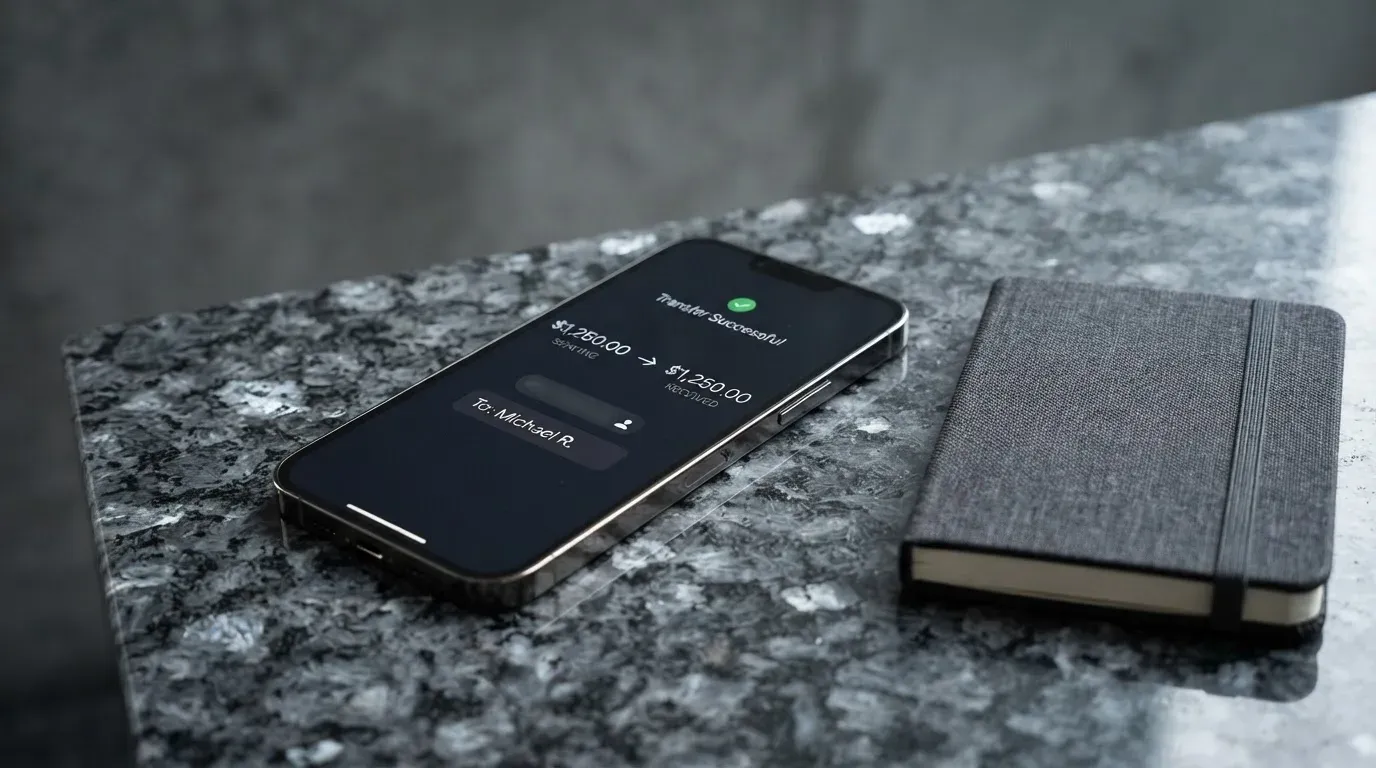
What the page does not say is the list of supported coins and networks. That is a meaningful gap. For most crypto cards the supported assets and the networks they are accepted on are spelled out on the same page, because the wrong network is the most common way for a deposit to be lost: a transfer sent on a chain the provider does not support can be irrecoverable. The card page does not list Bitcoin, Ethereum, USDC, USDT, or any specific asset, and it does not say whether the deposit is on-chain or via a payment processor. To find out which coins and networks are accepted, you have to look inside the Mover app itself, which is a friction point for anyone who likes to confirm a route before sending funds.
There is also no fiat top-up option described. The card is funded from crypto held in Mover, not from a bank transfer into a euro balance, and the minimum top-up is not stated. The card carries a dedicated personal EUR IBAN, so you have an account in the SEPA scheme, but the page frames the card as being funded from crypto rather than from a SEPA credit transfer. Local bank transfers out — using the card to “transferring money to local banks” — are described as available, but the fees for moving a balance back into crypto and the closure process are not stated.
For an EEA reader, the practical shape of the top-up flow is: hold crypto in the Mover wallet, exchange to euros at the rate shown in the app, and the euro balance becomes the card balance. The “Free” exchange is the headline saving, and the implicit cost sits in the spread on that exchange. The “Smart Treasury bonuses” are a separate mechanism that, at least for early customers, can cover part of the EUR 9.00 order fee; the conditions for earning those bonuses are not on the card page.
Paying with the Trastra card every day
In daily use, the Trastra card behaves like a normal Visa prepaid card. You can pay at any merchant that accepts Visa, in store or online, and you can withdraw cash from ATMs across Europe. The card has a dedicated personal EUR IBAN, which means you can also receive SEPA transfers into the underlying account, and the page describes the card as usable for “transferring money to local banks,” which covers the most common domestic payment cases.
What the card page does not describe is support for mobile wallets. There is no mention of Apple Pay or Google Pay in the official card materials, and the page does not describe a virtual card for online-only use. The blocked merchant category list, the in-app controls for freezing the card, the daily transaction count, and the reward or cashback programme are all not stated; a card-cashback programme is not described, either. Disputes and chargebacks are not described either, which is unusual for a regulated card product; the absence is more likely a gap in the public page than a refusal of dispute rights, but it is worth asking support about before you rely on the card for a high-value purchase.
Some third-party sources suggest the card can be added to Google Pay and Apple Pay, though this is not confirmed by the official card product page. Trastra’s self-description on its own Trustpilot company page mentions mobile wallet support; this is not stated on the official card product page. If mobile wallet support matters to you, the only way to confirm it is to check inside the Mover app or contact support at [email protected] before ordering.
For most readers, the practical question is whether the card will work at the merchants they care about. As a Visa-issued prepaid card, it is accepted at any merchant that takes Visa, including online. The BIN (the first six or eight digits of the card number, identifying the issuing institution) will be a Contis-issued BIN, which is a Lithuanian issuer; some foreign merchants apply extra scrutiny to cards issued outside the customer’s billing country, and some US merchants decline foreign-issued prepaid cards outright. If you are an EEA resident paying in the EEA, none of this is usually a problem; if you are an EEA resident paying a US merchant, expect occasional friction.
The card has no stated monthly or annual spending limits beyond the EUR 8,000 balance cap and the EUR 7,700 daily spend cap, so the headroom is fine for everyday use but not for large one-off payments. The mobile apps for Android and iOS and the web app at app.viamover.com are the day-to-day interfaces; app store ratings were not part of the materials reviewed for this page.
What can go wrong with the Trastra card
The card itself is a prepaid Visa, and the spending experience is straightforward, but the wider Trastra and Mover ecosystem carries risks that the card inherits. The most important ones to understand are the issuer, the public feedback, and the support model.
The card is issued by UAB “Finansinės paslaugos ”Contis“”, the electronic money institution mentioned above (EMI licence No. 53). Contis is a known European EMI that issues cards for several programmes, and the licence is a real one. The Trastra side is more complicated: Mover is described as a partner of Trastra, and Holyheld Labs is described as an authorised partner of Trastra Inc. The corporate structure is layered, and the cardholder agreement sits with Contis, not with Trastra.
The product page does not state a chargeback or dispute process, and a prepaid cardholder’s protection depends on the cardholder agreement you sign with the issuer. EU rules give cardholders chargeback rights, but the practical experience of raising a dispute depends on the issuer’s support operation. Contis has a support function, but the Mover side routes support to [email protected], with a knowledge base at faq.viamover.com. The languages and hours of support are not stated.
The public feedback on the wider Trastra service is poor. On Trustpilot, Trastra has 2.0 out of 5 from 747 reviews, with 65% of reviews at five stars and 23% at one star — a sharply bimodal pattern that often signals strong opinion on both sides. The review volume in the last 12 months is low (only 7 reviews), but the historical record includes repeated user reports of blocked and frozen funds, denied withdrawals, support replies that read as copy-paste, and a maintenance window in spring 2025 during which the balance was inaccessible. Some of these reports were followed by worries about an insolvency email related to a Trastra entity.
A note on what the public record does and does not say. These are user reports on a third-party review site, and they describe the Trastra service rather than the Mover-issued card specifically. They are not the same as a regulatory finding. The card is issued by Contis, which is the regulated entity, and the funds sit in a segregated account at Contis. The Trastra reviews nevertheless describe the experience of people who put money into the system and then could not get it out, which is the worst failure mode for any card product.
The third-party reports, which are unverified, include a March 2025 email to customers referencing “Initiation of Insolvency Proceedings” against a related entity, and May 2025 posts claiming the company is closing and pointing at police information about bankruptcy proceedings. None of this is dated official news from the card issuer. The pattern is consistent with a service that has had operational and corporate turbulence even where the regulated card product itself is technically sound.
What this means in practice: the card’s regulated layer (Contis, the segregated account, the EMI licence) is the part that protects your euro balance, and that layer is real. The unreliability risk is in the layer above it: the Mover and Trastra front-end, the support function, and the corporate vehicle. If Mover or Trastra as a brand has a problem, the underlying card programme may keep working, but the customer-facing experience may degrade. The MiCA framework in the EU, which took effect in June 2023 with stablecoin rules applying from 30 June 2024 and CASP rules from 30 December 2024, gives the issuer a clearer regulatory home, but the transitional grandfathering period runs until 1 July 2026, and the current state of authorisation for the wider Trastra corporate group is not on the card page.
The card product does not appear on the issuer’s own page in the materials reviewed for this review, so the only way to check the current state of the programme is to look for an issuer-side notice or to contact support before you top up a large balance. If you keep the balance small — under a few hundred euros, well inside the EUR 8,000 cap — the worst case is bounded. If you load the maximum and the front-end has a problem, the resolution is the issuer’s, and that resolution can take time.
What to take instead of the Trastra card
The Trastra card is one option in a category where there are several alternatives worth comparing. The ones that come up most often are Gemini, Lava, and RedotPay, and each is a different product rather than a like-for-like substitute.
Gemini (4.9 / 10) is a Mastercard World Elite credit card, not a prepaid card, and the difference matters. The Gemini card is paid off in fiat rather than from a crypto balance, and rewards are paid in Bitcoin or one of 50-plus other cryptocurrencies. The headline economics are 4% on gas, EV charging, and transit (capped on the first USD 300 a month), 3% on dining, 2% on groceries, and 1% on everything else. There is no annual fee and no foreign transaction fee, and the rewards are credited instantly to a Gemini account. The Gemini card is a credit card and requires a credit check, so it is not available to readers who cannot pass one, and the supported list of countries is not stated on the card page. The crypto back is a feature, not the funding model, so this is a useful card for someone who already has fiat income and wants crypto rewards, but it is not a substitute for a prepaid euro card funded from crypto.
Lava (7.1 / 10) is a “Lava Card” that spends at 150 million merchants in 150-plus countries. The card has no annual fees, no foreign exchange fees, and no FX spread, and there is no exchange fee or spread on Bitcoin buy and sell through Lava. Top-ups can be made in local currency or in stablecoins, with networks not stated on the card page. Rewards are up to 5% back in bitcoin on every Lava Card purchase, with the conditions not stated. The Lava positioning is closer to the Trastra card than Gemini is, but the fee schedule is lighter (no annual fee, no FX spread) and the rewards structure is more explicit. If the Trastra card’s EUR 15.00 annual fee and 3% non-EUR conversion are dealbreakers, Lava is a more competitive product on those terms.
RedotPay (6.9 / 10) is a Visa debit card with both virtual and physical versions, available in USD and HKD denominations. The application costs are USD 10.00 for a virtual card and USD 100.00 for a physical card, with the physical card fee not cancellable or refundable. Account maintenance is waived: no monthly or annual fee and no inactivity fee. The transaction fee is 1.00% for the default-currency crypto conversion, 1.20% for non-default currency, and there are a few merchant-specific fees for gaming and ad networks. Small-authorisation fees (USD 1.00 or less) are waived for the first five per card per month, then USD 0.20 each; declined transactions are waived for the first three per month, then USD 0.50. Eligibility is complex, with two different official lists: a KYC restriction list of 41 places (including the United States, Russia, Belarus, Ukraine, and Serbia, among others) where identity verification is not available, and a separate card-issuance restriction list that adds India, Indonesia, Morocco, Nepal, Singapore, and Turkey. RedotPay is the most expensive to start (USD 100 for the physical card) but the cheapest to run, and the geographic coverage is broader than the Trastra card’s, though with sharp exclusions.
| Card | Type | Order fee | Annual fee | FX | Rewards |
|---|---|---|---|---|---|
| Trastra | Visa prepaid (EUR) | EUR 9.00 | EUR 15.00 | 3% non-EUR | None stated |
| Gemini | Mastercard credit | Not stated | None | None | 1–4% in crypto |
| Lava | Card (network not stated) | Not stated | None | None, no FX spread | Up to 5% in bitcoin |
| RedotPay | Visa debit (USD/HKD) | USD 10 virtual / USD 100 physical | None | 1.20% non-default | 5 USD welcome, no card cashback rate stated |
Each of these is a different product rather than a straight substitute, and the right pick depends on what you actually need. If you need a euro prepaid card, the Trastra card is one of the few that is euro-denominated by default. If you can hold a USD or HKD balance, RedotPay’s lower running cost is attractive. If you want rewards and have credit, Gemini’s structure works. If you want a low-fee bitcoin-back card and do not need it to be in euros, Lava is the most competitive on the fee side.
Who I would recommend the Trastra card to
The Trastra card is a reasonable product for a narrow reader. The card works, the issuer is a real Lithuanian EMI, the basic economics are not unreasonable, and the Mover wallet is a real product. The costs are higher than several alternatives, and the public information is thinner than you would want, but neither of those is a disqualifier in itself.
The reader I would point at the Trastra card is an EEA resident who lives in one of the 31 listed countries, already has a Mover account or is comfortable opening one, wants a euro-denominated Visa prepaid card funded from crypto, and is willing to keep the balance small enough that an operational problem at the front-end would not be catastrophic. If you only need the card for small, regular spending, the EUR 15.00 annual fee is the main cost to weigh, and the 3% non-EUR fee is the cost to watch if you travel or shop across borders.
The reader I would not point at the Trastra card is anyone who needs a card with rich public documentation, a strong third-party reputation, broad geographic coverage, virtual-card support, mobile wallet support, or a rewards programme. The Trastra card is not strong on any of those dimensions today. If you are in a country that is not on the 31-country list, you cannot get the card at all. If you need a USD balance, you should look at a card that supports USD natively. If you need a credit card with crypto back, Gemini is a better fit. If you need a low-fee bitcoin-back card, Lava is more competitive on the fee side.
The wider reputational question — what the Trustpilot record and the 2025 insolvency-related emails mean for the card itself — is the hardest to weigh. The regulated layer is Contis, and the card programme is an EMI-issued prepaid card, which is a product class that has weathered corporate turbulence in the past (WaveCrest was suspended by Visa in 2018, closing every programme that ran on its cards). If Contis as the issuer is solvent and the programme is in good standing, your balance sits in a segregated account and the worst that can happen is an awkward front-end. The materials reviewed for this page do not give a current, dated confirmation of the programme’s standing, and that is the single most useful thing to ask the support team before you load a meaningful balance.
Frequently asked questions
What is the Trastra card?
The Trastra card is a euro-denominated Visa prepaid debit card funded from a crypto balance held in the Mover wallet. You convert crypto to euros inside Mover and the euro balance is what the card spends. The card is issued by the same e-money institution.
How does the Trastra card work?
You install the Mover app, complete the issuer’s identity checks, fund the wallet with supported crypto, exchange crypto to euros at the rate shown in the app, and spend the euro balance at any Visa merchant or ATM. The card carries a dedicated personal EUR IBAN, and the order fee of EUR 9.00 is taken from the first top-up.
Is Trastra a bank?
No. Trastra is not a bank, and the card is an e-money product, not a deposit product. The issuer is the same e-money institution. Funds are held in a segregated account and “not covered by the Deposit Insurance System of the Republic of Lithuania.”
Who owns Trastra?
Trastra is the brand, and the page describes Mover as a partner of Trastra, with Holyheld Labs as an authorised partner of Trastra Inc. The card itself is issued by UAB “Finansinės paslaugos ”Contis“”, a separate regulated entity. The full ownership of Trastra Inc. is not laid out on the card page.
Is the Trastra card available in my country?
The card is currently available in 31 listed countries, including Germany, France, and the United Kingdom, and the stated aim is to make it available to all EEA residents. Non-European residents are told “Not at the moment.” The 31-country list is not on a single page; you find it by working through the Mover onboarding.
How do I apply for the Trastra card?
You apply by downloading the Mover app for Android or iOS, or by using the web app at app.viamover.com, completing the issuer’s identity checks, funding the wallet, and ordering the card from inside the app. The EUR 9.00 order fee is deducted from the first top-up.
Does the Trastra card require KYC?
Yes. As an EU e-money product, the card is subject to anti-money-laundering and customer-due-diligence rules, which require the issuer to verify identity, address, date of birth, nationality, and sanctions status. The exact documents requested are not described on the card page; they are collected inside the Mover onboarding flow.
How do I top up the Trastra card?
You top up by holding crypto in the Mover wallet, exchanging it to euros inside the app at the rate shown, and the euro balance becomes the card balance. The crypto-to-EUR exchange is described as “Free,” with the rate set at the time of the transaction. The supported coins and networks are not stated on the card page; the Mover app shows them in practice.
Can I add the Trastra card to Apple Pay or Google Pay?
Unofficial sources, including Trastra’s self-description on its Trustpilot company page, mention Google Pay and Apple Pay support. The official card page does not state it, so the only way to confirm is to check inside the Mover app or contact support at [email protected] before ordering.
Is the Trastra card safe?
The card product is an e-money product issued by a regulated Lithuanian EMI, with funds held in a segregated account, login protected by password and 2FA, new devices approved by email, and transactions protected by Visa identity check and 3-D Secure. The product is not covered by deposit insurance. The wider Trastra service has a 2.0/5 Trustpilot score from 747 reviews, including user reports of frozen funds and denied withdrawals, and there are 2025 reports of an insolvency email related to a Trastra entity. These are user reports on a third-party site, not regulatory findings, and they describe the wider service rather than the Mover-issued card specifically.
Credit and cashback cards – cryptocardbasics
Content created by the «cryptocardbasics» team