
The card that reads as a normal Visa in the shop, with a crypto balance behind it
 Available in US
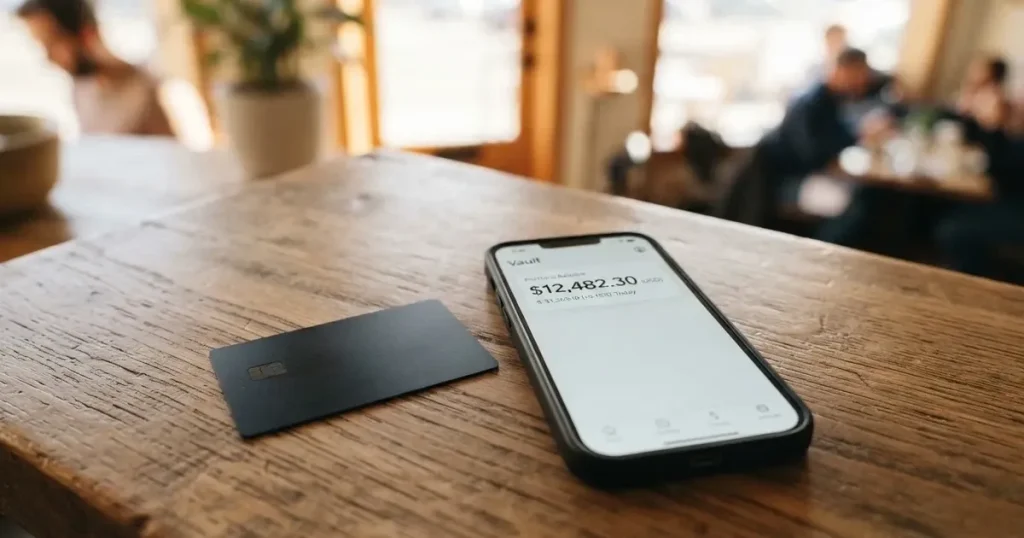
The Trustee Plus card is a Visa Prepaid card you load with stablecoins and then spend like an ordinary bank card — online, in stores, and in Apple Pay or Google Pay. On paper that is a useful shape for anyone who has money in USDC or USDT and wants to turn it into everyday spending without a traditional bank account in their own name. On paper, most of that promise is there. The trouble is concentrated in three places: the physical card is not available, the regulatory position has moved under it, and the exact terms of who may hold one are not published in a form you can check before signing up. My score for it is 5.7 out of 10 — a card that works for a narrow and specific person and quietly does not work for most of the people who will search for it.
The conditions described here are current as of October 28, 2026.
Verdict: 5.7 / 10, and the card suits one person well
A 5.7 sounds like a shrug. It is not. The card does what it does, cheaply, for the person it was built for: someone holding dollars in a stablecoin, spending those dollars online and in shops, comfortable with an app-based virtual card and with the idea that a private company in Panama, with a card programme in England, sits between them and their money. If that is you, the fee structure is genuinely good — no monthly charge, no payment fee, and a single card balance in USD that you can load from a crypto wallet.
What it is not is a general-purpose replacement for a bank card. There is no physical card to order today, no ATM, one published monthly ceiling, a conversion rate at which the provider’s markup is not disclosed, and a list of supported countries that I could not find on any public page. Those are not small omissions. A card that only exists inside a phone app is a payment instrument you can lose, misconfigure, or have frozen by an automated check — and the pattern of complaints I found is exactly that.
Here is how the total breaks down.
| Criterion | Mark | Why |
|---|---|---|
| Who can get it | 3 / 10 | Ukrainians regardless of country of residence; but the Terms require residence in a supported country and that list is not published, and registration in Ukraine was halted |
| Cost | 8 / 10 | Virtual card opening 10 USD, maintenance 0 USD, payments 0%, card top-up 0.5%; conversion runs at the Visa rate with no markup disclosed; 20 USDT per month wallet inactivity fee after a year |
| Top-up options | 9 / 10 | Wallet in USDC and USDT, 30+ coins and networks including TRC20, ERC20, SOL, NEAR; fiat through Smart P2P and a personal IBAN |
| Reliability and complaints | 5 / 10 | Card issued by Wirex Limited (England, 09334596), operator MIKEPAY INC. (Panama); NBU ban in September 2025; reports of freezes after source-of-funds checks |
| Everyday use | 4 / 10 | Apple Pay and Google Pay are supported; physical card unavailable (waitlist) and ATM unavailable |
Total: 5.7 / 10.
The two numbers at either end of that table tell you where the card’s value sits. Top-up options score highest because the routes in are broad — stablecoins across a long list of networks, plus fiat through peer-to-peer purchases and a SEPA IBAN. Cost scores high because the headline numbers are low. Who can get it scores lowest because the eligibility story is genuinely unclear, and Everyday use scores low because the card you would put in your wallet does not exist yet.
One more thing about who this is for, because it changes how you read everything else: the audience here is people topping up a virtual USD card with stablecoins. If you do not already hold crypto, none of this is your use case, and you would be better served by an ordinary prepaid or debit card from an institution in your own country.
Will they give you the card
This is where I have the biggest reservations, and it is worth separating what the card says from what I could not find.
The Ukrainian-language FAQ on the company’s site says that Ukrainians can get the card regardless of country of residence. That is a friendly sentence and it is the one most people will find. The Terms of Use tell a different, stricter story. They require that the user reside or be incorporated “in countries and territories We support” and that they are not a citizen and/or resident of any country appearing on sanctions lists. Residents of sanctioned countries are not allowed, and the rule covers both citizenship and residence, not just one.
The problem is the list itself. The Terms refer to “countries We support” and the English-language card page has no eligibility FAQ at all. I could not find that list published anywhere. So the honest answer to “will they give you the card” is: if you are a Ukrainian, the FAQ says yes from anywhere; if you are anyone else, the Terms say only people in a supported territory, and the territory list is not published. You would be applying without being able to check the rule in advance.
There is also unofficial information that points the other way. A third-party site described the card as offered to residents of the EEA in February 2026. That contradicts the official Ukrainian-language statement, and I am flagging it as unofficial and unconfirmed by the card — the card’s own pages do not say it.
The regulatory situation has also moved. In September 2025 the National Bank of Ukraine barred the Lithuanian operator from offering payment services in Ukraine. The director said existing clients would be unaffected, but new registrations in Ukraine were halted on May 22. The Terms of Use were last updated on 25 May 2026. For you, this means the Ukrainian route may no longer open the door it used to, and you should not assume a Ukrainian address or a Ukrainian-language FAQ gets you an account today.
How to get it
The process is short and runs through the app. First you install the Trustee Plus app. Then you complete identity verification — KYC is done inside the app before you order the card, through a partner called Kycaid. A Trustee guide describes the documents as a photo of a passport or ID card plus a selfie. Proof of address is not stated. You must be 18 or the legal age given in the Terms. Once you are verified, the app issues a virtual card, and you top it up.
The card itself comes as a virtual card you can order now, and a physical card that is currently unavailable and sits on a waitlist. It is a Visa Prepaid. The base currency is USD, the card is valid for three years, and it draws on its own separate card balance rather than on your wallet directly.
Two things you should not wait to ask about. First, delivery: because the physical card is unavailable, the countries it would ship to, the delivery time, the delivery cost, and whether a lost card can be replaced are all simply not stated. If a physical card matters to you, you have no information to plan around. Second, the verification itself: there is a single KYC step through Kycaid, but the verification levels, how long it takes, and the reasons a verification gets rejected are not stated. If you have been rejected by another crypto service before — a mismatch on an old address, a name spelled differently on your documents — this is exactly the step where that bites, and there is no published appeals process.
One small thing about the app itself: the Trustee Plus app is also distributed as an APK directly from the company’s site. I could not find ratings for the Trustee Plus app specifically; an App Store lookup surfaced the separate Trustee Wallet app at 2.86 from 36 ratings, updated 2026-03-19. That is a different product and I am not offering it as a proxy, but it is the only rating in the public record I could reach.
Fees: what it really costs
The headline numbers here are among the better ones in this category, and the fine print is where the cost actually hides.
| Fee or limit | Value |
|---|---|
| Opening a virtual card | 10 USD |
| Card maintenance | 0 USD |
| Payments | 0% fees |
| Topping up the card balance | 0.5% |
| Converting local-currency payments (EUR, PLN, GBP) | Automatic at the Visa rate; any markup not stated |
| Cash withdrawal at an ATM | Currently unavailable |
| Monthly limit | 30,000 USD per the table; the FAQ says a monthly operations limit of 30,000 USDC |
| Per-transaction and daily limits | Not stated |
| Wallet inactivity fee | 20 USDT equivalent per month after one year without transactions, per the Terms |
Let me walk you through what those lines mean when you actually pay for something, because “0% fees” covers less than it sounds.
Paying in dollars. You spend from a USD card balance at 0% fees. That is the clean case. If you bought the balance by topping up the card from the wallet, the 0.5% top-up fee is the cost of getting the money onto the card in the first place.
Paying in euros, zlotys or pounds. The card converts automatically at the Visa rate. The card does not disclose what, if anything, it adds on top of that rate. So you know the conversion is not worse than Visa’s own rate and you know nothing about whether a margin sits behind it. That is the one line in this table I would want answered before you commit to a big-ticket purchase.
Paying through Apple Pay or Google Pay. The card’s own pricing applies as above; the mobile wallet does not add a fee of its own, but the 3-D Secure check that Visa Secure performs online can, in rare cases, send a payment to a one-time-code challenge rather than approving it frictionlessly.
Taking money out at an ATM. You cannot. Cash withdrawal is listed among the physical card’s benefits, but the physical card is unavailable, so the ATM function is marked “currently unavailable” and the fee and allowance are not stated. If you need cash, this card is not it.
The fee that catches people out. That 20 USDT per month inactivity fee, charged after a year without transactions. It is in the Terms, not on the card page. If you open the card, load it, and then stop, a year later the wallet starts costing you twenty dollars a month. That is a real number to keep in mind before you forget the card exists.
There is a single tier. One virtual card at 10 USD, physical card unavailable, no tiered limits and no cashback. The Terms also say the Payment Card service “may be subject to fees”, which is a reminder that the published table is not a contract.
How to Top up the card
Top-up is where this card is genuinely strong, and it is the reason I scored it 9 out of 10 here.
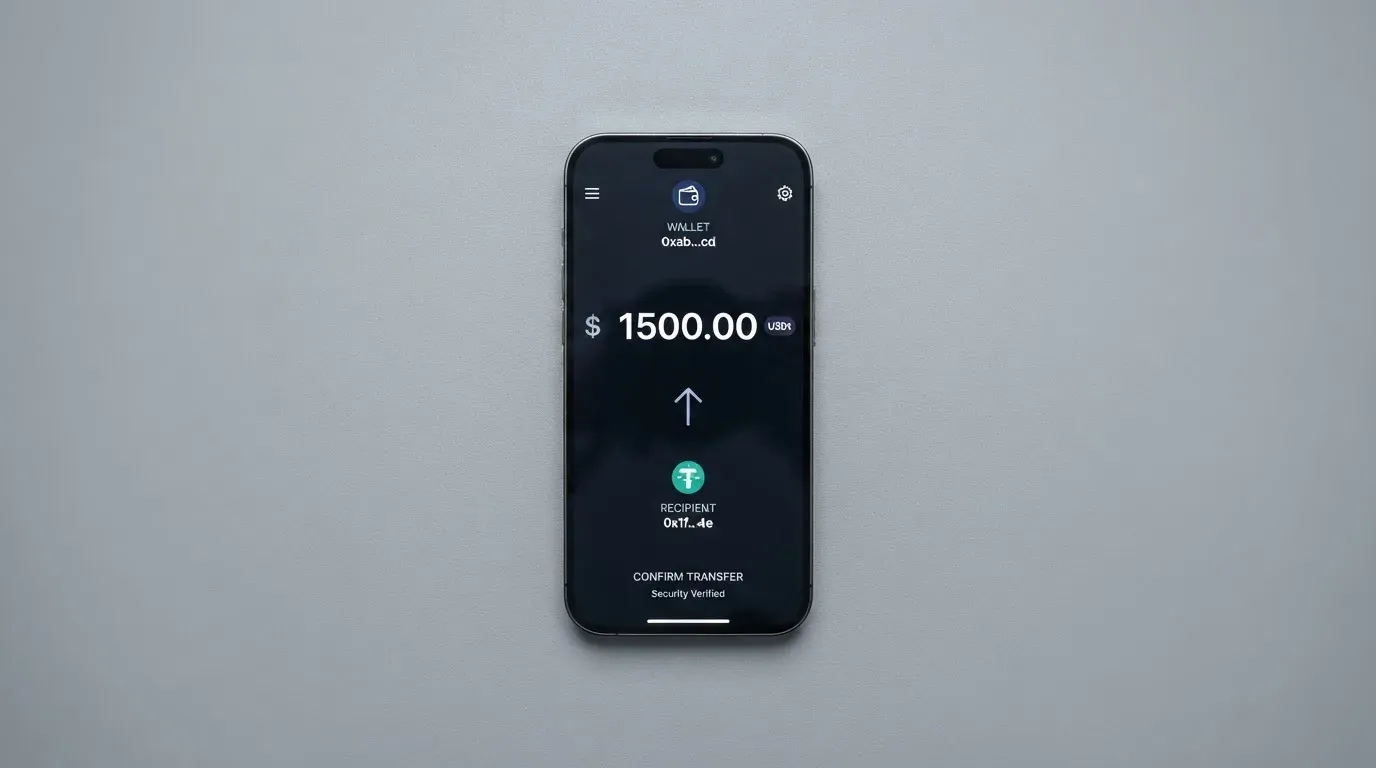
You top up the Trustee Plus wallet in USDC — the English guide also names USDT — then open the card section in the app and use “Top up” to move funds from the wallet to the card balance. The wallet supports more than 30 coins and networks, including TRC20, ERC20, SOL and NEAR. For fiat, there is Smart P2P with bank cards and a personal IBAN for SEPA.
The card top-up costs 0.5%, per the Ukrainian page; the English page shows “0% fees on transactions” and lists no other fees, so I am taking 0.5% as the figure to plan with. Wallet top-ups in stablecoins are a separate step: who pays the network fee and what the minimum amount is are not stated. Fiat comes in through P2P purchases and your personal IBAN via SEPA.
Moving money back out — from the card balance to crypto or to a bank — the fees are not stated, and neither is what happens to a remaining balance if you close the account. If you are someone who needs to reverse a mistake or pull funds home, that silence is worth a question to support before you load anything large.
One technical caution that belongs in this section rather than in the abstract: a stablecoin transfer sent on a network the provider does not support, or to an address belonging to a different network, can be lost or need manual recovery with no guarantee. Blockchain transfers are irreversible. And Circle stopped supporting USDC on Tron in February 2024, so “USDC over TRC20” is not a native option — if you are sending USDC, check which network the app actually expects before you confirm.
Paying with it every day
This is the card’s weak flank, and it is weak in one specific way: the physical card does not exist.
Everyday use is otherwise set up reasonably well. Apple Pay and Google Pay are supported, and the card page claims access to 60+ million merchants worldwide, for online payments and subscriptions. Because the card lives in your phone’s wallet, the physical-card problem is partly worked around — you add the card to Apple Wallet or Google Wallet and tap. But that only helps if your phone is to hand, and it means a lost phone is a lost card.
What is not stated is where the card will not work. Blocked merchant categories are not published — and the one category worth knowing about in this space is gambling (MCC 7995), which many issuers block on prepaid cards by policy rather than by law, with the blocked list varying by issuer. You cannot tell from the public pages whether this card declines it. If gambling or a similar category matters to you, ask.
On rewards, the card page shows no cashback. Separate loyalty and referral programmes exist, and those are structured differently from card cashback; I would not count them as a rebate on your spending. Deposits, ATM withdrawals and so on are excluded from cashback on cards in this category generally, so treat any figure you see elsewhere with care.
There is also a class of decline you should know about, because it explains a lot of complaints in this whole category and nothing in the card’s own materials. When you pay online, the merchant’s system looks up the card’s issuing country from the BIN — the first six or eight digits of the card number, which identify the issuing institution. If the issuer country differs from your billing address, the merchant may apply extra scrutiny. Address Verification Service, which compares the street number and ZIP you typed against the issuer’s records, is mainly offered in the US, Canada and the UK and is generally unavailable for foreign-issued cards. That combination — a foreign BIN and no address verification — is a common cause of declines at unfamiliar merchants. It is not a fault in your card, but it will feel like one.
One last everyday-use fact: what happens if a payment is disputed. Chargeback rights, reason codes, and the process for a goods-not-received case are not stated. Prepaid-card coverage varies by jurisdiction and should not be assumed. If you are about to make a large purchase on this card, that is the gap I would want filled.
What can go wrong
Here is the honest risk section, and it is the longest one.
The card can be frozen after a source-of-funds check. This is the most-reported problem with the card. User reports on Trustpilot cite funds frozen after source-of-funds checks, along with failures to withdraw and failures to pay, and a reference to cards moving to a merged platform. A June 2026 review describes slow USDT transfers, an unclear AML review, and an unclear complaint procedure. The company itself states no official incidents.
AML review exists and its outcome is opaque. The app lists an “AML Check” as a feature. When a review slows or stops a payment, you are not told the reason or the timeline. This is normal for the category — anti-money-laundering rules require ongoing monitoring and suspicious-activity reporting, and if due diligence cannot be completed, rules require the institution to refrain from the transaction or end the relationship. But “normal” is not “comfortable”, and the difference shows up in your cash flow.
The regulatory picture is not settled. The Terms name MIKEPAY INC. (registered in Panama) as the service provider and WIREX Limited (England, company number 09334596) as the card service, and the card page says it is issued in Great Britain. No licence or regulator registration is mentioned on the pages I read. I should say once, plainly: where the card’s public pages do not state something, this review says so, and that is the case for licensing.
Custody means trusting one company. The card draws on a custodial wallet-with-card. That is a different product from the non-custodial Trustee Wallet. With a custodial wallet the provider holds the credentials, so you must trust them completely — and the record of custodial platforms is not reassuring: Mt. Gox (about US$350 million reported stolen 2011–2014), Coincheck (about US$400 million, 2018), and the Ronin Network (US$625 million, 2022) are the standard examples. A seed phrase, typically 12 to 24 words, is the unencrypted form of the private key; anyone who obtains it can restore the wallet and spend it, and because blockchain transfers are irreversible, the network cannot freeze or return the funds.
Platforms get switched off. Visa does not issue crypto cards to consumers; it licenses issuers and can suspend a programme. It terminated its global agreements with FTX on 13 November 2022 and the FTX US debit card was wound down. WaveCrest, a Visa issuer that supplied crypto card brands, was suspended by Visa in Europe in 2018, closing all WaveCrest-issued Visa programmes. Closures typically give notice, then stop spending and loading, then ask you to withdraw remaining balances. When a card programme dies, your first task is moving money out, and you will be doing that against a closing operation.
The app is the whole product. Two-factor authentication, Face ID, a bug bounty on HackenProof, and Hacken audits of the apps in February 2025 are all listed as safeguards — real ones, and all of them protect the app, not the card in the world. Card freeze and insurance are not stated. The app is also available as an APK from the company’s site, outside the store’s review process.
The wallet fee has a one-year fuse. Twenty USDT per month after twelve months of no transactions.
And the elephant: nobody can tell you who is eligible. The supported-country list is not published. For anyone outside the Ukrainian-specific carve-out, that is not a detail. It is the first question.
What to take instead
Three cards came up repeatedly as comparisons, and each solves a different part of what Trustee Plus does badly. I am not recommending any of them outright — each has its own conditions you would have to meet — but the choice is worth walking through.
RedotPay scores 6.9, above Trustee Plus. It has both virtual and physical cards, USD and HKD currencies, and a card network described as Visa debit in the Singapore terms. On cost: virtual card application 10.00 USD, physical 100.00 USD (not cancellable or refundable once paid), virtual replacement 5.00 USD first then 10.00 each, and account maintenance waived. But the transaction fee is 1.00%, non-default currency is 1.20%, small authorisations and declines carry their own per-month charges after free allowances, and some merchants carry 1.5% (min 0.50 USD). Its eligibility rules are also a work of art: one official list blocks citizens of a long list of countries including Ukraine, Russia and Belarus; a second list, dated 28 August 2026 with 47 places, adds India, Indonesia, Morocco, Nepal, Singapore and Turkey for residents ineligible for both virtual and physical cards. A physical card exists; Trustee Plus’s does not.
Bitpanda scores 6.5. It requires a verified Bitpanda account and residence in a euro-area country, and users verified via “Bankident” cannot order. The card is a physical Visa debit card in EUR only, with a free first shipment, reissue at EUR 5.90 (the FAQ says EUR 9.90 for lost or stolen) and each additional card at EUR 10. Spending draws on a chosen asset — listed cryptocurrencies, precious metals or EUR — converted at the point of payment, with a EUR 1 minimum. It is a cleaner proposition if you are in the euro area and want a physical card; the cashback line is unreconciled between the body (1% on crypto spending) and the page summary (“up to 2%”).
Wirex scores 6.7. Worth noting because it is the company that actually issues the Trustee Plus card. It offers virtual and physical cards, one of each at a time, with issuance free in the UK, EEA, APAC, Singapore, Australia and “Other”. The card page says no annual or foreign exchange fees, and the exchange rate is shown in the app before you confirm. Rewards come back as WXT cryptoback: Standard 0.5%, Premium 3%, Elite up to 8%. Eligibility is region-dependent, and its Singapore terms bar cash withdrawals there.
| Trustee Plus | RedotPay | Bitpanda | Wirex | |
|---|---|---|---|---|
| Score | 5.7 | 6.9 | 6.5 | 6.7 |
| Physical card | Unavailable, waitlist | Yes | Yes | Yes |
| Card currency | USD | USD, HKD | EUR only | Not stated |
| Card opening | 10 USD | 10.00 USD virtual, 100.00 USD physical | Free first shipment | Free in listed regions |
| Monthly fee | 0 USD | Waived | Not stated | None stated |
| Payment fee | 0% | 1.00% | Not stated | None stated |
| Non-default currency | Visa rate, markup not stated | 1.20% | EUR 0, VISA mark-up applies | None stated |
| Top-up | USDC, USDT, 30+ networks, P2P, IBAN | On-chain crypto, crypto by card | Spends from chosen asset | Account-linked, SEPA and others free |
| Main catch | No physical card, no published country list | Fee load, restrictive country lists | Euro area only | Region-dependent availability |
Who I would recommend it to
I would recommend this card to one person: someone who already holds dollars in a stablecoin, pays for most things online or by phone, is comfortable doing all their money inside one app run by a company in Panama with an English-issued card, and has checked — actually checked, not assumed — that their country is on a list they have seen with their own eyes. For that person it is cheap, fast, and does what it promises.
I would steer everyone else away. If you need a physical card, this is not it. If you need cash from an ATM, this is not it. If you need to know in advance whether you are eligible, this is not it, because the list is not published. If you are a Ukrainian outside Ukraine, note that the FAQ says yes and the regulator halted new registrations — take neither as settled. If you are cautious about custody, the fact that the balance sits with the provider, not with you, is not a small thing.
And if what you actually want is a card that spends from crypto, the comparison above is the next five minutes of your life, well spent.
Frequently asked questions
What is the Trustee Plus card?
The Trustee Plus card is a Visa Prepaid card you load with crypto and spend as an ordinary payment card. You top up a wallet in USDC or USDT, move the balance onto the card, and pay online, in stores, or through Apple Pay and Google Pay. The base currency is USD, the card is valid for three years, and it draws on a separate card balance rather than your wallet directly.
How does the Trustee Plus card work?
It works as a prepaid card rather than a debit card: it spends a balance you have loaded first. You buy or hold crypto in the Trustee Plus wallet, open the card section, and use “Top up” to move funds to the card balance. Because the balance is funded in advance, the card cannot overdraw — but it also cannot be topped up beyond what the app and the compliance checks allow.
Is Trustee Plus a bank?
No, it is not presented as one. The Terms name MIKEPAY INC., registered in Panama, as the service provider, and Wirex Limited in England as the card service; the card page says the card is issued in Great Britain. No licence or regulator registration is mentioned on the public pages I read. The card is a payment instrument from an issuer, not a deposit account with deposit protection.
Who owns Trustee Plus?
The Trustee brand runs the app and the wallet; the card itself is issued by Wirex Limited (England, company number 09334596), and the Terms name MIKEPAY INC. (Panama) as the service provider. Trustees are listed as partners include Kycaid, HackenProof, Binance, Kraken, MoonPay and WhiteBIT. The non-custodial Trustee Wallet is a separate product from the custodial wallet-with-card.
Can I use the Trustee Plus card in my country?
That depends on where you are, and the answer is not published cleanly. The Terms require residence in “countries and territories We support” and exclude citizens and residents of sanctioned countries, but that supported list is not on any page I found. The Ukrainian FAQ says Ukrainians can get the card from anywhere; new registrations in Ukraine were halted in May 2025. Check with support for your specific country before you load money.
Does the Trustee Plus card require KYC?
Yes. Identity verification happens in the app before you order the card, through a partner called Kycaid, using a passport or ID card photo plus a selfie. You must be 18 or the legal age in the Terms. The verification levels, processing time and reasons for rejection are not stated, so if you have been rejected elsewhere before, expect this to be the step that matters.
How do I top up the Trustee Plus card?
Top up the wallet first in USDC (USDT is also named in the English guide), then use “Top up” in the app’s card section to move funds to the card balance. The wallet supports 30+ coins and networks including TRC20, ERC20, SOL and NEAR, and fiat comes in through Smart P2P with bank cards or your personal IBAN for SEPA. The card top-up costs 0.5%; network fees and minimums are not stated.
Is the Trustee Plus card free?
Opening it is not free: a virtual card costs 10 USD. After that the headline numbers are good — 0 USD monthly maintenance and 0% on payments — but two costs hide in the fine print. Converting a non-dollar payment runs at the Visa rate with any markup not disclosed, and the Terms charge a wallet inactivity fee of 20 USDT equivalent per month after one year without transactions.
Is the Trustee Plus card safe?
Safety here is a trade-off, not a verdict. The card is custodial, so the provider holds your credentials and you trust them completely — and custodial platforms have a serious history (Mt. Gox, Coincheck, Ronin). Listed safeguards include two-factor authentication, Face ID, an AML check, a HackenProof bug bounty and app audits. The card pages do not state card freeze, insurance, dispute handling or chargeback rights, and a frozen balance after a source-of-funds check is the most common complaint I found.
Is the Trustee Plus card worth it?
For someone already holding stablecoins who pays mostly online and by phone, yes — the fees are low and the top-up routes are wide. For anyone who needs a physical card, an ATM, or certainty about eligibility, no: the physical card is on a waitlist, cash withdrawal is unavailable, and the supported-country list is not published. Compare it against a card that ships, because there is no version of this card that solves those three problems today.
App and neobank cards – cryptocardbasics
Content created by the «cryptocardbasics» team