The card that turns a crypto balance into ordinary spending — priced accordingly
 Available in US
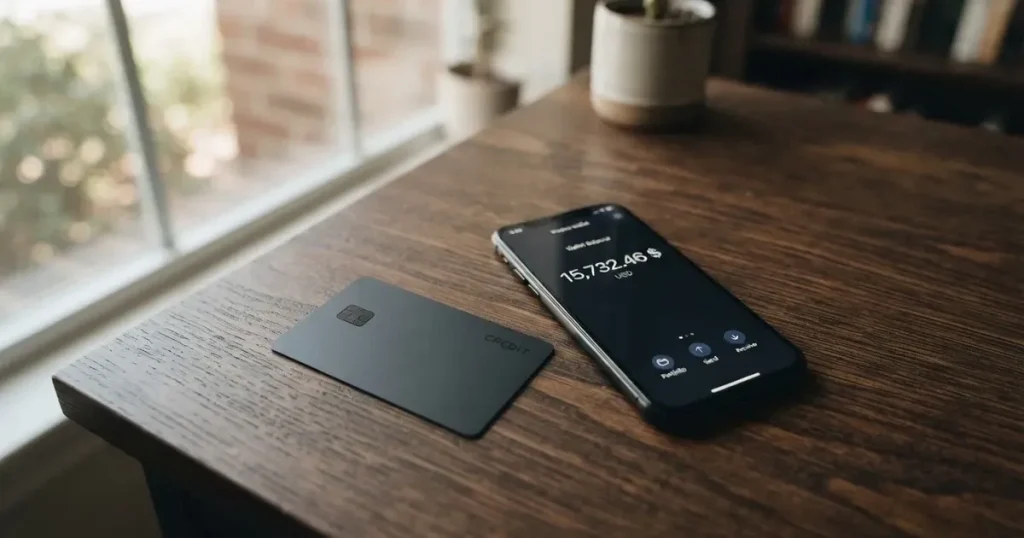
If ordinary banking has been difficult for you — a rejected application, a country without a local card, a closed account — then a card like Volet looks like the practical answer. It is a payment card you load from a crypto wallet, and it spends like any other card in a shop. The pitch is understandable. The price of getting there is where the disappointment usually lives, and that is what this page is about.
My score for Volet is 6.0 out of 10. That is not a rejection; it is a card that does one specific thing competently and charges you in several places along the way for the privilege.
The conditions described here are current as of October 28, 2026.
The verdict: a prepaid card from a crypto wallet, priced like one
Volet suits you if you already hold or plan to hold crypto, if you want a card that works in the shops and websites you actually use, and if you would rather convert in small steps than move a large balance at once. It suits you particularly if you are in Europe, Asia-Pacific or the broader set of countries where a global digital Mastercard is offered, and you want a regional card rather than a universal one.
It does not suit you if your priority is the lowest possible cost. It does not suit you if you want a bank account behind the card, a named issuer you can take to a regulator, or deposit-guarantee protection on the balance. It also does not suit you if you need to know exactly which networks your money travels on before you send it, because the card’s public pages do not say.
| Criterion | Mark | Why |
|---|---|---|
| Who can get it | 8 / 10 | Service in 180+ countries; global digital Mastercard in 150+ countries, regional cards for Asia-Pacific and Europe |
| Cost | 4 / 10 | Issuance: digital global $5, Asia-Pacific plastic $5, Europe Virtual 1 USD/EUR; card top-up from the e-wallet 2.5% + $1 on the digital global, 1% + 1 USD/EUR in Europe, 3.5% by wallet card |
| Top-up options | 6 / 10 | Card loads only from the fiat Volet wallet; USDT, USDC, BTC, ETH and others are deposited and converted to USD or EUR, networks not named |
| Reliability and complaints | 5 / 10 | Issuer and legal entity not named, regional agreements; Trustpilot 4.1 from 5 on 965 reviews, complaints about high fees, verification limits, cards not sent |
| Everyday use | 7 / 10 | Digital and plastic Mastercard and Visa, Apple Pay and Google Pay on some cards; ATM terms not officially disclosed |
The total is 6.0 / 10. The pattern in that table is the whole story: availability is generous, everyday spending is decent, and everything to do with cost and with who is actually behind the card is where it loses ground.
Will they give you the card?
Yes, for a large part of the world, and the answer depends on your region rather than on your nationality as such.
Volet’s own pages say the service runs in “180+ countries”. Availability of the card itself is narrower and regional: a global digital Mastercard in 150+ countries, separate Asia-Pacific cards, and separate Europe cards for Europe, Turkey and Israel. The page speaks throughout in terms of “region” — residence versus citizenship is not stated anywhere in the public material, and that distinction matters more than it sounds, because some of the regional cards are described by where you live while others follow restrictions attached to nationalities.
On the restricted side, third-party sources — unofficial, and not confirmed by Volet — list the United States, the United Kingdom, Puerto Rico, Cuba, Iran, Syria and North Korea as restricted, with 29 restricted countries in total, and 51 countries available. I would treat that list as a starting point to check rather than as the rule itself, and I would check your own country on Volet before you plan around this card.
The regional breakdown as reported unofficially:
- Europe: Europe cards for EU residents, plus Switzerland and Norway; Turkey and Israel for Visa.
- Asia-Pacific: Australia, Cambodia, Japan, Malaysia, New Zealand, Philippines, Singapore, South Korea, Thailand, Vietnam.
- Everything else in the service footprint: the global digital Mastercard route.
Two things to weigh before you apply. First, being in a country where the service operates is not the same as being able to get a card — the two lists above are different lengths. Second, if you have moved countries recently, the region that decides your card is the one that will also decide your limits and your currency, so think about which you will be in a year from now rather than where you are this month.
How to get it
The application itself is short. The basic functions of the Volet account work without identity verification. Full verification is what unlocks the cards, all the card features and higher limits, and Volet says it “usually takes only a few minutes”.
Which documents you will need is not stated on the card’s own pages. Unofficial third-party reporting describes an identity document, a selfie or liveness check, proof of address, and sometimes source-of-funds information depending on the programme — and for Asia-Pacific, proof of a residential address in one of the named countries. Volet itself does not publish a document checklist, and it does not state an age requirement. Treat the above as a plausible preparation list rather than a promise.
There is a second identity story worth knowing, from the reviews rather than the site: in September 2026 a UK user reported being unable to complete full verification, and in March 2025 a user reported a bank-statement PDF being rejected as proof of address, with Volet saying the issuing partner makes that call. That points at the structure underneath: the person who decides may not be Volet.
What you can pick from, according to the card pages:
- Global digital Mastercard, denominated in USD.
- Asia-Pacific plastic Mastercard, denominated in USD.
- Europe Virtual and Europe Plastic, Visa or Mastercard, denominated in USD or EUR.
Plastic cards are the Asia-Pacific and Europe/Turkey/Israel versions. Delivery is described as “free or express”, but neither the timeframe nor the price of express delivery is stated, and neither is the cost of a replacement card. Unofficial figures for replacement — digital $19.95, Europe €/$1 for virtual or €/$5 for plastic, Global Plus $120 — should be checked with support before you rely on them, because the card’s public pages do not confirm them.
Fees: what it really costs
This is where the 4 out of 10 comes from. Volet is not expensive to open. It is expensive to use repeatedly, because the money crosses a boundary more than once: crypto to wallet, wallet to card, card to merchant.

| Fee or limit | Value |
|---|---|
| Issuance, digital global | $5 |
| Issuance, Asia-Pacific plastic | $5 |
| Issuance, Europe Virtual | 1 USD/EUR |
| Issuance, Europe Plastic | $5/EUR 5 |
| Monthly card fee | Not listed; the FAQ says no monthly fees |
| Card top-up from the e-wallet, digital global | 2.5% + $1 |
| Card top-up from the e-wallet, Asia-Pacific | 1.5% + $1 |
| Card top-up from the e-wallet, Europe | 1% + 1 USD/EUR |
| Top-up to the e-wallet by wallet card | 3.5% |
| POS/FX | No extra fee, Mastercard rate; Europe stated as no POS fee |
| Crypto deposits to the wallet | Free |
| Auto-conversion to fiat/stablecoin balance | $1 for USDT/USDC, free for BTC/ETH and others |
| ATM | Not stated officially |
| Purchase limit, digital global | Up to $50,000 per purchase |
| Purchase limit, Asia-Pacific | Up to $22,000 per purchase; $6,500 load per day |
| Purchase limit, Europe | Not listed |
| Monthly caps | Not listed |
| Tiers | One tier per card type; card types differ by region only |
Now three everyday payments, with the fees that actually attach.
A coffee bought with the digital global card. You load the card from your fiat e-wallet balance first, and that load costs 2.5% plus $1. On the global card there is no extra POS or FX fee — the Mastercard rate applies. So the round trip is: crypto into the wallet, wallet to card at 2.5% + $1, then spend at the merchant’s price. A one-dollar coffee carries the fixed dollar, which is the part that bites on small purchases.
A euro supermarket run on a Europe card. Here the card load is 1% plus 1 USD or EUR, which is the cheapest of the three routes, and the Europe card states no POS fee. If your balance is already in euros, this is the version of Volet that makes the most sense, and it is the reason the Europe card exists as a separate product.
A monthly subscription paid from a card you top up by card. If you put money into the Volet wallet using a Visa or Mastercard, that step costs 3.5%. Combined with a later card load, you have paid twice to move the same money. This is the path a February 2026 reviewer calculated at up to 11% for a wallet-to-card route — not an official figure, but a reminder that the layers add up.
One more number worth knowing, because it is the one people ask about: on ATM withdrawals the official pages say nothing at all. Unofficial reports give €/$1.99 domestic and €/$2.99 outside the region for Europe, $2.99 for Asia-Pacific with $1.99 in Australia, $2 plus 1% for Global Plus with another 2% for non-USD, and no clear figure for the digital card. Unconfirmed, but it tells you cash is the expensive part of this card, and the people who rely on cash are exactly the people the card is meant to serve.
Top up: one route in, and it is not the obvious one
Here is the rule that catches people out: the cards load only from the fiat Volet e-wallet. Not directly from a bank account, not directly from an exchange. Crypto — USDT, USDC, BTC, ETH and others — is deposited into the wallet and then converted into USD or EUR. The networks are not named on the card’s pages, and I would not send anything until you have confirmed the network in the app with support, because a transfer to an unsupported network can be lost with no built-in recovery.
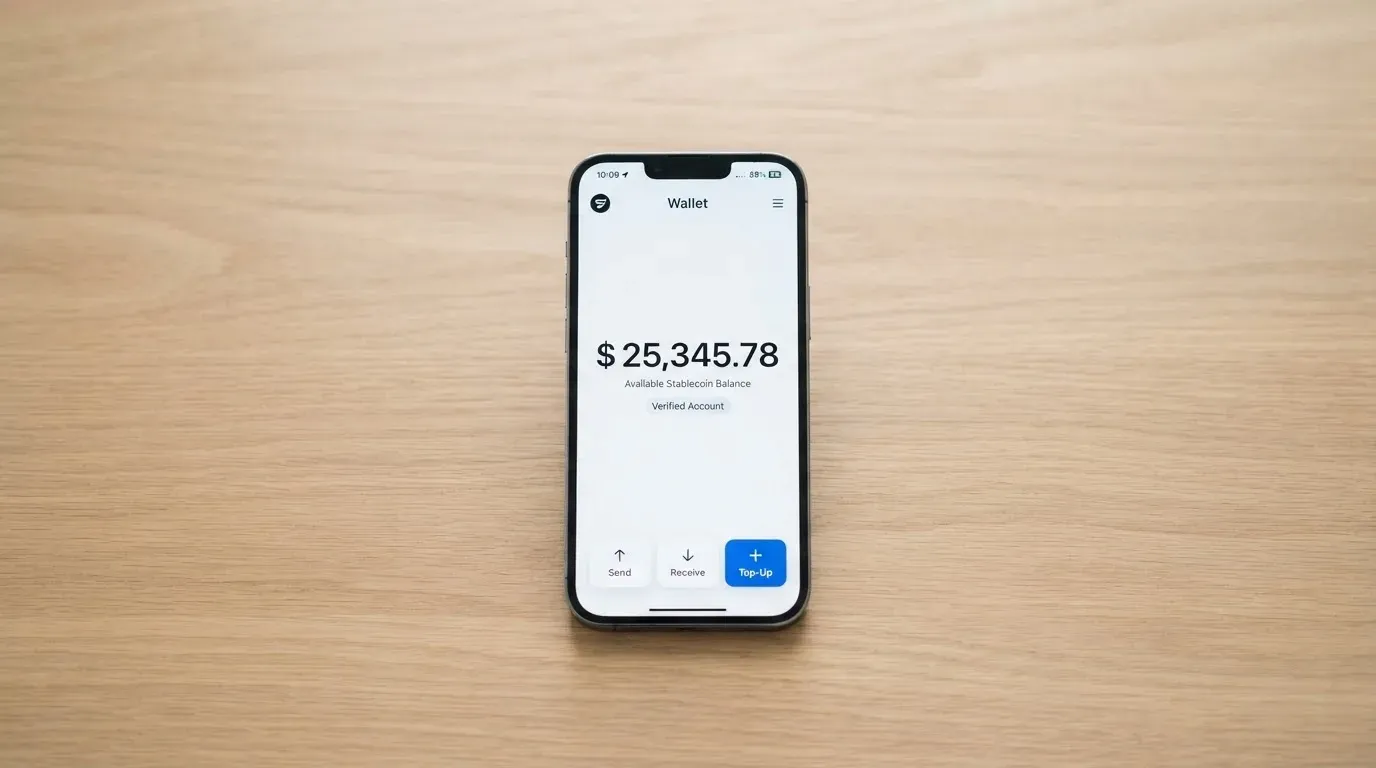
The costs on the way in:
- Fiat card top-up to the e-wallet, Visa or Mastercard: 3.5%.
- Crypto to crypto wallet: free.
- Crypto to fiat or stablecoin balance by auto-conversion: 1 USD for USDT and USDC, free for BTC, ETH and others.
- Minimum top-up: not stated.
- SEPA and bank top-up fees: not stated.
Getting money back out is a separate menu, and it is the part most people never look at until they need it:
| Withdrawal route | Fee |
|---|---|
| To a Volet card | From 1% |
| To Visa/Mastercard | From 3% |
| SWIFT | 1% + 25 USD |
| SEPA | From 1% |
| Local bank | From 1% |
| P2P | Free |
| Crypto, USDT TRC-20 from crypto wallet | 3.5 USDT |
| Crypto, USDT/USDC other chains from crypto wallet | 0.5 |
| Crypto, BTC/ETH from crypto wallet | Network fee |
| Crypto, USDT TRC-20 from fiat/stablecoin balance | 0.5% + 3.5 USD |
| Crypto, USDT/USDC other chains from fiat/stablecoin balance | 0.5% + 0.5 USD |
What happens to a balance if you close the account is not stated, and that is worth asking about before you ever fund it.
If you are comparing routes, the practical ordering from these numbers is: convert in euros if you are in Europe, avoid the wallet-card top-up where a cheaper route exists, and expect the fixed dollar or euro components to dominate anything small.
Paying with it every day
For ordinary spending this is a competent card. There are digital and plastic versions on both Mastercard and Visa, the Europe cards can hold USD or EUR, the global digital card is USD, and the Asia-Pacific card is USD. On the global card there is no extra foreign-exchange fee, the Mastercard rate applies, and Volet says fiat balance exchange happens at “near-market” rates without giving a figure. Multi-currency balances are not stated.
Mobile wallets are where you need to read carefully. Some cards support Apple Pay and Google Pay, and the instruction is to check each card’s description. Unofficial reporting is narrower than the marketing impression: Apple Pay and Google Pay on the digital and Spend Virtual cards, not advertised for Europe, not supported for Asia-Pacific or Global Plus. If a phone wallet is the reason you want the card, confirm it for your specific card before you pay for it.
What is missing from the official pages: which merchant categories are blocked, and how disputes work. Both are not stated. Neither is unusual to leave unstated, but neither is something you want to discover at the till.
No cashback is mentioned anywhere. There is a referral programme listed as “coming soon” — 2 USD/EUR per activated digital card, 5 USD/EUR per activated plastic card — which is not a reward you can rely on yet.
One detail on apps that catches people: Google Play and App Store badges are shown, but the page says “iOS coming soon”. The store ratings are not stated.
What can go wrong
Start with the structural risks, because they are the ones the fee table cannot show you.
You do not know who issued the card. The card pages and personal pages name no issuer and no legal entity — the footer says only Volet. The agreements are published per region (“Agreement Canada”, “Agreement Costa Rica”), which suggests the contracting entity changes depending on where you are. Licences are not stated. Unofficial sources say Volet was formerly ADVcash and that card issuers are not publicly named. For a reader who cannot open a normal bank account, this is not a footnote. You are being asked to load money onto a prepaid instrument issued by an unnamed party, under a regional agreement, with no named licence. Before you commit, ask support directly: who is the issuer of my card, and which entity contractually holds my balance?
Your money is held by someone else. Volet is a custodial e-wallet: funds sit with Volet. The site describes “multi-layer security, encryption, access controls and continuous monitoring” and shows PCI-DSS, GDPR, SSL and ISO badges. Two-factor authentication, card freeze in the app, spending controls, and any safeguarding or insurance are not stated. Custody has a history — Mt. Gox, Coincheck and the Ronin Network all failed — and the general rule is that blockchain transfers are irreversible, so a stolen key has no recovery path.
Complaints cluster on predictable things. Trustpilot shows 4.1 from 5 across 965 reviews, with 72% five-star and 16% one-star. The one-star themes are the ones to read: high fees (including an August 2026 remark that the cost of getting euros in is “somewhat high”), verification and withdrawal limits, transactions blocked from India in January 2026 without justification, funds sent to an old wallet address in August 2026, cards not sent in September 2026, and a bank-statement PDF rejected as proof of address.
Programmes close. Visa terminated its global agreements with FTX on 13 November 2022 and the FTX US debit card was wound down. WaveCrest, a Visa issuer that supplied crypto card brands, was suspended by Visa in Europe in 2018. Closures follow a pattern: a notice period, spending and loading stop, then you are asked to withdraw what is left. That is why I would not leave large idle balances on the card, and why the withdrawal fees above deserve a second look — they apply when you are least able to wait.
Two smaller ones. Declined payments can leave a hold on your funds for several days, sometimes up to seven. And a card issued in one country can simply look foreign to a merchant elsewhere, because the card’s first six or eight digits identify the issuing institution and country; some shops decline prepaid or foreign-issued cards as a matter of policy rather than any rule.
Support is “24/7 live support” with a help centre at support.volet.com and a contact page; the site runs in about 20 languages, including English, Spanish, German, French, Chinese and Japanese. Whether disputes and complaints are handled by that team or by the unnamed issuing partner is the thing I would test early, with a small amount.
What to take instead
The comparison below is on published pricing and stated features, not on personal testing. Scores are the same ten-point scale used above.
| Volet | Bitrefill | UPay | Kemy | |
|---|---|---|---|---|
| Score | 6.0 | 6.8 | 6.1 | 6.0 |
| Reach | 180+ countries; card in 150+ | Country list not stated | Claims 180+ | 190+ countries, some restrictions |
| Card | Digital and plastic Mastercard and Visa, regional | Virtual and physical Visa, EUR | Virtual and physical, personal and business; network not named | Unlimited virtual cards, one physical Mastercard |
| Issuance | $5 digital global; 1 USD/EUR Europe Virtual | Page says the card is free through the app | Not stated | $15 virtual, $250 physical |
| Monthly | None per the FAQ | Inactivity fee after 12 months, amount not stated | Not stated | $2 virtual, $10 physical |
| Top-up route | Fiat e-wallet only | SEPA 1.99%; crypto via “Buy with” list | BTC, ETH, USDT, USDC | USDT/USDC on main networks, BTC/ETH/SOL, mobile money |
| Cashback | None mentioned | 2% total, no cap | None stated | Not mentioned |
Three things stand out if you are choosing.
Bitrefill is the one with the rewards. It advertises 2% total cashback with no cap — 1% on each crypto deposit and 1% on each purchase — which Volet does not offer at all. Its costs are less transparent in places: the deposit spread on crypto-to-euro conversion has no percentage stated, and the FX fee is not stated. Eligibility is described only as “subject to eligibility criteria” set by its partners.
Kemy is far more expensive, and says so. $15 to open a virtual card valid three years plus $2 a month, or $250 for a physical Mastercard with DHL Express included plus $10 a month. It also charges 3.5% plus $1 per transaction on the virtual card, and its main-account deposit fee is shown as 8% in the summary and 5% in the section — an internal conflict worth asking about. If you want unlimited virtual cards, that is a real feature; if you want cheap everyday spending, it is not the answer.
UPay tells you least. Issuance and fees are not stated, the card network is not named, and conversions may happen during payment depending on network and settlement. Its eligibility rule is unusual in a way that matters: the KYC partner accepts only identity documents issued by the same country as the user. Its virtual and physical options for both personal and business are worth a look if you need a business card.
For anyone who simply cannot obtain an ordinary bank card, none of these replaces one. They sit in the same category: custodial, prepaid, region-limited, fee-bearing.
Who I would recommend it to
I would recommend Volet to someone who has crypto already and wants a card for Europe or Asia-Pacific specifically, who can hold a modest balance rather than a large one, and who plans to convert in euros where possible. The Europe route at 1% plus 1 USD/EUR to load is the cheapest way in, the Europe card states no POS fee, and the absence of monthly fees means an idle card costs nothing to hold.
I would not recommend it to someone optimising cost per transaction, to someone planning to use ATMs, to someone who needs a large balance on a card, or to anyone who wants to know which company stands behind the instrument. I would also be cautious for anyone whose whole reason for seeking this card is that mainstream banks have turned them down — that is precisely the situation in which the unnamed issuer and unnamed licence matter most, and in which you have the least room to absorb a mistake.
The single question I would put to support before funding anything is: who issues my card, which legal entity holds my balance, and what happens to that balance if this programme ends. Everything else on this page can be checked against the app. Those three answers cannot.
Frequently asked questions
What is the Volet card?
The Volet card is a prepaid payment card linked to the Volet e-wallet rather than to a bank account. It comes in digital and plastic forms on the Mastercard and Visa networks, with separate regional versions for Europe and Asia-Pacific and a global digital Mastercard. You convert or deposit money into the wallet and load the card from it, so the card spends only what you have put there and cannot overdraw.
How does the Volet card work?
You convert or deposit money into the Volet wallet, then load the card from that fiat balance. At the point of sale the card behaves like any other Mastercard or Visa, and on the global digital card there is no extra foreign-exchange fee beyond the Mastercard rate. Money moves through several parties: Visa or Mastercard routes the payment, an unnamed issuer holds the card programme, and Volet fronts it.
Is Volet a bank?
No, and Volet does not present itself as one. The card pages name no issuer and no legal entity, and the agreements are published per region — “Agreement Canada”, “Agreement Costa Rica” — which suggests the contracting party differs by where you are. Licences are not stated on the public pages. In the EU an electronic money institution can issue cards and wallets, but cannot lend, and it must safeguard customer funds separately from bank deposits.
Who owns Volet?
Unofficial third-party reporting describes Volet as formerly ADVcash, and says the card issuers are not publicly named. Volet’s own pages do not name the issuer or the legal entity behind the card — the footer shows only Volet. Licences are not stated, which is why I would ask support directly before funding a balance.
Does the Volet card require KYC?
Partly. The basic functions of the Volet account work without identity verification, but full verification is required for the cards, all card features, higher limits, fiat methods without limits and full withdrawals. Volet says this “usually takes only a few minutes”. Which documents are needed, and any age requirement, is not stated on the card’s public pages.
How much does it cost to top up the Volet card?
Loading the card from the fiat e-wallet costs 2.5% plus $1 on the global digital card, 1.5% plus $1 in Asia-Pacific, and 1% plus 1 USD or EUR in Europe. Topping the wallet up with a Visa or Mastercard costs 3.5%. Crypto deposits to the wallet are free, and auto-conversion to a fiat or stablecoin balance costs $1 for USDT and USDC, free for BTC, ETH and others.
Can I use the Volet card in my country?
The service operates in “180+ countries” and the global digital Mastercard is offered in 150+. Regional cards are narrower: Europe cards for EU residents plus Switzerland and Norway, with Turkey and Israel on Visa, and Asia-Pacific cards for Australia, Cambodia, Japan, Malaysia, New Zealand, the Philippines, Singapore, South Korea, Thailand and Vietnam. Unofficial sources also list restricted countries — you should confirm yours before planning around the card.
Is the Volet card safe?
It depends on what you are being safe about. Volet is custodial, so Volet holds your funds, and the site cites encryption, access controls, continuous monitoring and PCI-DSS, GDPR, SSL and ISO badges. Two-factor authentication, card freeze, spending controls and any safeguarding or insurance are not stated. Because no issuer or licence is named, I would fund it modestly rather than treat it as a place to hold money.
Does Volet have cashback or rewards?
No cashback is mentioned anywhere in Volet’s material. A referral programme is listed as “coming soon”, paying 2 USD or EUR per activated digital card and 5 USD or EUR per activated plastic card. For comparison, Bitrefill advertises 2% total cashback with no cap — 1% on each crypto deposit and 1% on each purchase — which is the clearest rewards offer among the cards I compared.
Can I add the Volet card to Apple Pay?
Some Volet cards support Apple Pay and Google Pay, and the card pages say to check each card’s description. Unofficial reporting is narrower: support on the digital and Spend Virtual cards, not advertised for Europe, and not supported for Asia-Pacific or Global Plus. There is also an app wrinkle — Google Play and App Store badges are shown, but the page says “iOS coming soon”, so check the current app situation on your own device first.
Virtual cards – cryptocardbasics
Content created by the «cryptocardbasics» team