The card that wants to be your everyday account, and what it asks of you in return
 Available in US
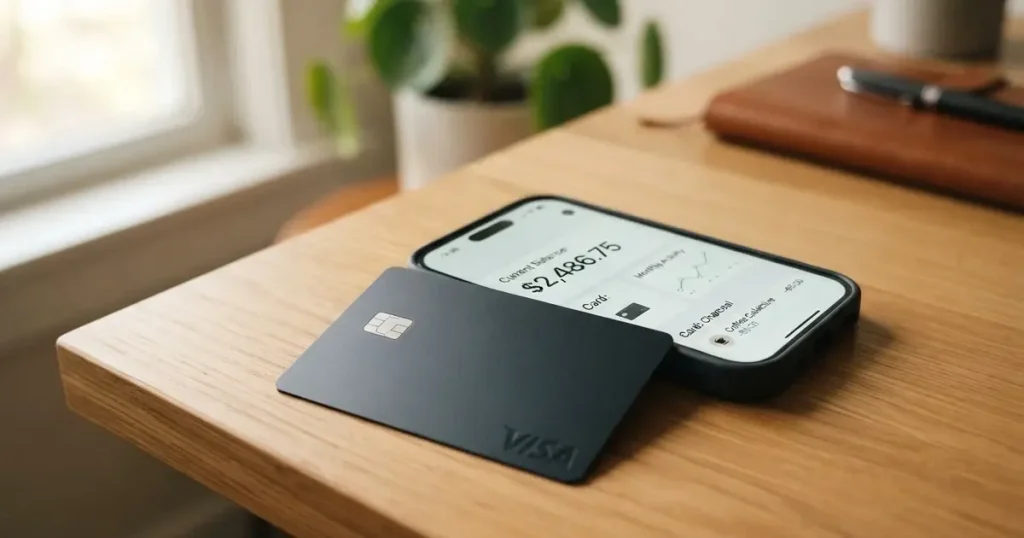
If you cannot get an ordinary bank card in the country you live in — or you simply would rather hold cash and crypto in one place and spend from both with the same piece of plastic — the Wirex card is built for exactly that. It issues a virtual and a physical card, tops up from bank rails and from crypto, and charges nothing to open or to keep. That is the pitch, and on everyday use the card largely delivers it: my rating is 6.7 out of 10. The gap between the promise and the reality is not in the shopping, it is in the fee disclosure, the limits and the track record of complaints about money being held.
So who is this for? In my reading, Wirex serves one audience well: Europe-based users who want one account for fiat and crypto, who are comfortable keeping a balance on a platform rather than in a bank, and who want to spend abroad without thinking about it. Who it does not suit: anyone who needs a card they can trust to behave like a bank debit card for salary, rent and utility direct debits; anyone for whom “the FX fee is not stated on the fee page” is a dealbreaker; and anyone whose country Wirex does not serve, because there is no waiting list and no workaround.
*Conditions and fees are current as of October 28, 2026.*
Verdict: 6.7 out of 10
The card does the job it was built for, quietly and cheaply, and the everyday-use score is the strongest single number in my table below. What holds it back is not the shopping experience. It is that the central promise — that you do not pay for conversion or foreign exchange — is stated on the card’s marketing page and absent from the fee schedule, and that the two app listings on the App Store tell you two different stories about the company’s own software.
| Criterion | Mark | Why |
|---|---|---|
| Who can get it | 6 / 10 | Service area is stated as worldwide (130+ countries), but the official country list would not open for me, and an unofficial source says the card itself is issued in 35 countries, not in the US |
| Cost | 7 / 10 | Issuance free, no maintenance fee, ATM free up to 200 EUR a month in the EEA then 2%; metal card 45 GBP; the FX fee is not disclosed even though the card page says no foreign exchange fee |
| Top-up options | 7 / 10 | You can spend cash, stablecoins and cryptocurrencies, and the exchange lists 200+ cryptocurrencies, but the coins and networks accepted for deposit are not disclosed |
| Reliability and complaints | 5 / 10 | Two companies are named (Wirex Pte Ltd in Singapore, Wirex Limited in England) but the issuer for the UK and EEA programmes is not named; complaints about held funds and limited accounts, plus a 5 h 51 min card outage on 25 June 2026 |
| Everyday use | 9 / 10 | Virtual and physical cards, Apple Pay and Google Pay, an ATM on the physical card and none on the virtual one |
That reliability row is the one I would read twice. Everything else on this page can change with a fee update; a pattern of complaints about funds not being released is a different category of problem, and it is the reason this is not a 7.5.
Will they give you the card?
Availability of the physical and the virtual card depends on your region — Wirex’s own phrase, and an unhelpful one if you are trying to find out before you start. Fees are published separately for the UK, the EEA, APAC, Singapore, Australia and a bucket called “Other”, which tells you the pricing structure follows regulatory regions rather than a single global sheet. Delivery is priced for the United Kingdom, the EEA, Hong Kong, Singapore, Australia, New Zealand, the Philippines and Taiwan — a list that is longer than the list of places you can obviously hold an account in.
The homepage advertises a service area of “Worldwide (130+ countries)”. The official list of eligible countries did not open when I checked, and I want to be plain about that rather than pretend I read it. An unofficial source, per thegodfunded.com in October 2026, counts 35 countries where the card is actually available: most of the EU, the UK, Switzerland, Norway, Australia, New Zealand, Hong Kong, Taiwan, Argentina and Brazil — and explicitly not the United States. Treat that as a starting map, not a guarantee, because Wirex has not confirmed it.
Two regional rules are stated in the Singapore terms and are worth knowing even if you never visit Singapore. Cash withdrawals “are not permitted in Singapore”, so if you are a Singapore resident the ATM is not part of the deal. And transactions involving “Prohibited Countries” — Iran, Cuba, Syria “and others” — are barred outright.
The rule that catches most applicants out is simple: the country of residence you enter must match your ID. If you put one country on the form and another on your passport, verification does not bend to accommodate you; it stalls, and you will be asked for more documents by email in the meantime.
How to get it
There is no shortcut, and anyone offering you one is selling something. Wirex services “are only available to verified users”, so the account comes before the card — verification starts when you upgrade your account to “Starter” status.
The verification itself covers identity, address and source of funds, and Wirex reserves the right to ask for more by email. Document upload and the selfie are done in the mobile app, not on the website. Depending on your country of residence you may also be asked for the Liveness Verification, which is a face check against your document.
Accepted documents are a passport, ID card, driving licence or residence permit — which types count varies by issuing country. Each must show your full name, date of birth, photo and expiry date, be in English and be in full colour. The minimum age is 18.
Two practical points. First, the accepted document list and the residence match rule are the two places a rejection comes from, so line your document up before you start rather than after. Second, the card’s currency and its validity period are not stated on the public pages I read, so if you need a card in a specific currency, ask in the app before ordering.
What you get is one physical card and one virtual card at a time. The virtual card is for online use; the physical card works at point-of-sale terminals and at ATMs accepting Visa or Mastercard. In Singapore the card is Visa; elsewhere the pages say “Visa or Mastercard” without fixing one per region, which is worth confirming for your region. A metal card is described as a “Visa Signature debit card” — note “debit”.
Delivery is one of the more concrete parts of the pricing. UK by Royal Mail, not trackable, 5 GBP. EEA by DHL WorldMail 5 EUR or DHL Express 15 EUR. Hong Kong: local post 39 HKD or DHL Express 238 HKD. Singapore by SingPost 5 SGD. Australia 1 AUD. New Zealand 7.99 NZD, or DHL Express 49.99 NZD. Philippines and Taiwan 4.99 USD, or DHL 29.99 USD. UK international DHL Express is 15 GBP.
Expect several days and up to four weeks; express delivery requires a starting balance in the account. If a card is lost in the post, the replacement cost is not stated on the pages I read — an omission that matters more than it sounds, because an untracked Royal Mail delivery is the cheapest route to losing a card.
Fees: what a payment really costs
This is where I would slow down and read the small print, because the headline is better than the schedule. The card page says “no annual or foreign exchange fees”. The fee page does not specify a foreign exchange fee at all — it says “market-leading exchange rates” and points you to the app, where fees are viewable. Both statements can be true at once, but you cannot budget from them. That is the single most important thing to know in this review.
| Item | What the pages say |
|---|---|
| Issuance | Free in the UK, EEA, APAC, SG, AU and “Other” |
| PIN change | Free |
| Metal card | 45 GBP order fee on the UK page, with free DHL Express; “only 45 EUR” delivery fee elsewhere |
| Monthly or annual fee | None; “no annual or foreign exchange fees” on the card page |
| Conversion | No fixed amount; the rate varies by pair and liquidity, shown in the app before you confirm |
| FX fee | Not specified on the fee page; the card page says no foreign exchange fee |
| ATM | Free up to 200 GBP monthly (UK and “Other”), 200 EUR (EEA), 200 SGD (APAC and SG), 400 AUD (AU); 2% after that; not available on virtual cards |
| Administrative fee | 30 GBP one-off, for accounts violating the General Terms of Service |
| Bank transfer limits | SEPA 50,000 EUR per day, Faster Payments 50,000 GBP per day |
Fees are “subject to change”, which on this card is not boilerplate so much as an expectation.
Three everyday payments, and which fees apply:
- A coffee in your own country. A plain purchase, no conversion if your card account holds the currency, no fee beyond the merchant’s own. This is the case the card is genuinely good at.
- A card that sits in your Apple Pay or Google Pay. Same economics as above — the fee schedule does not treat mobile wallet payments differently — but note that a merchant authorisation can hold up to 20% above the anticipated bill, so an authorisation hold at a hotel or a car rental can outlast the payment itself.
- A holiday purchase in another currency. Here the answer depends on which of two statements is operative. The card page promises no foreign exchange fee; the fee page declines to give a number. The exchange rate itself is shown in the app before you confirm, so the number you can actually inspect at the moment of spending is the rate, not the fee. Check it in the app the first few times rather than assuming the marketing sentence is doing the work.
Plans sit underneath the card. Standard, Premium and Elite exist, and you move between them with WXT — the platform’s own token. The metal card is tied to a higher monthly purchase limit of EUR 75,000 and the 45 GBP or EUR order fee. Official pages state that plans can be upgraded with WXT but do not list plan prices. Unofficial sources — the Bleap blog, which is a competitor, and thegodfunded.com, both October 2026 — put Standard at free with 0.5% back rising to 1% if you lock 150,000 WXT for 180 days, Premium at 9.99 EUR monthly or 102 EUR yearly, and Elite at 29.99 EUR monthly or 306 EUR yearly with back up to 8%. Wirex has not confirmed those prices to me, so treat them as a lead to check in the app rather than as a quote.
Top up: cash in, crypto in, both at once
A Wirex card is a debit card linked to a Wirex account, and the account is the interesting part. You can spend “cash, stablecoins, and cryptocurrencies” from one balance, which is the reason people pick this card over a normal debit card plus a separate exchange account.
Top-up comes from three directions: another Wirex account, another person, or a third-party payment provider. Fiat deposits by SEPA in EUR, Faster Payments in GBP, ACH in the US and PIX in Brazil are free. The exchange advertises “200+ cryptocurrencies” — but the specific coins and networks accepted for deposit are not stated on the pages I read. That is not a rounding detail. A deposit sent on a network Wirex does not support can be lost, or need manual recovery with no guarantee, because blockchain transfers do not reverse. The deposit screen in the app is the authority on what your account accepts, and it is worth checking before you send rather than after.
Topping up by external card is the route most people outside Europe will use:
- Minimum 12 USD.
- Unconfirmed card: 15,000 USD per day, or 2,000 USD per day in Singapore.
- Confirmed card: 25,000 USD per day.
- Card-to-Wirex transfer: minimum 10 USD; 10,000 USD per transaction for a first-party transfer and 2,500 USD for a third-party one; 50,000 USD per month first-party, 10,000 USD third-party.
- The local card funding fee is “0% or more”, depending on currency and country — so your card’s home currency is not necessarily the free one.
Crypto withdrawals Wirex-to-Wirex and off-chain are 0%; sending to an external wallet varies by network. Note the asymmetry that catches people: on-chain network fees for the deposit itself are charged by the blockchain, not by Wirex, so they land on top of whatever Wirex takes.
Fiat withdrawal out is free on the same rails — SEPA, Faster Payments, ACH, PIX. What happens to a balance if you close the account is not stated on the pages I read, which is a real question to ask in the app if closing is ever on your horizon.
Paying with it every day
This is where Wirex scores best, and it is not a close call.
Both a virtual card and a physical card, one of each at a time. Apple Pay and Google Pay are on the homepage feature list, so your phone is covered before the plastic arrives. An ATM works on the physical card and not on the virtual one — which is the practical difference between the two, and the reason to order the physical card rather than stopping at the virtual one. The card can be linked to Revolut; there is a help article on it.
Rewards are paid in WXT, the platform token, and that is the detail to sit with. Standard earns 0.5%, Premium 3%, Elite up to 8%; the metal card is advertised as “up to 8% back in WXT”. Limits and currencies may differ for UK and US customers. Not eligible for Cryptoback: ATM withdrawals, cash advances, crypto purchases, gambling, refunds, and a long list of merchant category codes including 4829, 6010, 6011, 6012, 6050, 6051, 6211, 6529–6532, 6534, 6536–6538, 7012, 7399, 8999, 9211, 9222, 9311, 9399.
That list is worth reading once. A merchant category code is a four-digit number classifying a business by what it sells — 7995, for instance, covers gambling — and many issuers block categories by policy rather than by law, with the list differing from issuer to issuer. The practical upshot: some of your ordinary spending quietly earns nothing back, and the exclusion list is the only place that gets told.
On gambling, a distinction worth keeping: gambling is excluded from the rewards programme. The Singapore terms are stricter — they prohibit drug paraphernalia, stolen goods, firearms, “certain financial products”, transfers to unrelated third parties and Prohibited Countries.
Two things the app store tells you. “Wirex: All-In-One Trading App” shows 3.76 from 846 ratings, updated 2026-01-23. “Wirex One” shows 1.87 from 15 ratings, updated 2026-10-05. I read both on 2026-10-20. The homepage’s structured data shows 4.5 from 15,000 ratings, which does not match either. The reason this matters is in the next section: Wirex is moving users to a new app, Wirex One, in 2026, and the new app is the one with the low score.
Dispute handling is not stated on the pages I read, which is another thing to ask before you rely on this card for anything expensive.
What can go wrong
Reliability and complaints is my weakest mark, 5 out of 10, and the reason is not a hunch about app quality.
On complaints: a 2026 Trustpilot user report describes funds held since January 2025, a limited account blocking crypto transfers, and an unresolved ATM withdrawal case in Cyprus from July 2025. I did not read a Trustpilot score or review count for Wirex, so I am not going to quote one. The pattern in that report — money held, transfers blocked, an ATM case unresolved for over a year — is the pattern that matters more than any rating.
On outages, a third-party report (Pingoru) that Wirex has not confirmed lists card payouts disabled for about 5 days from 6 May 2026, a card outage of 5 h 51 min on 25 June 2026, a 54-minute outage on 26 June 2026, unexpected declines on 13 July 2026, and a Wirex One transaction-processing incident on 3 September 2026. I found no regulator suspension. But the shape of those items — a week without payouts, declines with no obvious cause — is what you plan around, not what you wait out.
On the company itself, there is more than one entity. The homepage says Wirex was founded in 2014 in London and is a “Principal member of Visa and Mastercard”. The Singapore card issuer is “Wirex Pte Ltd” (registration number 201731976E), Visa. The App Store seller is “Wirex Limited”, for both apps. A third party, Trustee Plus, names “WIREX Limited” (England, company number 09334596) as its card issuer. The issuer for the UK and EEA programmes is not stated on the pages I read. If you are in Europe, that gap is worth asking about directly: an e-money licence and a bank licence are different protections.
On custody: Wirex holds the balance, which means the money is with a platform rather than with you, and platform custody has a history — Mt. Gox at about US$350 million reported stolen across 2011-2014, Coincheck at about US$400 million in 2018, Ronin Network at US$625 million in 2022. Also note that e-money funds are safeguarded in segregated accounts or insured, but that is not a bank deposit and may not sit under a deposit guarantee scheme.
Two smaller risks. Account-based custody means merchant authorisation holds up to 20% above the anticipated bill. And a declined payment can leave a hold on your funds for several days, typically up to seven. Support is a request form, in-app chat and a Discord community; the languages and opening hours are not stated on the pages I read, which for a card whose whole appeal is being usable abroad is a real gap.
There is a broader category risk here that belongs to crypto cards rather than to Wirex specifically. Visa and Mastercard do not issue crypto cards to consumers — they license issuers, and they can suspend a programme. Visa terminated its global agreements with FTX on 13 November 2022 and the FTX US debit card was wound down. WaveCrest, a Visa issuer that supplied several crypto card brands, was suspended by Visa in Europe in 2018. Programme closures typically run: a notice period, then loading and spending stop, then you are asked to withdraw. So the honest way to hold a balance on any of these cards is not as savings but as spending money.
In Europe there is a second regulator to know about. MiCA, the EU’s markets-in-crypto-assets regulation, took legal effect in June 2023; its rules on stablecoins applied from 30 June 2024 and the remaining provisions, including crypto-asset service provider rules, from 30 December 2024. Under MiCA, e-money tokens may be issued only by a credit institution or an electronic money institution, and a transitional period lets existing providers continue only until 1 July 2026 or until they are authorised or refused, whichever comes first. ESMA keeps an interim register of authorised providers. A card is regulated separately from the crypto side, so a crypto card often depends on two licences. Worth knowing that Wirex is mid-migration to Wirex One, in 2026, while this transition runs.
One last background note, because it changes what a card payment is: in the US the IRS treats digital assets as property, so exchanging them for goods or dollars generally produces a taxable gain or loss measured in local currency at the value on the transaction date. Every card payment funded from crypto may therefore be a separate taxable disposal. That is a point to raise with a qualified adviser in your own jurisdiction, not something to settle from a card review.
What to take instead
If Wirex’s appeal is one balance for cash and crypto, these are the cards I would actually compare it against. All three scored below Wirex on my scale, and I am listing them for contrast, not because any of them is trouble-free.
RedotPay — 6.9 / 10. The most similar shape, and the most transparent about money. Issuance is 10.00 USD for the virtual card and 100.00 USD for the physical card, and the page says the physical application is not cancellable or refundable once paid; virtual replacements are 5.00 USD the first time and 10.00 USD after. Account maintenance is waived, so no monthly or annual fee, and the paid tier is RedotPay Pro at 12.90 USD monthly or 129.00 USD annual. The fee schedule is published: 1.00% transaction fee, 1.20% in a non-default currency, small-authorisation and declined-transaction fees after a few free ones a month, and a list of merchants carrying 1.5%. Top-ups are on-chain crypto or buying crypto with a credit card in the app; USDT-TRC20 minimum deposit 1 USDT after network fees, and each asset is accepted only on the networks shown on the Deposit page. Rewards are a 5 USD welcome reward usable only on spending, valid 30 days. What gives me pause: two official lists word eligibility differently. The KYC list covers citizenship in 41 named countries including the United States, China, Russia and Ukraine, while the card-issuance list, dated 28 August 2026 and covering 47 places, adds India, Indonesia, Morocco, Nepal, Singapore and Turkey as ineligible for both virtual and physical cards and unusable as billing addresses, without mentioning citizenship. Two lists that disagree is a question to ask before you apply.
| Wirex | RedotPay | Bitpanda | COCA | |
|---|---|---|---|---|
| My score | 6.7 / 10 | 6.9 / 10 | 6.5 / 10 | 6.4 / 10 |
| Card cost | Issuance free; metal 45 GBP | Virtual 10.00 USD; physical 100.00 USD | Free; reissue EUR 5.90 (EUR 9.90 lost or stolen), each additional card EUR 10 | Not stated |
| Regular fee | No maintenance fee | 1.00% transaction; 1.20% non-default currency | FX fee EUR 0 but Visa mark-up applies | Not stated; footer advertises fee-free swaps |
| Access | Region-dependent; unofficial count of 35 countries, not the US | Citizenship and residence lists differ from each other | Residence in a euro-area country; not verified via Bankident | UK, EEA, Asia, South America, Middle East and Africa |
| Rewards | WXT back, up to 8% | 5 USD welcome reward, spending only, 30 days | 1% cashback on crypto spend per the body text, “up to 2%” per the page summary, unreconciled | Up to 8% cashback in stablecoins; up to 50% on subscriptions |
| Big caveat | FX fee not disclosed | Physical card fee not refundable | Crypto conversion spread not stated | Fees “disclosed at the time you access the Service” |
Bitpanda — 6.5 / 10. The European one. A verified Bitpanda account and residence in a euro-area country are required, and users verified via “Bankident” cannot order — so if your verification route happens to be that, the card is off the table. It is a physical Visa debit card in EUR only, one active card at a time. Account opening, the monthly cost and the first shipment are free; reissue is EUR 5.90, though the FAQ says lost or stolen is EUR 9.90, and each additional physical card is EUR 10. The non-EUR foreign exchange fee is EUR 0 but Visa mark-up fees apply. It spends from a chosen main asset — a listed cryptocurrency, precious metals or EUR — converted at the point of payment, with a minimum payment of EUR 1 and Crypto Indices excluded. That metals option is unique in this group. The rewards number is internally inconsistent on its own page: the body says 1% cashback on crypto spending, the summary says “up to 2%”, and fiat, stocks, metals and stablecoins are excluded. Payout currency is not stated.
COCA — 6.4 / 10. Currently available in the UK, EEA, Asia, South America, Middle East and Africa, with an in-app check for your area, and restricted jurisdictions defined in the terms as Afghanistan, Iran, Iraq, Cuba, Syria and others. Physical and virtual, Visa, currency not stated. Fees are “disclosed at the time you access the Service” and the footer advertises fee-free swaps — which is the same disclosure gap as Wirex’s FX question, in the other direction. Assets are transferred to a third-party linked smart contract wallet to make fiat payments. Rewards are the strongest on paper: up to 8% cashback in stablecoins on card spend and up to 50% on subscriptions such as Netflix and Spotify, on a Basic tier that is automatic, with higher tiers requiring $COCA held in the wallet, earning 1% above the tier’s monthly cap, and a 30-day grace on downgrade.
My read: RedotPay for transparency, Bitpanda if you are in a euro-area country and want an orthodox European card, COCA if subscriptions are a big share of your spending, Wirex if holding both fiat and crypto in one balance is the actual goal.
Who I would recommend it to
I would recommend the Wirex card to someone who has decided that one balance for cash and crypto is worth more to them than the certainty of a bank relationship — who is in a region where it is available, is comfortable with a company holding their money, and treats the balance as spending money rather than savings. That person gets a free card with no monthly fee, both virtual and physical, the phone wallets, an ATM, cheap SEPA and Faster Payments in and out, and a rewards rate that beats most conventional cards, in exchange for reading the app before they press confirm and for accepting that a week-long payout outage is a thing that has happened.
I would not recommend it as the card for a salary, a rent payment, a mortgage instalment or anything else where a declined payment has a consequence beyond inconvenience — not while the fee schedule cannot tell you the FX fee and the public pages cannot tell you who the UK and EEA issuer is. I would not put a large balance on it and call it savings. And if gambling is involved, note that it earns no rewards and sits behind merchant-code blocks on many issuers anyway.
The honest summary is that Wirex is good at the part it built for, and the part it built for is spending, not storing.
Frequently asked questions
What is the Wirex card?
The Wirex card is a debit card linked to a Wirex account, which can hold cash, stablecoins and cryptocurrencies together. You get a virtual card for online use and a physical one for shops and ATMs, one of each at a time. You can hold both of them at once. Spending draws on the balance in your account, so the card cannot overdraw it.
How does the Wirex card work at the point of sale?
The card works at terminals accepting Visa or Mastercard, with Visa fixed in Singapore and “Visa or Mastercard” stated elsewhere. Each payment converts whatever balance you are holding into the card currency and posts the amount. Apple Pay and Google Pay work from the same account, so most day-to-day spending never needs the plastic.
Is Wirex a bank?
Not one that the pages I read present it as. The homepage describes the company as founded in 2014 in London and a principal member of Visa and Mastercard, and there are separate entities behind it: Wirex Pte Ltd in Singapore as card issuer, and Wirex Limited in England. The issuer for the UK and EEA programmes is not stated on the pages I read, which matters because bank and e-money protection differ.
Who owns Wirex?
The materials I reviewed do not name an owner or parent. What they do name are the operating entities: Wirex Pte Ltd (Singapore, registration number 201731976E) and Wirex Limited (England, company number 09334596). Wirex is also moving users to a new app, Wirex One, in 2026, and it says the service has 7 million users in its text and 8 million+ in its structured data.
Is the Wirex card available in my country?
Availability depends on your region, and Wirex does not publish a country list that would open for me. An unofficial source, thegodfunded.com in October 2026, counts 35 countries including most of the EU, the UK, Switzerland, Norway, Australia, New Zealand, Hong Kong, Taiwan, Argentina and Brazil, and excluding the US. Fees are published by region for the UK, EEA, APAC, Singapore, Australia and “Other”.
Does the Wirex card require KYC, and can I get one at all?
Yes, and there is no way around it. Wirex services are “only available to verified users”, and verification covers identity, address and source of funds, starting when you upgrade to “Starter” status. You upload a passport, ID card, driving licence or residence permit — in English, full colour, showing name, date of birth, photo and expiry — plus a selfie, in the mobile app, and some countries add a liveness check. The minimum age is 18.
How much does a Wirex card cost to hold and use?
Issuance is free in all published regions and there is no monthly or annual fee, with PIN changes free too. ATM withdrawals are free up to 200 EUR a month in the EEA, 200 GBP in the UK and “Other”, 200 SGD in APAC and Singapore, and 400 AUD in Australia, then 2%. The one gap is foreign exchange: the card page says there is none, the fee page does not state a figure, and the exchange rate itself appears in the app before you confirm.
How do I top up a Wirex card?
Fiat deposits by SEPA, Faster Payments, ACH and PIX are free. You can also top up from another Wirex account, from another person, or through a third-party payment provider, or fund by external card from 12 USD — 15,000 USD a day on an unconfirmed card, 2,000 USD in Singapore, 25,000 USD on a confirmed one. The coins and networks accepted for deposit are not stated on the pages I read, so check the deposit screen before sending.
Can I add the Wirex card to Apple Wallet?
Yes. Apple Pay and Google Pay are both on Wirex’s homepage feature list, and the card works from the same balance as the physical card. Note that Apple Pay replaces the card number with a device-specific number stored on the device, and the issuer can still restrict a tokenised number for particular channels, so a card that works in the wallet is not a guarantee that every channel is open.
Is a Wirex card safe to use, and where does support stand?
Safer than it looks for ordinary spending, with the usual cryptography and tokenisation behind the wallet payments, but the money sits with a platform rather than with you. Support comes as a request form, in-app chat and a Discord community, and the languages and opening hours are not stated on the pages I read. The 2026 complaints picture is the part to weigh: held funds, limited accounts and unresolved ATM cases.
App and neobank cards – cryptocardbasics
Content created by the «cryptocardbasics» team