Worldwide card review: SBP top-up, Mastercard virtual, almost no public information
 Available in US
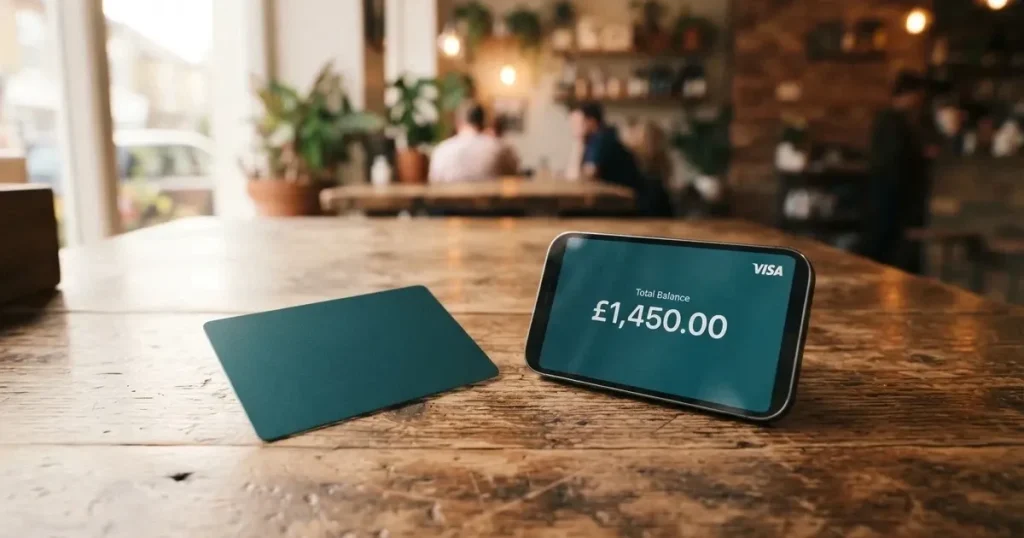
If you have been looking for a way to spend crypto in places where Russian-issued cards are not accepted, the name “Worldwide” is going to come up. The pitch is direct: a card you order and top up from Russia without a VPN, that works in more than 150 countries, and that you set up through Telegram. I went through the public pages, the App Store listing, the support channels and what little third-party material exists to find out what Worldwide actually is, what it costs, and where it leaves you exposed.
Conditions are current as of October 28, 2026.
Verdict
Worldwide scores 4.2 out of 10. Two things push it up: the cost of everyday use is genuinely low once you are past the subscription, and the SBP top-up is fast. Three things pull it down hard. The issuer is not named in public. The company behind the iOS app is a UAE free-zone entity with no licence, regulator or track record I can point to. And the only third-party review I could find is a single App Store rating of 1.0 out of 5 that calls the product a scam — unverified, but it is the only review.
This is, in practice, a card for users who want to fund a balance in rubles through SBP and spend that balance in USD or EUR, with a virtual Mastercard under Apple Pay or Google Pay. If that is your situation, the product does what it says. If you are outside the SBP ecosystem, want a physical card, want to top up with crypto from the website, or need to know who is responsible for your money if something goes wrong, this is not the card for you.
The score, broken down:
| Criterion | Score | Why |
|---|---|---|
| Who can get it | 5 / 10 | Eligibility rules and the list of countries where the card is actually issued are not described; the site markets “150+ countries” but the iOS app is the only place you can see in which storefronts the brand is listed |
| Cost | 5 / 10 | Annual fees of 2,900 RUB (Standard) and 3,900 RUB (Premium) are reasonable; operations and SBP top-ups are 0.00 USD; the markup on currency conversion is not disclosed |
| Top-up options | 3 / 10 | The website only tops up via SBP, with crypto “not offered”; the iOS app accepts USDT on TRC-20 — two different products sharing a name |
| Reliability and complaints | 3 / 10 | The issuer is described only as a “licensed foreign issuer” and never named; the iOS app developer is URUS – FZCO, a UAE free-zone company; reviews are essentially absent |
| Everyday use | 4 / 10 | Virtual Mastercard only, no physical card, no ATM; Apple Pay and Google Pay only on Premium and Promo tiers |
| Total | 4.2 / 10 |
Who can get the Worldwide card
This is the section where the absence of information is itself the answer. The marketing says the card works in 150+ countries, that it is useful in places where Russian cards are not accepted, and that you can order it from Russia without a VPN. None of those claims tells you who, specifically, is allowed to get one.
What the public pages do say is that there is a Telegram mini-app called “Card Without Borders” (literally “card without borders”) that you use to order and top up the card. The site also points to an iOS app called “Worldwide: Wallet USDT Card” in the App Store. The two products look related but not identical: the Telegram card tops up in rubles through SBP, while the iOS app lists USDT TRC-20 deposits and an account balance. There is no public statement about whether these are the same programme or two different products.
There is no published list of supported countries. The Telegram bot page does not state a residency requirement. The site does not explain whether the rules are based on citizenship, residence, the country where your phone number is registered, or all three. I could not find a statement that says “we do not issue to citizens of X” or “we only issue to residents of Y.” For a payment card, that is a significant gap.
The iOS app, on the other hand, can be downloaded from many App Store storefronts, including the US, Canada, the UK and Turkey. App Store availability and the right to be issued a card are not the same thing, and the app does not state which countries receive a card.
A second point is what kind of card you actually get. Both the Telegram card and the iOS app describe a virtual Mastercard. There is no mention of a physical card, no mention of ATM access, and no mention of a metal card. If you want a piece of plastic in your wallet, Worldwide does not appear to be it.
The short version: the audience this product is built for is users who want to top up a card through SBP and spend abroad. Outside that, you are in undocumented territory.
How to sign up
Sign-up is built around the Telegram mini-app. The site frames the whole flow as online-only: no queues, no couriers, no paperwork, no passport. Activation is described as taking minutes. The iOS app uses a biometric unlock on top of whatever registration it does; KYC steps and the documents you might be asked for are not described for either product.
I could not find published information on the verification levels, what triggers a rejection, or what data is collected beyond what Telegram itself shows. The site says only that the card is “issued by a licensed foreign issuer,” without naming the issuer or the licence.
In practice, what I can say is this: the Telegram flow is fast in design, fully digital, and does not require an in-person visit. The iOS app requires biometric authentication, but the KYC behind it is not described. If you are the kind of person who likes to read the small print before signing up, there is not much small print to read here.
What it really costs
The headline costs are the annual subscription, the operation fee and the SBP top-up fee. None of those three is painful. What is painful is that the currency-conversion markup, which is the fee you will actually pay on every foreign-currency transaction, is not disclosed.
Fees in detail:
| Fee or limit | Amount |
|---|---|
| Standard tier annual fee | from 2,900 RUB |
| Premium tier annual fee | from 3,900 RUB |
| Promo tier issuance | 2,390 RUB |
| Promo tier first-year maintenance | 0 RUB |
| Business tier annual fee | from 12,900 RUB |
| Card operations (spend) | 0.00 USD |
| SBP top-up fee | 0% |
| Currency-conversion markup | not stated |
| ATM | not stated |
| Daily and monthly limits | not stated |
| SBP top-up per transfer | 500 RUB minimum, 200,000 RUB maximum |
The tiers, as Worldwide describes them:
- Standard (from 2,900 RUB/year): online subscription payments, basic chat support, basic rate.
- Premium (from 3,900 RUB/year): unrestricted online purchases, priority support, better conversion rate, Apple Pay and Google Pay.
- Promo (2,390 RUB issuance, USD account): first year maintenance free, 0% top-up, Apple Pay and Google Pay.
- Business (from 12,900 RUB/year): unlimited turnover, a personal manager, the best rate, multi-cards for teams, expense reports.
To make this concrete, here are three everyday payments and what Worldwide would charge on the published numbers, ignoring the unknown conversion markup.
- A streaming subscription, $9.99 a month. Operation fee 0.00 USD, no monthly fee on the Promo tier, so the only cost is the annual 2,390 RUB. Across a year of paying $9.99 every month, you are looking at about $120 of spend and one annual fee.
- A €40 dinner in a European city. The spend is 0.00 USD; the ruble cost depends on the conversion, which Worldwide says is “close to the exchange or central bank rate” plus an undisclosed markup. The site’s own blog warns that the foreign-currency charge may exceed the ruble amount slightly, and recommends keeping a buffer. There is no FX percentage published.
- A $300 purchase during a work trip. Same logic: zero operation fee, unknown conversion markup, Premium tier needed for unrestricted online purchases. A 2% undisclosed markup, for example, would add about $6 in hidden cost.
The recurring pain point is the missing number in the middle of the table. Crypto cards in this category routinely charge 1% to 3% on conversion. Worldwide says it charges “close to the central bank rate” with the actual figure “shown before the top-up,” but the public pages do not show a number.
How to top up the card
The two products differ here, and that is worth being clear about.
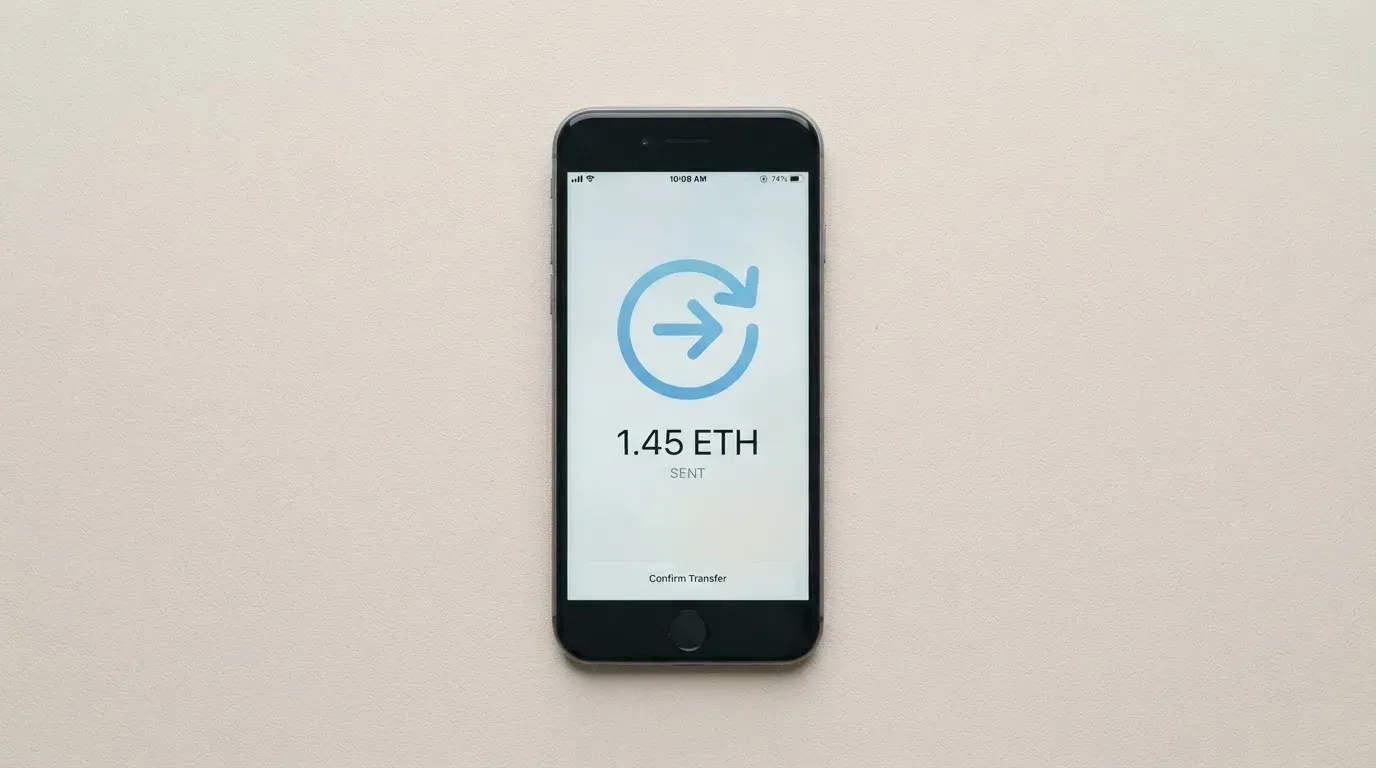
On the Telegram mini-app, the top-up page says SBP only. You can pay by SBP QR or by SBP details in your Russian banking app, from any Russian card or account. The transfer fee is 0%, the minimum is 500 RUB, and the maximum is 200,000 RUB per transfer (the Central Bank’s SBP cap). Credit is described as 1 to 3 minutes, sometimes up to 15. The page is explicit that crypto top-ups are “not offered” on this flow. The rate is shown before you confirm the transfer, but the markup is not quantified.
On the iOS app “Worldwide: Wallet USDT Card,” the top-up flow is different. The app supports USDT on the TRC-20 network (Tron), plus account balance. The exact fee terms are shown on the deposit and top-up screens, and the App Store listing says nothing about rubles or SBP.
If you have USDT on Tron, the iOS app is the relevant product. If you have a Russian bank account, the Telegram mini-app is the relevant product. Trying to send crypto to the Telegram card or rubles to the iOS app does not work, and a transfer on a network or in a currency the product does not support is, in this category, typically lost.
There is no public information on how to withdraw money from the card to a bank account. The iOS app supports USDT withdrawals on TRC-20, but the Telegram card’s withdrawal flow is not described. What happens to your balance if you close the account is also not stated.
Paying with Worldwide day to day
The card you get is virtual and on the Mastercard network, at least according to the Telegram card’s FAQ. The blog of the same brand at one point refers to “Mastercard or Visa,” which contradicts the FAQ; I would treat Mastercard as the published answer. There is no physical card, no metal card, and no ATM.
Apple Pay and Google Pay work, but only on the Premium and Promo tiers. Standard does not get mobile wallets. For a product whose value proposition is “spend where Russian cards are not accepted,” that is a real limitation — paying with a virtual card number typed into a checkout form works, but it works less well than tapping your phone.
Blocked merchants and merchant category codes (MCCs) are not stated. Some cards block gambling (MCC 7995), crypto purchases, or cash advances by policy; Worldwide does not say which.
Cashback, rewards or any kind of spending incentive are not stated. The Business tier mentions “unlimited turnover” and “the best rate,” but no cashback percentage.
On failed payments, the published behaviour is that funds return to the card balance automatically. If the problem is on the merchant side, Telegram support can help and, in some cases, return funds via SBP. The chargeback procedure is not described, and US-style Regulation E or Regulation Z protections do not apply because the card is not issued under US law.
The app situation is itself a moving target. The Telegram mini-app is the only way to interact with the Telegram card. The iOS app is a separate download. There is no Android (Google Play) version of the iOS app at the time of writing, which is unusual for a card aimed at this user base.
What can go wrong
The risks here are not exotic — they are the standard risks of holding a balance with a small, opaque issuer. Three stand out.
The issuer is not named. “Licensed foreign issuer” is a description, not a name. Without a named issuer, you do not know which regulator oversees the programme, what safeguards apply to your balance, or which jurisdiction’s law applies in a dispute. Compared with cards that print “issued by Bank X under licence from the Central Bank of Y,” this is a real gap.
The company is a UAE free-zone entity. The iOS app developer is URUS – FZCO. FZCO is a free-zone company structure in the UAE. UAE free-zone companies exist under emirate-level regulation, not under the same regime as a UAE mainland financial institution. Whether URUS – FZCO holds a financial-services licence in the UAE, or whether the card is in fact issued by an unrelated licensed entity, is not stated on the public pages.
The third-party record is almost empty. Trustpilot, Reddit and Russian-language review sites have essentially nothing about this product. The single App Store rating of 1.0 out of 5 calls the service “not safe and probably a scam” and mentions a “20 USDT card fee” (unverified — a single anonymous review). I could not corroborate either claim. The absence of reviews is not proof of anything, but it is unusual for a card that has been marketed as widely as Worldwide is.
On the security features the site does describe — 3D Secure, “modern encryption” — those are standard. What is not described is the custody model: where the underlying balance is held, who holds the keys to any crypto component, whether there is an account freeze, what controls the user has, and what happens to the balance in a programme shutdown. Visa and Mastercard have, in the past, suspended programmes and forced issuers to wind down. WaveCrest was suspended by Visa in Europe in 2018, closing all WaveCrest-issued Visa programmes overnight, and FTX’s debit card programme was wound down after Visa terminated its global agreements on 13 November 2022. When a programme shuts down, the typical pattern is that loading stops first, spending stops second, and a window opens to withdraw the remaining balance; the details of that window for Worldwide are not stated.
The Telegram support is described as 24/7 with live staff, with chat on Standard, priority on Premium and a personal manager on Business. The site is in Russian, and the iOS app lists Russian among nine languages. If your transfer does not arrive, support checks the receipt and credits manually.
What to take instead
If Worldwide’s profile is not quite right, here are three alternatives I looked at, with the same kind of scoring.
MaxSwap (5.2/10). A virtual Mastercard funded by crypto. The site claims “no geographical restrictions,” but eligibility rules are not stated. Issuance costs 50 USD with a 25 USD first deposit, for 77.125 USD total. Top-ups cost 4.5% plus $1, transactions cost $0.25 plus 0.4%, and there is no separate FX rate published. The coin list is long — BTC, ETH, USDT, USDC, TON, TRX and others. No cashback. The fees are higher than Worldwide’s, but the funding side is more flexible and the company is more transparent.
Karta (7.9/10). A Visa Signature with both virtual and physical cards, working in 200+ countries where Visa is accepted. Activation is 5 USDT, physical card from 100 USDT, no monthly fee. Crypto top-ups are free, card payments cost 1.5%, SEPA 1.5% plus €2, SWIFT (USD) 1.4% plus $2. USDT and USDC are supported on Tron, Ethereum, BNB Smart Chain, Polygon, Arbitrum, Optimism, Base and Solana; fiat is supported via ACH, SWIFT, SEPA, PIX, COP bank transfer and SPEI, depending on country. Cashback is offered, and a referral programme pays in KARAT points (1 KARAT = 0.01 USDT). This is the strongest of the three, at the cost of a higher payment fee.
Tegro (4.7/10). A virtual Visa, with issuance at 13 USD one-time and no subscriptions. Minimum card amount is $50, so a $50 card costs $65 in total. Deposit fee is 4%, FX not stated. Funding is USDT on Tron (TRC-20) only; tokens on other networks must be converted to TRC-20 first. No cashback. Tegro is cheaper than MaxSwap to issue but more expensive to top up.
If your priority is the lowest possible annual cost and you are happy with SBP only, Worldwide’s Promo tier (2,390 RUB, 0 RUB maintenance in year one) is competitive. If your priority is to know who is responsible for your money, Karta is the only one of the four that names a regulated Visa programme with a published fee schedule.
Who I would recommend Worldwide to
I would recommend Worldwide to a user who wants to top up a card in rubles through SBP, spend in USD or EUR via Apple Pay or Google Pay, and is comfortable with an opaque issuer in exchange for a low annual cost. I would not recommend it to anyone who needs a physical card, who needs to fund with crypto from the website, who is outside the SBP ecosystem, or who treats licence disclosure and customer-protection rules as a hard requirement.
Before you sign up, do three things. First, check whether the Telegram mini-app is the same legal product as the iOS app, because the two funding flows are different. Second, ask support what the conversion markup is in writing; if the answer is not a number, treat the card as more expensive than the published fees suggest. Third, look at the issuer disclosure: if you cannot find a name, a regulator and a licence number on the public pages, you are taking the counterparty risk yourself.
Frequently asked questions
What is the Worldwide card?
Worldwide is a virtual Mastercard sold through a Russian-language Telegram mini-app called “Card Without Borders” and through an iOS app called “Worldwide: Wallet USDT Card.” The Telegram card is funded in rubles through SBP; the iOS app is funded in USDT on TRC-20. The brand markets the card as working in 150+ countries.
How does the Worldwide card work?
You register, top up your balance, and the card spends from that balance. The Telegram card converts your SBP ruble transfer into USD or EUR at the Central Bank rate plus an undisclosed markup. The iOS app converts your USDT TRC-20 deposit similarly. The card cannot overdraw because it is a prepaid balance.
Is Worldwide a bank?
No. The site describes the card as issued by a “licensed foreign issuer” without naming it. The iOS app developer is URUS – FZCO, a UAE free-zone company. Worldwide is not a bank, and the funds on the card are not bank deposits.
Who owns Worldwide?
The site does not name an owner. The iOS app credits URUS – FZCO, registered in a UAE free zone. The card issuer is described only as a “licensed foreign issuer” and is not named publicly.
Is the Worldwide card available in my country?
The site does not publish a list of supported countries. The brand markets 150+ countries as a usage claim, not as an issuance claim. The iOS app is downloadable in many storefronts, but app availability is not the same as card availability.
How do I get the Worldwide card?
Open the Telegram mini-app for “Card Without Borders,” order the tier you want (Standard, Premium, Promo or Business), pay the issuance fee, and complete verification. Activation is described as taking minutes. There is no physical card, and no in-person step.
Does the Worldwide card require KYC?
The site says no paperwork or passport is needed, using marketing language. KYC steps and required documents are not stated for either the Telegram card or the iOS app. The iOS app uses a biometric unlock, but the verification behind it is not described.
How do I top up the Worldwide card?
On the Telegram card, only by SBP from a Russian bank account or card, with a 500 RUB minimum and a 200,000 RUB per-transfer cap. On the iOS app, by USDT on TRC-20 or from your account balance. The two products have different top-up flows.
Is the Worldwide card safe?
The site mentions 3D Secure and “modern encryption.” What is not described is the issuer, the regulator, the custody model or the procedure in a programme shutdown. Compared with cards that name a regulated issuer, Worldwide provides less public information on which to base a safety judgement.
How do I add the Worldwide card to Apple Wallet?
Apple Pay and Google Pay are listed for the Premium and Promo tiers only. Adding the card follows the usual Apple Wallet or Google Wallet flow once the virtual card is active. Standard tier does not have mobile wallet support.
Virtual cards – cryptocardbasics
Content created by the «cryptocardbasics» team