
Is the xPortal card actually useful, or just a MultiversX loyalty product with a Mastercard on it?
 Available in US

The xPortal card is a Mastercard debit issued from inside the MultiversX ecosystem, with a virtual card you can generate immediately and a physical card you order for delivery. It draws on a euro balance inside the xPortal app, lets you spend nine named coins (BTC, ETH, EGLD, POL, BNB, SOL, DOGE, BERA, SUI), and pays cashback in EGLD or UTK depending on what you stake. On paper, that is a tidy package for someone whose portfolio already lives in EGLD. In practice, the card is held back by something this review has to flag early: xPortal does not publish a country list for issuance, the fees page and the card marketing page disagree with each other on more than one figure, and the higher tiers most of the headlines refer to are not actually live yet. Read on, and you will see exactly what the card does, what it costs in plain numbers, and where it fits next to MetaMask Card, KAST and Zeal.
Conditions are current as of October 28, 2026.
Conditions on this page are current as of October 2026.
Verdict
xPortal scores 6.4 out of 10 in this review. That score reflects a card that is genuinely useful for everyday spending — virtual and physical Mastercard, Apple Pay and Google Pay, ATM access — but is held back by a thin public fee schedule, no published country list, and a cashback story that mixes the live entry tier with figures from tiers that have not been launched.
Here is the breakdown by criterion, with the short reason for each mark.
| Criterion | Mark | Why it scored there |
|---|---|---|
| Who can get it | 5 / 10 | No official country list; unofficial reports cover 29 EEA countries with a defined blocklist |
| Cost | 6 / 10 | Card is free to issue, but FX caps at 2.5% and the ATM allowance is small |
| Top-up options | 6 / 10 | Nine coins supported, but stablecoins and the networks they run on are not named |
| Reliability and complaints | 7 / 10 | Operator named in the terms; no Trustpilot or Reddit complaint trail found; app rated 4.8 on the App Store |
| Everyday use | 9 / 10 | Virtual and physical Mastercard, both mobile wallets, ATM up to EUR 500 a month |
| Total | 6.4 / 10 |
The audience that this card actually fits is narrow. If you live in the EEA, hold a meaningful slice of your crypto in EGLD, and want a Mastercard you can add to Apple Pay or Google Pay without setting up a bank link, xPortal does the job. If you live outside the EEA, want a multi-currency wallet, or care more about predictable cashback than about a particular coin, you will find cleaner products elsewhere — the alternatives section below walks through them.
Will they give you the card
The first thing to clear up is the awkward one. xPortal does not publish a list of countries where the card is issued. The terms say access to the service “may not be available to you … in certain regions”, and the card marketing page shows delivery prices for “RO” (Romania) and “INT” (international), with no further detail. That silence is unusual for a card that accepts euros.
Unofficial third-party reporting says the card is available in 29 EEA countries, with a hard block on Canada, Iran, North Korea, Switzerland, the UK and the US. The same unofficial source contradicts itself on Germany, so treat that line with caution until the issuer confirms it. The point that does hold up is that xPortal is, in practice, an EEA-issued product first, with international delivery as an add-on.
A note on what xPortal is and is not. The terms name xPortal Equity A.G. as the operator of xPortal. Unofficial reporting points to Capital Financial Services S.A. (the Twispay brand) as the card issuer, holding Romanian electronic money institution licence IEME-RO-0001 from the National Bank of Romania. xPortal Labs runs the site and the app, and the product sits inside the wider MultiversX ecosystem. If the distinction matters to you — for tax residency, for the regulator you escalate to, for the licence number a payments partner wants to see — confirm it with support before you commit.
How to get it
You start in the xPortal app, which is on the App Store, Google Play and Huawei AppGallery. The card page itself is light on steps. From what is published:
- The app prompts you to create an xPortal account, which is a wallet plus a card account in one.
- A virtual card is generated and you can use it for online payments or tokenise it into Apple Pay or Google Pay.
- A physical Mastercard Debit is ordered through the app and shipped to your address.
That is the marketing version. The detail xPortal does not publish is the KYC flow. The card page and the terms do not describe what is required; help-centre article titles suggest a “Source of funds check” and a tax identification number request, but the answers are not posted. Unofficial reporting says full KYC runs before issuance: identity document plus proof of address. If you cannot finish KYC, the help centre tells you to contact support by chat or by email at [email protected].
The card currency is shown as euro in the app’s graphics, but is not stated in plain text on the marketing page. Multi-currency balances are not offered.
Delivery pricing differs between the card page and the fees PDF. The card page lists delivery at EUR 5.99 in Romania and EUR 9.99 internationally. The fees PDF adds an issuance fee of EUR 9.99 for the first physical card on top of delivery (EUR 5.99 in Romania, EUR 12.99 internationally). An older help-centre article says international delivery is “only EEA”, which would rule out the US, UK, Switzerland, Canada and the rest of the blocklist, consistent with the unofficial country coverage above. Delivery time and replacement cost are not stated.
The fees PDF adds one more rule that catches the eye: the first three virtual cards are free, then each additional virtual card is EUR 3.
Fees: what it really costs
The cost picture is uneven. Some figures are spelled out, others are missing, and the two official documents that should agree on the basics — the card marketing page and the fees PDF for the Standard Mint Account — do not.

The table below pulls from the fees PDF where the card page is silent, and flags the conflicts.
| Fee or limit | Amount | Source |
|---|---|---|
| Issuing fee | Free | Card page |
| First physical card | EUR 9.99 (plus delivery) | Fees PDF |
| Virtual cards | First three free, then EUR 3 each | Fees PDF |
| Card delivery — Romania | EUR 5.99 | Card page; fees PDF agrees |
| Card delivery — international | EUR 9.99 (card page) / EUR 12.99 (fees PDF) | Conflict |
| Monthly or annual fee | Not stated | — |
| Card payments | Free | Fees PDF |
| Crypto purchase fee (via xMoney) | 1.49% | Card page |
| Foreign exchange fee | Maximum 2.5% | Fees PDF and card page |
| ATM withdrawal — free allowance | Up to EUR 200 / month | Fees PDF |
| ATM withdrawal — above allowance | 2% plus EUR 1 per withdrawal | Fees PDF |
| ATM balance inquiry | EUR 1 in Romania, EUR 2 outside | Fees PDF |
| High-risk MCC (e.g. gambling) | Up to 3%, minimum EUR 1 | Fees PDF |
| Chargeback (unjustified) | EUR 20 per case | Fees PDF |
| Daily card spending | EUR 5,000 (card page) / “No limit” (fees PDF) | Conflict |
| Daily top-up | EUR 2,500 (card page) / EUR 5,000 (fees PDF) | Conflict |
| Monthly top-up | EUR 10,000 (card page) / EUR 25,000 (fees PDF) | Conflict |
| ATM limit | EUR 500 / month (card page) / EUR 500 / day, EUR 2,500 / month (fees PDF) | Conflict |
| KYC-level split of limits | Not stated | — |
Three everyday payments, walked through.
You are buying a EUR 30 lunch in Berlin. The card is denominated in euros, the merchant is in the eurozone, and the fees PDF says card payments are free. No FX, no conversion, no extra fee. Crypto was already converted to euro balance when you topped up, so the only cost in the past was the 1.49% crypto purchase fee, applied at the moment you loaded the card.
You are buying a USD 40 ebook online from a US merchant, paying from a euro balance. Mastercard converts the USD to EUR at its wholesale rate, and xPortal adds the FX fee of up to 2.5% on top. The fees PDF ties the rate to transaction type, merchant type, geography and ongoing campaigns, so the actual percentage will move. As a rule of thumb, expect to lose up to 2.5% to FX on every non-euro transaction.
You are withdrawing EUR 100 from an ATM in Lisbon. The fees PDF says the first EUR 200 of ATM withdrawals per month is free, so you pay nothing. Withdraw EUR 250 in a single month and the EUR 50 above the allowance is charged 2% plus EUR 1, which is EUR 2 in this example. The balance inquiry itself costs EUR 1 in Romania or EUR 2 abroad if you check the balance at the ATM before withdrawing.
A word on the figures xPortal does not publish. There is no monthly or annual account fee, no inactivity fee, and no published multi-currency balance fee. There is also no published number for what the network charges xPortal for converting or routing a payment, which would be the only way to know if the 1.49% crypto purchase fee covers more than its name suggests. If those numbers matter to you, the only way to find them is to ask support.
Top up: how to fund the card
The card page names the coins you can load from your xPortal wallet: BTC, ETH, EGLD, POL, BNB, SOL, DOGE, BERA and SUI. It does not name the networks those coins should be sent on, and it does not name any stablecoin. The fees PDF only discusses adding fiat (e.g. EUR), which is free, with a EUR 10 minimum.
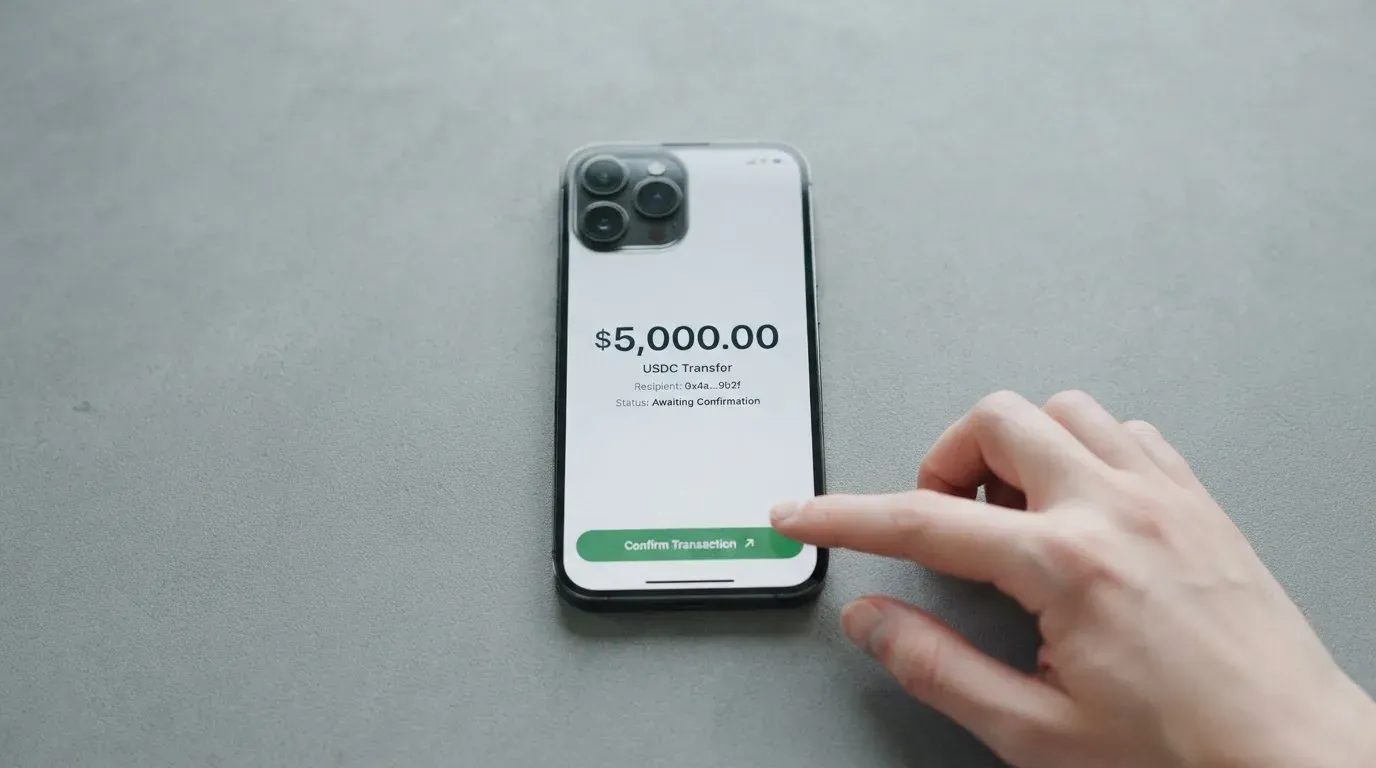
The same fees PDF gives different top-up caps to the card page. Card marketing: daily EUR 2,500, monthly EUR 10,000. Fees PDF: daily EUR 5,000, monthly EUR 25,000 across all methods. Until xPortal reconciles the two, treat the higher numbers as the more recent and the lower numbers as the safety margin.
The practical route for most users runs through xMoney. xPortal’s app is built on the xMoney stack, and the 1.49% crypto purchase fee is the cost of moving your balance from a coin into a euro balance the card can spend. You can also fund the card from a debit or credit card through the same flow, with the fees PDF saying the fiat leg of that top-up is free.
A few things to be careful about. The networks for BTC, ETH, EGLD and the rest are not stated. Crypto transfers are irreversible, and a deposit sent on a network the card provider does not support, or to an address that belongs to a different network, can be lost or sit in manual support recovery with no guarantee. The fees PDF does not say who pays the network fee, so assume it is on you. There is no mention of a minimum network fee or of a fee-free allowance for top-up.
Paying with it every day
Spending the card is the strongest part of the xPortal product. The card supports both Apple Pay and Google Pay — the wallet logos are shown on the card page — which is what most people will use day to day. The fees PDF says card payments are free, and the only surcharge on top of the Mastercard rate is the foreign exchange fee of up to 2.5% on non-euro transactions. Cashback is paid in $EGLD or $UTK depending on which token you stake, and the card marketing page advertises “up to 5% cashback” while a comparison table on the same page says “up to 0.5%”. Unofficial reporting clarifies that the 5% figure is for higher tiers (Eco Black, Diamond Touch) that are not live yet, and the live Fresh Mint entry tier is up to 0.5%.
The app is well rated: 4.8 out of 5 from 1.8K App Store ratings, on iOS 15.1 and up, including iPhone and Apple Vision, across 30 languages including Russian. The card page itself shows “4.9” for the App Store, but that is the marketing figure; the value you should weigh is the 4.8 from real ratings read on 2026-10-20. Google Play rating was not read for this review.
Three everyday features worth knowing:
- Freeze and unfreeze in the app. The Cards section lets you select a card and tap Freeze or Unfreeze. Card settings also let you Terminate or Replace.
- Mobile wallet tokenisation. Apple Pay and Google Pay are supported, with the card number replaced by a token at the device level. The issuer can still restrict a tokenised number, for example blocking online use while keeping contactless on.
- Chargeback and disputes. The fees PDF charges EUR 20 for an unjustified chargeback, so only raise a dispute if you have a real claim. Help-centre articles cover cancelling a transaction, dealing with an unrecognised transaction, and duplicate transactions, but the time frames are not stated, and at least one article says a transaction cannot be cancelled once initiated.
The card marketing page does not list blocked merchant category codes, but the fees PDF charges up to 3% (minimum EUR 1) on payments to high-risk categories such as gambling. That is not the same as blocking them, but the surcharge is real.
What can go wrong
The risk picture for xPortal has two layers. The first is the product itself. The second is the wider category — which is the same for every card on this kind of list.
Product-level risks, drawn from the published material:
- Fee schedule conflicts. The card marketing page and the fees PDF disagree on international delivery (EUR 9.99 vs EUR 12.99), on daily card spending (EUR 5,000 vs “No limit”), on daily top-up (EUR 2,500 vs EUR 5,000), on monthly top-up (EUR 10,000 vs EUR 25,000), and on the ATM allowance (EUR 500/month vs EUR 500/day and EUR 2,500/month). The two pages need to be reconciled before a reader can plan spending with confidence.
- No published country list. The block on Canada, Iran, North Korea, Switzerland, the UK and the US is unofficial. The full EEA coverage claim is unofficial too.
- No published KYC levels. The card page does not state what the KYC tiers are, what unlocks which limits, or what the rejection reasons are.
- Cashback ambiguity. The 5% figure on the same page as the 0.5% figure is confusing and points to tiers that are not yet live.
- Custody of crypto not stated. The terms and the card page do not say whether the underlying crypto is held by xPortal, by an external custodian, or in a self-custody wallet the user controls.
- Slow support response times. Unofficial user reports mention this; the help centre itself only lists in-app chat (Intercom) and an email address.
- Issuer and licence not stated on the card page. Unofficial reporting points to Capital Financial Services S.A. (Twispay) under Romanian EMI licence IEME-RO-0001. The card marketing page does not confirm this.
Category-level risks, drawn from the general background:
- Custodial failure. Mt. Gox, Coincheck and Ronin Network are the textbook cases. Holding funds with a custodian carries counterparty and hack risk that a self-custody wallet does not.
- Irreversible transfers. A deposit sent to the wrong network, or to an address belonging to another network, can be lost or stranded in manual support recovery. There is no on-chain refund.
- Stablecoin depeg. USDT and USDC have depegged in the past — USDC briefly in March 2023 during the US banking stress — and a stablecoin is only as stable as its reserves and redemption terms. xPortal does not name a stablecoin for top-up anyway, so this is a structural risk if it adds one.
- Programme closure. Visa and Mastercard have closed crypto card programmes before — WaveCrest in 2018, FTX US debit in November 2022. A card programme can be wound down by the network even if the card brand is solvent.
- Sanctions and address screening. Nationality is screened separately from residence, and a customer can be declined on citizenship or country of birth grounds even when their address is supported.
- 3-D Secure and AVS friction. Online merchants using Address Verification Service often cannot validate foreign-issued cards, and that can produce declines. 3-D Secure friction can also shift fraud liability.
- Prepaid coverage gaps. US debit card reversal rights come from Regulation E, credit card rights from Regulation Z, and prepaid-card coverage varies. Do not assume chargeback parity with a bank-issued card.
What to take instead
xPortal sits in a small group of crypto cards that spend directly from a connected wallet. Three alternatives are worth weighing.
| Card | Score | Card type | Cost | Cashback headline | Where it works |
|---|---|---|---|---|---|
| xPortal | 6.4 / 10 | Mastercard Debit (virtual + physical) | Free to issue, FX up to 2.5% | Up to 0.5% (live tier), 5% advertised for tiers not yet live | Unofficial: 29 EEA countries |
| MetaMask Card | 7.1 / 10 | Mastercard (virtual, Metal is physical) | Virtual free, Metal $199/year | Virtual 1%, Metal 3% (capped to first $10,000), $FLY bonus via Blackbird | 45 listed countries/territories; other regions on a waitlist |
| KAST | 6.1 / 10 | Visa (virtual + physical, up to 10 cards) | Standard $0/year, Premium $1,000/year, Private $10,000/year | Standard 1.5%, Premium 2%, Private 3% on USD spending | Country list shown at KYC; not published in advance |
| Zeal | 6.1 / 10 | Visa (virtual, plus Apple Pay) | Not stated on zeal.app or App Store | Up to 4% in GNO, plus advertised variable APY on EUR/USD balances | Spend in 150+ countries; programme live in EU, UK, Brazil, Colombia, Mexico, Japan, Singapore, Philippines, Indonesia, Thailand |
The closest competitor to xPortal is MetaMask Card. Both are Mastercard programmes, both let you spend from a connected wallet, and both focus on a small, well-defined audience. MetaMask Card has a published country list of 45, a $199 Metal tier with a 3% mUSD cashback (capped to the first $10,000), and supports mUSD, wETH, EURe, GBPe, USDC and USDT on Linea, Base, Monad and Solana. The catch is the country list: US and UK sign-ups are temporarily closed per its FAQ. If you are in the EU and want stablecoin support, MetaMask Card is a more predictable product.
KAST is the multi-currency, multi-card option. It is a Visa programme with up to 10 cards per user, three membership tiers, a 0% spread on stablecoin deposits and a 0% card spend in USD, with a non-USD FX fee of 0.5% to 1.75% depending on residence and card programme. The annual membership is the trade-off: $0 for Standard, $1,000 for Premium, $10,000 for Private. KAST also has the most country-by-country variation in fees and limits, so the published numbers are not the numbers you will see.
Zeal is the easiest to describe in a sentence: a Visa card on top of Gnosis Pay, with no additional FX fee and up to 4% cashback paid in GNO. Zeal’s card is virtual-first and adds to Apple Pay, the cost is not stated on the public site, and the cashback rate can change. If the Gnosis ecosystem and GNO incentives fit your portfolio, it is the natural pick.
A short summary table of the same comparison, this time around top-up coins and networks.
| Card | Coins you can spend | Networks | Stablecoin support |
|---|---|---|---|
| xPortal | BTC, ETH, EGLD, POL, BNB, SOL, DOGE, BERA, SUI | Not stated | Not stated |
| MetaMask Card | mUSD, wETH, EURe, GBPe, USDC, USDT, plus two more | Linea, Base, Monad, Solana | Yes (mUSD, USDC, USDT, EURe, GBPe) |
| KAST | USDT, USDC, PYUSD, RLUSD (terms say USDT and USDC only) | Ethereum, Solana, Polygon, Arbitrum, TRON | Yes |
| Zeal | Balances in card Safe (EUR/USD/GBP stablecoin accounts) | Gnosis Chain, Celo | Yes (stablecoin-denominated balances) |
If your portfolio is heavy in EGLD, xPortal is the only one of the four that supports it. If your portfolio is heavy in mainstream coins or stablecoins, MetaMask Card or KAST will be more comfortable.
Who I would recommend it to
Putting it all together, here is how I would read the score.
xPortal makes sense if you are an EEA resident whose day-to-day crypto exposure is in EGLD or one of the other eight coins xPortal supports, and you want a Mastercard you can tokenise into Apple Pay or Google Pay without linking a bank account. In that case the lack of a published country list, the missing KYC detail, and the fee schedule conflicts are annoyances, not blockers. The 1.49% crypto purchase fee is in line with the category, the FX cap of 2.5% is competitive for non-euro spending, and the EUR 200 free ATM allowance covers most months.
xPortal makes less sense if you live outside the EEA, if you want a multi-currency balance, if you rely on stablecoin top-up, or if you care more about predictable cashback than about the EGLD token. The cashback story in particular is being marketed on tiers that are not live, and the live tier pays up to 0.5%. MetaMask Card and KAST both pay more, in different shapes. KAST also offers a 0% card spend in USD and 0% on stablecoin top-up, which xPortal does not match.
xPortal is not the right product if you want a self-custody card. The card spends from an xPortal-managed balance, and the underlying custody of the crypto is not described in the public terms. If holding the private key yourself matters, a card that spends directly from a self-custody wallet (such as MetaMask Card or Zeal) is the better fit.
If you do decide to try xPortal, a short checklist before you commit:
- Confirm your country is in the EEA, or that the international delivery service is real for your address. The unofficial coverage is 29 EEA countries; the official list does not exist.
- Read both the card page and the fees PDF, and assume the higher number where they disagree. That is the more conservative reading.
- Make sure the EUR 200 monthly ATM allowance and the EUR 500 monthly ATM cap fit your cash habits. If you withdraw more than EUR 200 in a month, the 2% plus EUR 1 fee starts to add up.
- Pick the right network for every top-up. The card page does not name them, so the only safe move is to ask support before sending anything irreversible.
- Treat the 5% cashback headline as a future possibility, not a current feature, and base your expectations on the live 0.5% tier.
- Keep the EUR 20 chargeback fee in mind. Only raise a dispute when you have a real claim; the fee is a flat EUR 20 per unjustified chargeback.
The 6.4 score is honest. xPortal is a working EEA Mastercard with a clear MultiversX tilt, and a thinner public disclosure than its competitors. It is the right card for a narrow audience and the wrong card for most.
Frequently asked questions
What is the xPortal card?
The xPortal card is a Mastercard Debit issued from inside the MultiversX ecosystem. xPortal Labs runs the app, xPortal Equity A.G. is named as the operator in the terms, and unofficial reporting points to Capital Financial Services S.A. (Twispay) as the card issuer under a Romanian electronic money institution licence. The card comes as a virtual card you can generate immediately and a physical card you order for delivery, and it supports Apple Pay and Google Pay.
Is xPortal a bank?
No. xPortal is a card programme, not a bank. The terms name xPortal Equity A.G. as the operator of the service, and the card itself is issued under an electronic money institution licence, not a banking licence. EMI-issued cards are not covered by deposit guarantee schemes in the same way as bank deposits, and EMI rules require customer funds to be safeguarded, typically in segregated accounts, rather than treated as deposits.
Who owns xPortal?
xPortal is part of the MultiversX ecosystem. xPortal Labs runs the public-facing site and the app, and the terms name xPortal Equity A.G. as the operator of xPortal. The card issuer is not stated on the public pages; unofficial reporting attributes the card to Capital Financial Services S.A. (Twispay), a Romanian electronic money institution.
Is the xPortal card available in my country?
xPortal does not publish a list. Unofficial reporting says the card is available in 29 EEA countries, with a hard block on Canada, Iran, North Korea, Switzerland, the UK and the US, and the same source contradicts itself on Germany. Delivery is priced separately for Romania and international addresses, and an older help-centre article says international delivery is EEA-only. Treat the unofficial list as guidance, not as a guarantee.
Does the xPortal card require KYC?
Yes, for the physical card at least. The card page and the terms do not describe the KYC flow, but help-centre article titles refer to a “Source of funds check” and a tax identification number request, and unofficial reporting says full KYC runs before issuance: identity document plus proof of address. If KYC stalls, support is reachable by in-app chat or by email at [email protected].
How do I top up the xPortal card?
Inside the xPortal app, you can convert one of nine supported coins — BTC, ETH, EGLD, POL, BNB, SOL, DOGE, BERA, SUI — into a euro balance on the card, with a 1.49% crypto purchase fee. You can also fund the card from a debit or credit card through xMoney, with a EUR 10 minimum. Networks for the coins are not stated, so confirm the network with support before sending an irreversible transfer. Daily top-up is EUR 2,500 on the card page and EUR 5,000 in the fees PDF.
How do I add the xPortal card to Apple Wallet or Google Pay?
Generate the virtual card in the xPortal app, then add it to Apple Wallet or Google Pay from the card details screen. The card page shows the Apple Pay and Google Pay logos next to the virtual card option. The card number is replaced by a device-specific token, and the issuer can restrict the token if needed, for example blocking online use while keeping contactless on.
How do I withdraw cash from an xPortal card?
Use any Mastercard-accepting ATM. The fees PDF gives a free allowance of up to EUR 200 per month, then 2% plus EUR 1 per withdrawal above the allowance. The monthly ATM cap is EUR 500 on the card page and EUR 2,500 in the fees PDF, with a daily ATM cap of EUR 500. A balance inquiry at an ATM costs EUR 1 in Romania or EUR 2 abroad.
Is the xPortal card safe?
For an EEA-issued Mastercard backed by an EMI, yes, with the usual caveats. The card supports freeze and unfreeze in the app, tokenised mobile wallets, and a chargeback process, though the latter costs EUR 20 for an unjustified claim. Custody of the underlying crypto is not described in the public terms, so the platform-level risk is on xPortal rather than on a self-custody wallet you control. There is no public Trustpilot page for the xPortal card and no news or Reddit complaint trail was found, which is a soft positive but not a clean bill of health.
Is the xPortal card worth it in 2026?
For an EEA resident whose crypto is concentrated in EGLD or in the other eight supported coins, and who is happy to spend in euros, the card is worth a look. The free virtual card, the free first physical card aside from delivery, the Apple Pay and Google Pay support, and the EUR 200 free ATM allowance are competitive. For everyone else — non-EEA residents, multi-currency users, stablecoin-heavy users, anyone who needs predictable cashback above 0.5% — the alternatives section lists more suitable products, and the 6.4 score reflects that split.
Wallet cards – cryptocardbasics
Content created by the «cryptocardbasics» team