
A USDT-only Visa card with free virtual issuance, a $180 metal tier, and thin public fee detail
 Available in US
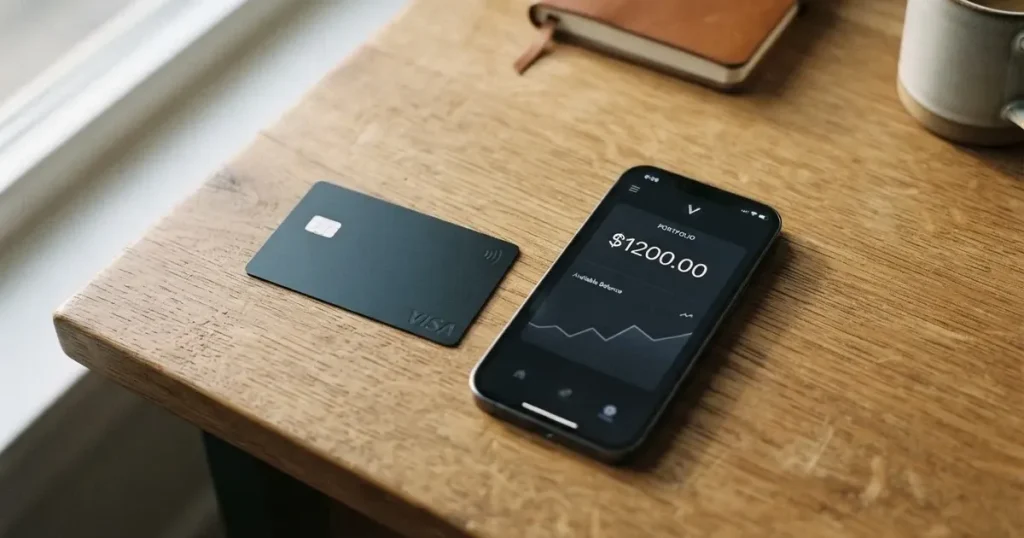
The BingX card is a Visa debit card that spends the USDT sitting in your BingX Fund Account, converted at the real-time rate. It comes in two versions: a virtual card you get instantly, and a metal card posted to you. On the surface it is a well-equipped everyday card — Apple Pay, Google Pay, cashback, ATM access on the metal tier, and no annual fee. Underneath, the card’s own public pages are quiet about a lot of the numbers you would want: retail purchase fee rates, FX rates, spending limits on the guide, the minimum top-up, replacement cost, and who the issuer actually is. The card also reached the market very recently, on 13 July 2026, in partnership with Wirex as the banking-as-a-service issuer.
I scored it 5.8 out of 10. That is a working card with a solid everyday feature set sitting on top of thin published cost detail, single-asset funding, and a young programme with a noisy reputation behind the exchange name. It suits people who already hold USDT on BingX and want to spend it without converting through a bank. It does not suit people who need to see a full price list before applying, or who want to hold other coins, or who want a card with a long public track record.
The conditions described below are current as of October 28, 2026.
What I scored and why
Here is the breakdown of the score out of 10, criterion by criterion.
| Criterion | Mark | Why |
|---|---|---|
| Who can get it | 7 / 10 | Europe (EEA), APAC, LATAM and other selected regions, but no country list is published; you have to ask support |
| Cost | 5 / 10 | Virtual card free, annual fee 0, Metal 180 USD; first 200 USD of ATM a month free then 2%; purchase rates and FX undisclosed |
| Top-up options | 4 / 10 | USDT only, from the Fund Account; no other coins claimed |
| Reliability and complaints | 4 / 10 | Issuer partner Wirex named in a launch blog but not in the card terms; Trustpilot for BingX as a whole is 1.5/5 over 766 reviews, with complaints about freezes and restrictions |
| Everyday use | 9 / 10 | Virtual and metal Visa, Apple Pay and Google Pay on both, ATM on the metal card |
| Total | 5.8 / 10 |
The single highest mark is the one you feel most directly: once the card is in your phone, it behaves like a normal Visa. Both versions work in Apple Pay and Google Pay, and the metal card adds ATM withdrawals. The low marks are all about things you would have to ask a support agent to find out: which countries, which fees, what limits, which coins.
Who will they actually give the card to
The card page names Europe (EEA), APAC, LATAM and “other selected regions” — and that is the whole list. There is no published country table, and the page’s own advice is to contact support to confirm. That is the first thing to ask before you apply: *is my country on it today, not theoretically?* The list is described as changing.
The card’s terms add two conditions: you must be 18 or older, and you must live in a supported country. An older Euro Mastercard page from BingX — a previous programme, not the current Visa one — says KYC was unavailable in many countries including Cuba, Iran, Russia, Ukraine, Pakistan, Nigeria and mainland China. That page is historical, so treat it as a hint about how the company has screened customers before, not as a statement about the Visa card.
If you are reading this hoping for a card in a country with thin banking access, that is exactly the use case — but the opposite side of that coin is that the same account can be closed when compliance checks do not clear. More on that in the risks section.
Getting the card
There are two card types. The virtual card is instant and needs no activation. The metal card is mailed, in about 15–30 business days after you apply, to the address you gave. Shipping is described as free for both card types in the card guide, though the same guide lists the Metal Card at $180 for non-VIP, non-agent users — so read the two statements together rather than as separate promises. Replacement cost for a lost or stolen card is not stated anywhere I could find.
Both are Visa debit cards. The card settles in US dollars.
On verification, the terms say you must be 18+, live in a supported country, and hold a BingX account. Identity verification must meet local rules, and physical cards are offered only to select customers. Beyond that, the specifics are not stated: the card pages give no KYC tiers and no processing time for the Visa card, and no document list. The one concrete timing figure in the whole file comes from the older Euro Mastercard programme, which described an automated review usually completed in one working day — useful only as a rough sense of scale, since it is a different programme.
So the honest summary of the signup step: the process is straightforward in shape and vague in detail. Know going in that you may need to submit documents and that the card pages do not promise you how long it takes.
What it really costs: fees and limits you can see
Start with the part that is disclosed, because there is a real free tier here, then look at what is missing.
| Fee or limit | Value |
|---|---|
| Virtual card application | Free |
| Metal card | $180 for non-VIP, non-agent users |
| Annual fee | Free |
| Inactivity or closure fee | None stated |
| Shipping | Free (guide, updated 7 Oct 2026) |
| ATM | Metal card only; first $200 a month free, then 2% |
| Per-transaction / daily limit | $10,000 |
| Monthly limit | $30,000 |
| Metal ATM limit | $500 per day, 5 transactions a day |
| Card currency | Settles in USD |
| FX | Automatic conversion on international purchases; cost possible on non-USD purchases, rate not stated |
| Purchase fee rate | Not given |
| Top-up fee and minimum | Not stated |
Now the three everyday payments, and which fees bite.
Buying coffee in your own country with the virtual card. The card spends USDT from the Fund Account at the real-time rate, so the conversion happens every time. Beyond that, the current terms say retail purchases carry fees shown in the terms themselves — and the guide does not print those rates. A July 2026 blog post said there are no issuance or annual fees, which is true and does not answer what a purchase costs. For comparison, the older Euro Mastercard programme used 1% on deposit, free in the EEA and 2% with a minimum of EUR 0.06 outside it; treat that as history, not as this card’s number.
Buying something priced in euros or pounds. Two things stack. Your purchase is converted into USD because that is what the card settles in, and then the merchant’s acquirer may apply its own conversion. The card side of that is an FX cost, possible on non-USD purchases, with no rate published. If you travel, that is the line item most likely to cost you real money without warning, and it is the one you cannot compute in advance from the card’s own materials.
Taking cash out. Only the metal card has an ATM, you set a four-digit PIN at activation, and the first $200 a month is free — then 2%. The metal card is capped at $500 per day and five withdrawals. There is no fee number stated for the virtual card because there is no ATM at all on it, so if cash is part of your plan, the $180 tier is not optional.
The cashback is worth understanding before you aim at it. Virtual card cashback runs 2% to 3% a month, Metal 3% to 5%, with tiers rising as monthly spend grows and being separate from your VIP status on the exchange. Tier 3 caps monthly cashback at $100 on Virtual and $150 on Metal, and eligible subscriptions earn 20% within that cap. A blog post from July 2026 also mentions no issuance or annual fees, consistent with the guide.
If you are comparing rates before you commit, that comparison is not fully possible from public pages — which is itself the finding. Two or three numbers you would use to decide whether the card is cheap to use (purchase rate, FX rate, top-up minimum) are simply not published.
How to top it up
The funding rule is short and has no exceptions: USDT only, for now, from your BingX Fund Account. No other coin is claimed as usable, and there is no multi-currency balance feature.
In practice you have three routes to get that USDT into the Funding Account:
- Deposit USDT from an external wallet, on a network the exchange supports.
- Buy USDT with Quick Buy, then move it to the Funding Account.
- Buy USDT through P2P, then transfer it.
Whichever route you take, the network fee is charged by the blockchain, not by the card. And the warning that matters most here is a general one that bites hard on a single-asset setup: transfers are irreversible. Sending USDT on a network the card provider does not support, or to an address belonging to a different network, can lose the funds or require manual recovery with no guarantee. USDT exists on several networks, including Ethereum, Tron, Solana, Polygon and Avalanche, and they are not interchangeable. Tether also says it disables tokens in wallets on the OFAC sanctions list and has frozen funds tied to illicit activity — stablecoins are not censorship-proof.
The Visa card’s own top-up fee and minimum are not stated, so I cannot tell you whether a small transfer is worth making.
If you ever want out, the terms say you end participation by contacting Customer Support and completing closure, verification, repayment or cancellation steps. No timeline for getting a balance back and no fee are stated — which, given the complaints below, is a line I would ask about before I loaded anything large.
Paying with it every day
This is where the card earns its keep. Both the virtual and metal versions are Visa debit cards, and both work with Apple Pay and Google Pay. That matters more than it sounds: tokenising the card into a phone wallet means the number lives in the device’s Secure Element rather than on the provider’s servers, and each payment carries a one-time dynamic code.
The metal card adds in-store use and ATM access, which is the practical difference between the two tiers if you want physical payment as well as contactless.
What the card pages do not tell you is where it can be used in the store sense. Blocked merchants are not listed. What is stated is that some merchants, countries, regions or industries may decline for compliance reasons, with no list attached. Here is the general background worth knowing, because it explains most surprises: the first six or eight digits of every card number identify the issuing institution and country, and any shop can look that up. If the issuer’s country does not match your billing address, the payment may attract extra scrutiny. That is why a card issued in one country looks “foreign” in another, and it is not a fault in your card. Some merchants also decline prepaid or foreign-issued numbers outright. Address verification services, which compare the numeric parts of a typed billing address against issuer records, are mostly a US, Canadian and UK mechanism and are generally unavailable for foreign-issued cards, which causes declines.
A smaller point: an authorised purchase that gets declined can still leave a hold on your funds, typically up to several days. And the BingX terms say authorisation holds on this card can last up to 30 days.
If a payment goes wrong, the process is: report unauthorised or incorrect transactions as soon as you are aware. BingX investigates and may credit the account “within a reasonable period” — no day counts are given. Refunds are not guaranteed and can be reversed. Disputes with BingX go to 30 days of negotiation and then SIAC arbitration. Whether you can raise a standard Visa chargeback is not stated.
What can go wrong
I want to separate three different risks here, because they are often blurred together.
The issuer question. The card page does not name the issuer. BingX’s launch blog names Wirex as a banking-as-a-service partner with Visa principal membership. The card terms page itself refers only to “the applicable card issuer” under a Visa licence. That gap is worth noting on its own: the entity whose balance you trust during a weekend of frozen-funds complaints is named in a blog post and not in the terms. Visa and Mastercard do not issue these cards themselves — they license issuers, and they can suspend a programme. In November 2022 Visa said it had terminated its global agreements with FTX, and that card programme was wound down. WaveCrest, a Visa issuer that supplied several crypto card brands, was suspended by Visa in Europe in 2018 and all its Visa programmes closed. Closures typically mean a notice period, then spending and loading stop, then you are asked to withdraw what is left.
The custody question. Your balance sits in the BingX Fund Account, which is custodial: BingX holds the credentials, so you must trust it. The usual reasons to hesitate are all live ones — custodial platforms have failed before, at Mt. Gox, Coincheck and Ronin Network, among others, and blockchain transfers have no built-in recovery. BingX does list real safeguards: a Shield Fund, 3-D Secure, two-factor authentication, end-to-end encryption and instant transaction alerts, plus instant freeze of a lost or stolen card in Card Management in the app. Those are the right features; they are not the same as custody of your own key.
The reputation question. Here I have to be careful about what is measured where. The card’s own pages state no incidents. On the exchange side, Trustpilot shows BingX as a whole at 1.5/5, labelled “Bad”, across 766 reviews with 64% one-star, read 2026-10-20. A third-party aggregator, rfp.wiki, has listed BingX Trustpilot at 1.3–1.6 — conflicting figures, with the rating at one point reported unavailable after action against fake reviews. Both are unofficial third-party numbers, not the card’s account, and nothing in them is card-specific. The 2026 user-reported themes are: restrictions and frozen funds blocking withdrawals, deductions over alleged improper gains or promotion violations, repeated ID and video verification requests, slow or generic support, forced liquidations and a missing fiat deposit. On forums, the card’s perks and rewards are described positively. Regulation is the other structural risk: MiCA’s rules on e-money tokens applied from 30 June 2024 and the remaining crypto-asset service provider provisions from 30 December 2024, with a transitional period running until 1 July 2026 for providers operating under national law. A card is a payment service regulated separately from the crypto side, so a crypto card often rests on two licences.
Before you load money, I would do three things: check whether the account freeze complaint pattern applies to your use case, ask support in writing what the Visa card’s purchase fee and FX rate are, and ask what happens to a residual balance at closure.
What to take instead
Here is how the alternatives I looked at compare, so you can see where BingX sits and where it does not.
| BingX card | Bybit Card | Coinbase Card | OKX card | |
|---|---|---|---|---|
| Score | 5.8 / 10 | 6.0 / 10 | 6.4 / 10 | 6.2 / 10 |
| Where | Europe (EEA), APAC, LATAM and other selected regions, no list | Argentina, AIFC (Kazakhstan), Georgia, Kazakhstan, Australia, Mexico, Brazil, Peru, Asia Pacific | All US states except Hawaii | EU plus Norway; Iceland and Liechtenstein excluded |
| Network | Visa debit | Mastercard and Visa, by region | Visa prepaid | Mastercard |
| Form factor | Virtual (instant) and metal | Virtual first, then physical (not in Peru) | Virtual or physical | Virtual only |
| Card currency | USD | By region: USD, ARS, MXN, BRL, PEN or USD | USD | EUR |
| Top-up assets | USDT only | Fiat first, then BTC, ETH, XRP, USDT, USDC, GRAM | Cash or crypto, crypto converted to USD | USDC or USDG in OKX Pay |
| Issuance | Virtual free; metal $180 | Virtual free “until further notice”; physical varies, none in Brazil and Mexico | No spending fees, no annual fees | None |
| Cashback | 2–3% virtual, 3–5% metal | Tiers from 2% to 10%, caps by tier | Optional crypto rewards, variable rate | USDG purchases only; EUR caps by VIP tier |
Bybit Card publishes the most complete fee schedule of the four, which is precisely why its 4/10 top-up mark and overall 6.0 are worth reading closely. Conversion fee is 0.9% over the One-Click Sell rate in Australia, Asia Pacific, Georgia, Kazakhstan, Brazil and Mexico, and 0.5% in Argentina; Peru is not supported. FX fee is 2% on top of the network rate in Australia, Asia Pacific, Georgia and Mexico, 2% on purchases outside Kazakhstan even in USD, 7% in Argentina, 1.5% in Brazil and 1% in Peru. Crucially for anyone comparing against BingX’s silence: its card page states “This product is not meant for European Economic Area customers. All European Economic Area customer participation is strictly prohibited.” So Bybit is the option if you are outside the EEA and want published numbers. Its card currency depends on the country of your Advanced Identity Verification, and as of 5 October 2026 only crypto-funded transactions earn points or cashback.
Coinbase Card is the narrowest option and, for its one market, the clearest on price: “Zero spending fees and no annual fees”, all fees disclosed in the Cardholder Agreement. No Coinbase transaction fee, but a spread applies when crypto is bought, sold or traded, and all crypto is converted to US dollars for purchases and ATM withdrawals. Available in all US states except Hawaii. If you are in the US, that is a straightforward proposition — and if you are not, it is not available at all.
OKX is the recent European entry: EU plus Norway, launched 28 January 2026, Iceland and Liechtenstein excluded. A euro-denominated Mastercard virtual debit linked to OKX Pay, issued via an unnamed European licensed payment provider, with no physical card mentioned. Funded with USDC or USDG in OKX Pay — other coins must be converted first, and there is no auto top-up, so a payment is declined if the balance is short. The published conversion spread is a conflict in its own materials: 0.1% in an explainer as of May 2026 against 0.4% in the launch press release. If you are in the EEA and want euro, this is the one to look at next; its cashback pays on USDG purchases only, with EUR caps by VIP tier.
Who I would recommend it to
I would recommend the BingX card to one specific person: someone who already keeps USDT on BingX, spends most of their money in USD or is comfortable with a USD-settled card, and wants a free virtual card in their phone this week. For that person the everyday-use score of 9/10 is real, and the 2–3% cashback with no annual fee is a genuine improvement on moving funds off the exchange manually.
I would steer everyone else elsewhere, for three reasons rather than one. If you cannot get the answer to “what does a purchase cost me, in percent” from support, the lack of published purchase and FX rates will follow you on every transaction. If you hold anything other than USDT, this card ignores it. And if you are making a decision that depends on a long record of how a provider behaves when an account is frozen — which is exactly the situation BingX’s Trustpilot reviews describe — then a programme that launched on 13 July 2026 has not built one.
The honest summary: good card, thin paperwork. The features are better than the disclosure, and disclosure is what you rely on when something goes wrong.
Frequently asked questions
What is the BingX card?
It is a Visa debit card that spends the USDT held in your BingX Fund Account, converting at the real-time rate. Two versions exist: a virtual card issued instantly with no activation needed, and a metal card mailed to you in about 15–30 business days. Both work with Apple Pay and Google Pay, and the card settles in US dollars. It launched on 13 July 2026 in partnership with Wirex.
How does the BingX card work?
When you pay, the card draws on USDT in your BingX Funding Account and converts it at the current rate, so the exchange happens on every transaction rather than once. The account is custodial, meaning the balance sits with BingX rather than in a wallet you control. Spend tiers rise with monthly volume and are separate from your exchange VIP status, with cashback between 2% and 5% depending on card type and tier.
Is BingX a bank?
No. BingX is a cryptocurrency exchange that also operates a card programme. Its launch blog names Wirex as a banking-as-a-service partner with Visa principal membership, while the card terms refer only to “the applicable card issuer”. Your balance is custodial and sits in the BingX Fund Account. That is a different arrangement from a bank deposit, with different protections.
Which countries can I get the BingX card in?
The card page names Europe (EEA), APAC, LATAM and “other selected regions”, with no country list published and a note that the list changes — so contact support to confirm before applying. You must be 18 or older and live in a supported country. An older Euro Mastercard page said KYC was unavailable in countries including Cuba, Iran, Russia, Ukraine, Pakistan, Nigeria and mainland China.
How do I get and activate the BingX card?
Apply with a BingX account and meet local identity verification rules. The virtual card arrives instantly and needs no activation; the metal card takes about 15–30 business days to arrive and is PIN-activated on delivery. Physical cards are offered only to select customers. The card pages do not publish KYC tiers, processing times or a document list for the Visa card.
What does the BingX card cost?
The virtual card is free to apply for and the annual fee is free, with no stated inactivity or closure fee and free shipping. The metal card is $180 for non-VIP, non-agent users. ATM withdrawals on the metal card are free for the first $200 a month, then 2%, capped at $500 per day and five transactions. Purchase fee rates and FX rates are not published.
How do I top up the BingX card?
With USDT, and only USDT, from the BingX Fund Account. You deposit USDT from an external wallet, or buy it via Quick Buy or P2P and transfer it. USDT exists on several incompatible networks, including Ethereum, Tron, Solana, Polygon and Avalanche, and transfers are irreversible, so sending on the wrong network can lose the funds. Network fees are set by the blockchain, not by BingX.
Can I add the BingX card to Apple Wallet?
Yes — Apple Pay and Google Pay are both supported for the virtual and the metal card. Adding the card to the phone replaces the card number with a device-specific token stored in the Secure Element rather than on Apple’s servers, so each payment uses a one-time code. The card pages do not list blocked merchants, though some countries, regions or industries may decline for compliance reasons.
Is the BingX card safe?
It has the standard safeguards: instant freeze of a lost or stolen card in the app, 3-D Secure, two-factor authentication, end-to-end encryption and transaction alerts. But your balance is custodial, and authorization holds can last up to 30 days. Trustpilot lists BingX as a whole at 1.5/5 across 766 reviews, with 2026 user themes including frozen funds, account restrictions and repeated verification requests. Nothing in those reviews is card-specific.
Is the BingX card worth it?
For someone already holding USDT on BingX who wants a free virtual card in their phone, probably yes — no annual fee, no issuance fee, 2–3% cashback and solid wallet support. For anyone who needs a published price list, holds coins other than USDT, or wants a provider with a long record of how it handles frozen accounts, I would look at the alternatives instead. The features here are better than the disclosure.
Exchange cards – cryptocardbasics
Content created by the «cryptocardbasics» team